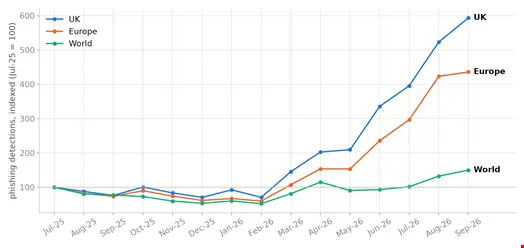
The ransomware landscape, which has arguably remained in a state of predictable stagnation for several years, is on the precipice of a radical transformation. According to Bob McArdle, director of cybercrime research at TrendAI, the rapid integration of artificial intelligence into the offensive toolkit of threat actors will fundamentally alter the nature of cyber-extortion by 2027. This impending shift promises to move beyond the current reliance on manual processes and established extortion playbooks, ushering in an era of machine-speed attacks and unprecedented tactical innovation.
McArdle delivered this stark assessment to attendees at the IRISSCON 2026 conference in Dublin, Ireland, on November 11. Reflecting on the current state of the industry, he noted that for researchers tasked with monitoring these threats, the recent past has felt surprisingly monotonous. While ransomware has certainly remained a high-impact threat, its core operational mechanics—the "how" of the attack—have largely followed a well-trodden path.
The Current Limitations of AI in Ransomware
To date, the role of AI in the criminal underworld has been primarily supportive rather than transformative. Ransomware gangs have leveraged machine learning and generative AI tools to sharpen the efficiency of their existing campaigns. For instance, attackers have utilized AI-driven analytical tools to sift through massive volumes of exfiltrated data, allowing them to rapidly identify high-value intellectual property or sensitive customer information once they have gained a foothold in a target’s network. Furthermore, some sophisticated groups have begun experimenting with automated chatbots to handle the initial stages of ransom negotiations, reducing the human overhead required to manage multiple concurrent victims.
Despite these tactical improvements, the fundamental architecture of a ransomware attack has remained remarkably consistent. The cycle typically begins with initial access brokers selling entry points, progresses to lateral movement, culminates in the encryption of data, and concludes with double-extortion tactics—threatening to leak stolen data if the ransom is not paid. According to McArdle, these current applications of AI are merely "a drop in the ocean" compared to the profound shifts that are expected to manifest over the coming year.
The Devaluation of the Initial Access Broker Marketplace
One of the most significant anticipated disruptions lies in the way cybercriminals gain entry into protected environments. In the established Ransomware-as-a-Service (RaaS) ecosystem, initial access brokers serve as the gatekeepers. These actors spend their time identifying vulnerabilities, purchasing stolen credentials, or developing custom exploits, which they then sell to the highest bidder—usually ransomware affiliates—on dark web marketplaces.
However, the emergence of advanced AI frameworks, such as Artex, is effectively removing the barriers to entry that previously necessitated specialized human expertise. These tools enable threat actors to scan the internet, identify vulnerable systems, and deploy exploits with a speed and precision that human brokers simply cannot match. "Anything that’s connected to the internet and is misconfigured or has vulnerabilities will be compromised," McArdle warned, underscoring the shift toward automated, relentless exploitation.
This automation is expected to lead to a significant devaluation of the traditional initial access market. As the capability to gain entry becomes commoditized through AI, the value proposition of a manual "broker" diminishes. Consequently, McArdle anticipates a pivot in the criminal business model. Instead of merely selling raw access, these brokers will likely be forced to move up the value chain, shifting their focus toward offering high-level privilege escalation services to ransomware groups, ensuring they can maintain their relevance in an automated economy.
Shrinking the Kill Chain to Machine Speed
The integration of AI agents and frameworks like Artex is not just changing how attackers enter networks; it is fundamentally altering the "kill chain"—the series of steps an attacker takes from the initial breach to the final objective. By leveraging AI, threat actors are capable of executing lateral movement, data reconnaissance, and system compromise at "machine speed." This drastic reduction in the time between initial access and encryption leaves security teams with an incredibly narrow window to detect and neutralize threats.

Moreover, the shifting infrastructure of modern enterprise IT is providing new avenues for exploitation. Organizations are increasingly centralizing their data storage to facilitate the use of enterprise-grade AI for business intelligence and data processing. While this centralization improves operational efficiency, it simultaneously creates a single point of failure that threat actors are eager to exploit.
McArdle pointed out that ransomware groups are beginning to recognize the importance of these centralized AI orchestration hubs. Beyond traditional encryption, attackers may soon incorporate the threat of tampering with or poisoning an organization’s AI models and data pipelines as a novel form of extortion. This evolution moves the goalposts from simple data theft to the potential sabotage of a company’s primary operational intelligence.
Data Processing and the New Inflection Point
AI is also poised to drastically enhance the profitability of stolen data. In the past, the challenge for criminals was not just stealing data, but processing it to identify what was worth selling or leaking. AI tools now allow attackers to effectively curate, categorize, and prioritize datasets of high-value information with minimal human intervention. By quickly filtering for financial records, trade secrets, or personal identification data, criminals can create "cleaner" and more attractive data packages for sale on the black market.
This efficiency will inevitably lead to a diversification of revenue streams for ransomware groups. McArdle explained that throughout 2027, the industry will witness an inflection point. The traditional extortion-based business models—where the focus is solely on the ransom payment—will exist alongside, and perhaps be augmented by, robust data theft and sales models. This dual-track approach ensures that even if a victim refuses to pay the ransom, the attackers have already secured a secondary, highly profitable monetization route.
Hostile Takeovers and Market Fragmentation
The democratization of these AI tools, which makes mounting an attack easier than ever, is paradoxically expected to lead to a more fragmented and aggressive ransomware ecosystem. As the technical barriers to entry drop, the number of independent ransomware groups is expected to surge. However, this proliferation will likely trigger a period of consolidation, characterized by what McArdle describes as "hostile takeovers."
In this evolving environment, larger, more established criminal syndicates—the modern equivalent of the infamous Conti or LockBit groups—will likely move to absorb smaller, less efficient, or newer groups. These acquisitions will not necessarily be about physical assets, but about acquiring technological advantages, specialized AI tools, or, perhaps most importantly, the established affiliate networks that smaller groups have cultivated.
By absorbing these smaller entities, the dominant players in the ransomware world will be able to maintain their market share and ensure their continued dominance in an increasingly crowded and competitive criminal landscape. This consolidation suggests that while the tools of the trade are becoming accessible to all, the power in the ransomware underworld will remain concentrated among a few highly sophisticated and well-resourced syndicates that know how to leverage the full power of AI. As 2027 approaches, organizations must prepare for a threat landscape where the velocity of attacks is no longer limited by human interaction, but driven by the relentless, automated precision of artificial intelligence.