
The discourse erupted when Chris Dixon, managing partner at a16z crypto, published an essay arguing that years of pervasive scams, extractive behavior, and aggressive regulatory attacks were the primary culprits behind the sluggish adoption of non-financial crypto applications. These alternative use cases encompass a wide spectrum of technological innovations, including decentralized social media platforms, digital identity management systems, decentralized media streaming services, digital rights management platforms, and Web3 video games, among others.
According to Dixon, the long-term vision of a decentralized internet has been unfairly stalled by external toxicity and structural growing pains rather than an inherent rejection by the market. However, this perspective met swift and sharp pushback from industry peers who point to hard market data and user metrics to support a much harsher conclusion.
Haseeb Qureshi, managing partner at crypto venture firm Dragonfly, took to social media to challenge Dixon’s thesis directly, asserting that non-financial crypto applications have struggled simply because consumers do not want them. In a blunt assessment, Qureshi stated that the industry must admit these were flawed products that ultimately failed the fundamental market test. He explicitly rejected the notion that regulatory pressure from figures like Securities and Exchange Commission leaders, high-profile industry collapses like FTX under Sam Bankman-Fried, or protocol failures like Terra were to blame, characterizing the defense of these failing models as mere psychological coping mechanisms.

The debate highlights a profound philosophical and strategic split among top-tier investors regarding how capital should be deployed and how the success of blockchain technology should be measured. Dixon defended the longer time horizons utilized by firms like a16z crypto, noting that their funds operate with at least a 10-year outlook because building entirely new technological industries inherently takes time and patience.
This viewpoint, however, drew immediate skepticism from other seasoned market participants. Nic Carter, founding partner at Castle Island Ventures, joined the conversation to dispute the viability of a decade-long wait for product-market validation in venture capital. Carter argued that venture capitalists do not have the luxury of simply waiting to be right, emphasizing that investors must be accurate about market demand during a standard two-to-three-year fund deployment period.
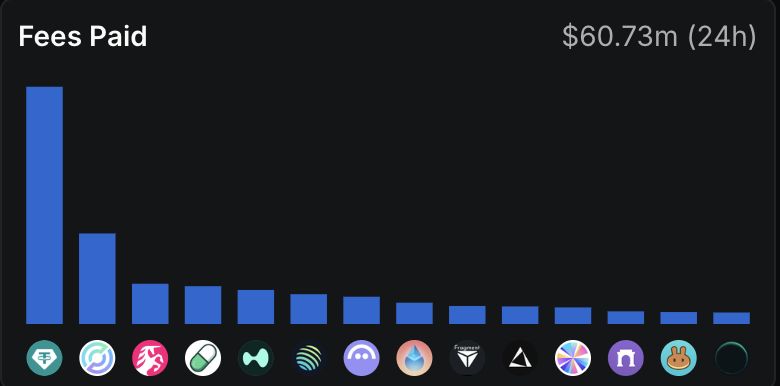
The online confrontation arrives on the heels of a broader market shift. Data tracking blockchain activity demonstrates that financial applications continue to dominate the entire ecosystem. Recent metrics from platforms like DefiLlama show that tens of millions of dollars are paid daily in fees to crypto exchanges and decentralized finance protocols. Furthermore, an analysis of the top 10 crypto applications ranked by fee generation and revenue reveals that every single one represents a financial use case. This stark concentration of revenue stands in sharp contrast to the comparatively quiet activity levels observed across decentralized social networks, digital identity protocols, and Web3 gaming ecosystems.
The debate also follows a broader surge in venture capital funding directed toward crypto projects, which saw a noticeable rebound driven heavily by the momentum of tokenized real-world assets. These assets involve the representation of physical or traditional financial instruments on-chain via digital tokens, bridging traditional finance with blockchain rails.
Different approaches to portfolio building
The ideological divide between these prominent venture capitalists is deeply reflected in the actual investment strategies and portfolios of their respective firms. Dragonfly has systematically positioned its capital around financial use cases and core blockchain infrastructure designed to facilitate the seamless movement of value and risk throughout the on-chain financial system. The firm’s portfolio features heavy representation in vital financial primitives, including the Agora stablecoin and payments platform, payments infrastructure provider Rain, synthetic dollar issuer Ethena, and the high-throughput Monad layer-1 blockchain network. For Dragonfly, the path forward for blockchain technology is intrinsically tied to financial utility, transactional efficiency, and institutional integration.
In contrast, a16z crypto has pursued a significantly broader investment mandate. While the firm’s portfolio certainly includes major financial cornerstones and market-leading financial use cases such as Coinbase and the decentralized crypto exchange Uniswap, it also encompasses a wide array of experimental Web3 sectors. These investments span community-building platforms, digital identity solutions, media streaming, and gaming. Notable projects within the a16z ecosystem include the community-building club Friends With Benefits, digital identity provider World, and Web3 gaming platform Yield Guild Games.
As the debate continues to ripple across digital forums and industry circles, it underscores a fundamental identity crisis within the blockchain sector. Whether the future belongs exclusively to robust financial rails and tokenized assets, or if a patient, long-term approach will eventually unlock mainstream demand for decentralized social and creative applications, remains one of the most contentious questions facing modern venture capital.