Prominent crypto venture capitalists are currently clashing online over a fundamental question facing the digital asset industry: whether non-financial use cases in crypto, Web3, and blockchain have failed due to a fundamental lack of investor demand and product-market fit, or if the best days for non-financial applications still lie ahead of the ecosystem.
The high-stakes public debate erupted on Friday when Chris Dixon, a managing partner at venture capital firm a16z crypto, published an article arguing that years of severe industry headwinds—including persistent scams, extractive corporate behavior, and aggressive regulatory attacks—were the primary reasons why non-financial use cases in crypto have failed to take off in a mainstream capacity.
These non-financial use cases, championed heavily by certain sectors of the venture community, encompass a wide variety of decentralized technologies. They include decentralized social media platforms, digital identity management solutions, decentralized media streaming applications, digital rights and creator platforms, and Web3 video games, among other community-driven initiatives.
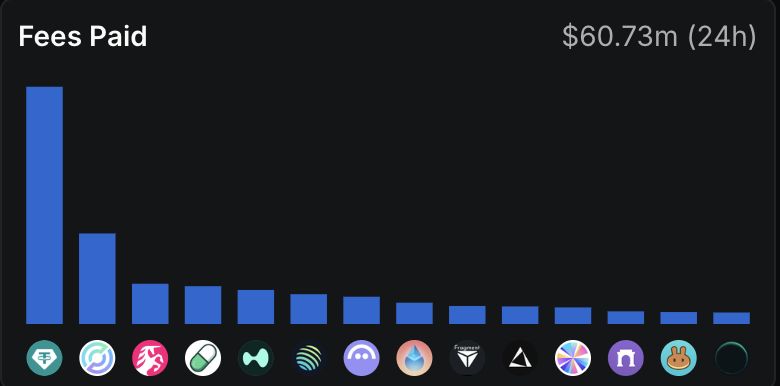
Despite these visions, market data illustrates a starkly different reality on the ground. According to recent figures from DefiLlama, over $60.7 million in fees were paid over a single 24-hour period to crypto exchanges and decentralized finance (DeFi) applications alone. Furthermore, a deeper look at onchain analytics reveals that the top 10 crypto applications by fee generation and revenue are exclusively financial use cases, leaving non-financial infrastructure trailing far behind in terms of active, revenue-generating usage.
This revenue disparity fueled sharp pushback from industry peers over the weekend. On Sunday, Haseeb Qureshi, a managing partner at crypto venture firm Dragonfly, took to social media to challenge Dixon’s thesis directly, offering a blunt assessment of the state of consumer-facing blockchain apps.

"Non-financial use cases for crypto have failed because no one wants them," Qureshi stated in his online response. He added, "Let’s just admit it. They were bad products. They failed the market test. It was not Gensler or Sam Bankman-Fried or Terra that caused these things to fail; it was that no one wanted any of it. Pretending otherwise is coping."
The friction highlights a deep ideological divide among leading investors regarding how long venture capital funds can afford to wait for nascent technological paradigms to mature. Dixon defended his firm’s long-term outlook by pointing out that a16z crypto manages its funds with at least a 10-year time horizon, a timeline grounded in the belief that building entirely new technological industries takes significant time, patience, and trial and error.
However, other prominent venture investors quickly pointed out the operational realities of managing institutional capital in the fast-moving digital asset space. Nic Carter, a founding partner at venture firm Castle Island Ventures, joined the online discussion to reply to Qureshi, emphasizing the strict constraints under which most venture funds operate.
"You don’t have the luxury of ‘waiting to be right’ in VC," Carter said in his reply. "You need to be right about a market during the 2-3 year fund deployment period."
This public disagreement follows a broader market shift that saw a surge of venture capital funding into crypto projects throughout 2025. Much of this renewed investment capital largely bypassed speculative consumer applications, instead flowing heavily into tokenized real-world assets—commonly known as RWAs—which involve physical or traditional financial assets represented onchain by digital tokens. As Web3 revenue continues to shift dynamically from underlying blockchains toward user-facing wallets and high-performing DeFi applications, investors are increasingly forced to re-evaluate where sustainable value actually resides.
Different approaches to portfolio building
The online sparring between Dixon and Qureshi reflects fundamentally different strategies and investment philosophies when it comes to portfolio construction and risk management in the blockchain ecosystem.
Dragonfly’s investment portfolio is heavily built around financial use cases and underlying blockchain infrastructure designed to facilitate the efficient movement of value and risk through the growing onchain financial system. Some of the firm’s notable investments include the Agora stablecoin and payments platform, payments infrastructure provider Rain, synthetic dollar issuer Ethena, and the high-throughput Monad layer-1 blockchain network. By focusing heavily on financial primitives and infrastructural rails, Dragonfly aligns its capital deployment with areas of the market that currently demonstrate immediate, measurable demand and fee generation.
In contrast, a16z crypto pursues a much broader mandate. While the firm’s extensive crypto portfolio certainly includes major financial use cases such as Coinbase and the decentralized crypto exchange Uniswap, it also features a vastly wider range of experimental Web3 sectors. These include community-building initiatives, interactive gaming ecosystems, and decentralized media streaming platforms designed to alter how creators and audiences interact online.
These projects backed by a16z include the community-building club Friends With Benefits, digital identity provider World, and Web3 gaming platform Yield Guild Games. These investments reflect a thesis that consumer habits take much longer to adapt to decentralized models, requiring patient capital to nurture infrastructure that may not yield immediate financial returns but could eventually redefine digital ownership.
As the debate continues to circulate across industry circles, it underscores a critical crossroads for venture capitalists and builders alike. Whether the future of Web3 will be dominated strictly by high-yield financial engines and tokenized traditional assets, or if patient capital will eventually unlock a thriving ecosystem of consumer-focused, non-financial applications, remains one of the defining questions for the next decade of blockchain development.