
Prominent venture capitalists in the cryptocurrency ecosystem are clashing online over a fundamental question facing the industry: Have non-financial use cases in crypto, Web3, and blockchain failed due to a lack of genuine investor demand and an inability to achieve product-market fit, or do the best days for non-financial applications still lie ahead?
The high-profile debate ignited on Friday when Chris Dixon, a managing partner at prominent venture capital firm a16z crypto, published an article arguing that years of "scams, extractive behavior and regulatory attacks" were the primary culprits holding back non-financial use cases in crypto from taking off at scale.
These non-financial applications span a wide spectrum of emerging technology sectors, including decentralized social media, digital identity management, decentralized media streaming platforms, digital rights platforms, Web3 video games, and more. Proponents of this view maintain that the disruptive nature of these technologies naturally attracts regulatory scrutiny and bad actors, which in turn overshadows legitimate technological progress and dampens mainstream consumer adoption.
However, this thesis was swiftly challenged over the weekend. On Sunday, Haseeb Qureshi, a managing partner at crypto venture firm Dragonfly, took to social media to push back against Dixon’s narrative, offering a much more blunt assessment of the state of consumer crypto.

"Non-financial use cases for crypto have failed because no one wants them," Qureshi stated in his online response. He went on to elaborate, "Let’s just admit it. They were bad products. They failed the market test. It was not Gensler or Sam Bankman-Fried (SBF) or Terra that caused these things to fail; it was that no one wanted any of it. Pretending otherwise is coping."
Dixon has defended his long-term perspective by pointing out that a16z crypto’s funds are managed with at least a 10-year time horizon, emphasizing that "building new industries takes time."
The philosophical divide quickly drew commentary from other heavyweights in the crypto venture capital landscape. Weighing in on the exchange, Nic Carter, founding partner at venture firm Castle Island Ventures, offered a counterpoint to Dixon’s prolonged horizon argument in a reply to Qureshi. "You don’t have the luxury of ‘waiting to be right’ in VC," Carter noted, adding that investors "need to be right about a market during the 2-3 year fund deployment period."
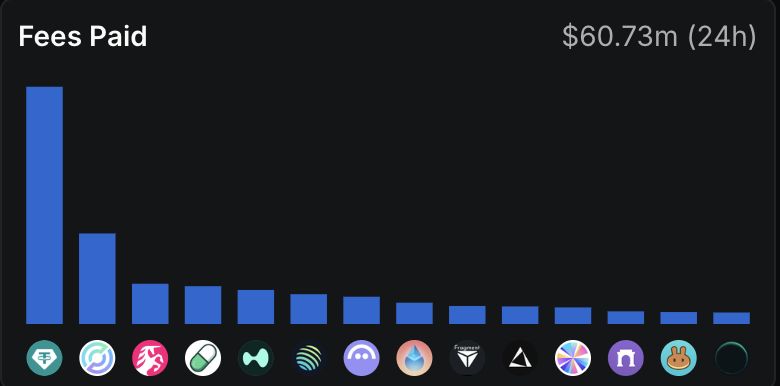
Market data further complicates the debate, illustrating a stark disparity between financial and non-financial blockchain activity. Over recent 24-hour periods, over $60.7 million in fees have been paid to crypto exchanges and decentralized finance applications, according to data from DefiLlama. Furthermore, an analysis of the top 10 crypto applications by fee generation and revenue reveals that every single one represents a financial use case.
This ongoing public debate unfolds against the backdrop of a shifting investment landscape. The broader discourse follows a notable surge of venture capital funding into crypto projects, which predominantly flowed into tokenized real-world assets—often referred to as RWAs—where physical or traditional financial assets are represented onchain by digital tokens. As decentralized finance applications capture increasingly high volumes of transaction fees and revenue compared to foundational layer-1 blockchains, venture firms are re-evaluating where to deploy capital.
Different approaches to portfolio building
The ideological split between these prominent venture capitalists is also reflected in the divergent strategies they employ when constructing their investment portfolios.
Dragonfly’s portfolio strategy, for instance, is heavily centered around financial use cases and underlying blockchain infrastructure designed to facilitate the seamless movement of value and risk throughout the onchain financial system. Some of the firm’s notable investments include the Agora stablecoin and payments platform, payments infrastructure provider Rain, synthetic dollar issuer Ethena, and the Monad layer-1 blockchain network. These investments highlight a strategic focus on products and protocols that directly serve financial utilities, liquidity generation, and transactional efficiency.
In contrast, a16z maintains a considerably broader mandate. While the firm’s extensive crypto portfolio certainly includes major financial use cases—such as prominent crypto exchanges like Coinbase and decentralized trading platforms like Uniswap—it also features a much wider range of experimental Web3 sectors. These encompass decentralized community building, interactive gaming, and digital media streaming.
Among a16z’s portfolio projects are the community-building club Friends With Benefits, digital identity provider World, and Web3 gaming platform Yield Guild Games. These investments reflect the firm’s thesis that blockchain technology can radically restructure digital ownership, identity, and social coordination well beyond traditional financial transactions, even if those sectors face adoption hurdles and market skepticism in the near term.