Bitcoin (BTC) surrendered its early-week gains as trading commenced on Wall Street, pulling back from local highs as mounting skepticism surrounding a proposed Russia-Ukraine "energy ceasefire" weighed on global risk sentiment.
Data from TradingView recorded BTC/USD reaching a peak of $84,254 on Bitstamp, marking its strongest performance since Wednesday. However, the momentum quickly reversed, sending the leading cryptocurrency down by as much as 2.2% over the session as macroeconomic pressures and geopolitical tensions resurfaced across international markets.

Bitcoin pressured as Brent crude oil rises above $107
The sudden retreat in digital asset markets coincided with escalating geopolitical concerns in Eastern Europe and the Middle East. Ukrainian President Volodymyr Zelenskyy publicly accused Russia of maintaining military strikes against critical energy infrastructure, directly challenging the framework of a recently discussed moratorium on such attacks previously announced by United States President Donald Trump via social media.
Simultaneously, tensions in the Middle East added fuel to the fire, with Iranian authorities reporting that an oil tanker had been struck and left ablaze in the strategically vital Strait of Hormuz.
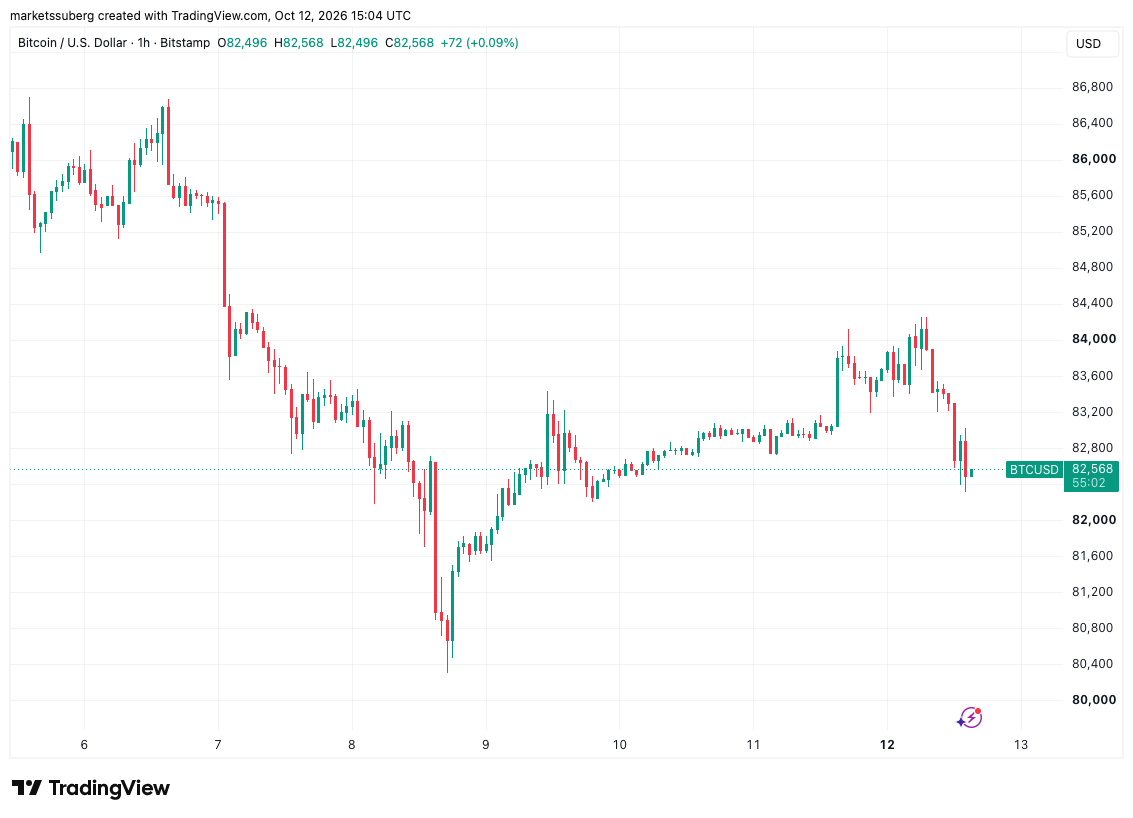
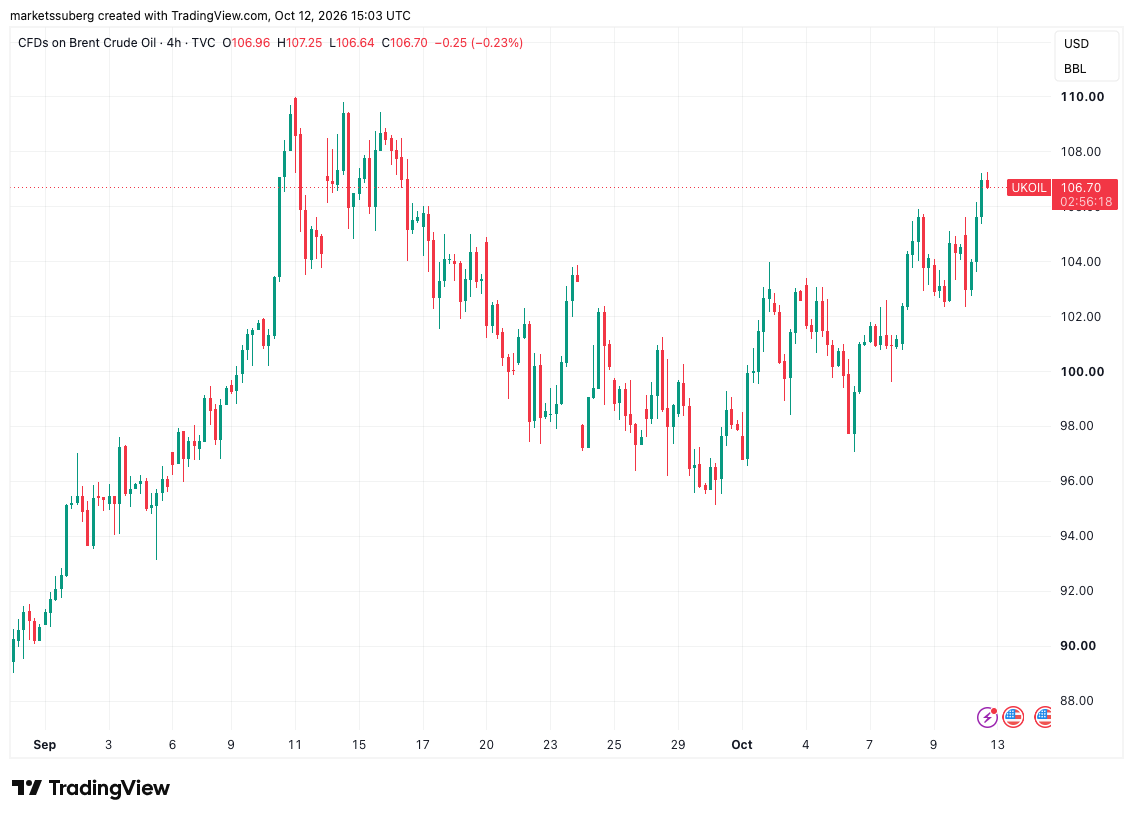
Commodity markets reacted swiftly and sharply to the dual geopolitical flashes. West Texas Intermediate (WTI) crude spiked past $94 per barrel, while international benchmark Brent crude surged to $107.25, marking its highest price point since September 16.
These commodity spikes arrived while traditional financial markets were already on edge, bracing for pivotal upcoming macroeconomic data releases from the United States. The Bureau of Labor Statistics is scheduled to release the Consumer Price Index (CPI) on Wednesday, followed by the Producer Price Index (PPI) on Thursday. Historical market analysis demonstrates that headline and core inflation metrics, particularly the CPI, remain exceptionally sensitive to sudden surges in global oil and energy prices.
Weighing in on the crude market dynamics, Robin Brooks, former chief FX strategist at Goldman Sachs, suggested that energy traders may have overcorrected by pricing in an excessive risk premium. Brooks highlighted that despite recent disruptions, actual petroleum transit volumes moving through the Persian Gulf continue to show resilience compared to earlier historical lows.
"Oil volumes out of the Persian Gulf are around 13 million barrels per day compared to a high of 16.5 million barrels per day a few weeks ago," Brooks noted in a recent blog post. "This is still way better than the height of the war in March and April, but oil prices are back to their highs."
BTC bid support seeks to protect $82,000
As Bitcoin navigated the broader market pullback, institutional trading desks and options market analysts began evaluating the asset’s structural health and potential trajectories. According to a market report from digital asset trading firm QCP Capital, Bitcoin options markets are currently displaying a notable duality, characterized by cautious defensive positioning alongside lingering sentiment that an upside breakout remains entirely possible.
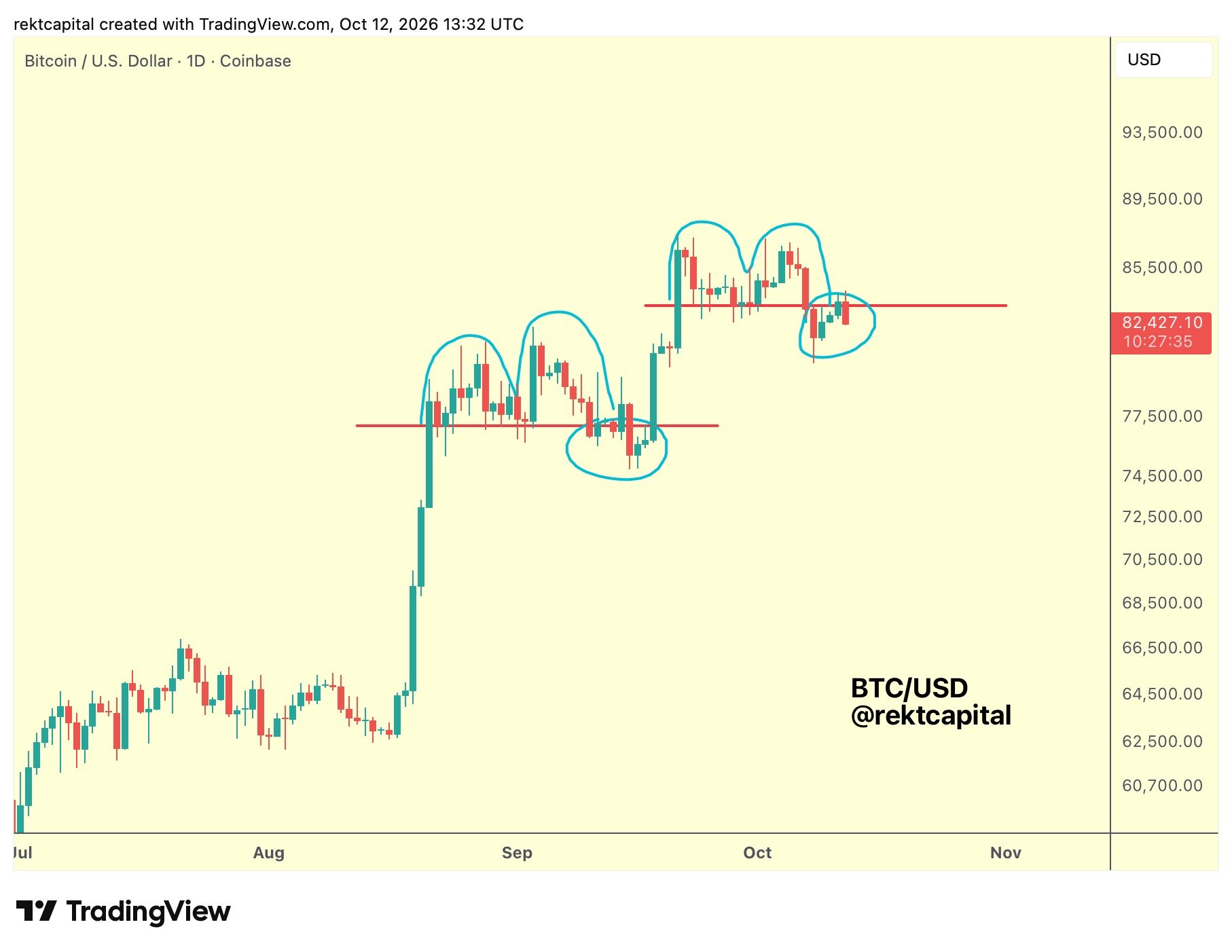
"Implied volatility has held firm even as spot settled back into the range, while risk reversals show a less pronounced premium for puts than usual," QCP Capital summarized in its latest market insight. "Read together, the market looks less defensively positioned but still priced for a possible breakout." Analysts at the firm further emphasized that a decisive and clean movement above the $87,000 threshold would quickly bring the $94,000 level back into active market focus.
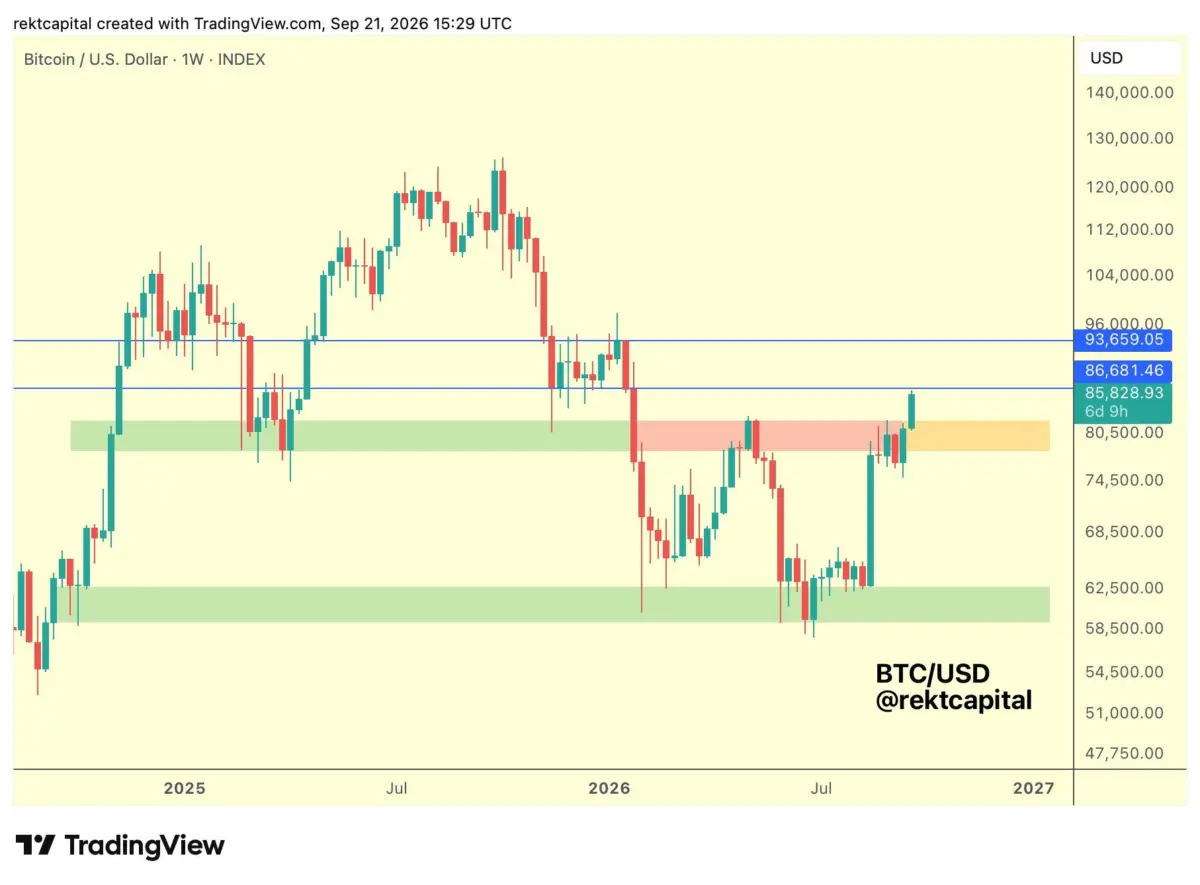
Independent trader and technical analyst Rekt Capital pointed to $83,400 as the immediate local resistance level to watch. He observed that this current resistance zone closely mirrors the price action observed around $77,000 from mid-August through September 21, a consolidation area that preceded Bitcoin’s previous leg upward.
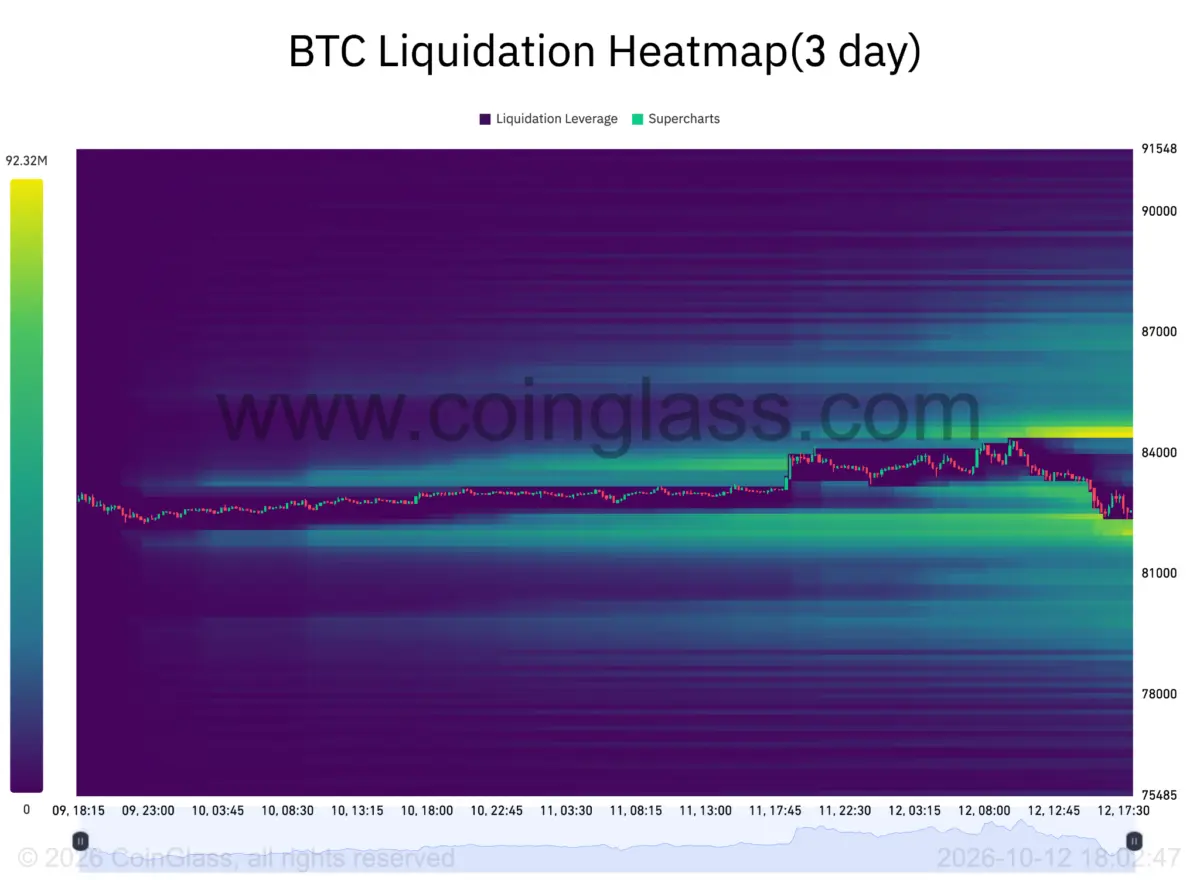
Order book and derivatives metrics compiled by on-chain analytics platform CoinGlass revealed significant market positioning near current spot prices. Ask liquidity appeared heavily clustered around the $84,500 mark across major centralized exchanges, with total sell-side orders at that specific level approximating $180 million. Conversely, active buy bids were steadily accumulating around the $82,000 threshold as the spot price trended lower during the European and early North American trading sessions.