As the cryptocurrency space headed into the final month of 2025, the overarching market mood bore little resemblance to the euphoric peaks of previous cycles. Rather than welcoming another high-octane decentralized finance summer or a frenzied wave of non-fungible token speculation, the industry ushered in a slow, deliberate, and sober pivot toward real-world utility. Instead of chasing short-term market hype, developers and protocol architects spent the year quietly focusing on the foundational infrastructure necessary to make decentralized applications viable for everyday users.
Decentralized applications, commonly known as DApps, are software programs that operate on distributed blockchain networks rather than relying on traditional, centralized servers. By leveraging smart contracts, these applications allow users to interact directly with various digital services—ranging from peer-to-peer payments and advanced financial tools to gaming and decentralized social media—while retaining significantly greater control over their personal identities and digital assets.
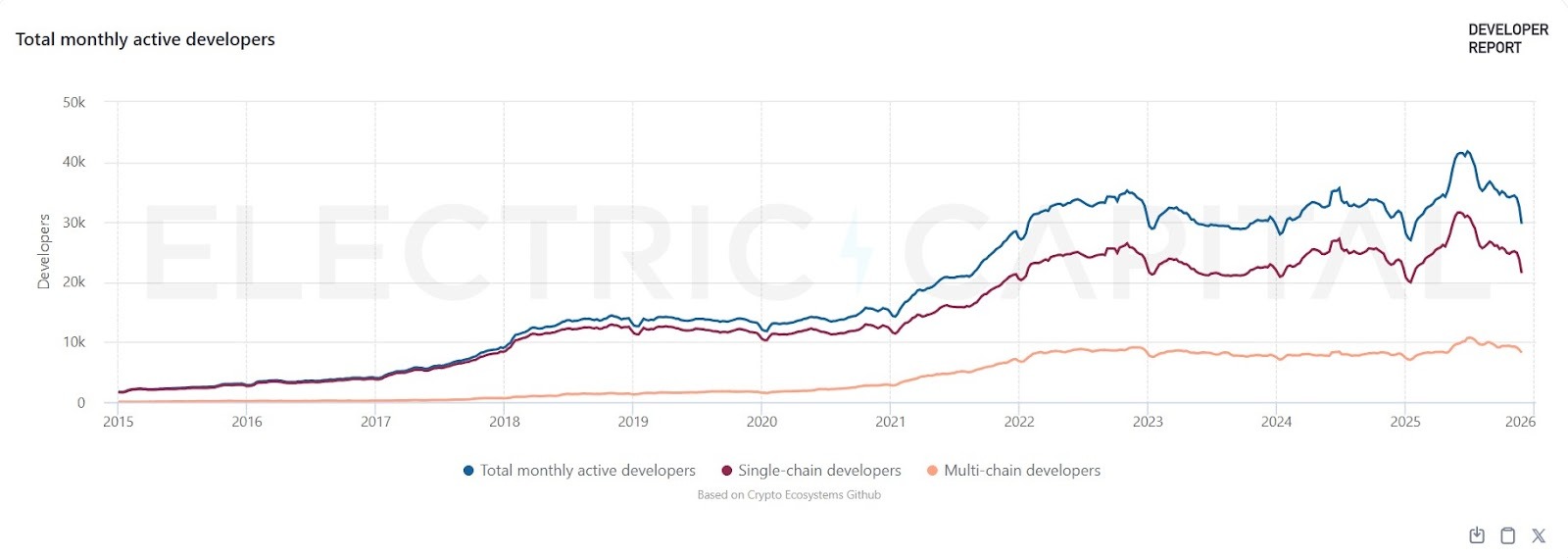
Despite the lack of superficial market mania, active builders held steady throughout 2025, decisively shifting their strategic priorities toward a much longer-term horizon. According to Electric Capital’s closely watched Developer Report, the number of full-time crypto developers—defined as active contributors committing code at least 10 days per month—actually rose by 5% year-on-year, even as total developer counts experienced a slight overall dip.
This noticeable divergence strongly suggests that speculative "tourist" participation has largely waned, leaving behind a core cohort of dedicated professionals pursuing crypto development as a full-time career. In practice, this shift points to a smaller yet substantially more committed developer base, with sustained engineering efforts increasingly concentrated among long-term, well-funded teams rather than transient, short-term projects looking for a quick exit.
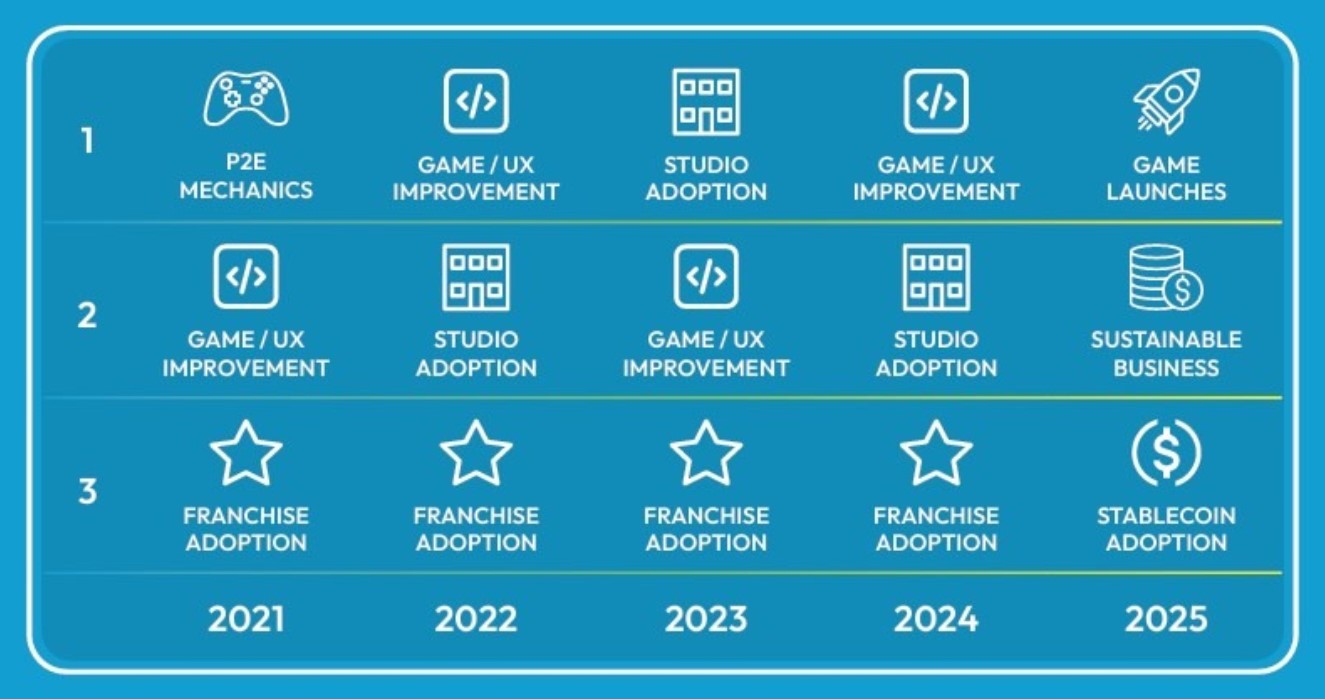
Web3 gaming developers were similarly forced to re-evaluate their strategies, identifying entirely different drivers of long-term success for gaming DApps. According to a comprehensive survey conducted by the Blockchain Gaming Alliance, Web3 game developers are now tying their future success directly to polished gameplay, sustainable in-game monetization models, and robust infrastructure capable of supporting seamless player spending.
This evolution means that modern builders are depending far less on external macro forces—such as traditional, mainstream gaming giants finally expanding into the Web3 ecosystem—and are instead focusing intensely on controllable internal factors. These include implementing robust asset interoperability, integrating sophisticated artificial intelligence capabilities, and engineering deeply engaging, player-driven economies that can sustain themselves independently of token price fluctuations.

If the year 2024 was primarily defined by the rapid rollout of layer-2 scaling paths and throughput solutions, 2025 evolved into a year of meticulous preparation. Builders dedicated their time and resources to making crypto genuinely usable for the masses, successfully pushing account abstraction into active production environments, tightening wallet user experiences, and constructing reliable mobile distribution channels through dedicated hardware ecosystems like Solana’s Saga and The Open Network’s deep integration with the messaging platform Telegram.
Concurrently, regulatory authorities across major global jurisdictions, including the United States, Europe, and Asia, worked to draw clearer legal boundaries around stablecoins, digital asset custody, and compliance reporting. This regulatory clarity, exemplified by milestones like the U.S. Senate passing the GENESIS Act regarding stablecoins, Europe’s Markets in Crypto-Assets regulation, and Singapore’s Monetary Authority of Singapore framework, finally provided developers with a predictable framework to build within. The collective result was a transformative year spent laying critical groundwork instead of simply chasing fleeting, breakout applications.
This extensive groundwork now sets up 2026 as a decisive test of long-term industry relevance. With core technical tooling largely in place and compliance obligations streamlined, decentralized applications will soon need to address the challenging and unavoidable question of whether they can effectively attract and retain everyday users without relying on unsustainable, speculative yield incentives.
The digital asset industry spent much of 2025 talking extensively about a fundamental pivot toward practical utility, but 2026 is the year where those ambitious claims must meet cold, hard reality. If everyday consumers do not stick around once speculative yields fade and temporary rewards disappear, the underlying problem will no longer be technical limitations, but the actual applications themselves.
How DApps Can Compete With Web2 in 2026
While decentralized applications spent previous years aggressively competing against one another for fractional user attention within a closed ecosystem, 2026 will likely be the year they must finally stand up against massive Web2 applications and their unparalleled scale.
For DApps to stand a realistic chance in this broader market, they must systematically erase the historical friction points that have traditionally driven mainstream users away. Fortunately, this critical shift is already underway across the industry. Account abstraction is moving rapidly closer to becoming the default user experience across major blockchain ecosystems, enabling smart accounts that behave much more like familiar traditional log-in mechanisms than complex cryptographic tooling.
Furthermore, gas sponsorships—where applications pay network transaction fees on behalf of their users—have successfully eliminated one of the single biggest pain points in onboarding newcomers. At the same time, social logins and multi-party computation wallets have entirely removed the intimidating requirement for users to write down and safely store manual seed phrases. Moreover, achieving sub-second finality on high-performance blockchains like Solana, alongside the maturation of modular rollups on Ethereum, has dramatically narrowed the technological latency gap between decentralized systems and legacy servers.
The rapidly emerging layer of autonomous artificial intelligence agents capable of interacting directly with smart contracts could soon make DApp usage feel far less like managing a cryptographic wallet and more like interacting with a standard, intuitive smartphone application.
This technological progress highlights the stark contrast between the fragmentation fatigue of 2025 and the consolidation needed for 2026. Last year saw thousands of isolated DApps, each operating with separate accounts, disparate assets, and disconnected user journeys, creating a remarkably high cognitive load for newcomers.
Consequently, the next major leap for the decentralized sector will likely come from modular, interoperable super apps capable of bundling multiple essential needs into a single, cohesive interface. This mirrors closely how dominant platforms like WeChat and Grab built their immense market dominance in the traditional Web2 space.
Essential financial services such as payments, digital savings, and stablecoin settlement rails could soon sit comfortably alongside creator tools, gaming assets, loyalty tokens, and social identity layers. This design allows users to flow smoothly across vastly different digital experiences while remaining safely inside a single, unified ecosystem.
If 2025 was the year underlying protocols built the structural foundation, 2026 will serve as the definitive proving ground to test whether these integrated systems actually function seamlessly in daily use.
Which Ecosystems Are Positioned to Win in 2026?
Several prominent blockchain ecosystems enter 2026 equipped with distinct competitive advantages, excelling not merely in raw transaction throughput or developer tooling, but also in distribution channels, user acquisition funnels, and genuine real-world relevance.
Ethereum firmly remains the intellectual and economic center of smart contract development, though its protocol upgrades throughout 2025 were largely incremental. Improvements tied directly to the Fusaka upgrade focused heavily on advancing Ethereum’s foundational data availability layers and its ambitious zero-knowledge proof roadmap.
This includes early, methodical steps toward more efficient cryptographic proof systems and shared sequencing concepts rather than immediate, dramatic fee reductions on the congested Ethereum mainnet. Together with the continued maturation of layer-2 rollups, these technical changes position Ethereum to safely support cheaper and faster settlement over time without ever compromising its gold-standard security model.
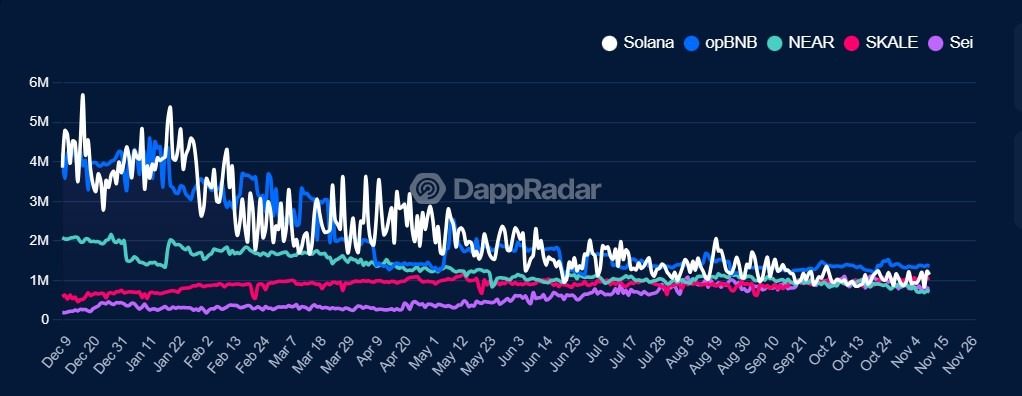
Meanwhile, Solana continues to successfully carve out the dominant consumer lane, processing lightning-fast sub-second transactions optimized for retail payments, in-app micro-purchases, and mobile-native experiences that feel significantly closer to traditional Web2 applications than legacy crypto platforms.
On the other hand, The Open Network stands out by possessing arguably the most powerful user funnel in the entire digital asset space. Telegram’s massive global user base, combined with native Mini Apps and seamless wallet integrations, has created a built-in distribution channel that traditional blockchain projects would find virtually impossible to independently replicate.
Beyond foundational layer-1 and layer-2 networks, specialized thematic sectors are also poised to dictate what dominates the industry landscape. Decentralized physical infrastructure networks gained substantial traction throughout 2025 by successfully anchoring crypto mechanics to tangible, real-world utility workflows such as decentralized bandwidth markets, shared compute networks, mobility solutions, and verifiable energy credits.
These emerging networks provided sustainable revenue paths that do not rely on inflationary yield farming or speculative trading volumes. In a prominent mid-year report, the World Economic Forum predicted that the decentralized physical infrastructure sector could expand to a staggering $3.5 trillion market by 2028, largely driven by the accelerating global adoption of advanced blockchain architecture and artificial intelligence.
Concurrently, creator-focused decentralized applications are maturing rapidly past the era of pure non-fungible token speculation, moving toward practical micro-intellectual property ownership, transparent music royalties, and direct, fan-powered monetization models.
If these prevailing trends hold steady through the coming months, the blockchain ecosystems best positioned to succeed in 2026 will likely be those that successfully combine wide distribution, seamless scalability, and clear, everyday use cases—ultimately winning not just by boasting the fastest underlying network, but by securing the largest base of genuinely active users.
2026 Will Be a Turning Point for Utility
The broader cryptocurrency industry has already spent years systematically building, scaling high-throughput networks, tightening enterprise-grade security, refining user experience paradigms, and establishing the regulatory foundations required to support mainstream economic development.
With core infrastructure finally reaching consumer-grade readiness, the upcoming phase of industry growth will likely be defined less by which underlying blockchain can process transactions the fastest, and far more by which digital products consumers are genuinely willing to return to voluntarily, devoid of traditional token incentive schemes.
If 2025 was a year primarily spent in heavy construction and technical refinement, 2026 is rapidly shaping up to be a critical year of evaluation—one where decentralized applications must deliver tangible, practical value rather than speculative promises. The ultimate market winners will invariably be those projects that feel indistinguishable from everyday consumer applications, characterized by frictionless onboarding, invisible transaction fees, and stable cost structures.