
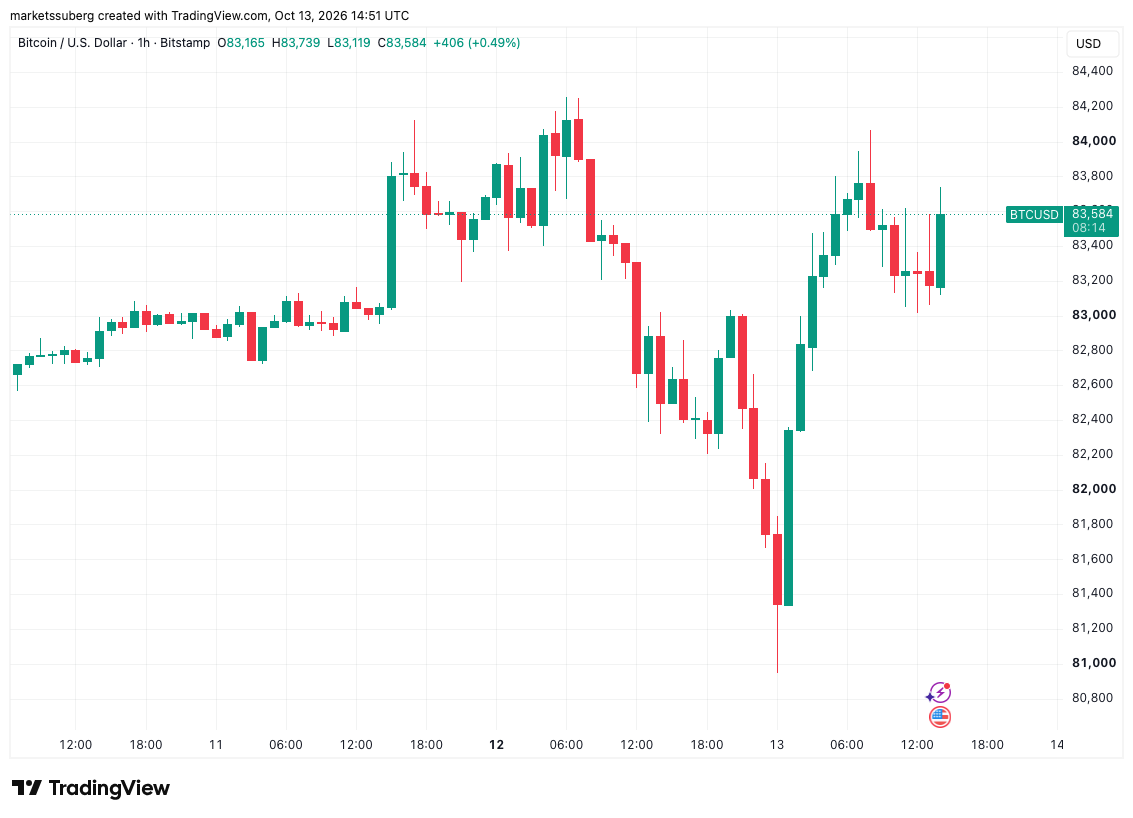
Bitcoin (BTC) continued its push toward the psychological $84,000 threshold at Tuesday’s Wall Street open, showing resilience as United States stock markets attempted to absorb and move past a sharp tech sector sell-off originating in South Korea.
Data from TradingView captured BTC/USD returning to approximately $83,800 at the official start of the domestic trading session, successfully preserving a substantial portion of the upside momentum it had accumulated overnight. Despite facing multiple macroeconomic headwinds, the leading cryptocurrency maintained its trading range while market participants closely monitored global cross-asset volatility, shifting bond yields, and an advancing US dollar.

The resilience in the crypto market unfolded against a backdrop of broader financial market turbulence. Equities opened lower following a wave of severe selling across Asian markets, triggered primarily by South Korea’s KOSPI Composite Index suffering a steep 7.4% decline over a two-day period. Semiconductor shares bore the brunt of the downward pressure, driven by mounting anxieties regarding aggressive artificial intelligence infrastructure expenditures, questions surrounding future profitability, and intensifying competition from domestic and international manufacturing rivals in China.
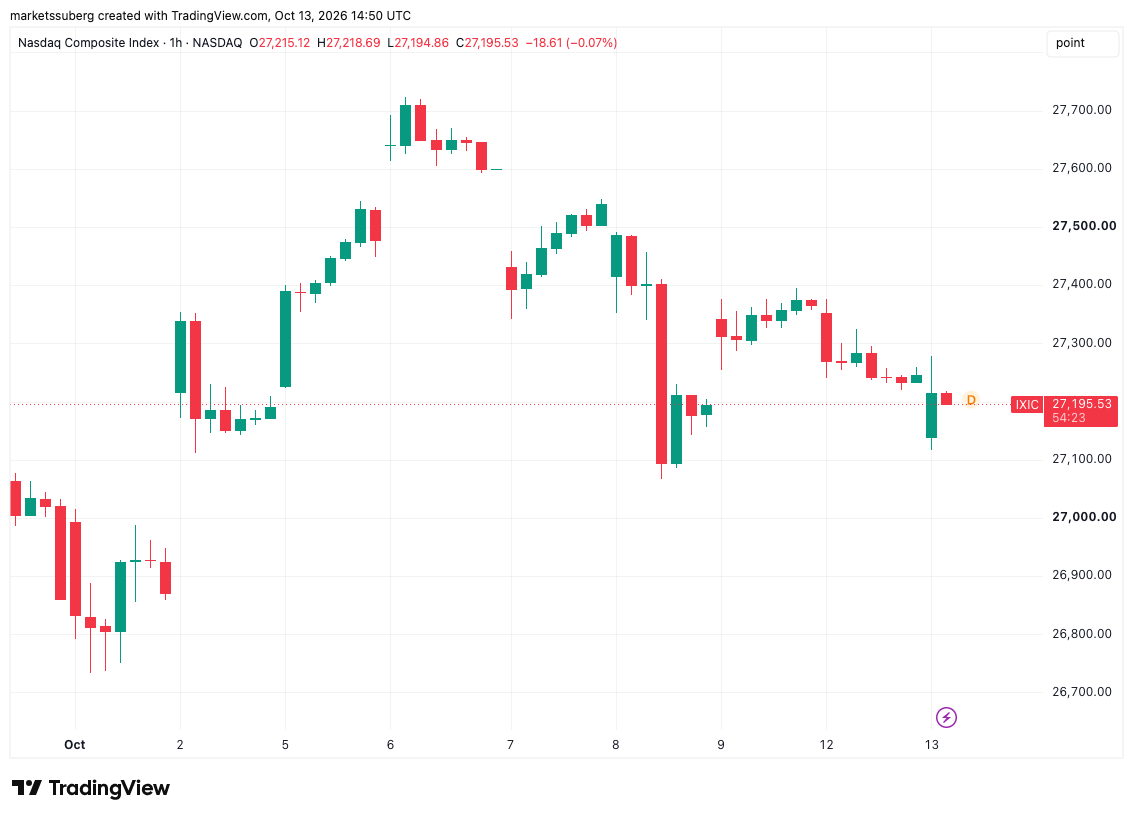
Despite the heavy losses registered in Asia, major US stock indexes demonstrated notable intraday recovery attempts. Both the benchmark S&P 500 index and the technology-focused Nasdaq Composite index staged early recovery rallies that briefly pushed them into positive territory during the morning session. However, persistent underlying pressures kept both gauges slightly in the red, trading down by less than 0.5% at the time of publication.
Financial strategists pointed to broader structural shifts in fixed-income markets as a primary driver of the unease rippling through global exchanges. Damien Boey, a portfolio strategist at Wilson Asset Management in Sydney, Australia, highlighted the cascading effects of unstable debt markets in remarks to Reuters.
The most important development has been not just bond yields going up, but the volatility for bonds, Boey explained, noting that this instability is starting to work its way out through asset pricing across the board. Describing the current environment as a very uncomfortable situation on many fronts, Boey added that market participants are beginning to reassess previous assumptions, suggesting that perhaps artificial intelligence capital expenditures might just come off the boil a little bit, and maybe a few players are casualties in that process.
Within the digital asset ecosystem, Bitcoin’s immediate price action remained constrained by heavy exchange order-book liquidity. According to metric and analytics data provided by CoinGlass, dense clusters of liquidity continued to function as formidable overhead resistance just above the $84,000 level, creating a temporary ceiling that bulls must clear to unlock further upside potential.
Dollar Strength and Institutional Risk Aversion Weigh on Crypto
Bitcoin bulls are currently navigating a complex double macroeconomic headwind this month, according to market commentary published on Tuesday by Darkfost, a contributing analyst at onchain research platform CryptoQuant.
As global bond yields hover near their highest levels observed in nearly a quarter of a century, the purchasing power and overall valuation of the US dollar have climbed significantly. The US dollar index (DXY), a widely followed metric that measures the greenback against a basket of currencies belonging to major US trading partners, has surged by 5.5% since September 9. On Tuesday, the index touched 102.57, marking its loftiest valuation since April 2025.
Although the historical inverse correlation between the DXY and Bitcoin has shown signs of weakening throughout the year, analysts note that the broader crypto market is currently suffering from a severe contraction in macro risk appetite.
When taken together, these macroeconomic factors significantly constrain the liquidity available to global financial markets and erode institutional confidence, leaving major corporate and professional investors deeply reluctant to take on additional risk exposure, the analyst wrote in the accompanying blog commentary.

The current environment remains distinctly unfavorable for Bitcoin, which continues to be perceived by traditional financial institutions as a high-beta, highly risky asset class. Meanwhile, more mature traditional equity sectors, such as the tech-heavy Nasdaq index and the broader S&P 500, continue to absorb what little speculative and institutional liquidity remains available in the wider financial system.