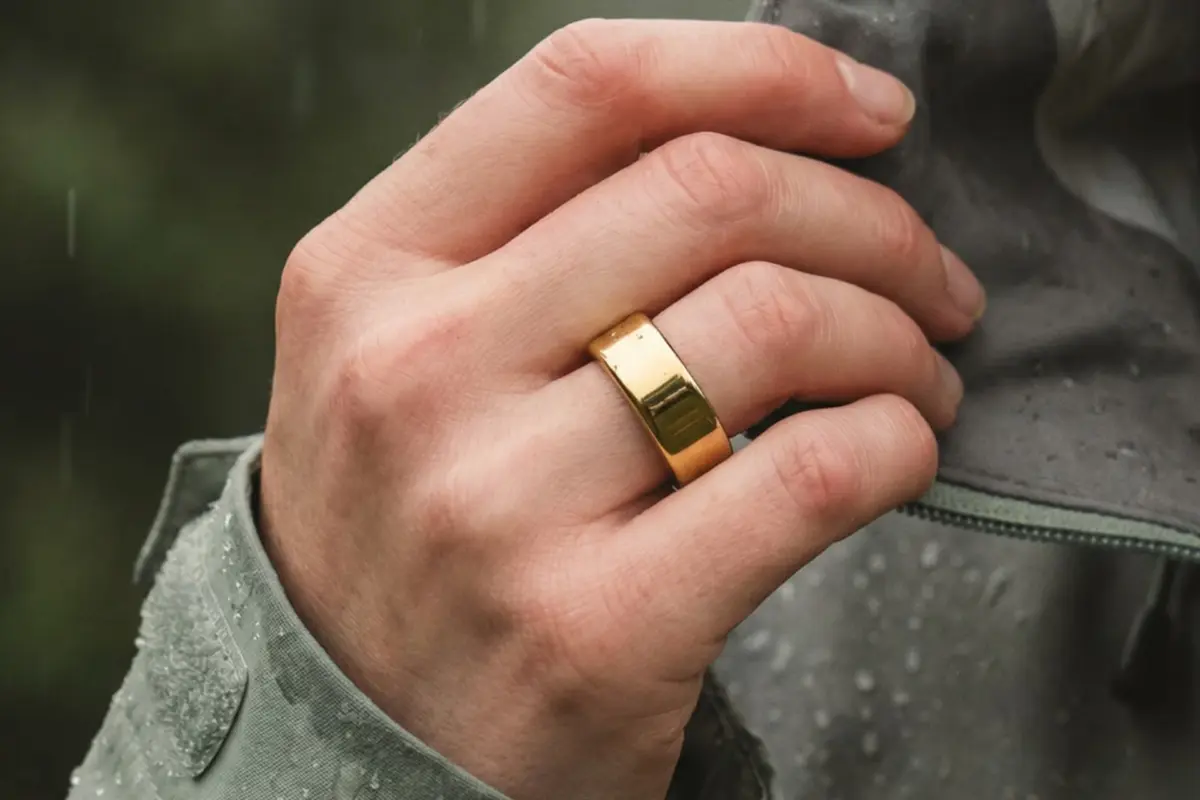
Smart ring pioneer Oura has intensified its legal battle against its Bengaluru-based rival Ultrahuman, filing a fresh federal lawsuit aimed at blocking U.S. sales of the startup’s newly redesigned Ring Pro. The legal maneuver comes just months after the targeted redesign successfully paved the way for Ultrahuman’s triumphant return to the lucrative American market following a damaging import ban. This latest confrontation represents only the newest skirmish in an increasingly aggressive campaign waged by Oura to protect its market dominance against a growing roster of competitors entering the burgeoning wearable technology sector.
In the formal complaint lodged in a federal court located in Texas, Oura alleges that Ultrahuman’s flagship Ring Pro infringes upon two distinct patents held by the Finnish wearable tech company. These disputed patents specifically cover the intricate design elements of the smart ring as well as critical internal hardware components, including the device’s specialized battery architecture and sensitive array of health-monitoring sensors. To remedy the alleged infringement, Oura is actively pursuing significant monetary damages alongside a permanent injunction that would effectively halt the importation, marketing, and commercial sale of the Ring Pro throughout the United States.
The legal jeopardy surrounding the Ring Pro follows a tumultuous period of regulatory hurdles and corporate maneuvering. Ultrahuman officially launched the redesigned Ring Pro in February, following a series of engineering adjustments intended to bypass previous legal roadblocks. By March, the device had secured a favorable ruling from U.S. Customs and Border Protection, a crucial regulatory milestone that cleared the path for the startup to resume commercial operations in the U.S. market. That favorable decision arrived on the heels of a devastating import ban targeting Ultrahuman’s older Ring Air model. That previous restriction took effect after Oura successfully secured a sweeping patent infringement ruling from the U.S. International Trade Commission in August of the prior year.
Reflecting on the ongoing corporate rivalry, a spokesperson for Oura issued a strongly worded statement to the media, asserting that Ultrahuman’s business practices demonstrate a consistent pattern of replicating proprietary advancements. According to the company representative, Ultrahuman introduced a modified ring design while failing to rectify the underlying infringement of Oura’s intellectual property, choosing instead to capitalize on pioneering innovations and the established market leadership that Oura has spent years cultivating.
Oura’s legal strategy hinges on the distinction between the regulatory clearances previously granted and the specific intellectual property invoked in the current litigation. The company maintains that the recent Customs ruling was strictly confined to the single patent involved in the earlier dispute, leaving the two new patents cited in the Texas lawsuit unaddressed. To safeguard its proprietary technology, Oura stated that it was compelled to initiate this latest complaint of patent infringement.
Adding a compelling layer to the timeline of the litigation, one of the asserted patents—designated as patent number 12,769,363—is remarkably fresh. The United States Patent and Trademark Office formally issued the intellectual property rights to Oura on October 20, merely two days before the company filed its federal lawsuit. This newly minted patent broadly encompasses sophisticated smart-ring design configurations that integrate tightly packed internal components, such as a curved battery tailored for circular enclosures, advanced circuit boards, tiny internal magnets, and multi-functional sensors.
Furthermore, Oura has strategically expanded the scope of its lawsuit by naming Texas-based electronics manufacturer SVTronics as a co-defendant. According to the court filings, SVTronics manufactures the disputed Ring Pro at a specialized industrial facility situated in Plano, Texas, operating directly under the direction and control of Ultrahuman. The legal complaint explicitly accuses both Ultrahuman and SVTronics of orchestrating the manufacture, importation, and distribution of an infringing device within U.S. borders.
In response to the legal escalation, Ultrahuman co-founder and chief executive officer Mohit Kumar expressed absolute confidence in the integrity of the Ring Pro design and vowed to mount a robust defense against the fresh allegations. In a statement addressing the development, Kumar noted that Oura has elected to pivot toward entirely different patents, including one issued just forty-eight hours prior to the initiation of the lawsuit. Kumar emphasized that the startup intends to navigate these claims through the appropriate legal channels, assuring customers that no existing court orders impact the Ring Pro and that the device remains fully available for purchase across the United States.
The friction between Oura and Ultrahuman dates back to 2023, when Oura initially initiated legal action against the Indian startup over the Ring Air, a wearable device that had previously propelled Ultrahuman into the consciousness of American consumers. That initial tension escalated into the formal U.S. International Trade Commission case in 2024, culminating in the structural import ban that briefly severed Ultrahuman’s access to the American consumer base.
However, Ultrahuman is far from the only competitor caught in Oura’s legal crosshairs. Oura has systematically pursued intellectual property claims against a wide variety of rival smart-ring manufacturers, including major consumer electronics players like Samsung, as well as specialized competitors such as RingConn, Circular, and Zepp Health. While some of these high-stakes legal battles have resulted in protracted litigation, others have found resolution through formal licensing agreements. Notably, competitors like RingConn and Circular ultimately chose to settle their disputes by agreeing to pay ongoing royalties to Oura, thereby securing the legal right to continue distributing their respective products within the United States.
This wave of intellectual property consolidation and litigation unfolds against the backdrop of a rapidly expanding global smart-ring market. Market intelligence and research firm IDC projects that worldwide shipments of smart rings will experience a robust year-over-year increase of 12.8%, bringing total shipments to approximately 4.9 million units, with projections scaling upward to an estimated 6.3 million units by 2030. While Oura undeniably commands a foundational leadership position within this evolving product category, ambitious competitors like Ultrahuman continue aggressively carving out their own market share.
The timing of the lawsuit also coincides with broader corporate developments at Oura. Just weeks prior to the legal filing, Oura made the strategic decision to shelve its highly anticipated $2.2 billion initial public offering, pointing directly to lingering economic uncertainty within the broader financial markets. Despite holding off on its public market debut, Oura has maintained an aggressive product development cycle, rolling out sophisticated software updates and introducing new fitness metrics designed to help users comprehensively track how daily physical exertion impacts long-term cardiovascular health.
Concurrently, Ultrahuman has been aggressively fortifying its financial and technological foundation. In September, the startup successfully closed a $70 million funding round backed by prominent institutional investors, including Qualcomm Ventures and Labcorp, which propelled the company’s valuation to approximately $365 million. As part of its forward-looking strategy, Ultrahuman has been actively collaborating with Qualcomm on the development of next-generation smart-ring architectures capable of executing complex software tasks directly on the edge device itself. Through these technological leaps, the startup aims to transcend traditional health and fitness tracking parameters, eventually expanding its footprint into advanced software ecosystems, artificial intelligence interactions, and immersive gaming applications.