Reliable Robotics, an innovative aerospace startup working for nearly a decade to commercialize cutting-edge autonomous flying technology capable of being installed on existing aircraft, has secured a significant financial boost to extend its operational runway. Based in Mountain View, California, the company has announced a fresh $115 million in funding as it presses forward with its ultimate goal: obtaining official certification for its autonomous flight system from the Federal Aviation Administration (FAA). According to co-founder and CEO Robert Rose, this regulatory milestone represents a critical juncture that the startup is steadily inching toward day by day.
The latest financing represents a substantial extension of the company’s Series D funding round. It is comprised of $90 million in equity financing led by Nimble Partners, alongside $25 million in debt provided by Silicon Valley Bank. With this new infusion of capital, the total value of the Series D round has climbed to $275 million, successfully pushing the startup’s overall private valuation beyond the coveted $1-billion mark. Beyond Nimble Partners and Silicon Valley Bank, the growing roster of backers supporting Reliable Robotics includes Gideon Strategic Partners, RockCreek, Geek Ventures, Gold Hill Capital, Sparkwave Capital, and several other strategic investors. To date, the company has successfully raised an impressive total of $380 million in capital since its inception.
"We continue to make steady progress and deliver evidence to the FAA and every day, we inch closer and closer," said Rose, whose impressive engineering background includes serving as the former director of flight software at SpaceX, alongside notable stints at technology giants Tesla and Google. The company’s deep roots in elite aerospace engineering extend directly to its leadership team. Reliable co-founder and CTO Juerg Frefel is also a seasoned SpaceX veteran who spent nearly a decade working as an engineer at Elon Musk’s private space exploration enterprise.
Within aviation, widely recognized as one of the most strictly regulated and heavily scrutinized industries in the entire world, making measurable progress toward the certification of brand-new technology is an achievement in its own right. Reliable Robotics is systematically pursuing FAA certification across four distinct fronts, each of which is intricately linked to its overarching mission of enabling safe, reliable autonomous flight.
The company’s very first commercial product, known as continuous autopilot engagement, is designed to handle routine yet critical phases of a flight, including engine startup, taxiing, takeoff, and landing. Under this system, the pilot remains physically inside the aircraft, maintaining a hands-on presence while interacting with the sophisticated autonomous flight system through a streamlined touchscreen interface. Rose anticipates that the startup will successfully receive official FAA certification for this foundational first system within the next 18 to 24 months.
Looking further ahead, the second major certification milestone involves removing the human pilot entirely from the cockpit, transitioning their role to a remote ground-control station. Rose estimates that this ambitious phase of the company’s roadmap is at least three years away from achieving regulatory approval.
In parallel with its autopilot software, Reliable Robotics is actively working toward securing certification for a proprietary collision-avoidance radar system. The startup was forced to develop this technology entirely in-house after struggling to attract legacy aerospace suppliers willing to take on the complex project. Most conventional aviation radar systems rely on traditional antennas that physically move back and forth to scan the surrounding airspace. In contrast, Reliable has engineered an advanced solid-state radar that features zero moving parts. According to Rose, this innovative system is capable of scanning the sky at a significantly longer range and at a much higher resolution than legacy alternatives. Furthermore, because it lacks mechanical moving parts, the hardware is inherently easier to maintain, more reliable over time, and notably less expensive to manufacture and operate.
"This is of great interest to operators these days, given the collisions that we’ve had recently in commercial aviation," Rose noted, highlighting that the solid-state radar system is versatile enough to function effectively on the ground as well, helping to prevent potentially hazardous collisions with other aircraft or critical airport infrastructure. Rose expects this proprietary solid-state radar to achieve full regulatory certification by the end of 2027.
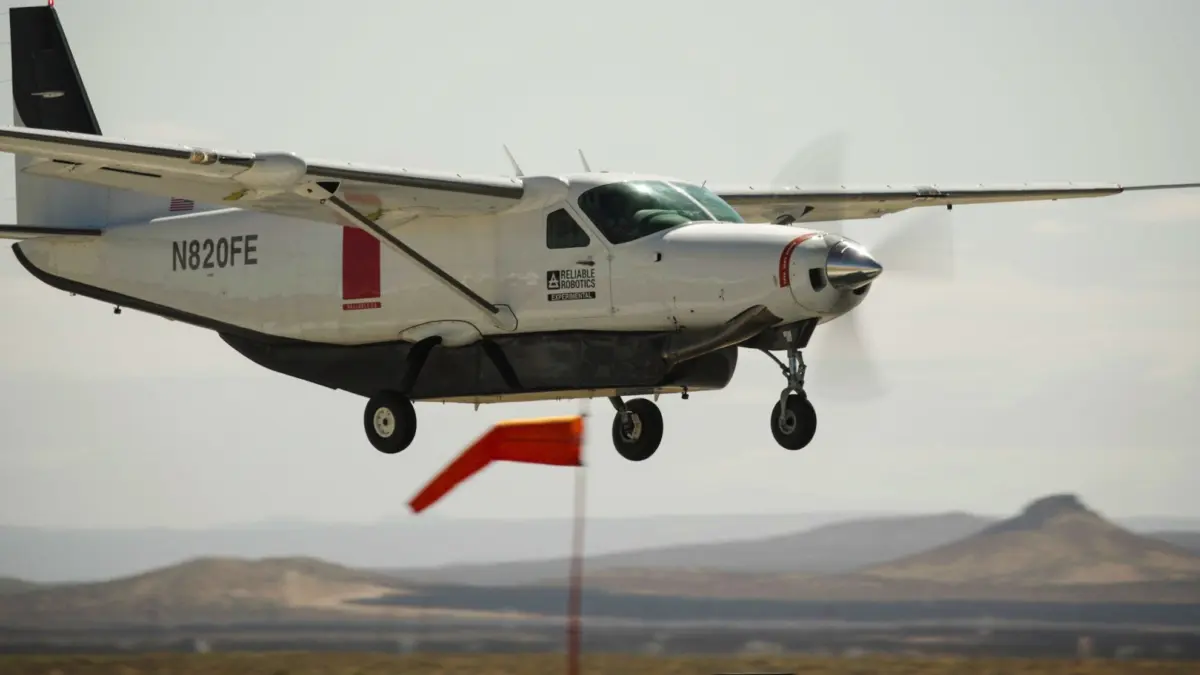
The final and perhaps most comprehensive certification effort centers on the company’s very own airline operations, appropriately named Reliable Airlines. Based in Albuquerque, New Mexico, Reliable Airlines is positioned to become the first commercial airline officially certified to utilize the startup’s autonomous flying technology in everyday operations. The airline currently utilizes a fleet of six Cessna Caravans—widely regarded as the dependable workhorses of the regional aviation industry—to fly commercial cargo routes six days a week. While the FAA certifies individual aviation equipment and technology under specific airworthiness guidelines, the federal agency also requires airline operations to be certified under an entirely separate, rigorous set of regulatory frameworks.
While acknowledging that the federal certification process is inherently lengthy and demanding, Nimble Partners founder John Burbank emphasized that the long-term benefits of the technology will be broad, profound, and transformative for global transportation.
"It’s a much bigger effort and much bigger opportunity than to just build one plane," Burbank said, pointing out that Reliable Robotics is deliberately engineering a flexible, scalable system that can eventually be adopted by virtually any airframe on the market. "They had a really big vision nine years ago, and saw this as something needed and essential. Once they get the first one approved, then everyone will realize this is going to be the path for the industry, just as we’re seeing the path for the auto industry being autonomous."