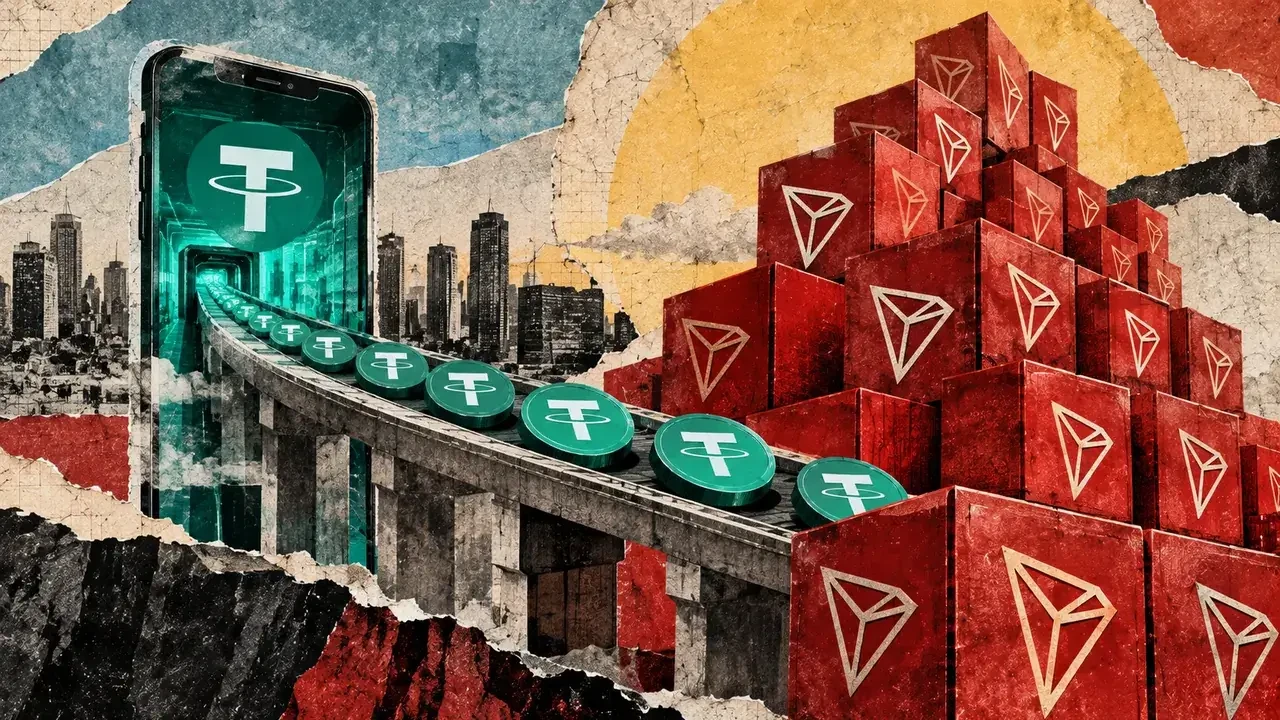
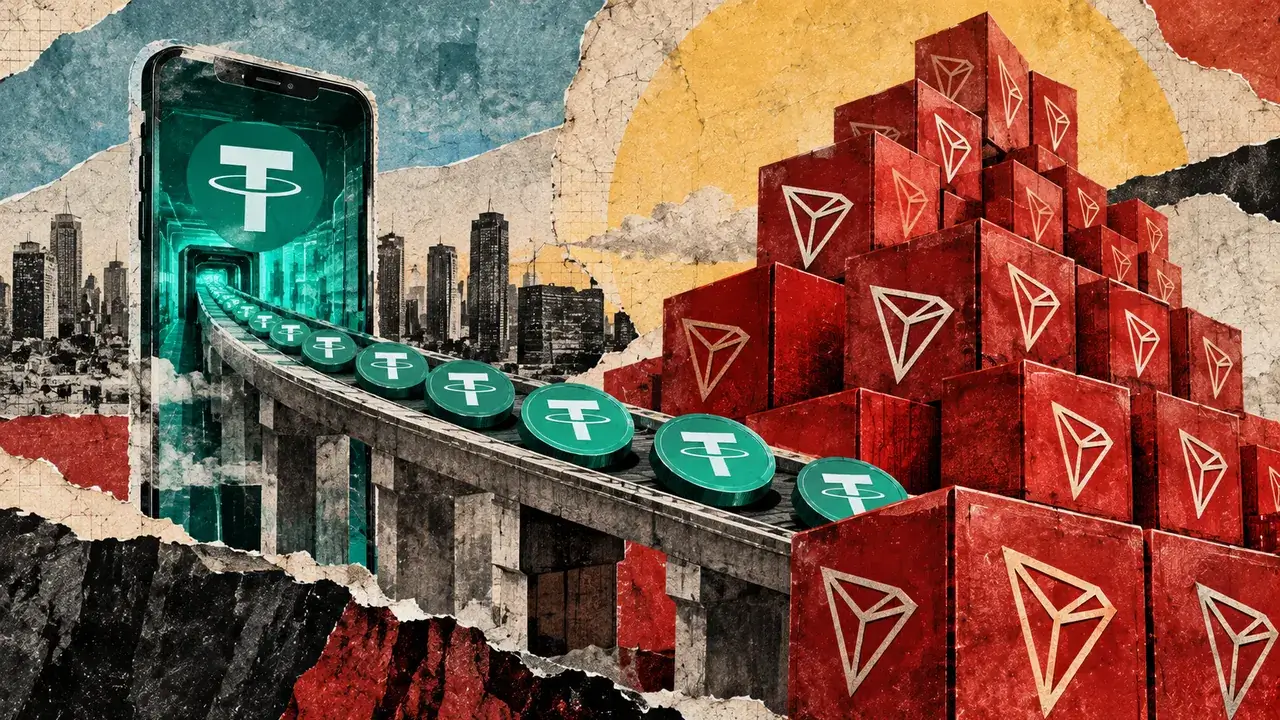
TRON’s robust stablecoin settlement ecosystem experienced significant growth throughout the third quarter of 2026, even as the network’s native TRX token saw its circulating supply expand on every single day from July 1 through October 16. According to recent data and reporting, the high-throughput blockchain added 125.8 million TRX to its total supply during Q3, followed by an additional 22.9 million tokens over the first 16 days of October, even after accounting for all protocol-level token burns.
The developments highlight a fascinating dynamic in modern blockchain economics: TRON is currently capable of handling trillions of dollars in value transfers without necessarily destroying more of its native asset than it creates through block rewards and network consensus incentives. Data published by TRON DAO Research indicated that the network processed an impressive $2.2126 trillion in stablecoin settlements during the third quarter alone, marking a 5.1% increase compared to the previous quarter. Despite this massive surge in financial activity, the circulating supply of TRX continued its upward trajectory into the autumn months.
TRON’s underlying architectural design allows these seemingly opposing outcomes to coexist harmoniously. The network relies on reusable resources to cover routine transaction activity, while continuous block-production and voter incentive mechanisms automatically mint fresh TRX. The measured supply shortfalls observed through mid-October illustrate the precise distance the network maintains from a state of total supply equilibrium, while also shedding light on how closing that gap would ultimately impact both resource payers and reward recipients across the ecosystem.
Data compiled from TRONSCAN records for July, August, and September provide a comprehensive look at the third quarter, encompassing 92 consecutive daily observations. Across every single date within this extensive sample, token issuance outpaced total burns. This trend did not falter as the calendar turned; records covering October 1 through October 16 added another 16 consecutive positive issuance readings, bringing the uninterrupted streak to 108 days.
During the 92-day span of the third quarter, the network issued approximately 360.22 million TRX while burning roughly 234.45 million tokens, resulting in a net issuance of 125.76 million TRX. This steady expansion continued into the subsequent month. Over the first 16 days of October, TRON issued 62.65 million TRX against 39.78 million burned, yielding a net addition of 22.87 million tokens. Comprehensive tracking by CryptoSlate across this window highlights a cumulative net addition of approximately 148.6 million TRX. Despite the high-volume activity, the overall scale of this expansion remained modest, with Q3’s net addition amounting to roughly 0.133% of an opening circulating supply of approximately 94.85 billion TRX.
Meanwhile, stablecoin liquidity metrics followed a distinct path. Combined balances of major dollar-pegged assets such as USDT and USDD on the TRON network reached $93.88 billion, representing a 5.5% increase from the second quarter. Because these stablecoins and the native TRX token serve fundamentally different economic functions within the network architecture, growth in stablecoin supply does not automatically dictate the direction or behavior of the native token’s supply dynamics.
Furthermore, financial analysts note that settlement measures the aggregate value transferred across the network. The 5.1% quarterly increase in total settlement volume differs slightly from the report’s noted 3.9% increase in daily average settlement, a discrepancy primarily driven by calendar math, as the third quarter contained 92 days compared to the second quarter’s 91 days.
How Reusable Resources and Rewards Affect TRX Supply
To understand how TRON manages these concurrent trends, one must examine the protocol’s resource rules, which meter transaction size and computational complexity. The network utilizes Bandwidth to cover the raw data bytes recorded on the blockchain, while Energy is dedicated to smart-contract execution. Crucially, the underlying dollar value of stablecoins moving through any given transaction does not, by itself, dictate the computational or byte cost of that transfer.
Users can acquire the necessary resources by committing TRX through staking or by receiving delegated resources from another account. TRON’s technical documentation specifies that both Bandwidth and Energy recover dynamically over a rolling 24-hour window. Resources consumed during a transaction fully recover after 24 hours without requiring further token expenditure, though additional network activity continuously updates the recovery schedule.
Significantly, the routine utilization of these resources does not destroy the underlying staked TRX. The stake merely supports continuous access, which can be deployed repeatedly as network capacity naturally replenishes. Delegation further enhances flexibility by allowing a receiving account to utilize resources supplied entirely through another participant’s stake.
Fallback rules, however, differ depending on the specific resource type. For standard Bandwidth charges, the network first attempts to draw from staked or delegated quotas, followed by free daily quotas provided to accounts. Each quota must cover the transaction’s entire byte cost. If neither quota is sufficient, the protocol burns TRX to cover the full Bandwidth charge.
Energy operates under a similar logic but can partially cover a caller’s smart-contract execution costs, with TRX burned for any remaining balance up to the designated fee limit. Consequently, resource provisioning plays just as critical a role as raw network activity when evaluating overall token burns.
On the issuance side, TRON distributes newly minted tokens to compensate block producers and voting participants. Documented consensus rewards currently stand at 8 TRX per block for production and 128 TRX per block for voter rewards, though network governance retains the authority to modify these parameters over time.
Distribution mechanics are equally important to the broader economic picture. Under TRON’s staking and voting reward model, voters receive a proportional share of rewards after the chosen super representative retains its specified brokerage cut. Simply holding unstaked TRX in a private wallet does not automatically confer the same reward claim.
Consequently, a resource user, a staking participant, and a passive token holder experience the network’s underlying economics in fundamentally different ways. One utilizes transaction capacity for commercial or personal transfers, another supplies stake to secure the network and claim voting rewards, while a passive token holder sees no automatic increase in their balance simply because the protocol issues more TRX to maintain consensus operations.
October’s Gap to Supply Balance
Looking closely at the data from the first half of October, token burns offset approximately 63.5% of new issuance. During this 16-day window, average daily issuance hovered around 3.92 million TRX, compared to an average daily burn of 2.49 million TRX, leaving a persistent daily average gap of roughly 1.43 million TRX.
If issuance had been held strictly at the observed total of 62.65 million TRX, aggregate burns would have needed to climb from 39.78 million TRX to match issuance entirely. Achieving this balance would have required an additional 22.87 million TRX to be destroyed, representing a 57.5% increase over the observed burn rate. Alternatively, keeping burns fixed at the observed level would have required issuance to fall by the same 22.87 million TRX, or roughly 36.5% of the total issuance recorded during the period. These differing percentages simply reflect the distinct starting denominators used in the calculations.
These figures illustrate separate arithmetic comparisons for the same 16-day snapshot. Because aggregate burns depend heavily on a combination of resource utilization rates and dynamic fee charging, a 57.5% increase in total token destruction does not imply an equivalent 57.5% increase in the fee charged for any single individual transfer.
At a theoretical supply balance, new tokens could continue to be minted and subsequently destroyed in equal amounts, resulting in a flat circulating supply. True deflation, by contrast, would require aggregate burns to consistently exceed total issuance over a measured timeframe.
If issuance and external conditions were held constant, closing the supply gap entirely through heightened burn activity would necessitate significantly more TRX being destroyed through resource payments or auxiliary burn mechanisms. That financial burden would inevitably fall upon the accounts funding those specific network charges. Conversely, closing the gap through reduced issuance would shrink the aggregate newly minted reward pool, directly altering individual allocations based on existing reward rules and brokerage agreements.
For token holders whose individual balances remain static, positive net issuance marginally increases the total supply against which their holdings are measured. The modest 0.133% supply expansion witnessed throughout the third quarter illustrates the precise scale of this macroeconomic effect. Meanwhile, active reward recipients continue to add tokens to their balances, and staked resources provide ongoing utility by granting recurring access to scalable network capacity.