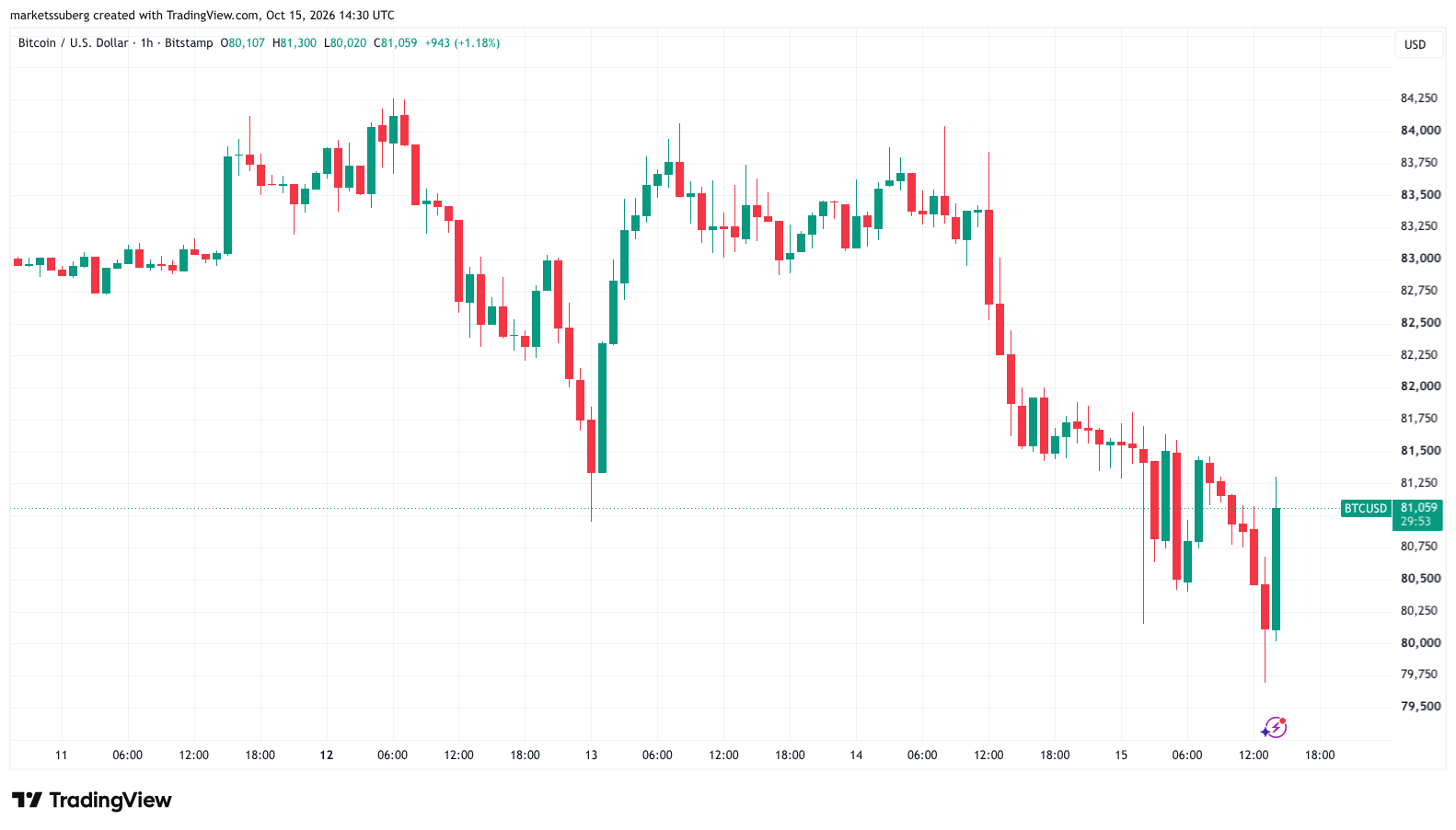
Bitcoin (BTC) retreated below the $80,000 threshold on Thursday, pressured by hotter-than-expected US macroeconomic data and broader risk-off sentiment bleeding into global financial markets. The leading cryptocurrency experienced a volatile trading session following the release of the latest US Producer Price Index (PPI) figures, which significantly beat market expectations and added fresh economic headwinds to risk assets.
Data from TradingView indicated that the BTC/USD trading pair slipped to its lowest level since September 18, declining as much as 1.8% over the course of the day before staging a modest recovery to trade around the $81,000 mark. The sharp movement underscored how sensitive the digital asset market remains to incoming macroeconomic indicators, particularly those concerning inflation and Federal Reserve monetary policy.

Biggest PPI Increase Since March 2022 Adds to Bitcoin Headwinds
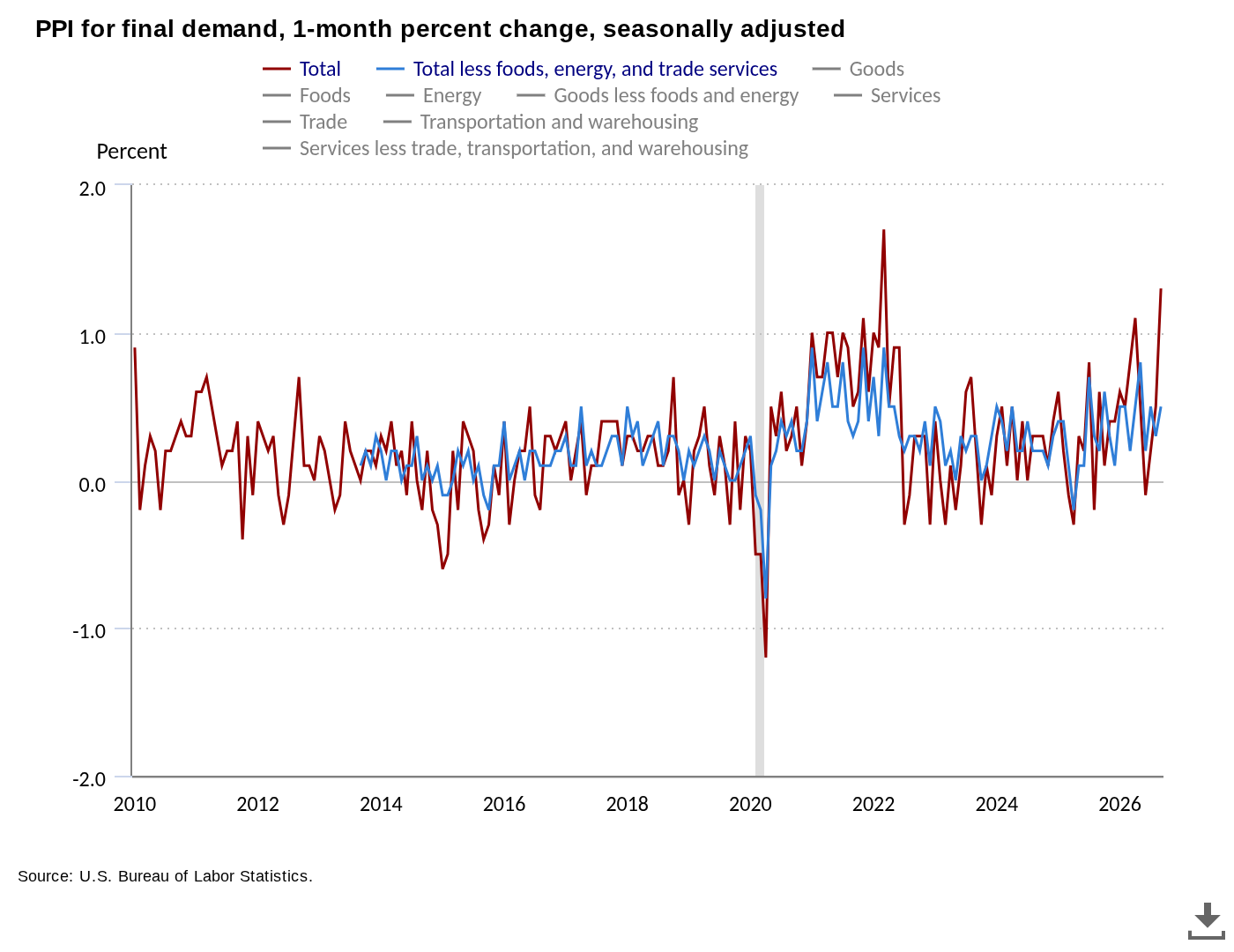
According to data released by the Bureau of Labor Statistics (BLS), the September Producer Price Index came in at 6.3%, sitting a full 100 basis points above the anticipated level. Meanwhile, the core PPI—which strips out volatile food and energy components—rose to 5%, coming in higher than the 4.4% consensus estimate expected by economists.
An official news release from the BLS confirmed the magnitude of the jump, noting that the September increase represents the largest monthly advance since the index rose 1.7% in March 2022. On an unadjusted basis, the final demand index climbed 6.3% for the 12 months ended in September, marking the largest 12-month increase since the index moved up 6.4% in December 2022.
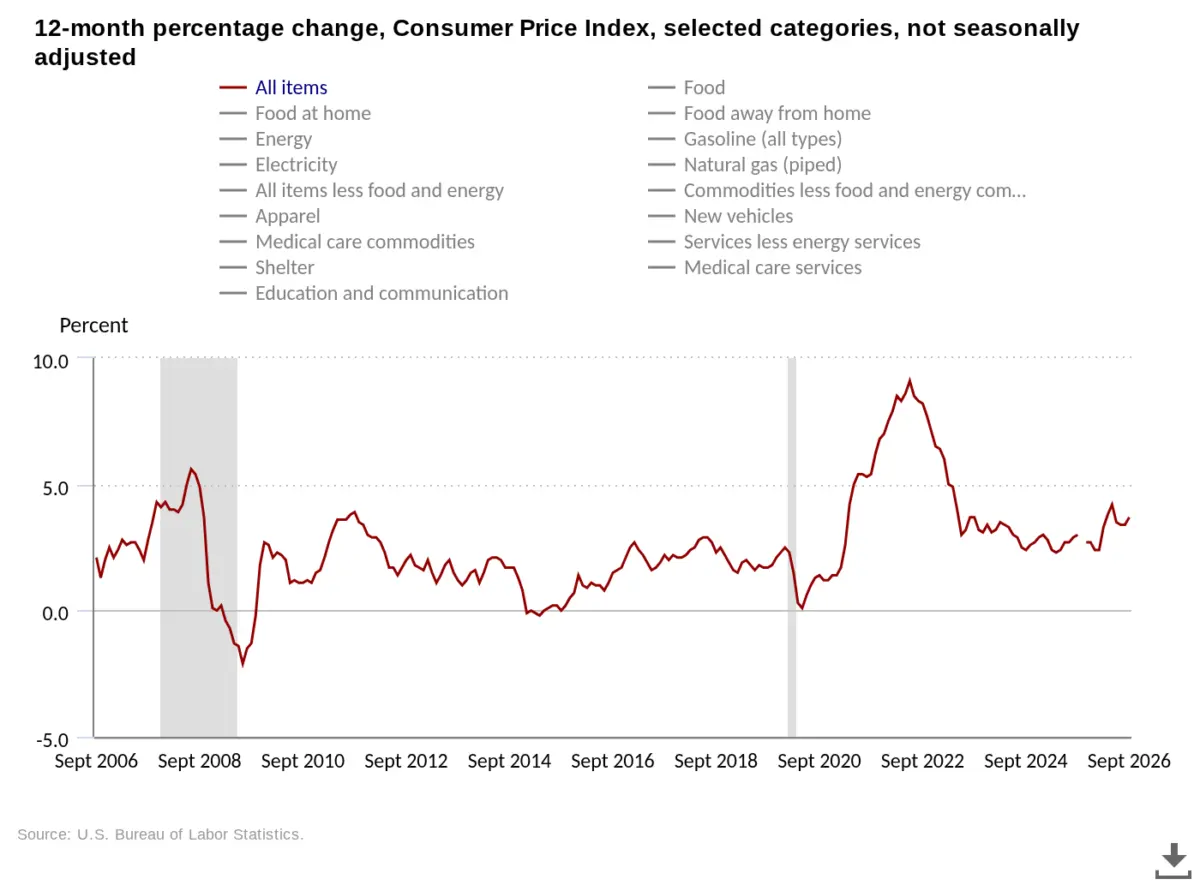
The troubling inflation print arrived on the heels of the Consumer Price Index (CPI) report, which also overshot forecasts, triggering an immediate wave of selling across crypto and traditional risk assets. Beyond domestic economic pressures, risk assets were already feeling the strain of an international tech sell-off centered in South Korea. On Thursday, the KOSPI Composite Index suffered a steep decline, plunging 7.5% and hitting its lowest close since April, which further soured global investor sentiment and contributed to liquidity withdrawal from high-beta markets like cryptocurrency.
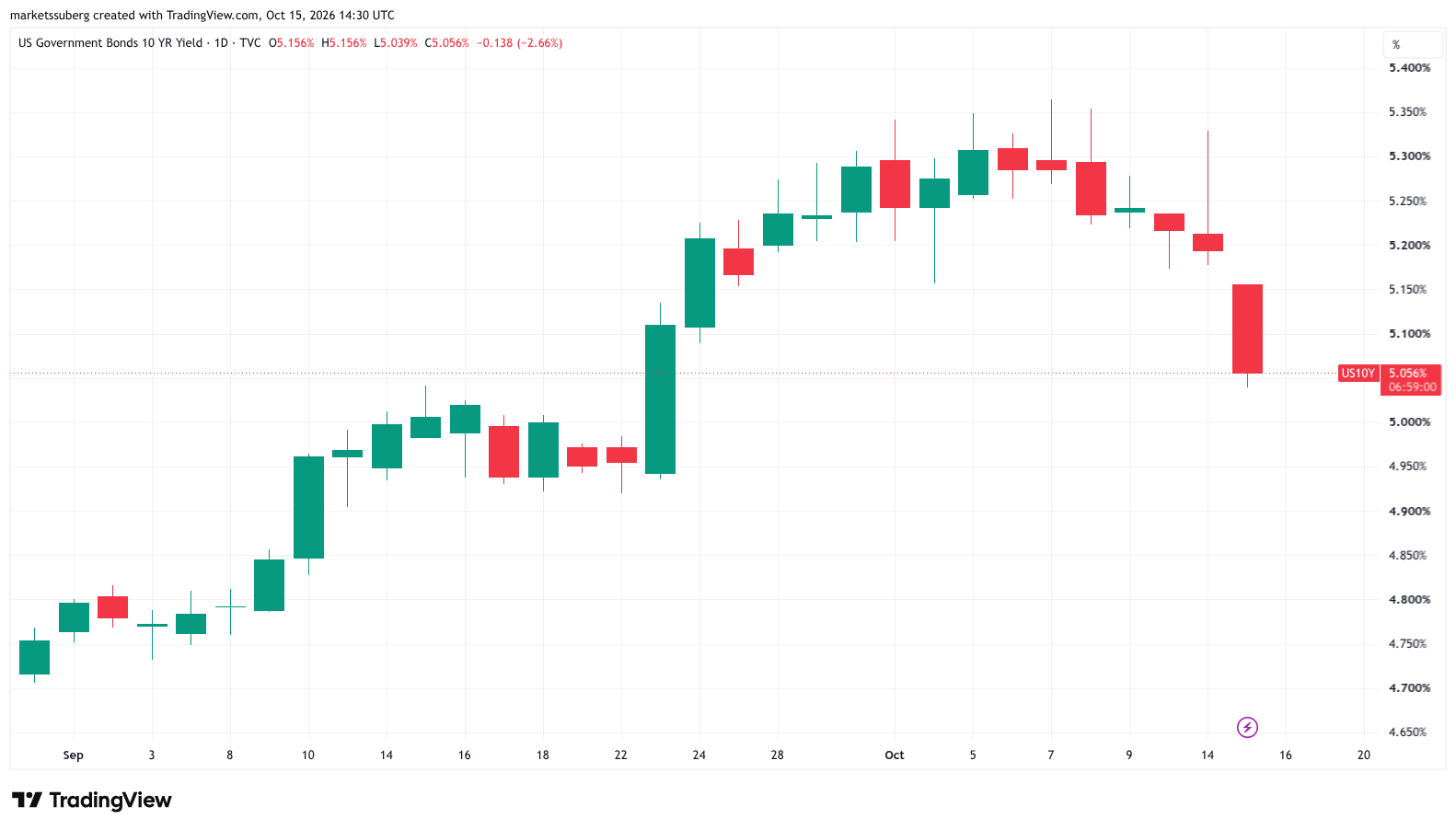
Renowned economist Mohamed El-Erian weighed in on the data, describing the PPI figures as "even more striking" than the preceding CPI results. However, El-Erian and several other market observers pointed out an unusual divergence in the financial markets: US bond yields were not rising in tandem with the higher-than-expected inflation numbers. At the time of writing, the benchmark US 10-year Treasury bond yield was down nearly 3%, hitting its lowest level since September 23.
Robin Brooks, a former chief FX strategist at Goldman Sachs, elaborated on this phenomenon by pointing to earlier findings suggesting that bond yields have "decoupled" from standard US macroeconomic data. According to Brooks, market priorities have shifted dramatically toward the federal government’s handling of the expanding budget deficit.
Comparing the 30-day correlation between upside economic data surprises and daily movements in the 10-year Treasury yield, Brooks revealed that the correlation had dropped from near 0.6 earlier in the year to just below zero by the end of August. In a recent commentary, Brooks explained that this decoupling indicates bond yields are reacting more intensely to the trajectory of the national deficit, forcing longer-term yields upward regardless of what incoming data surprises suggest about broader inflation trends.
Analysis Eyes "Early-Stage Bull Market" Support Retest
As Bitcoin navigated the turbulent macroeconomic landscape, its immediate price action brought several critical technical support trend lines back into sharp focus for traders and market analysts. Attention has centered heavily on the 21-week and 50-week exponential moving averages (EMAs), which currently sit at $76,144 and $78,459, respectively.
Well-known trader and analyst Rekt Capital noted that despite the recent downside pressure, BTC/USD could still retest both moving averages while successfully preserving its overarching bullish market structure. Historically, brief deviations below these foundational levels during volatile pullbacks are common characteristics of early-stage bull markets. However, Rekt Capital observed that while past cycles usually saw these temporary deviations occur after a bullish crossover of the two EMAs, Bitcoin is currently still positioned in a pre-crossover state.
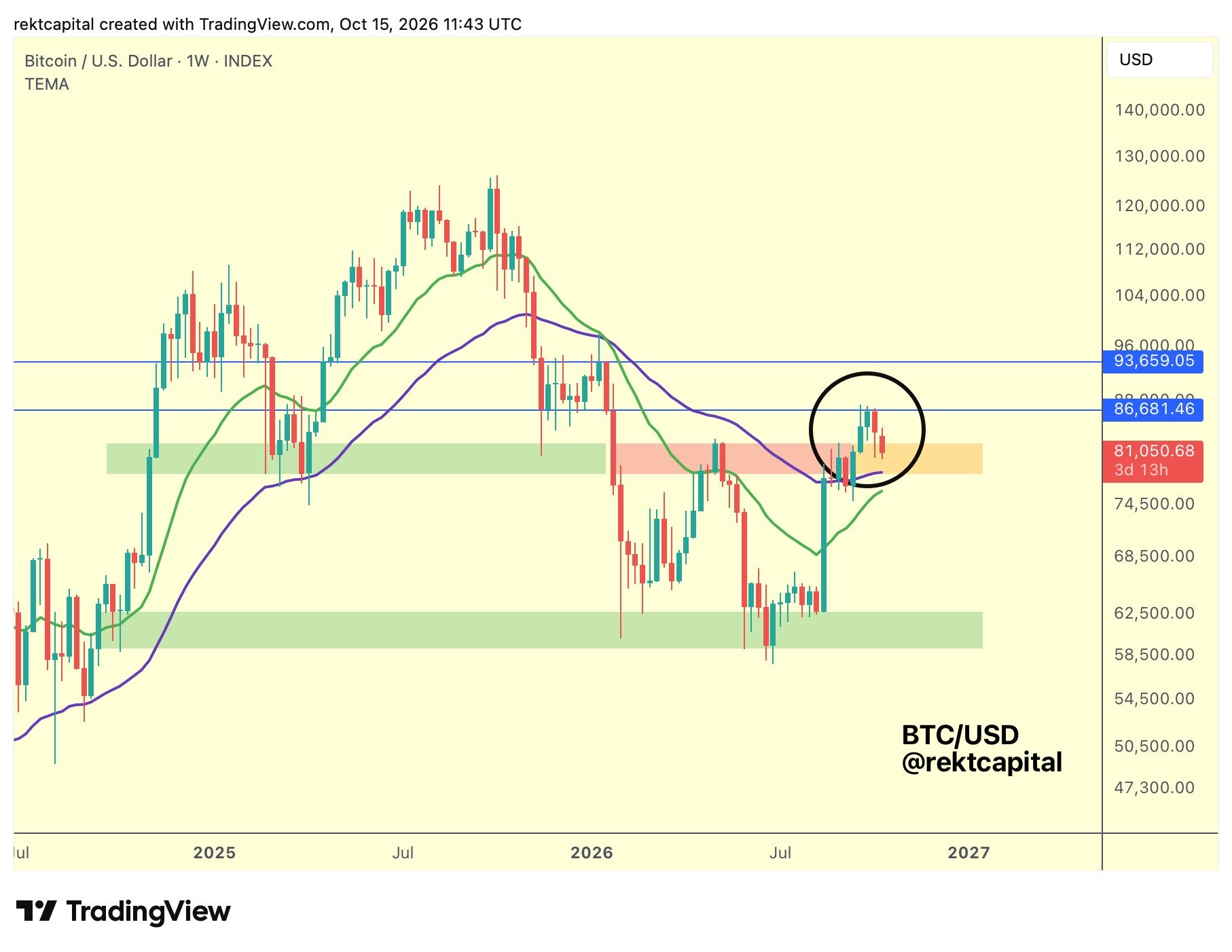
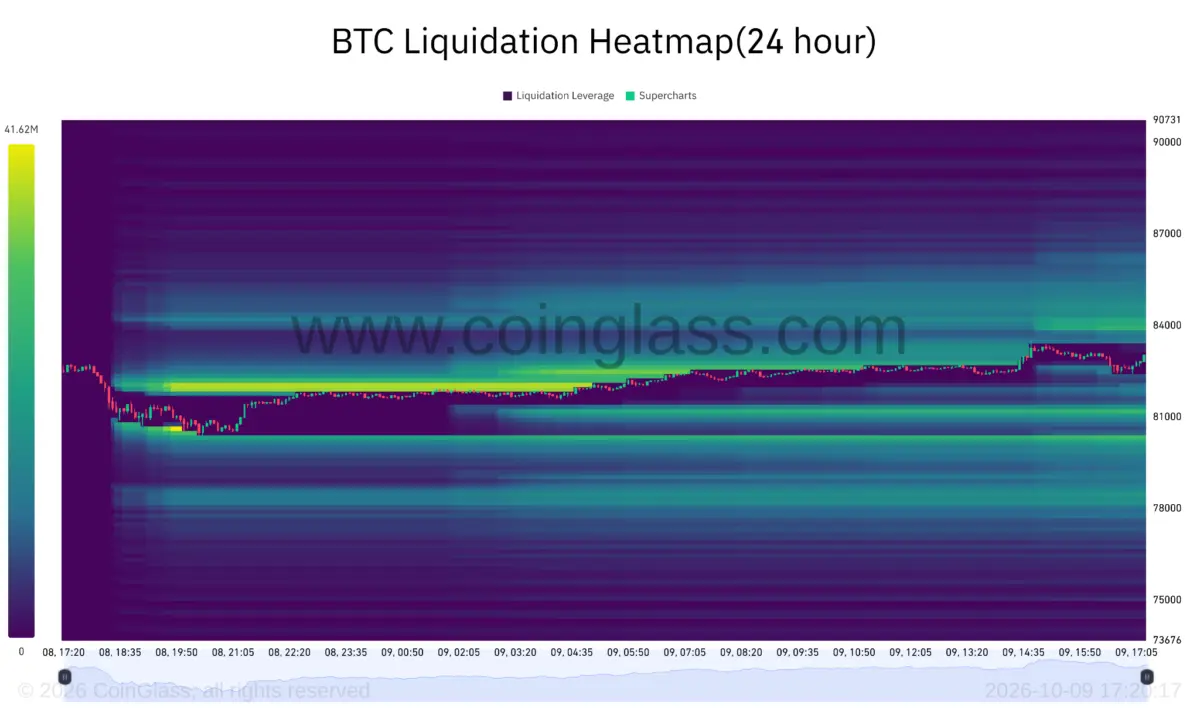
In the short term, Bitcoin has continued to trade below the crucial price zone between $82,500 and $82,800—an area that has acted as a key battleground and support zone of interest for market participants over recent weeks.
Adding a more cautious perspective, technical analyst Aksel Kibar suggested that Bitcoin’s latest weekly close around the $83,700 level lacked the underlying strength necessary to validate a definitive breakout. In an update shared with market observers, Kibar warned that a weekly close back inside the established trading range could open the door for a resumption of wide consolidation between $60,000 and $82,800. Furthermore, he noted that the $75,000 level could be utilized as the primary negation point for the broader rectangle bottom reversal pattern.