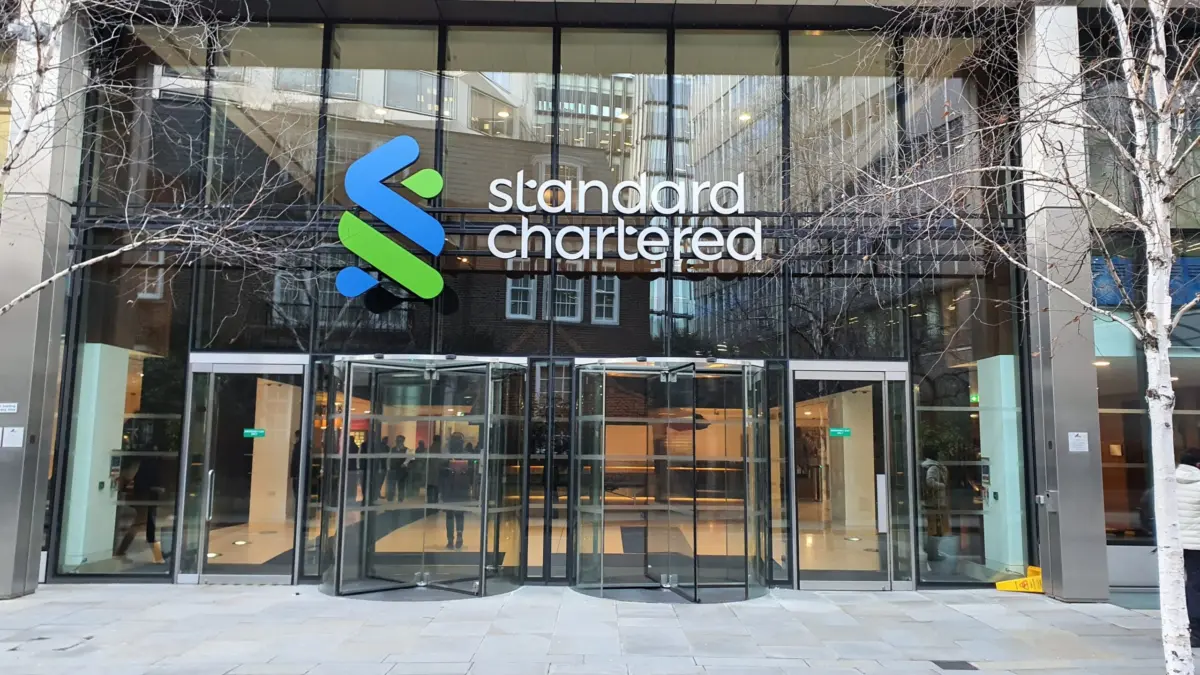
Global banking giant Standard Chartered has taken a significant step further into the digital asset ecosystem by offering institutional custody for Ripple’s USD-pegged stablecoin, RLUSD, on the XRP Ledger through its Dubai branch. This new service provides eligible corporate and institutional clients with a trusted, regulated banking environment to safely hold the dollar-pegged asset.
The banking institution, which manages nearly $450 billion in assets, is also laying the groundwork for a broader integration. Standard Chartered plans to collaborate with Ripple and LMAX Group—an institutional trading venue specializing in foreign exchange and digital assets—to enable clients to use RLUSD held within Standard Chartered custody as active collateral for trading on LMAX’s platform.
According to details shared by the bank, this specific facet of the arrangement is not yet live. It remains subject to final documentation, comprehensive testing, compliance with evolving regulatory requirements, and internal institutional approvals.
Should the initiative successfully clear these remaining hurdles, LMAX plans to allow mutual clients to back their active market trades using RLUSD safely secured at Standard Chartered, removing the operational requirement of transferring the stablecoin directly to the trading venue itself.
This separation of duties introduces a vital risk-management structure that is expected to strongly appeal to traditional financial institutions, investment funds, and corporate treasuries. Many institutional participants have historically wanted to leverage the speed and efficiency of stablecoins for trading purposes, but have hesitated due to the security risks associated with leaving digital assets directly on trading venues. By separating custody from execution—allowing a globally systemically important bank to securely hold the tokens while a specialized trading venue accepts their validated value as collateral—the framework addresses a major operational bottleneck in digital asset markets.
Industry observers have noted the strategic importance of this development. Joseph Goh, head of Asia-Pacific at Singapore-based crypto investment bank Areta, emphasized the changing landscape of financial infrastructure, stating that regulated custody connected to a global systemically important bank is rapidly becoming one of the most valuable pieces of architecture in the digital asset space.
Waqar Chaudry, Standard Chartered’s global head of digital assets, securities services, and transaction services, echoed this sentiment regarding institutional demand. Chaudry pointed out that institutional clients are eager to participate in digital asset markets, but they refuse to compromise on how their assets are safeguarded or how underlying counterparty risks are managed.
This latest service offering directly builds upon Ripple’s broader corporate strategy to position RLUSD as a primary settlement and collateral asset for institutional finance. As part of these expansion efforts, Ripple injected $150 million in financing into LMAX Group in January, designed specifically to accelerate the integration of the RLUSD stablecoin into the venue’s core institutional infrastructure.
The prospective LMAX link, once completed, would successfully grant RLUSD another vital entry point into the sophisticated collateral systems that underpin institutional trading operations, extending the token’s utility far beyond basic peer-to-peer payments or routine spot market settlements.
Standard Chartered’s move in Dubai is part of a broader, aggressive expansion of its digital asset custody operations across several key global financial centers. The bank has been rapidly scaling its capabilities to capture the growing institutional demand for tokenized financial instruments. Just recently, the bank outlined plans to offer institutional clients in Singapore dedicated custody services for selected cryptocurrencies, stablecoins, and tokenized real-world assets.
These initiatives follow Standard Chartered’s complete acquisition of Zodia Custody earlier this year, which consolidated the bank’s internal digital asset custody roadmap. Additionally, the bank demonstrated its leadership in the regulated stablecoin sector by becoming the first traditional banking institution to distribute one of Hong Kong’s official regulated stablecoins under the Anchorpoint banner back in August.
As regulatory frameworks continue to mature across major financial hubs like Dubai, Singapore, and Hong Kong, traditional financial institutions are increasingly positioning themselves to bridge the gap between traditional banking infrastructure and decentralized financial technology.