Published: Nov 2, 2026
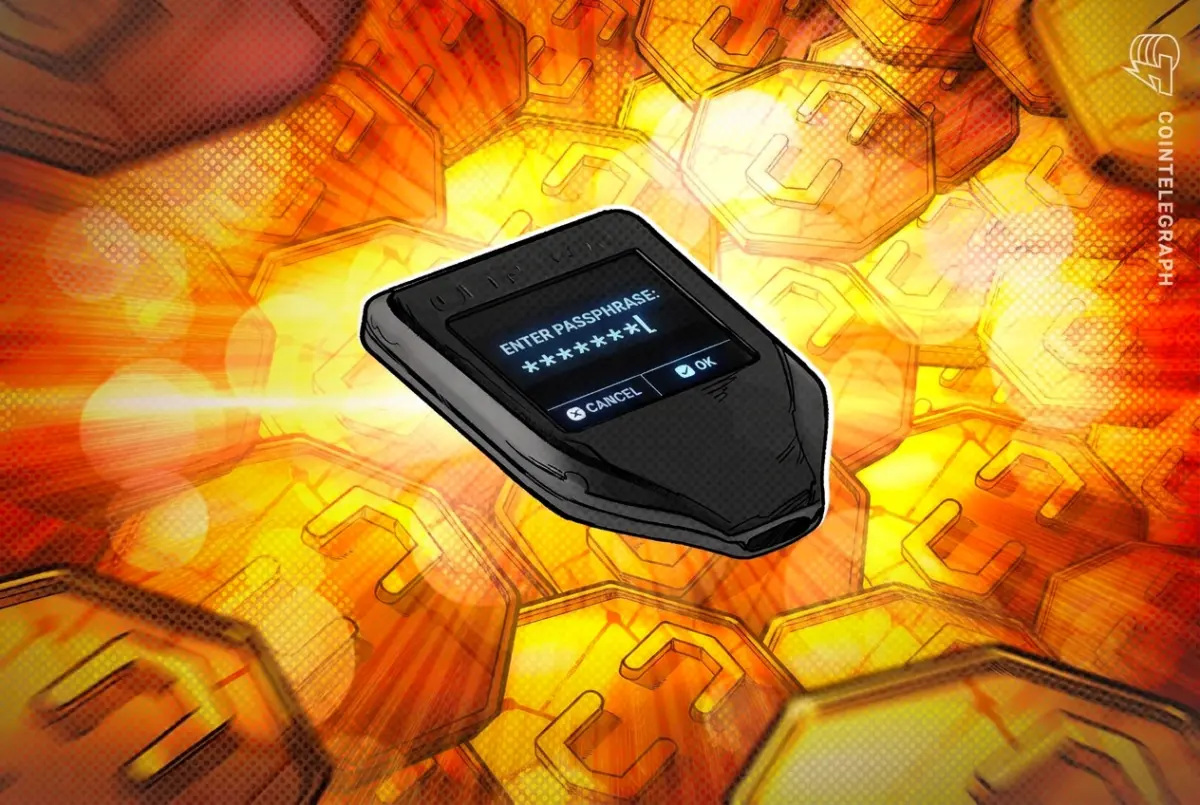
Hardware wallet manufacturer Trezor has officially increased the maximum length of optional wallet passphrases from 50 to 128 characters, offering an upgraded layer of cryptographic defense for cryptocurrency holders navigating an increasingly complex threat landscape.
Announced on Sunday, the substantial upgrade is now available through the latest iteration of the Trezor Suite ecosystem, coupled with newly updated device firmware. According to the company’s official announcements, users who wish to take advantage of the extended character limit must ensure both their software and hardware firmware are fully updated. Devices running older firmware versions will remain restricted to the previous 50-character limit, highlighting the company’s ongoing push to encourage routine security updates across its user base.
Within the architecture of modern hardware wallets, a passphrase functions as an additional, highly customizable password that users can set to complement their standard seed recovery phrase. Even in a worst-case scenario where an unauthorized actor manages to obtain a user’s physical or digital recovery phrase—the core sequence of words used to back up a crypto wallet—they would still be completely blocked from accessing the funds held within unless they also possess the exact, correct passphrase. By allowing longer and vastly more complex strings of text, Trezor’s latest update exponentially increases the mathematical difficulty of brute-force attacks against this secondary security layer.
The decision to expand passphrase capabilities was heavily informed by recent security incidents across the broader digital asset industry, notably the high-profile Coldcard attacks that transpired in July. During those security breaches, a firmware vulnerability impacted certain Coldcard devices, causing them to generate recovery phrases with severely deficient randomness. This critical flaw allowed sophisticated attackers to mathematically reconstruct the compromised seed phrases and drain vulnerable user accounts.
In its commentary on the July incidents, Trezor noted that strong, highly unique passphrases served as an effective last line of defense, successfully shielding several affected users from devastating financial losses even after their underlying recovery information had been compromised. By doubling the allowable length of these passphrases, Trezor is aiming to give users even greater tools to fortify their holdings against similar systemic vulnerabilities.
This proactive security enhancement arrives closely on the heels of a separate, pressing warning involving Trezor’s own hardware products and supply chain integrity. Just days prior to the passphrase announcement, the company issued a vital advisory urging customers who had purchased wallets from CryptoBilis, a former authorized reseller, at any point since March, to immediately transfer their digital assets to newly generated, uncompromised wallets.
The supply chain warning was triggered after an Indonesian customer reported discovering a suspected unauthorized physical implant inside a Trezor Safe 5 device. According to initial details, the suspected tampering involved hardware capable of capturing sensitive on-screen information—including user recovery phrases during the initial setup process—and covertly transmitting that data over a cellular network. While Trezor stated on Friday that it had not yet physically examined the specific device in question and had received zero reports of actual user fund losses linked to the incident, the company chose to err on the side of extreme caution by advising affected buyers to migrate their funds immediately.
The combination of supply chain vulnerabilities highlighted by the CryptoBilis incident and the seed generation flaws seen in competitor hardware earlier in the year underscores a growing consensus within the cryptocurrency community: relying solely on standard recovery seed backups may no longer be sufficient for safeguarding significant digital wealth. As hardware wallet manufacturers work to reinforce their physical supply chains and firmware reliability, features like extended, highly complex passphrases are increasingly positioned as essential safeguards for long-term cryptocurrency storage.