Tokenized stocks operating on Base have rapidly captured approximately one-third of the weekly spot trading volume within their specific market just months after their initial launch. This milestone highlights a significant acceleration in the adoption of blockchain-based financial assets, signaling a broader shift in how traditional market instruments are issued, traded, and managed.
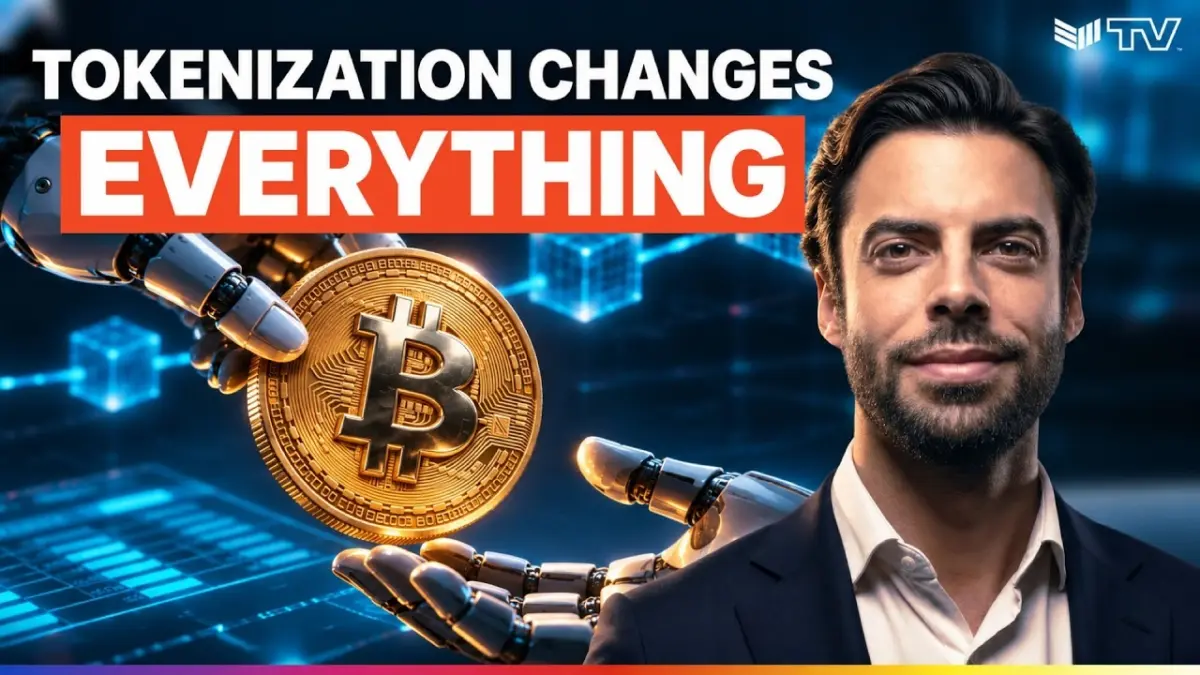
Xen Baynham-Herd, Director of Marketing and Global Expansion at Base, recently addressed this rapid growth during an appearance on Bitcoin Magazine’s BMTV, emphasizing that this initial surge represents merely the beginning of a much larger transformation in global finance. According to Baynham-Herd, the traditional Exchange-Traded Fund (ETF) structure was originally engineered to solve specific operational, administrative, and cost-related hurdles associated with holding traditional assets. However, he argues that modern tokenization addresses those exact challenges far more efficiently by removing unnecessary intermediaries and settling transactions directly on-chain.
When combining tokenized stocks with the capabilities of emerging autonomous artificial intelligence agents capable of constructing and managing hyper-personalized portfolios, Baynham-Herd suggests a profound structural shift is underway. In his view, the integration of on-chain asset representation and automated intelligence means that tokenized stocks will likely overtake the conventional ETF business model over time.
This discussion formed part of a broader conversation on BMTV exploring the intersection of decentralized finance, Bitcoin-backed liquidity, artificial intelligence, and global market dynamics. Throughout the episode, industry participants examined how emerging technologies are reshaping foundational financial concepts, moving away from legacy administrative frameworks toward continuous, programmable, and borderless market infrastructure.
A central theme of the discussion involved Coinbase’s growing footprint in Bitcoin-backed financial services on Base, highlighting billions of dollars in loans secured by Bitcoin. As more asset holders seek liquidity without triggering taxable events or selling their underlying holdings, borrowing against Bitcoin on decentralized networks has experienced notable momentum. This trend reflects an increasing willingness among digital asset participants to utilize native cryptographic collateral to access capital, mirroring traditional securities-backed lending but operating within transparent, smart-contract-governed environments.
The dialogue also ventured into the futuristic yet rapidly approaching realm of AI agent-run financial entities and global stablecoin credit markets. As automated agents take on more responsibilities in portfolio management, executing trades, and even navigating decentralized borrowing protocols, the architecture of credit is evolving. The distinction between collateralized and unsecured lending strategies deployed by automated agents points toward a 24/7, highly responsive market environment where traditional trading hours and geographic boundaries cease to restrict liquidity.
These developments underscore a broader narrative of continuous building, even through challenging market cycles. Executives and developers focusing on emerging markets note that tokenization and decentralized rail systems offer profound utility where legacy banking infrastructure is often costly, restrictive, or entirely inaccessible. By stripping away operational friction, tokenized financial instruments allow users in developing economies to interact with global asset classes seamlessly.
As the landscape matures, discussions surrounding market volatility, cross-asset correlations, and regulatory competition continue to shape the strategic direction of major blockchain ecosystems. While traditional institutions evaluate how to adapt to the speed and efficiency of tokenized markets, the rapid ascent of tokenized equities on Base demonstrates tangible demand for financial products that leverage the speed, transparency, and composability of modern distributed ledgers.