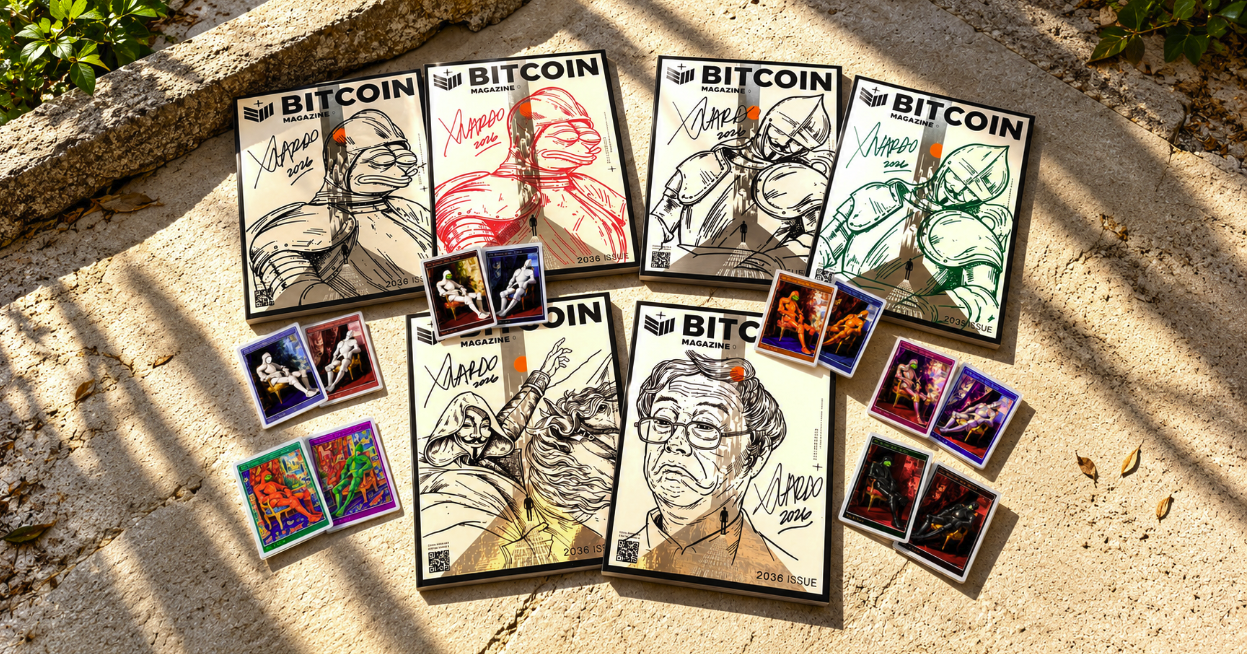
The intersection of physical print publishing, fine art, and Bitcoin’s expanding cultural canon has yielded a new collector’s milestone. Visual artist Pepenardo has transformed six copies of Bitcoin Magazine’s 2036 issue into original, one-of-one mixed-media artworks. Utilizing a Sharpie to draw directly onto the covers, the artist has imbued the high-profile publication with signature elements from his expansive visual universe, deepening a multi-year creative relationship with the media outlet and the broader Bitcoin collectibles ecosystem.
The hand-altered magazine editions feature iconic characters from Pepenardo’s established iconography. Among them are the Sleeping Knights, the subjects of a prominent series previously exhibited at the BMAG Museum in Nashville and at Bitcoin 2026 in Las Vegas. Additional imagery rendered across the covers includes the masked rider of FAKEGENESIS, Dorian Nakamoto, and Pepe the Frog, weaving together meme culture, historical financial tropes, and contemporary digital lore.
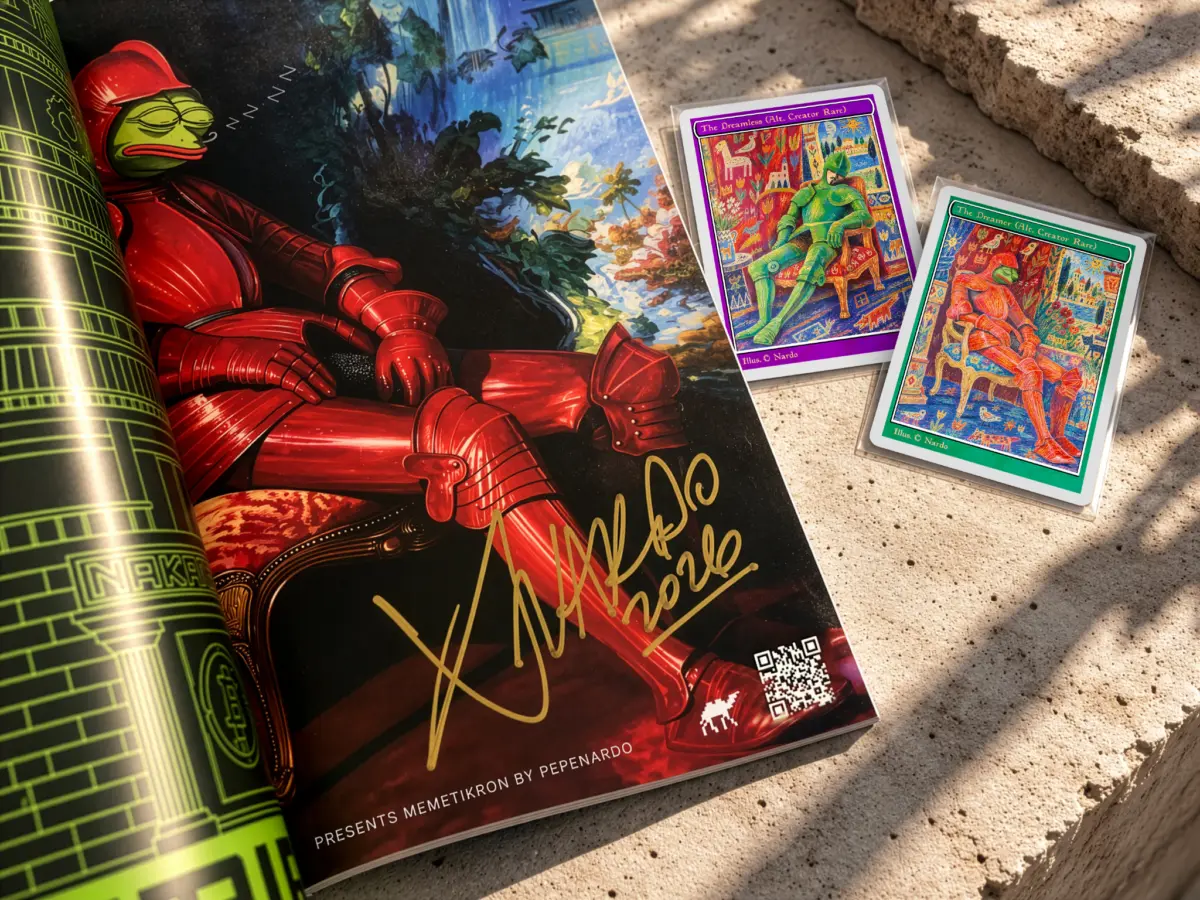
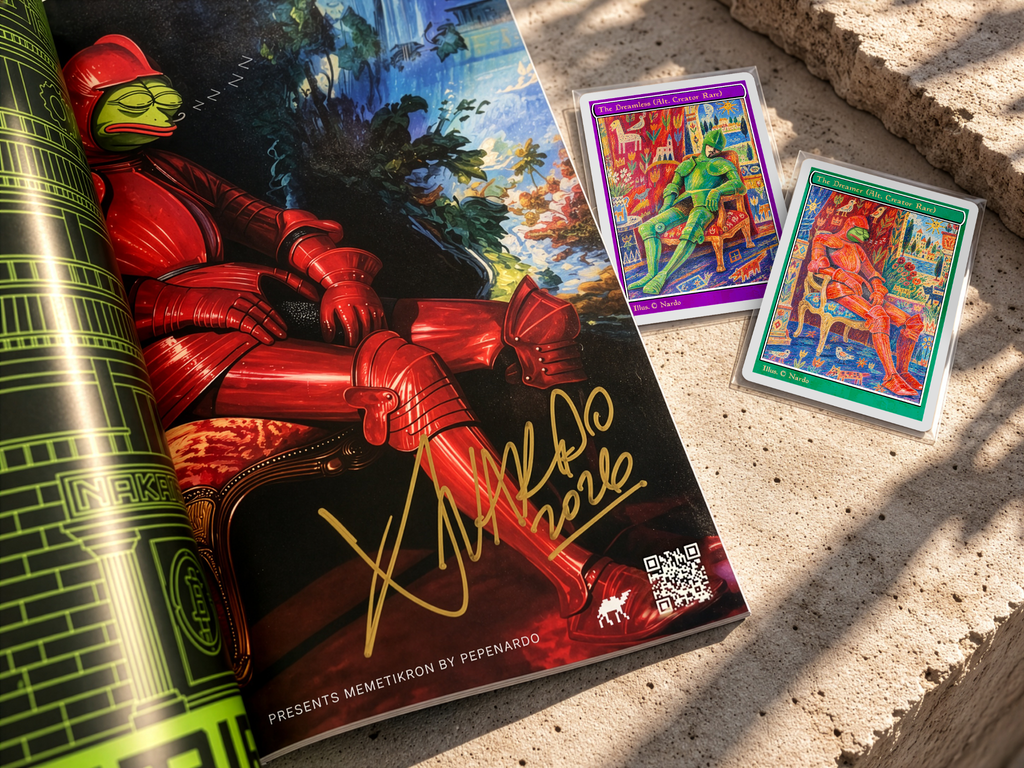
Every custom magazine features the artist’s hand-drawn signature on its illustrated cover, complemented by an additional gold-ink signature on an interior spread that reproduces his painting THE DREAMER. To complete the physical package, each modified magazine is paired with two original, one-of-one trading cards created specifically for the collaboration, reinforcing the tactile, collectible nature of the project.
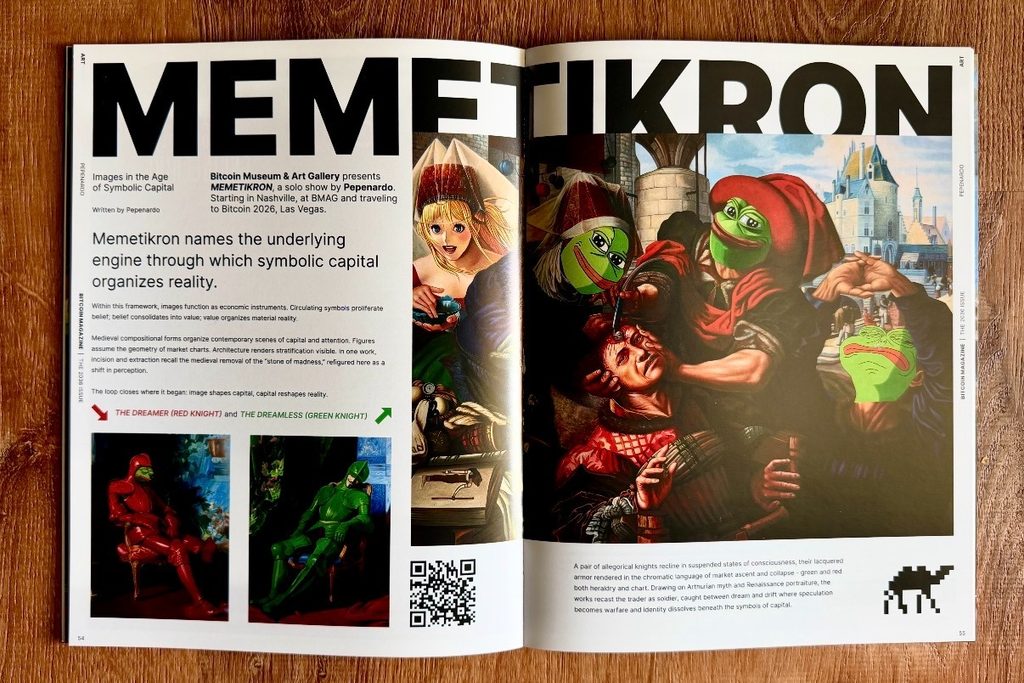
This creative endeavor highlights the broader ambitions of BTC Inc., parent company of Bitcoin Magazine, as it continues to expand its footprint in the realms of high-end art publishing, physical artifacts, and curated collectibles. The project builds directly on the momentum of Pepenardo’s MEMETIKRON exhibition at Bitcoin 2026, where two major oil paintings—THE DREAMER (RED KNIGHT) and THE DREAMLESS (GREEN KNIGHT)—emerged as the undisputed highlights of the official BMAG auction.
Measuring 30 by 39.5 inches each, the two oil paintings depict reclining figures clad in red and green armor, serving as visual allegories for market sentiment, volatility, and traditional historical portraiture. When they went under the hammer in Las Vegas, both works sparked intense bidding wars, ultimately selling for 0.32698802 BTC each—approximately $26,500 at the time—attracting a combined total of 197 bids. The rich visual vocabulary of those canvases now finds new life in artist-made trading cards featuring alternate colorways, remixed compositions, and hand-painted Creator Rare editions inspired by traditional textiles.
Amid a booming modern trading card market, Pepenardo’s artistic output successfully bridges the gap between traditional fine art painting and handheld collectibles, a space where scarcity, provenance, and subtle variations heavily influence valuation. His engagement with this specialized market, however, predates the creation of the Sleeping Knights series.
In 2023, his painting FAKEGENESIS—a striking reinterpretation of Jacques-Louis David’s neoclassical masterpiece Napoleon Crossing the Alps, featuring a masked rider atop a green horse—sold at the Bitcoin Conference in Miami for a substantial 1.625 BTC. Originally conceived in 2022 as a digital "Fake Rares" trading card, the physical oil painting became an early milestone for physical Bitcoin art, demonstrating surging collector appetite for high-caliber works emerging organically from the network’s native meme culture.
FAKEGENESIS subsequently appeared on the back cover of Bitcoin Magazine, with high-quality prints made available through the publication’s official store. Its recent evolution into a hand-drawn magazine cover marks a complete, unusual artistic progression: moving fluidly from a digital trading card to an oil painting, into a mass-printed periodical reproduction, and finally returning full circle as an original, hand-embellished collectible.
Bitcoin Magazine itself commands a storied collecting history that traces back to its inaugural issue in May 2012, co-founded by Mihai Alisie and Vitalik Buterin. At a landmark bitcoin event in London in September 2012, seven copies of that historic first issue were signed by more than 20 pioneering figures from the cryptocurrency’s formative years. One of those signed copies famously attracted a winning bid of 7 BTC, though the transaction was ultimately left incomplete by the winning bidder.
In the years since, early issues of the publication have matured into sought-after historical artifacts, with professionally graded copies and rare print runs commanding significant attention from dedicated collectors. In 2023, Bitcoin Magazine formalized this interest by introducing the Genesis Box, a limited-edition run of 21 comprehensive collector’s sets housing the publication’s first 22 issues within protective acrylic display cases.
Much like traditional exhibition catalogs, first-edition books, and vintage concert posters, Bitcoin Magazine has cultivated a cultural value that far exceeds its original publishing intent. Pepenardo’s customized covers serve to extend this ongoing history, turning individual copies of the publication into unique, primary artworks.
In Conversation with Pepenardo and Mark Mason
This collaboration came together quickly after you noticed the blank space on the cover of the Bitcoin Magazine issue featuring your work. What inspired you to turn these magazines into original artworks, and how do you see them fitting alongside your paintings and trading cards?
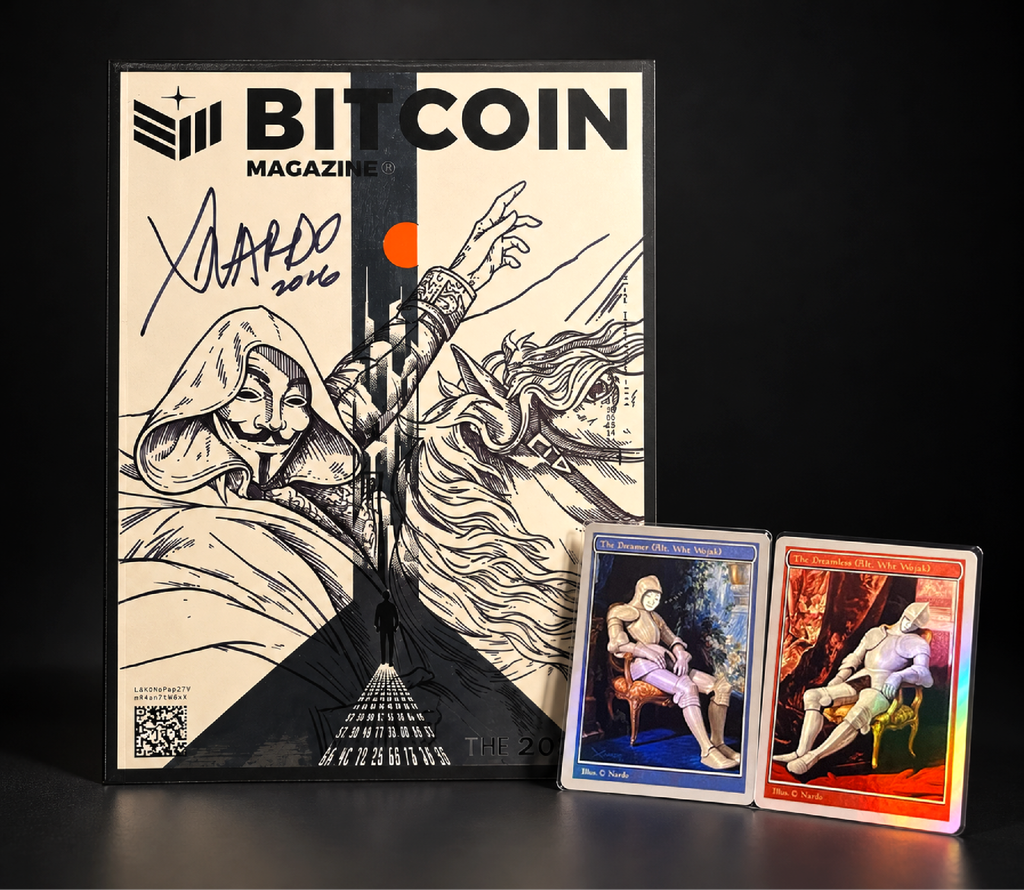
Pepenardo: I couldn’t help but notice that welcoming blank space on the cover. It seemed like an obvious place for a drawing. Coincidentally, I came into Bitcoin through watching the energy around trading cards on Counterparty, from 2016 all the way to the present. Hal Finney foreshadowed this ethos in his famous 1993 email titled "Crypto trading cards." Of course he was talking about digital collectibles, but the principle stays the same. Bitcoin’s history has a magnetic pull on collectibles; people want to hold on to a fragment of such an important modern history. When we look back fifty years from now, the content and the artifacts that came out of the movement will help future generations make sense of Bitcoin’s tremendous timeline.
The two knights, THE DREAMER and THE DREAMLESS, began as oil paintings exhibited and sold at Bitcoin 2026 in Las Vegas. They have since appeared in Bitcoin Magazine and now as original trading cards with different variations. How does the meaning of these characters change as they move between painting, publication, and collectible card? What rules guide your remixed versions, and were you surprised by how quickly the cards sold out?
Pepenardo: I was shocked at how quickly they went. I have no words. But it certainly reinforces that what I’m attempting to create and build with my work has some value. Being able to use the trading cards as a way to remix the original works lets me enrich the life of each painting. The mediums are different—oil on canvas for the paintings, various print methods for the trading cards—but the tedious care that goes into executing both is the same.
FAKEGENESIS became a defining work in your career, moving from Fake Rares into an original painting that attracted significant attention at Bitcoin 2023 in Miami. Looking back, what do you remember about that moment, and how did it change your practice and the audience for your work?
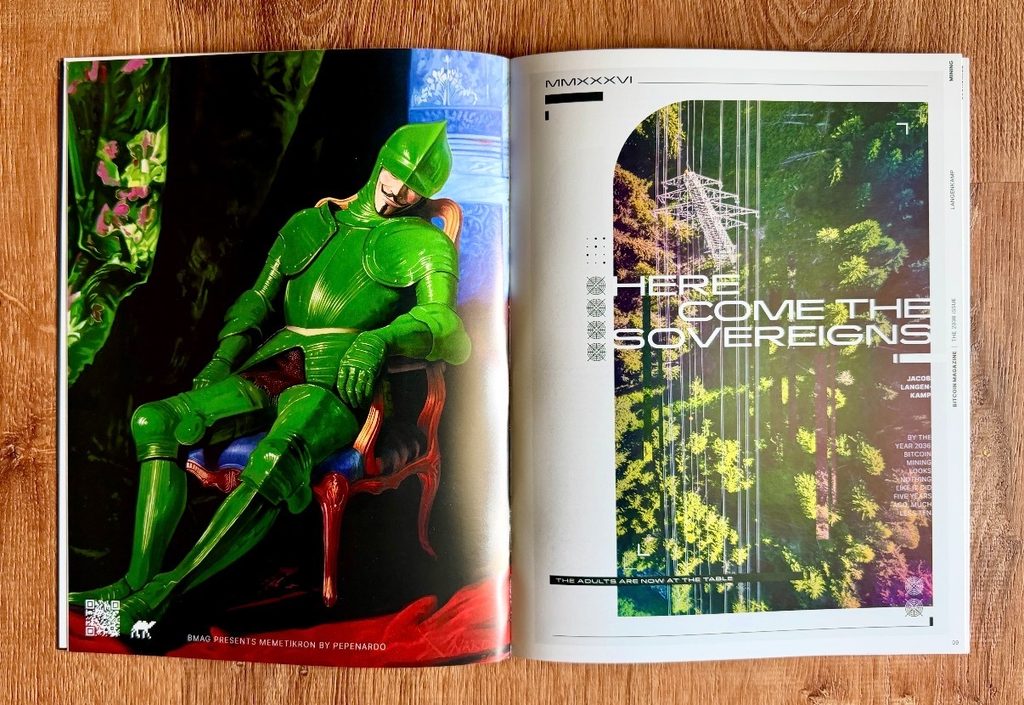
Pepenardo: FAKEGENESIS will always be the pivotal work that showed me how I should properly approach my art. I knew that even before it sold. It is a painting that embeds the tropes of Bitcoin’s ethos without being too obvious. Art within the context of Bitcoin shouldn’t have to throw a big B at you all the time; it should give you the fiery sensation of standing inside a new history being built. My hope is that it is remembered as a work that represents an entire movement—onwards and upwards.
Bitcoin Magazine’s earliest issues have become historical artifacts in their own right, from signed copies of Issue 1 and graded editions to the Genesis Box collection. Even figures like Michael Saylor have signed covers featuring themselves for charity auctions. What gives these publications their enduring collectible value, and how do you see artist-customized covers like Pepenardo’s fitting into that history?
Mark Mason: For over a decade, Bitcoin Magazine has documented the evolution of Bitcoin, from its early technical developments to the people and culture surrounding it. We see each physical issue as a time capsule, capturing a particular moment in Bitcoin’s journey toward hyperbitcoinization.
One of the biggest factors driving their collectible value is that we never reprint past editions. Each issue has a limited print run, creating a finite supply that has made early editions, graded copies, and signed covers increasingly sought after by collectors.
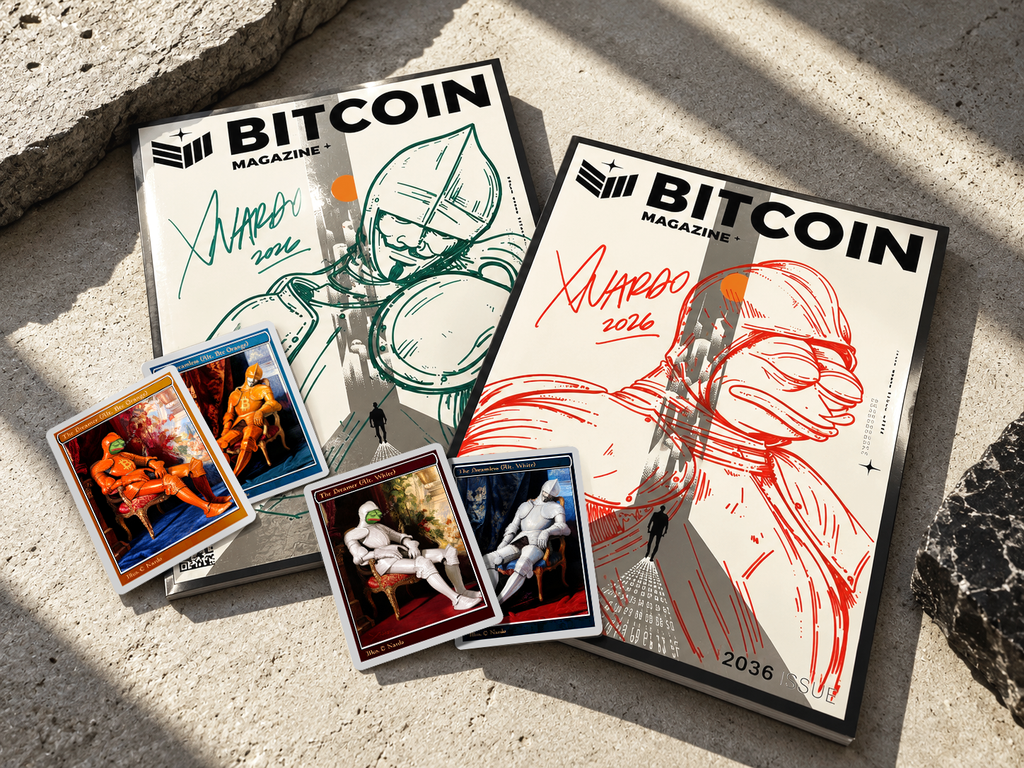
Bitcoin has always existed at the intersection of technology, economics, and culture. Artist-customized covers like Pepenardo’s take that relationship a step further, transforming an already collectible publication into an original artwork. It’s an extension of what Bitcoin Magazine has become: both a record of Bitcoin’s history and an artifact of that history itself.
Pepenardo’s custom magazine covers and accompanying trading card sets sold out shortly after their initial launch, with all six one-of-one editions successfully finding institutional and private collectors. Additional works by the artist remain available to collectors, including MASTER CUTS OUT THE STONE (after Hemessen), the centerpiece painting from his MEMETIKRON exhibition that traveled from the BMAG Museum in Nashville to Bitcoin 2026 in Las Vegas.
Collectors interested in acquiring related physical artifacts can also explore FAKEGENESIS fine art prints and the Genesis Box limited-edition collector sets, which preserve the publication’s foundational issues spanning from 2012 to 2014.
The Bitcoin Museum & Art Gallery (BMAG) continues to organize international museum exhibitions, live auctions, and high-profile artist collaborations examining Bitcoin and its far-reaching cultural implications. Patrons can explore available works from Curtis William Readel’s exhibition Paper Money, alongside an array of additional prints, original fine artworks, and limited collectibles.
BMAG is scheduled to return at Bitcoin Amsterdam, running from November 4 through November 6, 2026, showcasing European artists who explore the complex dynamics of money, political power, and decentralized finance. Further insights into these themes can be found in The Architecture of Money and The Undercurrent via Bitcoin Magazine.