As the cryptocurrency market moved deeper into an era defined by institutional participation and heightened regulatory scrutiny, the traditional "altcoin season" that many retail traders and market observers eagerly anticipated never fully materialized. While Bitcoin reached fresh highs earlier in the market cycle, the broader altcoin landscape experienced a stark divergence, leaving most alternative tokens lagging behind the flagship cryptocurrency.
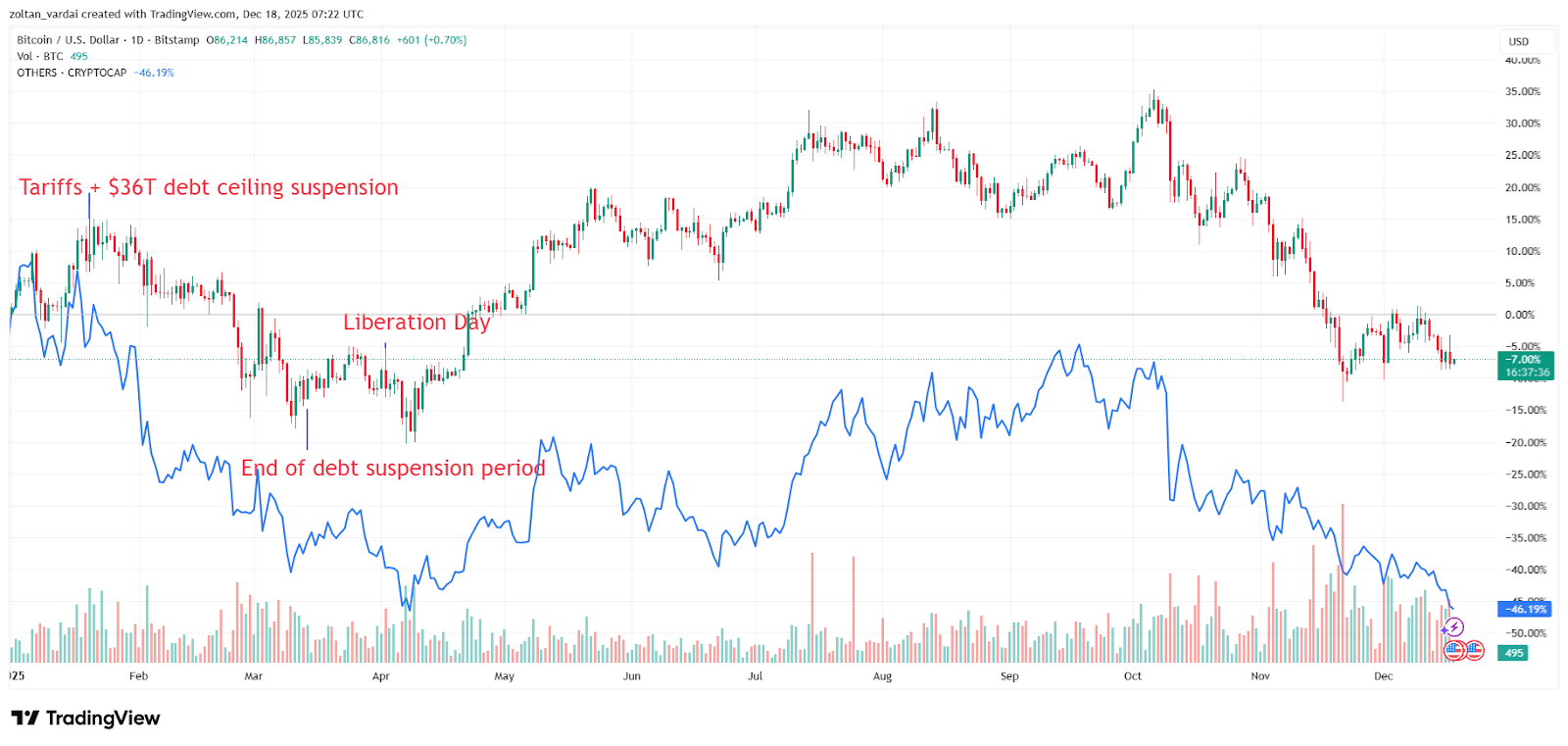
According to data from TradingView, Bitcoin was down approximately 7% year-to-date following an early-October market sell-off. Meanwhile, the total market capitalization of altcoins suffered a much steeper decline, dropping by more than 46% from its 2025 peak. Macroeconomic headwinds, such as persistently elevated interest rates, combined with Bitcoin’s prolonged market dominance to absorb the lion’s share of available crypto liquidity, leaving speculative tokens starved of capital.
Despite these broader market challenges and the absence of a broad-based altcoin rally, a select group of digital assets managed to defy the downward trend. Throughout a year characterized by selective risk-taking, heavy compliance scrutiny, and a shifting macroeconomic backdrop, specific tokens outperformed their peers. XRP gained vital momentum from monumental regulatory developments and fresh institutional financial products, Zcash surged as a renewed hunger for financial privacy swept the digital economy, and Algorand capitalized on significant real-world asset tokenization initiatives.
XRP Gains as Regulatory Overhang Eases
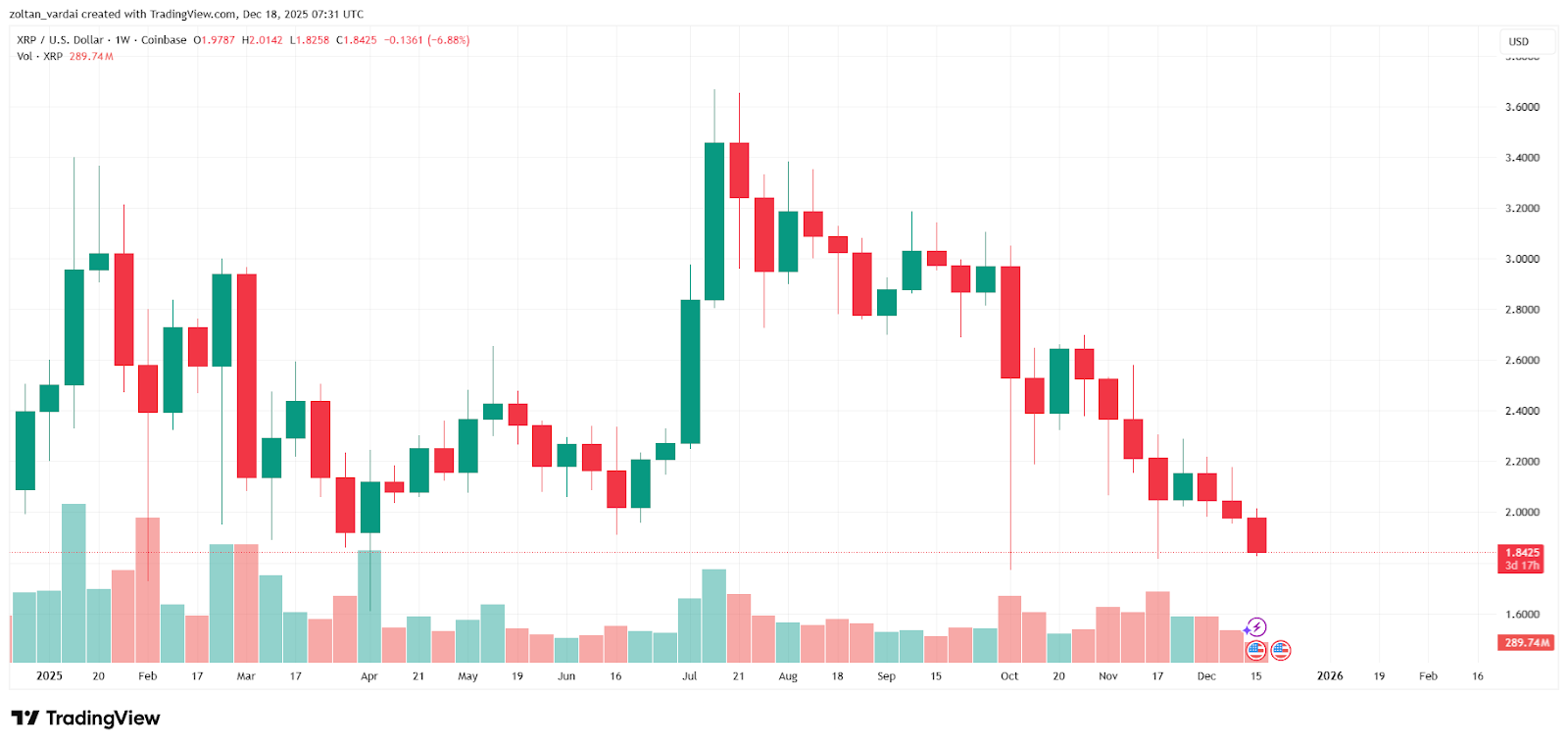
XRP stood out as one of the major success stories of the 2025 crypto market, vastly outperforming the majority of alternative cryptocurrencies despite the broader market’s sluggishness. TradingView data indicates that XRP surged over 35% in July alone, culminating in a yearly high of $3.60 on July 23. This performance represented an impressive eight-fold price increase from the previous year’s low of $0.43, which had been recorded on August 5, 2024.
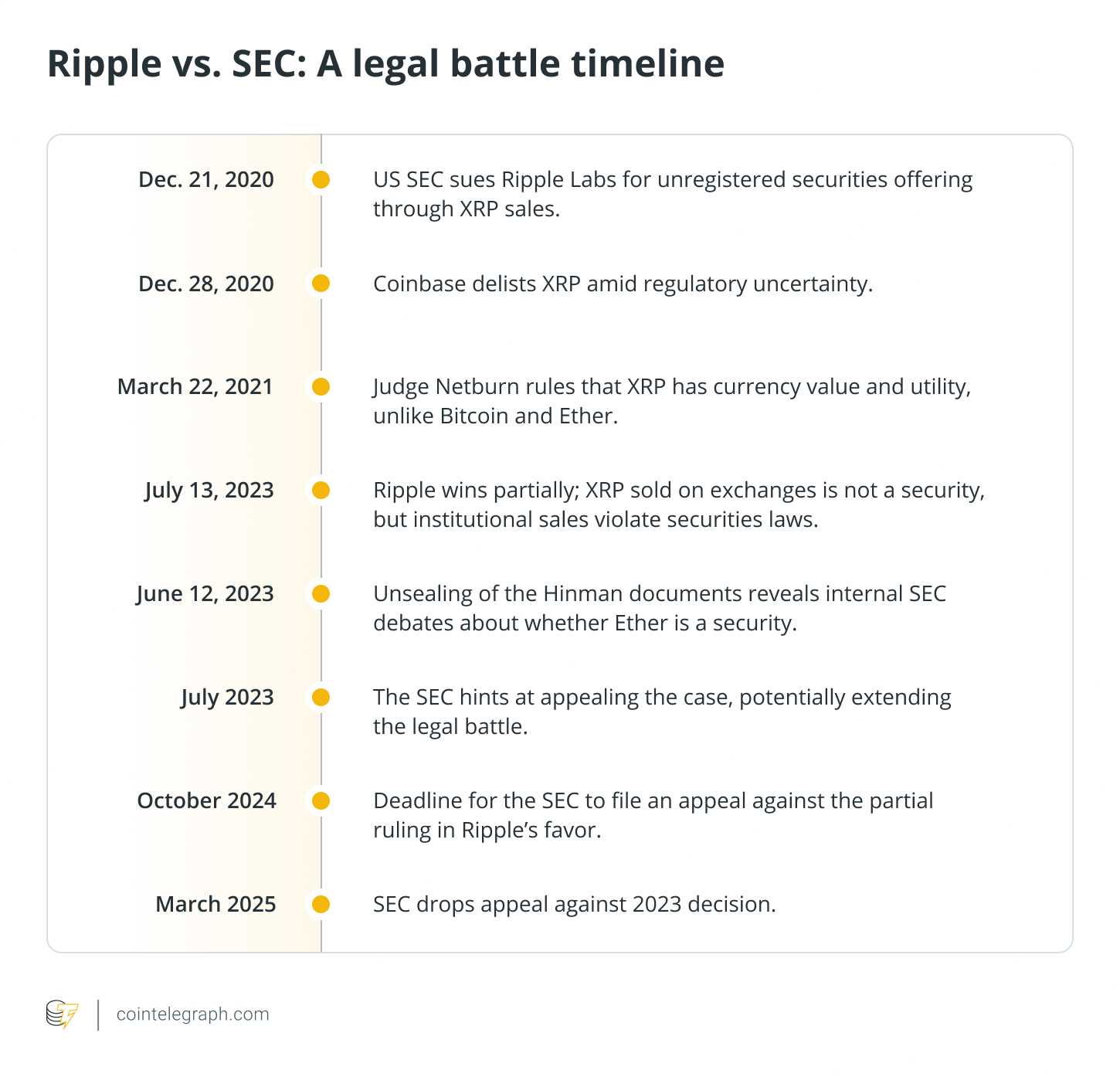
The token’s dramatic ascent was propelled by powerful tailwinds stemming from growing regulatory clarity, most notably the initial reports regarding the resolution of the United States Securities and Exchange Commission’s long-standing, high-profile lawsuit against Ripple Labs. The legal battle, which began in December 2020 when the SEC sued Ripple for allegedly raising $1.3 billion through unregistered XRP sales, had cast a heavy shadow over the asset for years.
That multi-year regulatory cloud finally parted on August 8. According to court filings, Ripple and the SEC officially ended their protracted dispute after submitting a joint letter asking the court to dismiss the SEC’s appeal and Ripple’s cross-appeal, with each side agreeing to bear its own costs and fees.
The lifting of this legal burden immediately changed market sentiment. Alex Davis, founder and CEO of blockchain ecosystem Mavryk Dynamics, noted that the market clearly began rotating toward assets that regulators could cleanly classify, institutions could accurately model, and corporate compliance teams could confidently sign off on. According to Davis, XRP fit that institutional profile better than most other altcoins during the year, effectively reopening the door for institutional capital.
The launch of the Canary Capital XRP exchange-traded fund on November 13 provided another powerful signal for institutional investors seeking regulated altcoin exposure, according to Isaac Joshua, CEO of crypto startup platform Gems Launchpad. Joshua highlighted that XRP outshined its competitors due to three primary pillars: regulatory clarity, fresh institutional inflows, and a steadily growing perception of real-world utility. He suggested that if ETF demand remains robust and global payment volumes continue to rise, XRP may successfully transition from a speculative altcoin into an established piece of global payment infrastructure. Data showed that XRP exchange-traded funds generated $756 million in net positive inflows during their first eleven trading days alone.
Zcash Rallies as the Privacy Trade Returns
Zcash emerged as another unexpected powerhouse in 2025, fueled by a resurgence of interest in privacy-focused cryptocurrencies at a time when global regulators were tightening their oversight of digital transactions and user identities.
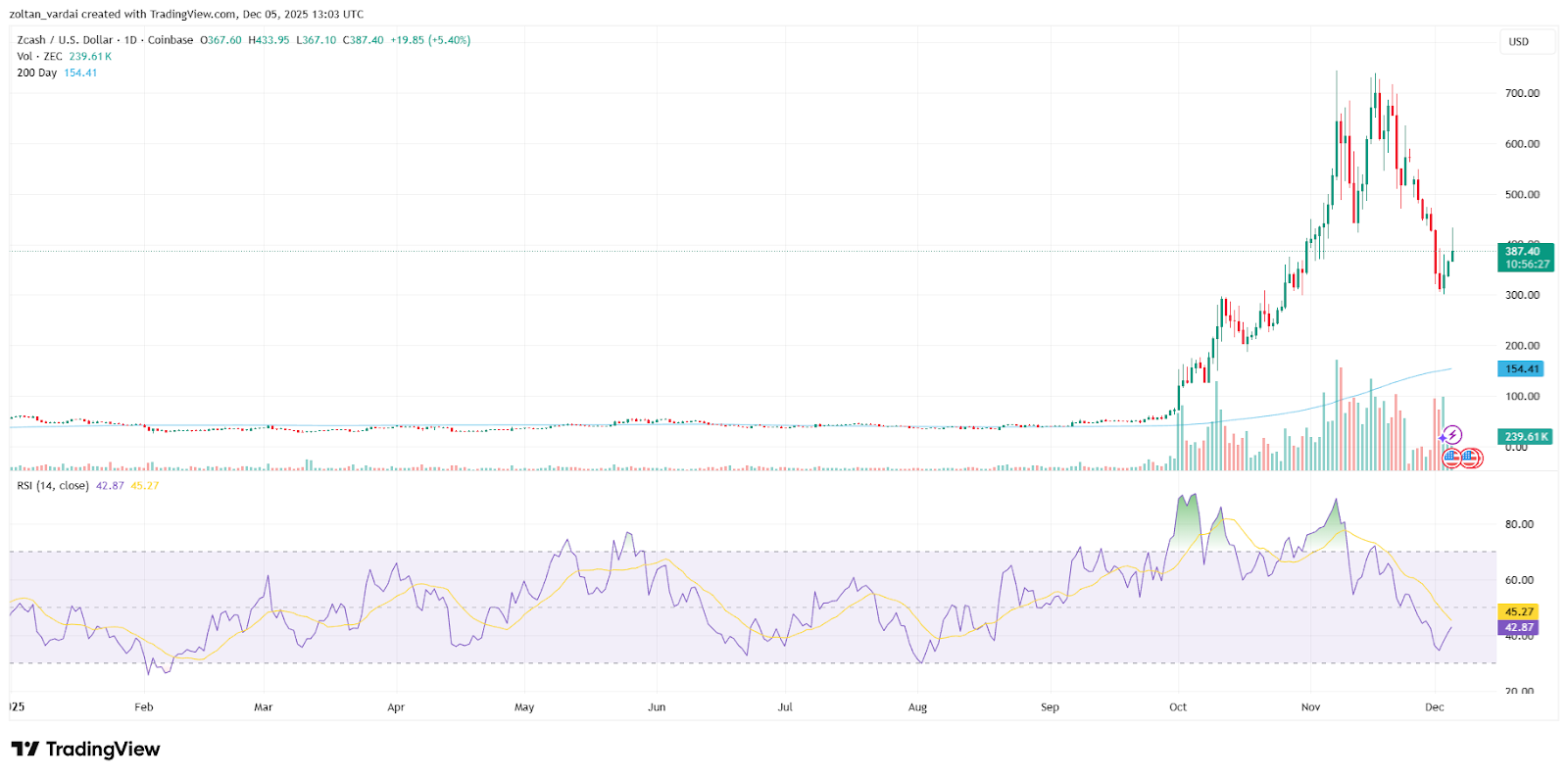
By mid-November, Zcash transformed from a relatively low-profile asset into the most-searched cryptocurrency on Coinbase, temporarily surpassing both Bitcoin and XRP in retail and institutional investor interest. TradingView data reveals that Zcash achieved a dramatic twelve-fold rally, climbing from a yearly low of $48 to a peak of $744 on November 7. This remarkable surge occurred just a month after the record $19 billion market crash that shook the crypto ecosystem at the beginning of October. Despite this massive upward movement, Zcash remained well below its all-time high of $5,941, which was recorded nearly a decade earlier on October 29, 2016.
Industry experts attributed this strong performance to structural shifts rather than fleeting speculation. Narek Gevorgyan, founder and CEO of crypto portfolio management platform CoinStats, pointed out that privacy-focused assets outperformed the broader market due to soaring demand for financial confidentiality in an increasingly surveillance-driven digital economy. Gevorgyan explained that the recent momentum was driven by tighter Know Your Customer and Anti-Money Laundering rules on centralized exchanges, escalating government scrutiny of crypto transactions, and renewed developer interest in zero-knowledge cryptographic technologies.
Launched in 2016, Zcash uniquely combines a proof-of-work consensus mechanism with advanced zero-knowledge proof technology. This architecture allows users to choose between transparent transactions and fully shielded transactions that obscure both the transaction amounts and the sender and receiver addresses.
Demand for these privacy features translated directly into on-chain metrics. The volume of ZEC tokens held securely inside shielded addresses climbed significantly during the year, moving from approximately 1.7 million coins to roughly 4.5 million coins by late November, with an astonishing 1 million tokens transferred into shielded pools over a compressed three-week period. Additional supply-side pressure came from the network’s latest halving event on November 23, 2024, which cut block rewards from 3.125 ZEC down to 1.5625 ZEC, effectively reducing daily token issuance from 3,600 down to approximately 1,800 new coins.
Algorand Jumps on Enterprise Tokenization Push
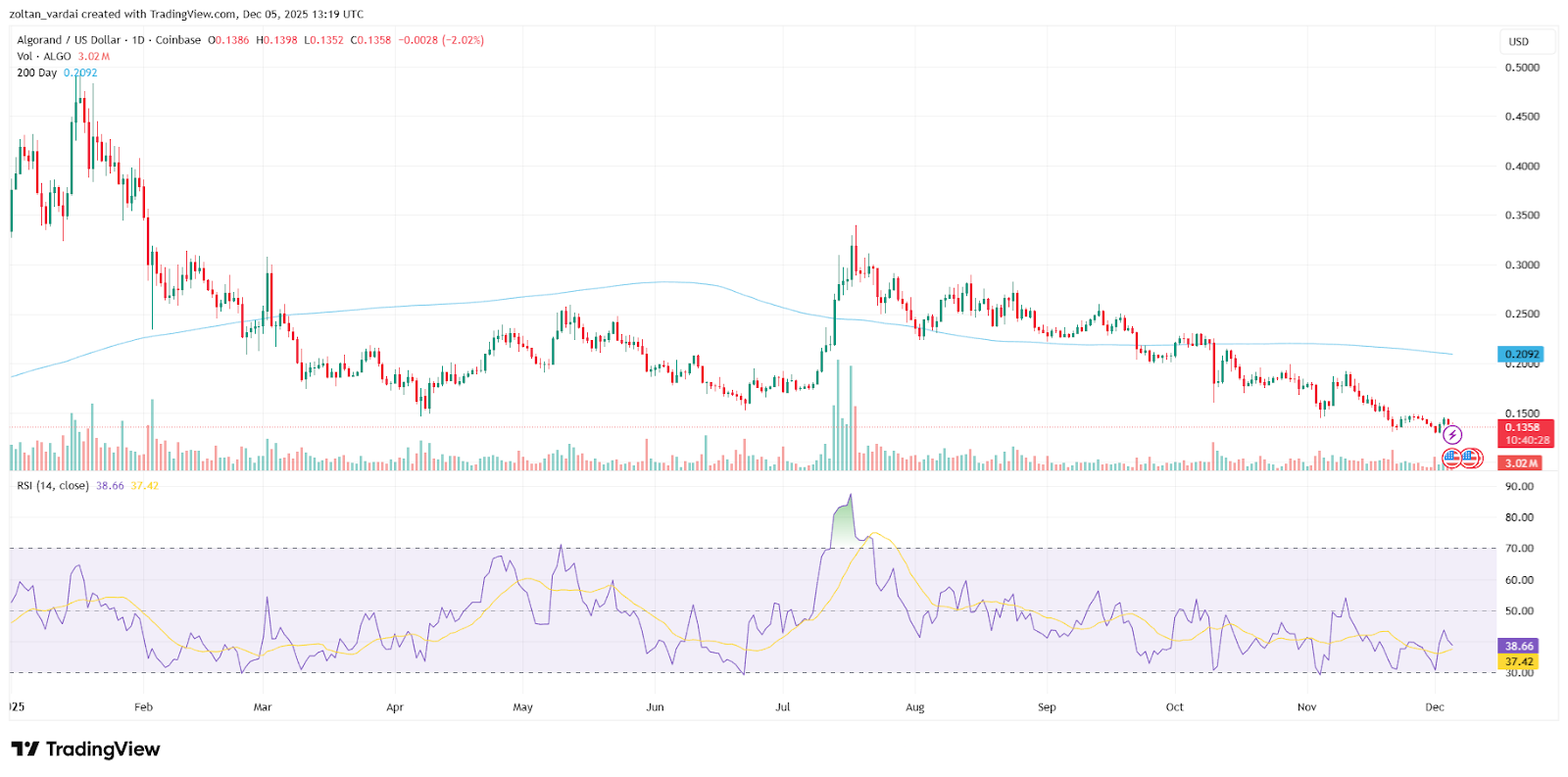
Algorand drew considerable attention early in the year as signs of expanding real-world blockchain deployment began to materialize. The network’s native token, ALGO, rose by roughly 48% over a three-week period, moving from $0.33 at the end of December 2024 to surpass a yearly high of $0.49 on January 17, according to TradingView data.
A major catalyst arrived on January 21, when Algorand announced a high-profile partnership with Enel Group, one of Europe’s largest electricity providers. The initiative was designed to enable Italian residents to purchase fractional shares of Enel’s solar farms and wind power installations using tokenized Energy Utility Tokens issued on the Algorand network.
Lacie Zhang, a market analyst at Bitget Wallet, noted that Algorand’s tangible real-world integrations position the underlying blockchain well for long-term relevance. She emphasized that these developments reinforce the network’s technical strengths and its commitment to enterprise-grade, environmentally sustainable use cases.
At the same time, Zhang observed that Algorand’s broader yearly price performance reflected wider macroeconomic and structural trends rather than project-specific weaknesses. She pointed out that ongoing macro headwinds, including higher interest rates and Bitcoin’s prolonged market dominance, effectively starved the broader altcoin sector of liquidity. In such an environment, strong technological progress did not immediately translate into sustained price appreciation. Nevertheless, she expressed confidence that projects anchored in real-world integrations would eventually recover as market sentiment pivots permanently from pure speculation to utility-driven adoption.
Despite sluggish price action following its January peak, Algorand experienced steady growth in fundamental blockchain activity. According to a research report published by Messari, the total amount of staked ALGO grew by 28% quarter-over-quarter, surpassing 1.95 billion tokens during the second quarter of 2025. Furthermore, the network continued to enhance its developer ecosystem, highlighted by the release of AlgoKit 3.0 in March to provide improved building tools, alongside preparations for AlgoKit 4.0, which was slated for early 2026 to introduce composable smart contract libraries and support for additional programming languages.
A Selective Market Heads into 2026
The widening performance gap between Bitcoin and the broader altcoin market throughout 2025 fundamentally altered the playbook for digital asset investors. Rather than mirroring the broad, speculative bull runs of previous market cycles, the year established a much more selective, fundamentals-driven landscape.
While pockets of the retail community still held out hope for a traditional altcoin season reminiscent of historical market cycles, the evolving market structure signaled a maturing industry. As the crypto ecosystem enters 2026, market participants face a reality where projects must demonstrate genuine underlying utility, clear regulatory compliance, and robust real-world adoption to capture sustained investor traction.