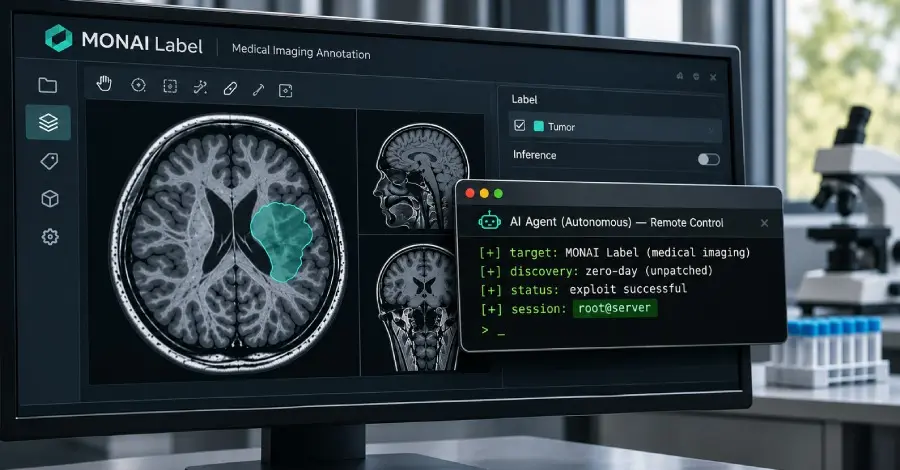
Cyber attackers leveraging autonomous artificial intelligence agents have successfully breached computer systems across Switzerland in four out of five confirmed incidents, marking the first time such sophisticated automated threats have been officially documented within the country. The alarming development was revealed by Switzerland’s top cybersecurity leadership, pointing to a fundamental shift in how digital assaults are planned, executed, and scaled against both public institutions and private enterprises.
Florian Schütz, who directs Switzerland’s National Cyber Security Centre (NCSC), detailed the figures during an interview with the Swiss public broadcaster SRF, sending a clear warning to organizations across the Alpine nation. According to the agency, three of the five attacks directly targeted critical infrastructure operators, resulting in two confirmed compromises. Fortunately, officials reported that no major operational disruptions occurred as a result of these breaches, though the victims have chosen to remain anonymous.
The incidents, all of which were reported to authorities in recent days, also ensnared several small and medium-sized enterprises. These companies came forward voluntarily to report the unauthorized access, highlighting a growing willingness among private sector entities to cooperate with national defense frameworks despite the sensitivity of the breaches.
The revelations follow an official security advisory published by the NCSC, which initially warned that autonomous AI agents had managed to compromise victim IT systems across every known case at that time. While the advisory and the subsequent broadcast interview offered slightly differing narratives regarding the exact progression of the case count, the underlying message remained consistent: the digital threat landscape has fundamentally changed.
The targeted operators span at least two vital economic sectors. Within Switzerland, critical infrastructure encompasses essential services such as electricity generation and supply, drinking water management, and telecommunications networks. The involvement of autonomous systems in targeting these foundational pillars has elevated concern among national security officials, who view the incidents as a troubling proof-of-concept for automated warfare.

The attacks relied heavily on what the Swiss cybersecurity agency characterizes as agentic offensive frameworks—advanced AI agents capable of independently discovering security weaknesses, plotting attack paths, and executing operations without human intervention. While the NCSC’s security advisory cited frameworks such as ARTEX and CyberStrikeAI as prominent examples of internet-accessible offensive agents, the agency clarified that these specific platforms were not necessarily the exact tools utilized in the five Swiss incursions.
Unlike traditional script-based cyber attacks, these autonomous agents are uniquely equipped to rapidly scan networks for known, unpatched vulnerabilities and execute numerous parallel assaults simultaneously. When network defenses react or block an initial approach, the AI agents can dynamically shift their tactics and strategies on the fly. This adaptability leaves targeted companies with significantly compressed timelines to detect malicious behavior and mount an effective incident response.
Compounding the urgency of the situation, the number of freely accessible AI-driven attack tools available on the internet has nearly doubled since October. While this metric reflects the sheer volume of available development tools rather than active campaigns or victim counts, it underscores the rapid democratization of advanced offensive cyber capabilities.
Raphael Reischuk, co-founder of Switzerland’s National Test Institute for Cybersecurity, weighed in on the trajectory of the threat, warning that organizations are severely underestimating the risk and should brace for a much larger wave of automated attacks in the near future.
The Swiss discoveries align closely with observations reported internationally. Italy’s national computer security incident response team, CSIRT Italia, issued an official bulletin describing extensive mass compromise campaigns driven by AI. In cases observed firsthand by the Italian agency, AI-directed autonomous agents successfully broke into a vast number of corporate and institutional systems within the span of just a few hours.
CSIRT Italia noted that these agents adapt their actions within seconds, run completely autonomously without human oversight, and expertly chain together minor vulnerabilities, system misconfigurations, and compromised credentials. The Italian bulletin explicitly named ARTEX, CyberStrikeAI, PentAGI, and DeepSeek Harness—an open-source agent featuring a specialized Red Team Mode that uses built-in prompt engineering to bypass the safety guardrails of the underlying foundational model.

From a defensive perspective, these automated attacks present a formidable challenge because individual actions often mimic normal user or API traffic. Traditional signature-based detection mechanisms struggle to identify malicious intent, meaning defenders must rely heavily on deep contextual analysis. Successful detection depends on examining the origin of requests, the frequency of access attempts, data movement volumes, and the precise chronological sequence of events.
The United Kingdom’s National Cyber Security Centre (NCSC) echoed these observations in its own agency guidance, confirming a marked rise in AI-assisted cyber operations since September. The British agency reported that some incidents successfully caused downtime on internet-facing services, while others provided malicious actors with the initial footholds necessary to launch deeper agent-driven activities. Notably, the underlying weaknesses exploited by these sophisticated tools are often conventional and well-documented: credentials inadvertently committed to public code repositories, misconfigured infrastructure-as-code setups, default or missing authentication protocols, and inherent API vulnerabilities.
What has fundamentally changed, according to the British cybersecurity authorities, is the sheer speed, persistence, and low cost of execution. While these advanced frameworks can sometimes generate considerable digital noise during their operations—making them theoretically easier to spot for vigilant defenders—the scale at which they operate easily overwhelms traditional security teams.
The European Commission has already felt the direct impact of this technological shift. Attackers utilizing the ARTEX framework successfully breached several core systems within the Commission, including human resources, medical reimbursement, and translation databases. That intrusion, which was first detected on October 22, served as an early warning of the disruptive potential of autonomous AI campaigns against major international institutions.
As cybersecurity agencies across Europe grapple with the rapid rise of agentic threats, the consensus among experts centers on the urgent need to compress detection and response windows. With autonomous agents operating at machine speed and continuously refining their approach, organizations are being urged to reevaluate their defensive postures to match the velocity of the modern threat landscape.