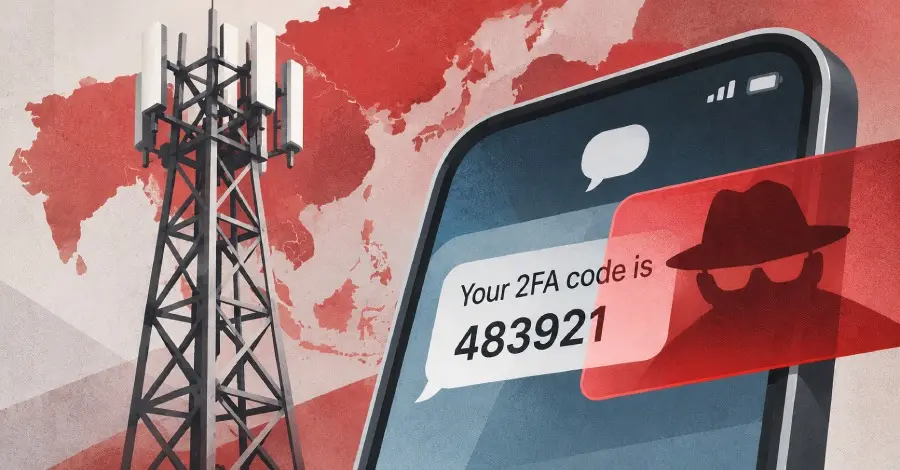
A newly identified and highly sophisticated espionage group has compromised internal telecommunications equipment across at least six Asian countries, using the compromised infrastructure to covertly intercept calls and text messages of targeted individuals, with a primary focus on Taiwan.
The campaign was uncovered by Enea, a Stockholm-based telecommunications and cybersecurity software company. In a comprehensive technical report released this week, researchers detailed the activities of the threat actor, which has been designated as "SilentAir." Based on the operational sophistication, the precision of the targeting, and the technical mechanisms employed, Enea assessed with high confidence that SilentAir operates as a state-level threat actor. However, the cybersecurity firm noted that it can only link the group’s activities to China with low confidence, relying primarily on circumstantial indicators such as operating hours and geographical focus.
Enea has reportedly notified the affected mobile network operators where SilentAir’s attack sources were identified. According to the company, the immediate threat posed by SilentAir has been temporarily disrupted, though researchers warned that the sophisticated nature of the campaign leaves open the possibility of a resurgence. The publicly available findings do not specify whether the impacted telecommunications providers have successfully purged the hacked equipment from their core networks or completely remediated the unauthorized access.
Understanding the Mechanics of Signaling Protocols and IPX Networks
To understand how SilentAir executed its espionage campaign, it is necessary to examine the underlying architecture of global mobile telecommunications. Mobile operators rely heavily on specialized signaling protocols known as SS7 (Signaling System 7) and its modern counterpart, Diameter, to exchange critical signaling messages. These protocols are the backbone of modern telecommunications, responsible for routing phone calls and text messages across disparate networks and enabling seamless global roaming for mobile subscribers.
This essential signaling traffic travels across a shared, interconnected network infrastructure known as the IPX (IP eXchange). The entire architecture of the IPX relies upon a high level of implicit trust between interconnected mobile network operators worldwide. SilentAir weaponized this trust by infiltrating the core infrastructure of specific operators and deploying its attacks directly into the IPX from compromised internal network equipment.
Instead of launching attacks from external networks—which are increasingly monitored or restricted by modern security firewalls—the actors leveraged internal access to send fraudulent signaling messages. Specifically, SilentAir utilized a technique centered around the "UpdateLocation" message in SS7, or its Diameter equivalent. When transmitted, this message falsely claims that the targeted subscriber’s mobile device is now being served by the attackers’ compromised equipment rather than their actual cellular tower. If the victim’s home mobile network blindly accepts this fraudulent signaling message, all incoming and outgoing calls and text messages intended for that individual are seamlessly diverted to the threat actors.

The repercussions of this sophisticated diversion method were starkly evident during Enea’s investigation. For several high-priority targets, researchers observed two-factor authentication (2FA) SMS codes being intercepted almost immediately after the diversion mechanism took effect. This precise timing strongly indicates that the threat actors were actively attempting to compromise secondary online accounts—such as corporate logins, financial portals, or personal email accounts—associated with the targeted individuals, thereby expanding their intelligence-gathering footprint from telecommunications interception to broader digital account takeovers.
While the interception of text messages and authentication tokens was explicitly documented through observed data, Enea’s report noted no comparable definitive evidence regarding the real-time interception of standard voice calls, nor did it confirm whether any specific secondary accounts were successfully seized during the operation.
Precise Targeting and the Scale of SilentAir Operations
Interception attempts constituted a significant portion of the malicious activity observed by Enea, accounting for approximately 18.3 percent of all attacks originating from SilentAir. This figure represents an unusually high concentration of targeted espionage compared to typical commercial surveillance companies, which generally utilize mass signaling attacks for broader tracking, with interception accounting for roughly 2.1 percent of observed volume in Enea’s historical research.
Among the specific targets identified in the campaign were prominent political figures and government VIPs within their respective countries. In rare and highly coordinated instances, Enea observed SilentAir equipment operating across multiple distinct national borders to jointly target the same high-profile individuals. According to the cybersecurity firm, this cross-border coordination strongly points to a centralized command structure directing the operations.
The campaign did not unfold in a continuous, steady stream. Instead, SilentAir’s attacks were delivered in distinct bursts. These operational waves ranged from targeting a small handful of subscribers to impacting several thousand individuals over the course of a month, followed by operational gaps lasting anywhere from several months to even longer periods between active phases.
Geographically, while the bulk of the intense targeting focused on subscribers in Taiwan, the collateral or secondary impact extended across other Southeast and East Asian telecommunications networks. Sporadic activity was also detected affecting networks in East Africa, Central Asia, the Middle East, and Europe. Enea noted that while subscribers using the hacked operators’ internal networks may have also been systematically targeted, the company lacked the visibility required to inspect that specific internal traffic.

Detection, Silent SMS, and the Low-Confidence Link to China
Enea first stumbled upon the SilentAir activity while conducting deep analytical research into anomalous signaling attacks occurring across the interconnect links between mobile operators. Since early 2025, the firm had been monitoring unusual and suspicious attack patterns—predominantly utilizing SS7 and occasionally Diameter—originating from specific Asian operators that would not typically engage in such signaling traffic. Subsequent retrospective analysis uncovered indicators of similar suspicious activity dating back even earlier.
A critical breakthrough in the investigation came when researchers observed that the networks hosting SilentAir infrastructure were handling follow-up signaling messages for diverted targets in erratic, inconsistent ways. This analytical anomaly left researchers with two primary hypotheses: either an external entity was systematically spoofing the signaling addresses of those networks, or physical equipment residing deep inside each network had been entirely compromised.
Confirmation of the latter hypothesis came when Enea observed internal equipment within a targeted operator actively transmitting and receiving unauthorized attack commands. This compromised hardware exhibited identical behavioral patterns to known SilentAir sources detected across other external networks.
Detecting and mitigating these intrusions proved exceptionally difficult during the initial phases of the investigation, primarily because the threat actors demonstrated an advanced, granular understanding of telecommunications network architectures and legacy signaling defenses. Once containment measures were successfully implemented, researchers recovered forensic traces confirming unauthorized access, though they were unable to capture or analyze the specific malware payload believed to have been deployed by SilentAir.
A particularly notable aspect of the campaign involved the massive deployment of "silent SMS" messages, predominantly directed at subscribers located in Taiwan. Silent texts are specially formatted messages designed to prompt a cellular device to respond invisibly in the background without generating any visual notification, audio alert, or logging on the user’s screen.
During daytime hours, the majority of these silent text messages were routed to subscribers on external networks, such as those in Southeast Asia. Researchers assess that these daytime checks were primarily used to verify whether a call and text diversion had been successfully established; if the silent test message was received by the attackers’ hacked infrastructure rather than the victim’s legitimate handset, the actors had immediate confirmation that the interception was functioning.

Conversely, most silent SMS activity occurred during nighttime hours and was heavily concentrated on individuals in Taiwan. While the definitive operational purpose of these nocturnal messages remains unconfirmed, Enea suggested they likely served as a bulk verification method to ensure that prior diversions remained active, capitalizing on the time window when mobile devices are least likely to autonomously re-register to their genuine physical locations.
To evade automated filtering and security controls, these silent texts were embedded with randomized, spam-like motivational or promotional phrases, frequently written in English. Enea believes this text served as a deliberate camouflage mechanism; if an intermediate mobile network stripped the message’s hidden operational settings during transit, the recipient would simply view the transmission as ordinary commercial spam and disregard it.
The assessment linking SilentAir to China with low confidence is anchored in several distinct operational indicators. Primarily, the group maintained a strict focus on Taiwan while systematically avoiding any targeting of domestic Chinese networks or mainland subscribers. Furthermore, SilentAir’s tracking and interception operations adhered closely to a standard working day schedule aligned with UTC+8, which corresponds to China Standard Time. Activities routinely commenced around 9:00 AM local time, dropped off significantly over weekends, and experienced noticeable slowdowns or operational pauses coinciding with major Chinese public holidays.
Overlaps with Liminal Panda and the SCTPE Trojan
Enea also investigated potential connections between SilentAir and Liminal Panda, a well-documented threat group associated with previous telecommunications intrusions involving the SIGTRAN protocol suite. While researchers classified the connection as possible, it remains unconfirmed, and Enea has chosen not to formally link the two distinct groups at this time.
In several instances across compromised operators, SilentAir attacks coincided temporally with known active infections of Liminal Panda. However, during other operational windows, the two groups showed no evidence of cooperation. Furthermore, while both actors targeted telecommunications operators within the same broader geographic region of Asia, Liminal Panda has no historical precedent of focusing operations on Taiwan.
From a technical standpoint, SilentAir’s operational behavior shares functional similarities with SCTPE, a relatively obscure Linux kernel-level trojan designed specifically to originate and process SS7 and Diameter traffic. This same tool has previously been detailed in official government advisories published by Singapore’s Infocomm Media Development Authority (IMDA), where it is designated under the name SIGweaver. According to the IMDA advisory, the tool was identified by cybersecurity firm CrowdStrike on January 21 and is linked to Liminal Panda with moderate confidence.

However, Enea noted a key technical discrepancy: SilentAir demonstrated the capability to autonomously respond to signaling messages it had not initiated itself—a functional trait that the known SCTPE program cannot perform. Additionally, SilentAir’s overarching operational security (OPSEC) appeared significantly more disciplined and advanced than that observed in Liminal Panda campaigns.
In parallel with tracking SilentAir, Enea’s GTP firewall solutions have successfully detected active Liminal Panda intrusions across multiple customer operators since the first quarter of the year. Researchers successfully blocked the group’s GTPDoor traffic and identified confirmed infections—or strong indicators of compromise—across at least five to ten distinct telecommunications operators.
The GTPDoor backdoor, originally documented in late February 2024, operates by concealing malicious commands within GTP-C (GTP Control plane), the core protocol responsible for establishing mobile data connections between cellular networks. During their recent analyses, Enea researchers also uncovered evidence of an evolving variant that hides command-and-control traffic within GTP-U (GTP User plane), the protocol segment dedicated to carrying actual customer data traffic. While GTP-U traffic is inherently more complex and difficult for network defenders to inspect, researchers assess that this newly discovered variant is currently utilized primarily as an operational backup mechanism.
As telecommunications networks face increasingly sophisticated internal and protocol-level threats, Enea’s comprehensive findings underscore the persistent vulnerabilities inherent in legacy signaling infrastructure and the critical need for heightened vigilance across global mobile operators.