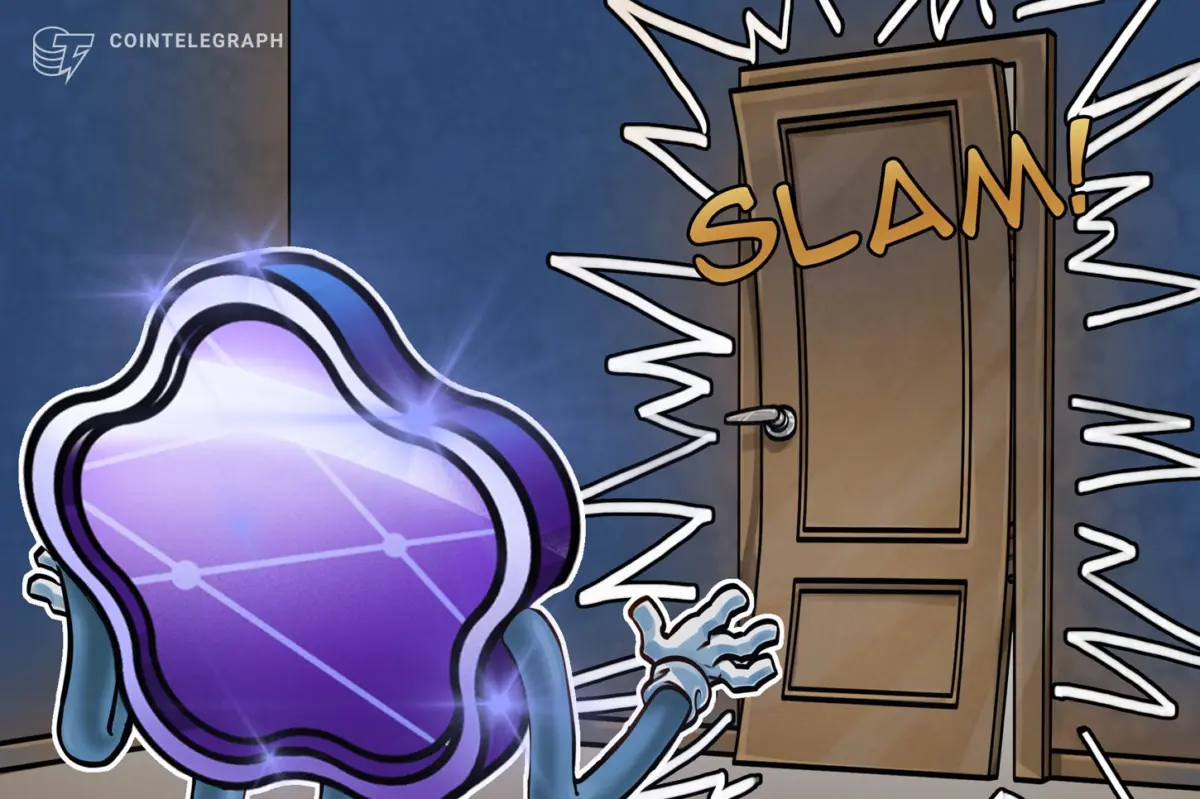
The Sui blockchain ecosystem is facing a challenging period marked by a wave of project closures, service withdrawals, and declining decentralized finance (DeFi) activity. The latest blow to the network comes from the self-custodial cryptocurrency wallet Suiet, which has announced that it is officially shutting down its operations.
In a public notice, Suiet stated that it will completely stop updating and supporting its browser and mobile wallet applications, with essential application programming interface (API) services scheduled to terminate permanently after November 14. The decision by Suiet to wind down its operations highlights the growing economic pressures and operational hurdles faced by infrastructure providers building on top of the Sui network.
The shutdown arrives at a time when the broader Sui network has experienced a sharp and sustained contraction in decentralized finance participation. According to data tracked by DefiLlama, Sui’s total value locked (TVL)—a key metric representing the total capital deposited within the network’s smart contracts—stood at approximately $413 million. This figure marks a significant decline of more than 22% over the span of a single month, reflecting a broader withdrawal of liquidity from the ecosystem.
User engagement metrics have similarly experienced steep downward trends. Analytics from Token Terminal indicate that the Sui network averaged roughly 128,000 daily active users. This represents a staggering reduction when compared to historical data from late 2025, when the network boasted around 601,000 daily active users, translating to a drop of approximately 79%.
The sudden departure of Suiet and other key ecosystem contributors has renewed discussions within the broader cryptocurrency community regarding the high costs and logistical challenges of maintaining active development and infrastructure on the Sui network. Industry experts point out that the obstacles facing the network are primarily economic rather than structural.
Kadan Stadelmann, the former chief technology officer of the Komodo Platform, provided insight into the situation. According to Stadelmann, the network’s current difficulties appear to stem from a combination of expensive engineering overhead and low user volume, rather than any fundamental failure of the protocol itself. He noted that no critical flaws in the core design of the system have been uncovered, suggesting that the root cause lies in market dynamics and cost-benefit analyses conducted by service providers.
Despite attempts by media outlets to gather further perspective, representatives from both the Sui Foundation and the Suiet development team had not responded to requests for comment by the time of publication. The silence from major stakeholders underscores the turbulent nature of the current phase for the blockchain network.
Recent Closures and Departures
Suiet’s abrupt shutdown does not occur in a vacuum; rather, it is part of a broader cascade of project closures and service reductions that have rattled the Sui ecosystem in recent weeks. The wallet provider’s announcement immediately follows the decision by Suiball, a Sui-based hardware wallet project, which declared its own closure just days prior on November 10. Earlier in the autumn, major multi-chain wallet provider Phantom also made the strategic decision to end its support for the Sui network, citing shifting priorities and resource allocations.
The decentralized finance sector within the ecosystem has not been immune to these challenges. Notably, the Sui-based DeFi protocol Full Sail announced it would wind down its operations following a security incident involving Switchboard, an oracle and data feed provider. The security breach resulted in direct losses amounting to approximately $91,000, compounding the difficulties faced by project developers operating within the ecosystem.
Interestingly, while user counts and total value locked have trended downward, raw transaction metrics tell a slightly different story. Data from Token Terminal reveals that transaction volume on Sui actually increased significantly, reaching 324 million transactions during October. This is a notable rise compared to the 101 million transactions recorded in November 2025.
However, industry analysts caution that a high volume of transactions does not automatically equate to a healthy, growing user base or sustainable revenue for infrastructure providers. Wallet providers and developers must continually weigh the maintenance costs of supporting a specific network against the actual economic returns it generates.
Stadelmann elaborated on the commercial realities faced by wallet developers operating across multiple blockchain ecosystems. He explained that multi-chain wallets inherently possess expansive attack surfaces and operational complexities. The specific architectural and integration requirements of networks like Sui can introduce additional costs for vendors, who ultimately possess the flexibility to shift their business resources and capital to less demanding or more lucrative chains. Consequently, the individual failure or withdrawal of a multi-chain wallet is viewed by industry observers more as a reflection of the economic risks inherent in wallet development than an indictment of any single underlying blockchain protocol.
A Series of Outages
Compounding the economic headwinds and project departures, the Sui network has also had to navigate technical hurdles, including a series of network-wide outages. According to incident reports published by the Sui Foundation, the blockchain has experienced four distinct network outages, resulting in approximately 22 hours of combined downtime for users and developers.
The technical disruptions began in January, when the network unexpectedly ceased processing transactions for a duration of roughly six hours. This initial incident was followed by three additional outages occurring in rapid succession on May 28 and 29. At the time of the spring disruptions, the Sui Foundation released technical statements attributing the network instability to software bugs, which included unforeseen complications introduced by a recent network software update.
Technical stability remains a critical benchmark for Layer-1 blockchain networks, particularly when compared against prominent competitors in the highly competitive smart contract platform sector. For instance, the rival Solana blockchain has not recorded a network-wide outage since February 2024, when it experienced an interruption lasting nearly five hours. Similarly, Aptos—another prominent blockchain that utilizes Move, the same underlying smart contract programming language pioneered for Sui—last reported a mainnet network outage in October 2023.
For everyday users and institutional participants alike, network outages carry significant practical implications. Unexpected downtime can completely immobilize decentralized finance participants, preventing them from executing trades, transferring funds, liquidating positions, or actively managing collateralized loans and farming yields. While the Sui Foundation explicitly confirmed in its post-mortem reports that no user funds were placed at risk or compromised during the May disruptions, the recurrence of downtime events has remained a point of scrutiny for developers deciding where to deploy capital and build long-term infrastructure.
As the Sui network works to address these ongoing technical and economic hurdles, the departure of infrastructure projects like Suiet signals a critical juncture for the ecosystem. How the network and its governing foundation respond to these liquidity contractions, developer exits, and reliability concerns will likely shape its trajectory in the competitive blockchain landscape moving forward.