Cybersecurity researchers have disclosed details of a now-patched vulnerability that could have been exploited by malicious actors to bypass Lockdown Mode protections in OpenAI’s ChatGPT. The security flaw, discovered and analyzed by researchers at Check Point, highlighted critical risks regarding how auxiliary application features interact with artificial intelligence security controls, exposing potential pathways for silent chat data theft, sophisticated phishing campaigns, and malware delivery.
Lockdown Mode was originally introduced by OpenAI in June 2026 as an optional, security-focused setting designed to minimize data exfiltration risks arising from prompt injections and other adversarial inputs. As enterprises and individual users increasingly rely on generative artificial intelligence for complex workflows, securing the boundaries of these environments has become a paramount concern for software developers and cybersecurity analysts alike.
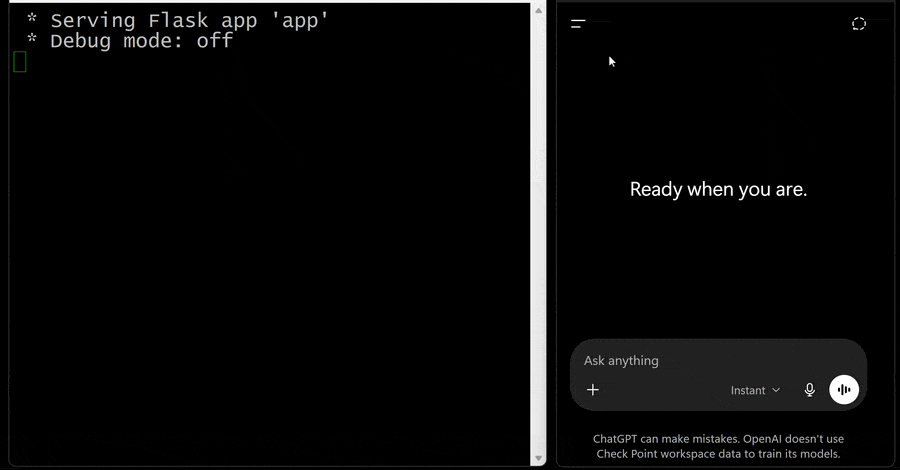
According to reports shared by Eli Smadja, head of research at Check Point, the vulnerability could have enabled silent chat data theft, phishing, and malware delivery, including zero-click data exfiltration within the ChatGPT desktop application. The root cause of the problem stemmed from HTML page previews inside ChatGPT code blocks. These previews are designed to allow HTML content to be rendered directly within the application interface to enhance user experience and utility.
However, executing user-supplied HTML and JavaScript inherently introduces security risks, prompting developers to isolate the content inside a secure sandbox. This sandboxing mechanism ensures that rendered code cannot directly access sensitive data stored within the main application, such as user cookies and local storage. Furthermore, the sandbox is engineered to prevent the rendered content from communicating with external resources without explicit user consent. Lockdown Mode was implemented to act as an additional security barrier, mitigating data exfiltration risks by strictly limiting outbound network requests that could otherwise be utilized to transfer sensitive information to attacker-controlled infrastructure.
Despite these precautions, researchers at Check Point identified a critical loophole in the specific manner that popup windows are handled during HTML previews. This oversight made it entirely possible for malicious actors to escape the confines of the sandbox and completely bypass the protections offered by Lockdown Mode.

Explaining the mechanics of the exploit, Smadja noted that the HTML preview feature relied on nested sandboxed frames. While ChatGPT successfully intercepted direct attempts by scripts to open new windows, the underlying sandbox permissions still inadvertently allowed popups and permitted them to escape the sandbox environment. By crafting an additional nested frame within the rendered page, an attacker could access an unmodified popup function, thereby bypassing the strict security restrictions placed upon the original HTML preview. Consequently, content opened through this secondary route was no longer subject to the same sandbox restrictions, providing a seamless avenue to circumvent Lockdown Mode.
Once these protective restrictions were successfully bypassed, a threat actor could exploit the underlying vulnerability to exfiltrate confidential data, harvest private chat messages, or deliver malicious payloads. This could be achieved through various vectors, including a crafted prompt, a malicious custom GPT, or a publicly shared chat link. Because the attacker maintained complete control over the content displayed inside the popup window, the interface could easily be leveraged to render convincing social-engineering lures. For instance, a fake ChatGPT update could be displayed, tricking an unsuspecting victim into downloading malware simply by persuading them to click on a malicious link.
Security analysts observed that the underlying issue was not strictly limited to the Electron-based desktop environment. Instead, it underscored a broader industry lesson regarding how weaknesses existing outside the direct scope of the core AI model can severely undermine overall AI security controls. Following responsible disclosure protocols, the vulnerability was swiftly addressed and patched by OpenAI on September 18, 2026.
Reflecting on the implications of the discovery, Smadja emphasized that while Lockdown Mode was specifically engineered to reduce the possibility of sensitive data leaving a conversation through potentially malicious outbound requests, a vulnerability in an entirely separate application feature provided an unexpected pathway around that vital security boundary. This finding brings to light a significant enterprise security challenge: artificial intelligence security controls are only ever as robust as the wider application environment that surrounds them.
The disclosure of this flaw coincided with a series of other high-profile security findings involving the popular AI platform. Just a week prior, security researchers at Parameter Labs detailed an alternative method to bypass ChatGPT’s sandbox and Content Security Policy. That specific vector allowed attackers to take over a user’s account merely by sending an attacker-controlled public ChatGPT share link and prompting the victim to click the HTML preview once, especially if the HTML block was marked as previewable and opened automatically.

Mukul Goyal, the security researcher who analyzed the account takeover vector, explained that an attacker could create a malicious conversation, publish it using standard sharing features, and distribute the link to another user. When the victim opened the shared link, the payload executed within the context of chatgpt.com, granting unauthorized access to the victim’s authenticated web session.
Check Point clarified that these two shortcomings represented distinct vulnerabilities operating on the same fundamental component. While the Lockdown Mode bypass focused on neutralizing security boundaries and enabling data exfiltration or malware delivery, the account takeover bug enabled arbitrary JavaScript code execution outside the sandbox, compelling the victim’s browser to make unauthorized API requests on their behalf. Researchers noted that this sequence of events clearly demonstrates how every newly introduced feature in complex software systems represents an opportunity for unforeseen vulnerabilities to emerge.
Earlier in September, Check Point also demonstrated a covert cross-account command channel. This sophisticated technique allowed an attacker to utilize an unsuspecting victim’s active ChatGPT session to execute hidden tasks in the background using the various tools, data streams, and connected applications available to that session, all while the user engaged in a completely normal, visible conversation.
Through this covert channel, a victim might receive a perfectly standard, expected answer to their visible request while the attacker’s hidden task was processed separately in the background, with the resulting data exfiltrated across accounts. This hidden instruction delivery could be accomplished via a malicious prompt, a shared conversation, or a custom GPT. Once established within the victim’s conversation context, ordinary interactions could trigger the attacker-controlled background task without ever exposing anomalous behavior in the visible response.
These discoveries arrive amid a wave of security disclosures affecting numerous AI-driven tools, services, and autonomous agents over recent months. Security analysts have repeatedly warned about the dangers of tricking automated systems into leaking confidential data or performing unauthorized actions. As Novee Security observed, autonomous agents are rapidly becoming default infrastructure across critical domains such as continuous integration and continuous deployment pipelines, messaging platforms, support triage, and incident response. As these systems grow increasingly autonomous, the underlying software harnesses assume greater responsibility for determining what constitutes safe operations, increasing the volume of untrusted inputs reaching real execution environments.