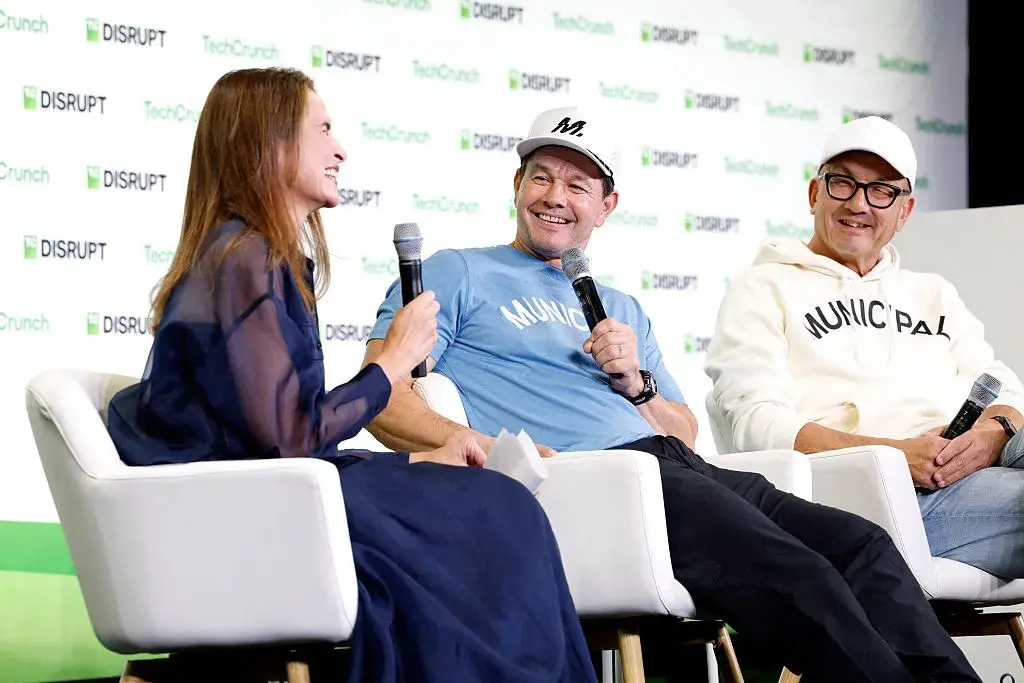
Mark Wahlberg has built an expansive business empire spanning production, dining, clothing, and fitness ventures, but his latest project has him more energized than anything else in his storied career. Speaking at TechCrunch Disrupt in San Francisco, the actor and entrepreneur pulled back the curtain on the upcoming launch of the very first Municipal Gym, a massive 32,000-square-foot facility situated just outside Las Vegas that is scheduled to open its doors in December.
The project represents a direct push into a highly lucrative and rapidly growing sector of the health market: pricey, diagnostics-heavy wellness. However, Wahlberg is positioning his venture as a more accessible alternative to the elite longevity clubs that currently dominate the space, offering high-end science and recovery tools at a fraction of the cost.
The upcoming Las Vegas facility is designed to be an all-encompassing health ecosystem. It features advanced diagnostic and recovery amenities, including comprehensive blood work, epigenetic testing, specialized recovery gear, compression therapy, cold plunges, and an on-site café serving nutrient-dense options like protein muffins. According to Wahlberg, the concept is designed to challenge the status quo of longevity clubs that charge tens of thousands of dollars annually for similar services.
This ambitious fitness hub serves as the second major phase of a business strategy that originated seven years ago with the launch of a casual sportswear line. The apparel brand Municipal famously debuted during the height of the COVID-19 pandemic in 2020—a timing that Wahlberg readily acknowledges was far from ideal, given that the retail sector was suffering widespread devastation with major names like J.Crew and Brooks Brothers filing for Chapter 11 bankruptcy.
The clothing line grew out of Wahlberg’s extensive experience as a celebrity fitness spokesperson. Over the years, he had collaborated with various athletic brands and fielded numerous offers to act as a brand ambassador, but he routinely noticed a recurring limitation. Most companies approached him with a singular focus on selling basic apparel items like T-shirts and sneakers. Wahlberg, by contrast, wanted to build something that could exert a much broader impact on people’s daily lives.
That vision extended far beyond what people wear, encompassing their nutritional habits, supplement intake, training regimens, and recovery processes. Clothing was simply the initial building block of a much grander blueprint. Wahlberg explained that the plan was to establish a foothold in the apparel market and systematically expand outward, noting that he exclusively commits his time and capital to ventures that he feels deeply passionate about and that serve as a direct extension of his personal lifestyle.
Even discounting the catastrophic economic backdrop of a global pandemic, the apparel industry remains notoriously unforgiving. High-profile companies routinely face severe operational and quality-control hurdles, such as the well-documented fabric issues experienced by brands like Lululemon. Yet Wahlberg remains entirely unphased by these industry perils, pointing instead to how naturally the physical gym environment aligns with his broader business goals.
He always believed that establishing physical brick-and-mortar spaces would ultimately serve as a powerful catalyst for the clothing brand by allowing consumers to personally touch and feel the garments before making a purchase. Furthermore, physical fitness and exercise represent a fundamental pillar of modern consumer lifestyles.
While Wahlberg’s venture aims to democratize access to advanced wellness, the broader market has been aggressively courting high-net-worth clients with exorbitant price tags. Fountain Life, a longevity company co-founded by Tony Robbins, raised $18 million to expand its network of elite wellness centers, where full annual subscriptions cost upwards of $21,500. Similarly, The Estate—another venture co-founded by Robbins alongside hospitality executive Sam Nazarian—has mapped out plans for luxury wellness centers with memberships reaching $35,000 a year. Equinox has likewise established a growing waitlist for its Optimize longevity add-on, which costs $36,000 annually on top of a traditional gym membership.
Municipal intends to operate in that same elite luxury tier of health optimization but at a radically disrupted price point. Wahlberg asserted that the club offers a superior value proposition, promising better results at a fraction of the cost charged by established competitors. As a practical example, he noted that members will be able to access services such as three rounds of comprehensive blood work and a one-on-one consultation with a physician to identify genetic predispositions for just $99, with targeted supplements and hormone therapy seamlessly integrated into the offering.
When asked whether the new gyms would function primarily as storefronts for his existing business interests, such as his proprietary protein and supplement brand P.I. Nutrition, Wahlberg indicated that retail is only part of the equation. What he is truly constructing is a complete, soup-to-nuts health and wellness ecosystem where every conceivable fitness, nutritional, and recovery need is met under one roof.
Although he refrained from disclosing a precise target for the total number of locations he plans to open, Wahlberg described the brand’s overarching growth strategy as aggressive. He noted that real estate developers and property landlords who toured the initial Las Vegas facility have already responded enthusiastically, offering prime AAA locations on exceptionally favorable commercial terms, complete with generous tenant-improvement allowances to help subsidize the build-out costs.
Wahlberg’s history with fitness chains includes high-stakes gambles that offer hard-earned lessons. During an earlier episode of his HBO reality series Wahl Street, viewers watched him dive deeply into the fitness franchise F45 in 2019, buying into the company—known for its fast-paced 45-minute group workouts—at a valuation of $450 million. The company subsequently went public in 2021 before experiencing a severe stock collapse that ultimately led to its delisting from the New York Stock Exchange in 2023. Reflecting on that tumultuous chapter, Wahlberg acknowledged that the experience provided invaluable business insights.
His primary takeaway from the F45 venture centered on the importance of aligning exclusively with partners and stakeholders who share his exact operational philosophy and long-term vision. He also realized that he fundamentally prefers a traditional big-box gym model over hyper-specialized boutique classes. While quick group workouts cater to individuals with severe time constraints, Wahlberg envisions Municipal as a destination where members linger for hours to take advantage of a complete suite of services. He criticized the prevailing fitness industry business model built on signing up members who rarely attend, stating that he cannot comprehend a philosophy that relies on absentee customers.
The name Municipal holds deep personal significance for Wahlberg, who grew up in impoverished circumstances in Boston as one of nine siblings, spending his youth playing sports on public basketball courts and municipal golf courses. He frequently emphasizes the formative lessons learned on the blacktop, where children learn how to win, lose, compete, and pick themselves up after a setback.
Wahlberg has never concealed the challenges of his troubled youth, which included a stint in a correctional facility during his teenage years. However, his life trajectory shifted dramatically thanks to the mentorship of key figures in his community, including Father Jim Flavin, a Boston-area parish priest who has remained a guiding presence in his life since he was 13 years old. The actor wants the new gyms to embody that same spirit of mentorship, camaraderie, and mutual support. He describes Municipal as a space not just for hard work, but for cultivating community and challenging individuals to become better versions of themselves.
The venture is deeply personal for the actor, who frequently reflects on his journey from a disadvantaged inner-city childhood to monumental commercial success. He hopes to serve as living proof to at-risk youth and inner-city children that difficult life circumstances can be overcome through relentless effort and dedication.
Now at age 55, Wahlberg notes that his personal priorities and wellness goals have shifted significantly. While his younger years were defined by a desire to achieve a specific aesthetic, his current focus is entirely functional. He simply wants to wake up feeling energized and ready to conquer the extensive schedule of professional and personal commitments he has mapped out for each day.
Currently, Wahlberg’s professional plate is remarkably full. Aside from managing the rollout of Municipal, he is actively engaged in preparation for a prominent film role portraying Pete Rose and is closely supporting his daughter’s rapidly advancing competitive equestrian career. His anticipation for the Las Vegas gym opening is so intense that visiting the active construction site feels like watching paint dry. When questioned about whether he is actively hunting for additional business acquisitions, he shrugged off the notion, stating that he is not scouring the market for his next project. Yet, true to his entrepreneurial nature, he quickly added that if an extraordinary opportunity were to present itself, he certainly would not turn it down.