
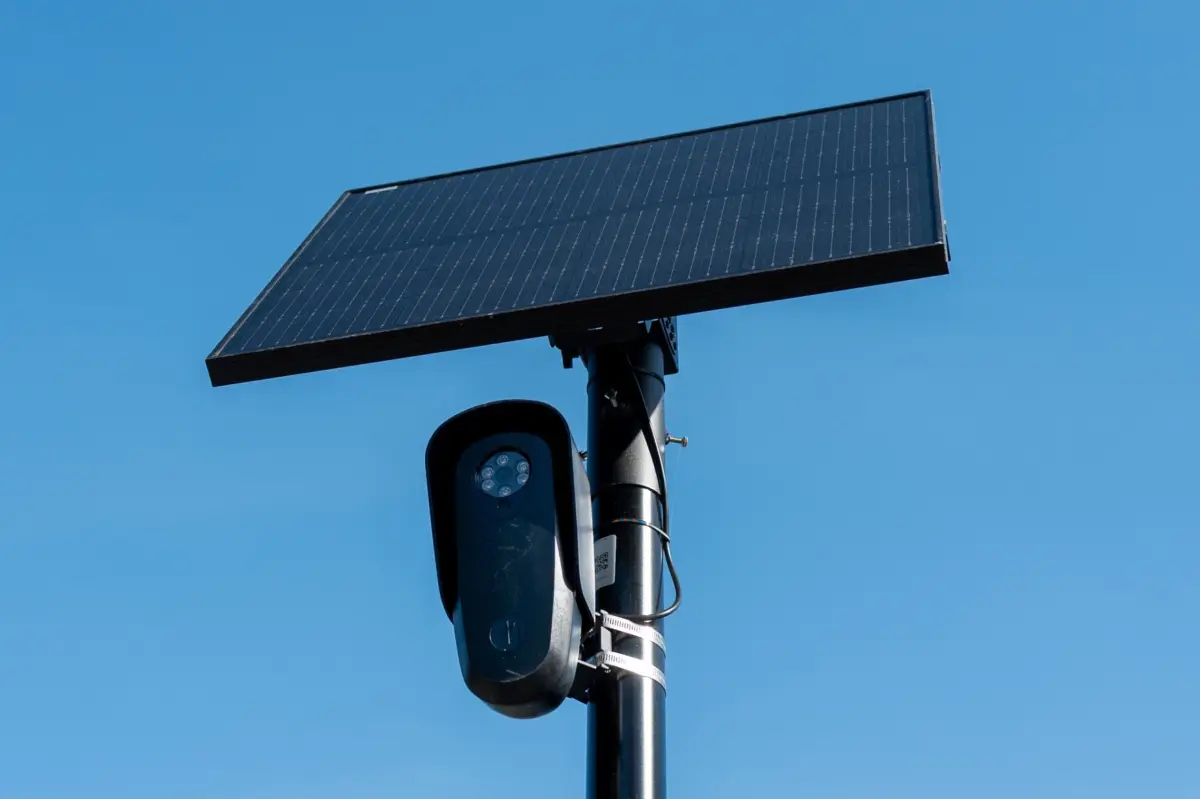
In a ruling that has sent ripples through the legal and technological landscapes, a federal judge in Oklahoma has concluded that a Tulsa County Sheriff’s deputy violated a motorist’s Fourth Amendment rights by utilizing a Flock Safety automated license plate reader database to search her vehicle information without a warrant.
The decision, initially brought to light through reporting by 404 Media, does not establish a nationwide binding legal precedent across all federal circuits. However, legal experts note that it stands as one of the first explicit rulings by a federal judge declaring that the use of a Flock Safety database search constitutes an unconstitutional act under current search and seizure laws.
The case centers on a traffic stop and subsequent vehicle search conducted by a Tulsa sheriff’s deputy. According to the written opinion by U.S. District Judge Sara Hill, the deputy queried the Flock Safety network for the target vehicle’s license plate information without obtaining a search warrant beforehand. Judge Hill noted in her ruling that the deputy possessed "no apparent reason" for executing the search "other than the fact that [the woman’s vehicle] had a California license plate."
Following the initial database query, the deputy tracked the woman’s historical travel patterns derived from the network of automated cameras and used that data as part of the justification to search her automobile. That search ultimately led law enforcement officers to allegedly discover 91 pounds of methamphetamine inside the vehicle.
Despite the substantial quantity of illicit drugs recovered, Judge Hill ruled that the constitutional violation tainted the entire sequence of events. Applying foundational criminal procedure doctrine, she wrote that all physical evidence and information obtained following the initial database search "must be suppressed as the fruit of a poisonous tree." Because the underlying search of the Flock database lacked a warrant and was executed without reasonable suspicion or probable cause linked to a specific crime, the subsequent vehicle search and its evidentiary yields could not legally stand in court.
Beyond the immediate particulars of the Oklahoma traffic stop, Judge Hill’s decision took broader aim at the systemic implications of warrantless queries into automated license plate reader networks. She addressed the constitutional complexities of tracking individual movements, emphasizing that monitoring people’s locations—even when those individuals are traveling openly in public spaces—becomes deeply problematic when law enforcement agencies are granted the capability to indiscriminately and passively catalog citizen whereabouts over extended periods. She pointed out the constitutional hazards of retaining such vast repositories of data to be queried for any purpose whenever it is convenient for investigators.
"This is a type of indiscriminate mass surveillance," Judge Hill wrote in her strongly worded opinion. She contrasted the technology with more focused investigative instruments, noting, "It is not targeted on a single individual, as in Carpenter v. United States," referencing the landmark Supreme Court precedent that addressed how government agencies access historical location data generated by cellular phones. Instead, she described the automated system as a blanket utility that "collects information about all vehicles that pass by any network-connected camera at all times, and it serves up the information to law enforcement on demand."
Judge Hill’s ruling arrives amid a rapidly intensifying national debate over the deployment of automated license plate readers and private surveillance infrastructure by public safety agencies. Critics from across the political spectrum have increasingly voiced alarm over privacy violations, civil liberties implications, and the potential for scope creep. In response to these mounting concerns, numerous local and state governments across the United States have curtailed or entirely banned the use of the technology. Notably, state authorities in Florida and Texas have moved to block the implementation of Flock cameras within certain jurisdictions over data privacy anxieties.
The legislative pushback has also reached the halls of Congress. Senator Bernie Sanders, an independent from Vermont, introduced legislation known as the Block Flock Act. The proposed bill aims to place a strict federal ban preventing federal agencies from utilizing automated license plate reader networks like those operated by Flock Safety, drawing a sharp legislative line against federal reliance on mass surveillance tools.
Meanwhile, private sector leaders within the surveillance technology industry are attempting to navigate the mounting political and legal headwinds. Flock Safety CEO Garrett Langley has publicly called for a legislative and societal "compromise" that attempts to balance individual privacy rights with community safety initiatives. Langley’s public outreach has also included issuing direct apologies to individuals, such as women who have experienced stalking by law enforcement officers misusing the Flock system to track personal targets.
As public pushback grows, municipal cancellations mount, and legal challenges begin to materialize in federal courtrooms, the company has reportedly adjusted its internal operations. Reports indicate that Flock Safety has offered voluntary employee buyouts as part of an effort to downsize its workforce in the face of an uncertain market and shifting regulatory environments.