
Malta’s premier financial regulatory authority has taken a decisive step toward establishing legal clarity for the rapidly evolving decentralized finance sector. The Malta Financial Services Authority (MFSA) has officially issued a comprehensive discussion paper outlining a potential legal framework tailored specifically for decentralized finance, commonly known as DeFi. This forward-thinking initiative includes the formal recognition of decentralized autonomous organizations, marking a significant milestone as European policymakers continue to grapple with the complex realities of regulating blockchain-based financial services.
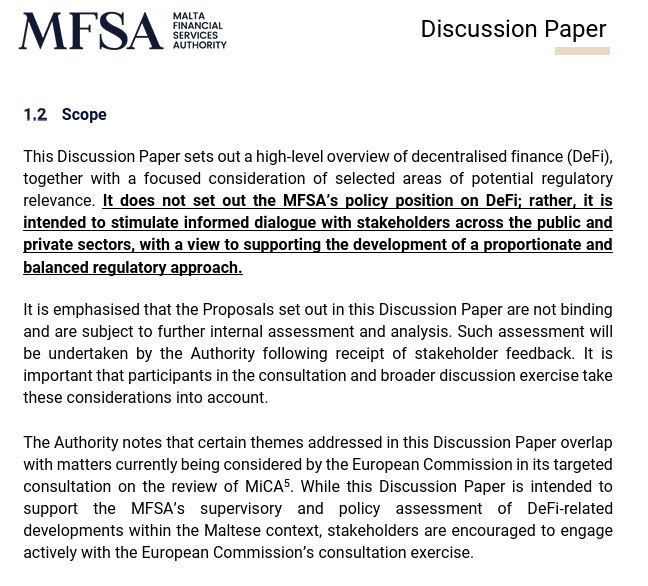
On June 12, the MFSA opened a public consultation process regarding DeFi under the overarching umbrella of the European Union’s landmark Markets in Crypto-Assets regulation. The newly released discussion paper invites critical feedback and industry insights from stakeholders through July 10. Within the document, the regulator proposes introducing an innovative legal category designated for so-called "software-based organizations." This classification is explicitly designed to encompass decentralized autonomous organizations alongside other entities that rely on software-based governance structures to manage their operations.
Rather than attempting to treat decentralized autonomous organizations as a standalone, rigid legal concept, the MFSA suggests a more nuanced approach. The regulatory body proposes recognizing them specifically as a distinct type of software-based organization. This strategic choice effectively separates the legal framework governing the organization itself from the separate set of rules that govern the underlying protocol and software code. By drawing this clear line, the regulator hopes to address the unique structural challenges posed by decentralized communities without stifling technological innovation.

This latest discussion paper builds seamlessly on Malta’s long-standing reputation as a pioneer in the digital asset industry. The Mediterranean island nation previously made global headlines in 2018 by introducing one of the region’s very first comprehensive and holistic crypto regulatory frameworks. While firmly establishing this new path forward, the regulator stresses that fully decentralized services generally fall outside the direct scope of the Markets in Crypto-Assets regulation. However, the MFSA argues that a vast number of DeFi projects continue to retain centralized features in practice. These hidden or overt centralized elements heavily complicate broad claims of true decentralization and raise pressing questions regarding regulatory accountability and consumer protection.
As the discussion paper highlights, the legislative boundaries drawn by the European Union leave room for interpretation. "MiCA excludes fully decentralised models from its regulatory scope, meaning that projects without intermediaries or central control may not need to comply with MiCA," the paper states. This realization has left both regulators and industry participants searching for workable solutions to bridge the gap between traditional legal entities and code-driven financial protocols.
EU Regulators Increasingly Turn Attention to DeFi
Malta’s newly introduced discussion paper does not exist in a vacuum; rather, it arrives amid a much broader, coordinated push across the entire European Union to clarify how decentralized finance and decentralized autonomous organizations should be treated under the Markets in Crypto-Assets regime. European institutions are increasingly realizing that the intersection of traditional financial regulation and decentralized technology requires urgent attention and continuous dialogue.
Evidence of this mounting regulatory focus appeared earlier in March, when a European Central Bank working paper revealed striking insights into the governance structures of the blockchain ecosystem. The research paper found that governance and control across four major DeFi protocols remained heavily concentrated in the hands of a small number of participants. This high concentration of power suggested that many prominent projects may ultimately struggle to qualify as "fully decentralized" under strict legal scrutiny, meaning they could inadvertently fall under the regulatory weight of the Markets in Crypto-Assets framework.
The intense debate surrounding the regulatory treatment of decentralized finance continued to evolve in May. At that time, the European Commission launched a targeted review of the Markets in Crypto-Assets regulation, actively seeking feedback from industry leaders and legal experts on a wide variety of pressing issues. These topics included the handling of stablecoin interest payments, the proper legal treatment of decentralized finance activities, and whether existing gaps in the legislative framework warrant the creation of entirely additional regulations.
However, a universal consensus on the necessity of a dedicated regulatory rulebook for decentralized finance remains elusive. Not everyone within the broader policy sphere believes that an entirely new legislative framework is necessary to manage the sector. Speaking to industry media at the WAIB Summit Monaco earlier this month, European Commission adviser Peter Kerstens offered a different perspective on the matter. Kerstens argued that European policymakers should prioritize integrating tokenization seamlessly into a broader digital asset framework rather than expending resources on pursuing a second, separate version of the Markets in Crypto-Assets regulation specifically focused on decentralized finance.
As these high-level discussions continue to unfold across European capitals, the regulatory landscape for digital assets faces immediate milestones. Crypto service providers operating within the region are currently navigating a critical transition period, with regulatory deadlines fast approaching for unlicensed operations as various grace periods associated with the broader European crypto regime draw to a close. Within this dynamic and high-stakes environment, Malta’s proactive initiative serves as a crucial testing ground for how smaller European jurisdictions can shape the future dialogue surrounding blockchain accountability and decentralized governance.