

Wall Street’s traditional wealth-creation models remain fundamentally inaccessible to the everyday investing public until long after companies complete their initial public offerings and list on major exchanges, according to Jeff Yan, co-founder and CEO of decentralized derivatives platform Hyperliquid.
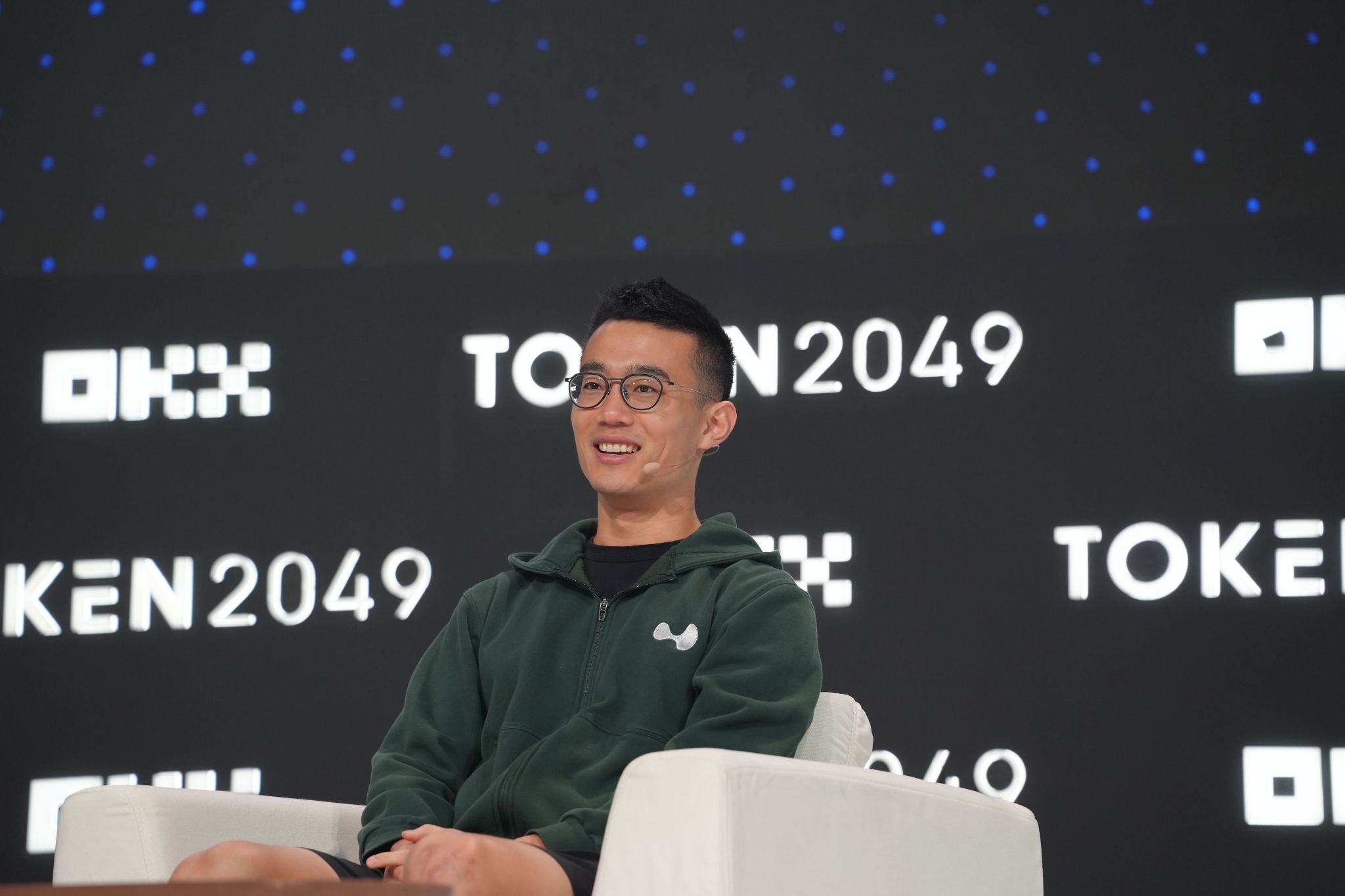
Speaking during a high-profile fireside chat at the Token2049 conference in Singapore, Yan argued that retail participants are systematically sidelined from capturing the most significant pre-listing and early-stage growth phases of modern financial assets. In his view, this exclusive structure prevents ordinary individuals from building wealth in the same manner as institutional investors and privileged insiders.
"Some assets are only tradable by a few people for many orders of magnitude of its growth, and then ultimately tradable by the public only after all of the growth has been realized by a select few people with privilege," Yan told the audience. While acknowledging that this bifurcated dynamic is deeply embedded in the broader legacy economy, Yan emphasized that this wealth-creation model is ultimately unsustainable over the long term as global investors demand greater participation and financial inclusion.
Yan pointed to Hyperliquid’s surging protocol revenue as a direct byproduct of successfully democratizing access to blockchain-based wealth creation. Rather than functioning as a closed ecosystem reserved for accredited or institutional players, the decentralized exchange allows global users to interact directly with sophisticated financial instruments on-chain.

Hyperliquid’s Mission Is Financial Openness, Not "Optimizing" for Revenue
Elaborating on the core philosophy guiding the protocol, Yan stated that Hyperliquid’s primary mission focuses on expanding access to wealth creation and fostering broader participation within the global financial system. He maintained that financial revenue is merely a secondary byproduct of delivering genuine utility to users rather than the company’s core strategic target.
"We’re not really optimizing for revenue. That’s a byproduct of providing value to users," Yan explained.
The platform’s architectural design has played a critical role in driving its adoption among digital asset traders. Yan noted that Hyperliquid’s success is partly attributable to its perpetual futures contracts featuring no expiry dates. This structural feature significantly reduces the number of complex decisions required by traders while simultaneously preventing the liquidity fragmentation that often plagues alternative trading venues.
Market data underscores the platform’s rapid ascent within the decentralized finance ecosystem. According to metrics from DefiLlama, Hyperliquid currently ranks as the third-largest revenue-generating protocol across the entire decentralized finance landscape, having hauled in an impressive $72 million in fees over a recent 30-day window.
Onchain Perpetuals Challenge Wall Street Dominance
The rapid expansion of decentralized derivatives platforms has not gone unnoticed by traditional finance observers. In July, blockchain-focused asset manager Pantera Capital published a comprehensive assessment suggesting that perpetual futures may soon cement themselves as one of the dominant trading instruments in global finance due to their inherent structural advantages. Pantera highlighted Hyperliquid’s trajectory as a prime example of how modern blockchain infrastructure is beginning to absorb traditional market volume and challenge legacy financial institutions.
This growing market pressure has increasingly drawn the attention of heavyweight traditional finance participants. Earlier, Jeffrey Sprecher, CEO of Intercontinental Exchange (ICE)—the parent company of the New York Stock Exchange—publicly urged regulators to establish a "level playing field" to accommodate the burgeoning ecosystem of 24/7 onchain perpetual futures contracts.
The traditional financial establishment’s interest in blockchain architecture extends beyond mere observation. In March, the New York Stock Exchange forged a strategic partnership with digital asset tokenization platform Securitize. The collaboration forms part of a broader, deliberate industry initiative to develop next-generation blockchain-based stock trading infrastructure capable of supporting around-the-clock trading and instantaneous settlement for Wall Street participants.
As regulatory debates surrounding 24/7 onchain trading and tokenized securities continue to evolve, executives like Yan argue that the momentum toward open, transparent, and globally accessible financial rails will only continue to accelerate.