The European Commission has officially confirmed that it was the target of a sophisticated cyber-attack driven by artificial intelligence, an incident that forced the institution to temporarily take several critical internal services offline. The breach, which highlights the growing threat posed by the malicious application of AI tools in state-level digital warfare, has prompted a major internal investigation and a coordinated response across European cybersecurity agencies.
Commission spokesperson Thomas Regnier addressed the situation during a press briefing on November 19, providing clarity on the timeline of the intrusion. According to the Commission, the suspicious activity was first detected on October 22, 2026. Following an internal review, the incident was formally confirmed as a cyber-attack four days later, on October 26. This confirmation triggered an immediate suite of mitigation measures, including the precautionary suspension of specific digital applications to prevent further unauthorized access or lateral movement within the network.
“I can confirm that the Commission has recently taken necessary steps in response to a detected cyber campaign,” Regnier stated in response to questions from the press. “As a protective and preventive measure, we temporarily took down several applications, and most of them have since then been restored.”
The incident has naturally raised questions regarding the identity of the perpetrators and the extent of the damage. As of the latest update, the Commission has not publicly identified a specific threat actor, nor has it confirmed whether sensitive data was successfully exfiltrated. Regnier noted that the investigation remains active and comprehensive, involving collaboration with specialized security bodies. However, he provided some reassurance regarding the nature of the impact, stating that he was “not aware” of any ransomware demands being issued to the Commission. Furthermore, he emphasized that, at this stage of the forensic analysis, investigators had not uncovered any evidence of a data breach specifically affecting the personal information of Commission staff.
Targeted Infrastructure and Institutional Response
In the immediate aftermath of the detection, the European Commission engaged in standard emergency procedures, which included notifying the European Data Protection Supervisor (EDPS) regarding the potential security risks. In a follow-up statement provided to Infosecurity after the press conference, a Commission spokesperson clarified that the attack was surgical in nature, specifically targeting “individual systems.” As part of their established security protocols, the Commission ensured that teams responsible for the impacted systems were informed promptly to mitigate operational disruption.
The internal systems affected by the shutdown included essential administrative tools. Notably, the breach impacted Sysper, the primary human resources platform utilized by EU Commission staff members for managing payslips, time tracking, and various internal administrative functions. Additionally, systems related to medical reimbursements were among those temporarily taken offline as a security precaution.
“The Commission has been working to strengthen the security of its systems and continues to take appropriate measures,” the spokesperson said. “We are also preventively checking other systems while staying in close contact with CERT-EU and the EDPS. The investigation is still ongoing. We are taking any necessary steps based on the findings.”
This confirmation follows reports that surfaced earlier in the day suggesting the breach may have exposed the personal information of employees. While the Commission has downplayed the extent of the data compromise, the shutdown of HR-related platforms underscores the severity with which the institution views the protection of its internal administrative data.
The Rise of AI-Generated Cyber-Attacks
Perhaps the most significant aspect of the disclosure is the Commission’s confirmation that the attack was “AI-generated.” During the press briefing, Regnier admitted that the adversaries had utilized a “publicly available” tool to identify and exploit vulnerabilities within the Commission’s infrastructure.

“We have seen many global cyber-attacks recently, and of course, no one is immune to this,” Regnier explained. “AI-assisted tools can be used and especially misused to detect vulnerabilities. Indeed, we can confirm that this was done with AI tools.”
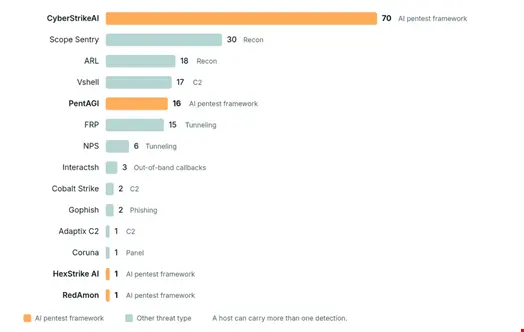
Industry analysts and reports have linked the attack to a specific tool known as ARTEX. Reports suggest that this Chinese-origin AI penetration-testing platform has seen a surge in activity over the last few months. ARTEX is characterized by its sophisticated architecture, written in the Go programming language with an embedded Next.js web console. It functions as an offensive command-and-control platform capable of interfacing with multiple AI agents and large language models (LLMs), allowing attackers to automate the reconnaissance and exploitation phases of a cyber-campaign with unprecedented speed.
The threat posed by ARTEX is not new to the international cybersecurity community. On November 5, CERT-EU—the cybersecurity emergency response team for the European Union—issued a formal warning regarding the tool, noting that it had observed multiple threat actors worldwide leveraging the platform to automate their operations. This assessment was mirrored by the United States’ Federal Bureau of Investigation (FBI), which published a Flash notice on November 13. The FBI warned that various malicious cyber actors have been actively using ARTEX to conduct campaigns against organizations across the globe since at least August 2026.
The Challenge of Defensive AI
The breach of the European Commission serves as a stark reminder of the widening gap between offensive and defensive cybersecurity capabilities in the age of generative AI. Chris Dimitriadis, the chief global strategy officer at ISACA, noted that the integration of AI into the cyber-criminal toolkit has fundamentally altered the landscape of digital threats.
“AI is enabling attackers to hack at the speed of intent,” Dimitriadis said, explaining that many organizations are currently unable to keep pace with the velocity at which these tools can probe for weaknesses. “Until organizations deploy AI defensively as fast as criminals deploy it aggressively, we will continue on this trajectory.”
Dimitriadis suggested that the Commission’s immediate priority must be a granular forensic investigation to determine the exact vulnerability exploited by the ARTEX tool. “In the short term, the Commission will investigate whether staff data has been compromised and what weakness hackers were able to use ARTEX to exploit,” he observed.
Looking beyond the immediate recovery efforts, experts suggest that this incident highlights a systemic need for a shift in how public institutions approach digital resilience. According to Dimitriadis, the path forward involves a significant commitment to human capital. “They should be bolstering their cybersecurity and building long-term resilience by investing in recruiting, training, and upskilling privacy professionals who can build defenses that are stronger than the AI tools now freely available to attackers.”
The European Commission’s experience mirrors a broader global trend where the democratization of powerful, AI-driven hacking tools has lowered the barrier to entry for sophisticated cyber-attacks. As the investigation continues, the focus remains on patching the specific vulnerabilities identified during the incident and ensuring that the Commission’s defensive posture is capable of anticipating, rather than just reacting to, the next wave of AI-enhanced threats. The ongoing coordination with CERT-EU and the EDPS remains the cornerstone of the institution’s strategy to restore full functionality while safeguarding the integrity of its digital environment.