While an official "altseason" may not yet be firmly established across the broader crypto landscape, digital asset traders are actively initiating capital rotations, and the resulting market metrics are becoming increasingly difficult for observers to ignore. Over the past thirty days, a diverse cross-section of digital assets has posted significant rallies, signaling shifting sentiment across multiple sectors of the decentralized economy.
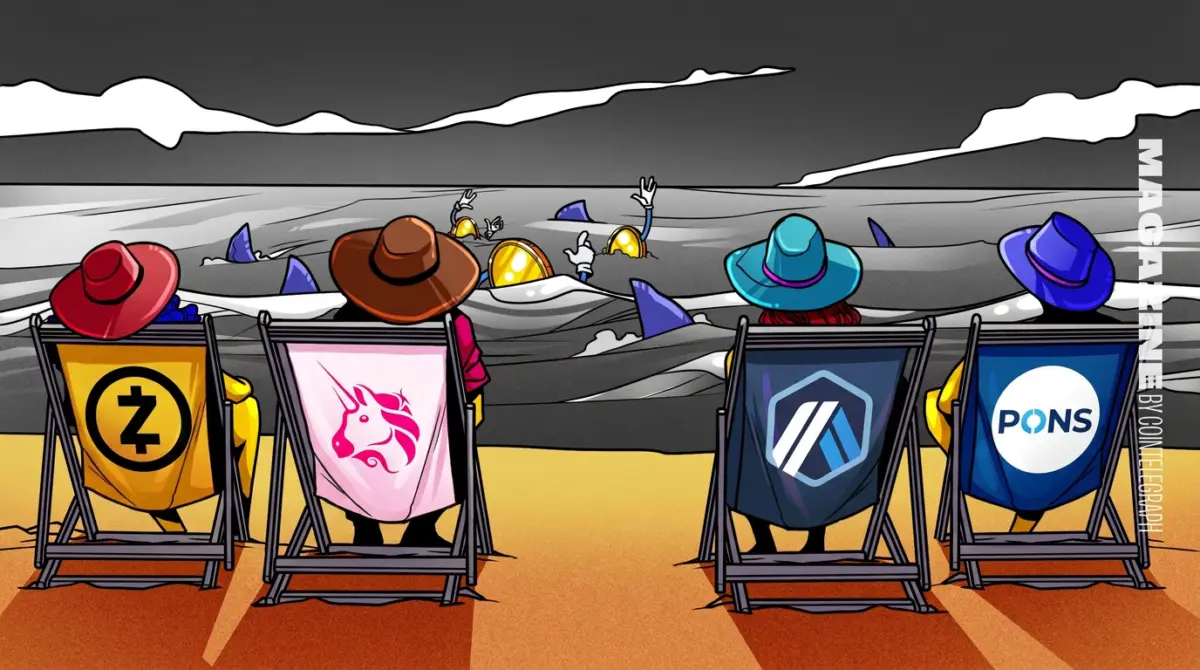
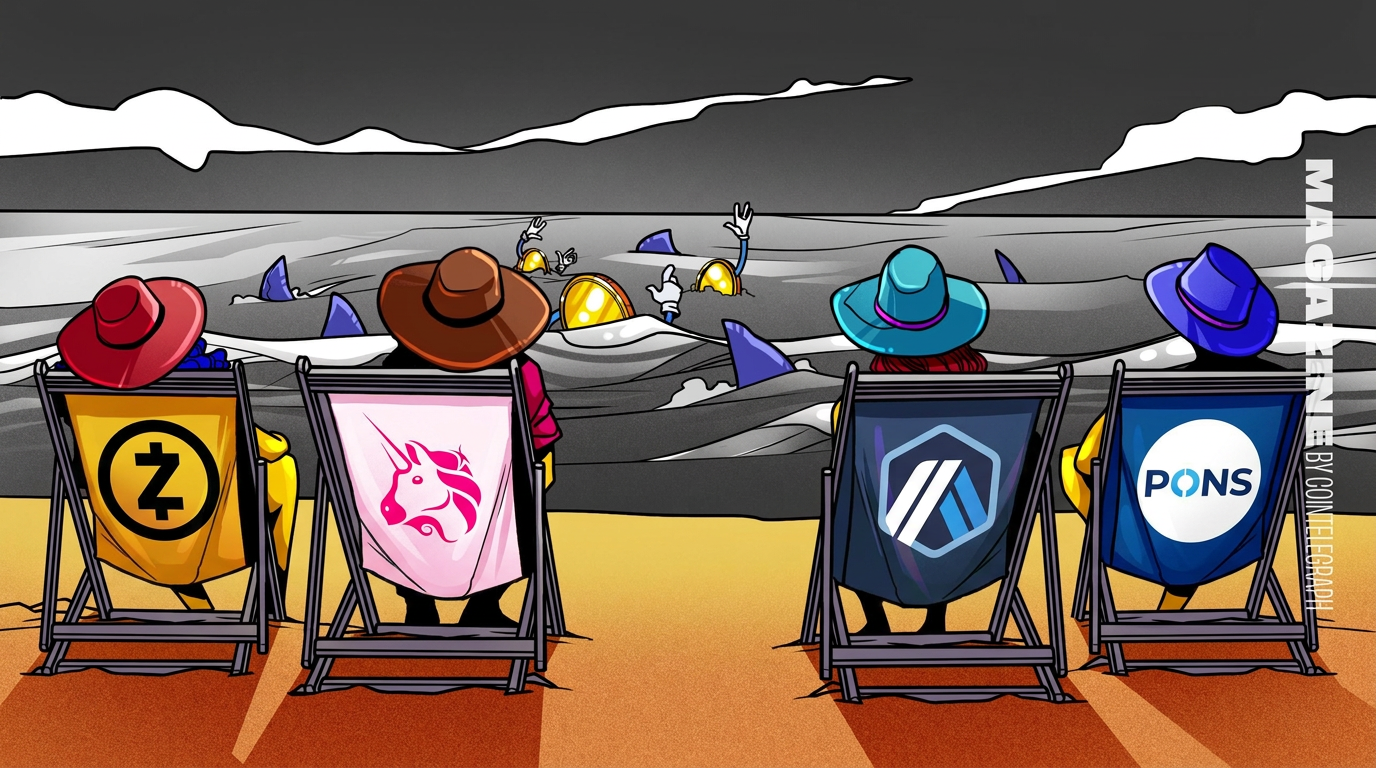
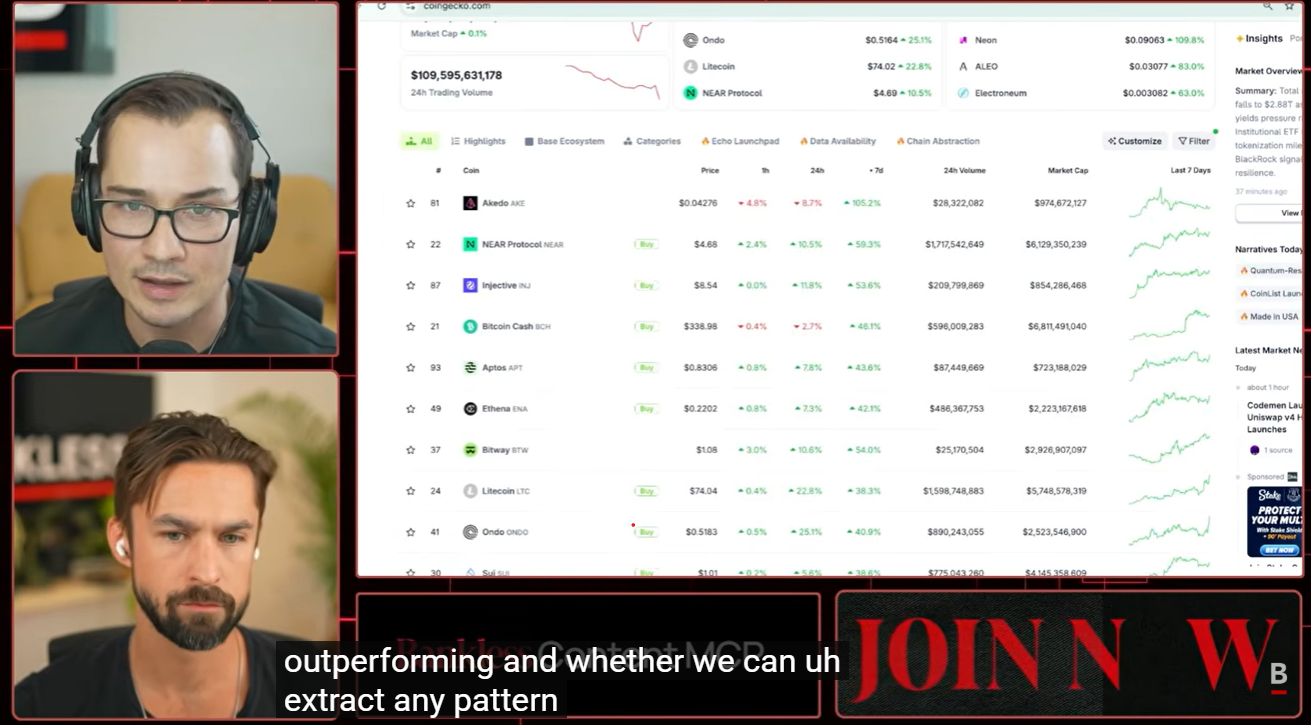
Among the standout performers over the trailing month is the memecoin launchpad token PONS, which has soared by more than 350%. Meanwhile, the decentralized finance sector has witnessed substantial capital inflows, with Uniswap’s native token UNI gaining upwards of 110%, Arbitrum’s ARB jumping more than 150%, and the artificial intelligence-focused NEAR Protocol shooting up by approximately 180%.
Additional movement has been observed across various digital asset categories. Privacy token Zcash notably climbed to a record high above $1,600, while Bitcoin Layer-2 token LIT and memecoin launchpad token PUMP have also established themselves among the top-performing assets over the period, according to data from CoinMarketCap.
Because these pronounced gains span wildly different sectors—ranging from privacy and artificial intelligence to Layer-2 scaling solutions and speculative launchpads—they do not point to a single, obvious trade. Instead, market behavior suggests that a significant portion of traders are actively pursuing coins backed by tangible business models and clear operational use cases this time around, even as speculative plays retain pockets of high momentum.
During a recent discussion on the Bankless podcast, host David Hoffman highlighted the massive gains observed in tokens such as ARB, UNI, Jupiter’s JUP, and Ondo’s ONDO. Pointing to their shared traits, Hoffman noted that these assets fundamentally generate revenue, suggesting that the current market rally could be increasingly driven by organic utility rather than pure speculation. Additional context from market performance data indicates that among the top twenty biggest gainers over a recent weekly tracking period, only two were memecoins, with Pudgy Penguins representing the sole memecoin presence on the list in the most recent week.
However, industry participants caution that fundamentals are only part of a larger, more complex picture. Sergej Kunz, co-founder of 1inch, points out that over the last thirty days, memecoins have continued to demonstrate some of the strongest growth metrics among active retail buyers. At the same time, Kunz observes that decentralized finance protocols, privacy-focused tokens, artificial intelligence projects, and tokenized real-world assets are concurrently capturing substantial market attention.
Describing the current behavioral trend, Kunz characterizes the movement as "breadth before depth." He explains that an increasing number of individual wallets are buying a broader and more diverse range of tokens, but they are generally executing these trades in smaller individual amounts. This underlying caution reflected in on-chain and trading data aligns with a broader pattern of selective market participation, where users are deploying capital selectively rather than committing to an indiscriminate, all-in approach.
So what will make this altseason different?
The central question facing market participants is whether the cryptocurrency ecosystem is finally maturing into a more discerning environment where capital is allocated primarily toward assets with genuine utility, or whether the market will ultimately revert to a speculative frenzy driven predominantly by memecoins featuring dogs in hats and viral internet humor.
At this stage, it remains too early to definitively declare a shift, particularly given that CoinMarketCap’s official Altcoin Season Index has yet to officially cross into designated altseason territory. The index currently hovers around 64 out of 100. While this represents a notable recovery from a reading of 48 the previous week, it still sits comfortably below the traditional 75 threshold required to mark the official onset of a new altseason.
Furthermore, a closer examination of market structure reveals that a relatively small cohort of major altcoins continues to account for the lion’s share of total market capitalization. Data compiled by institutional digital asset firm Talos indicates that the top ten altcoins currently account for approximately 80% of the total altcoin market capitalization, an increase from roughly 70% at the close of 2024.
Samar Sen, head of international markets at Talos, notes that this quantitative data points toward a market environment where capital is clustering tightly around a smaller group of established assets rather than rotating broadly into the speculative long tail of the market. According to Sen, Talos’s order flow data from September demonstrates a notably strong buying tilt, with sustained net buying dominating on nearly every trading day. This dynamic contrasts sharply with late 2024, when buyers and sellers were more evenly matched and the post-election rally generated broad-based outperformance across a wide array of legacy altcoins, including Dogecoin, Cardano, and Hedera.
What people are actually buying
Despite the concentration of capital among top-tier assets, Sen observes that the strongest localized performance is clustering around specific thematic narratives. These include revenue-generating protocols, on-chain perpetual platforms, and prominent decentralized finance projects such as HYPE, LIT, UNI, and MORPHO.
Concurrently, privacy-oriented assets like ZEC, NEAR, and Monero are demonstrating strong performance metrics, alongside artificial intelligence-adjacent tokens such as VVV and TAO. Talos has also recorded a surge of trading activity surrounding memecoin launchpads like PUMP and PONS, while assets tied to the Robinhood ecosystem and alternative tokens like the USELESS memecoin have also posted favorable results.
Echoing the sentiments of 1inch’s Kunz, Sen emphasizes that the market is experiencing a structural increase in selectivity. Investors are consciously concentrating their capital around specific narratives and interconnected ecosystems rather than treating the altcoin market as a single, homogenous trade. Tokenized commodities, including tokenized gold, along with tokenized stocks, are attracting increased buyer interest, while artificial intelligence tokens continue to appreciate, albeit starting from a relatively modest market base.
Overall, rather than marking a wholesale, definitive shift from pure speculation to fundamental utility, the current market phase appears to be characterized by a complex intersection of competing narratives. This overlap was vividly illustrated earlier in the month when an explosion of unconventional trading pairs on retail platforms provided a glimpse into how traditional and speculative categories are beginning to merge. Tokenized equities suddenly found themselves traded directly against memecoins via novel market pairings such as BONER/HIMS and SPACEHOOD/SPCX. One such unorthodox pairing reportedly generated more than $425 million in combined 24-hour trading volume during early September, highlighting the persistent appetite for high-velocity speculative instruments alongside fundamental asset accumulation.
The case for a more fundamental altseason
Offering an institutional perspective, Michael Egorov, founder of Curve Finance and Yield Basis, notes that he is observing significantly higher levels of attention directed toward actual use cases and tangible institutional demand compared to previous market cycles.
According to Egorov, there is a tangible increase in market interest surrounding protocols that perform genuinely useful functions, successfully bridge the gap between cryptocurrency and traditional financial activity, and prove their operational viability in real-world scenarios. Stablecoins serve as a prime example of this trend, particularly regarding their expanding utilization in on-chain foreign exchange transactions and broader fintech applications. Egorov believes that the primary long-term driver for the sector will be the deepening integration of crypto-native infrastructure with the broader traditional economy.
If this institutional and practical demand continues its upward trajectory, it could ultimately provide the current altseason with a fundamentally different source of sustaining liquidity, allowing crypto infrastructure to prove its utility far beyond the confines of speculative digital asset trading. However, market participants acknowledge that achieving this broader integration remains a substantial long-term objective.
Who is actually driving the rally?
Market data from Talos introduces another critical nuance regarding the participants fueling the current price action. Dealer participation in altcoin trading has experienced a notable decline, falling from approximately 65% at the end of 2024 to roughly 32% in September, even as overall order flows maintained a robust buying trend.
Sen points out that this shift represents a significant divergence from the previous altcoin rally, suggesting that traditional liquidity providers and market makers have played a comparatively subdued role in driving the most recent market movements. Simultaneously, retail access has become notably streamlined. Exposure that once required users to navigate complex decentralized venues like Raydium or Orca can now be accessed directly through mainstream, user-friendly platforms. This structural shift effectively lowers traditional barriers to entry and broadens retail participation on a global scale.
Furthermore, professional and advanced traders now benefit from a sophisticated suite of tracking tools—ranging from sophisticated wallet monitoring to automated copy trading—that provide real-time signals regarding how capital flows across individual wallets, distinct protocols, and multiple blockchain networks. This combination of broader, simplified retail access alongside advanced analytical tools for professional participants has created a unique trading environment as the crypto market navigates its ongoing evolution.