Most security metrics in modern organizations are not built to be actively used for strategic decision-making. Instead, they are built primarily to be shown. Somewhere between the frantic preparation for a quarterly executive review and the delivery of the next stakeholder status update, a set of numbers gets assembled that looks reassuring in a boardroom meeting. Yet, these carefully curated figures tell almost no one what is actually happening across the enterprise environment during any given week. Typically, an overwhelmed security professional pulls the numbers together the week before the presentation, cleans up the rough edges, and presents a polished picture of a security program that is, as of that single morning, entirely fine.
This systemic issue is rarely a failure of individual effort. Security teams are constantly doing the hard work, often performing far more labor than anyone outside the department realizes. The core problem lies in the traditional reporting cycle itself, which relentlessly rewards the static snapshot. A snapshot, however, is merely a memory of the past rather than an active measurement of the present. It tells leadership how things looked precisely on the day the data was retrieved, but it says very little about the vulnerable weeks in between. Unfortunately, modern cyber risk does not keep to a neat reporting schedule or wait for leadership approval.
Gathering the Picture Is the Hard Part, and It Is Getting Harder
When industry conversations turn to security metrics, the discussion usually jumps straight into a debate over which specific numbers matter most. This common approach skips over the part of the process that actually hurts organizations on a daily basis. Before anyone can successfully report a single metric, someone has to go out and gather it from the source, and in today’s complex enterprise environments, that is a genuinely painful and time-consuming job.
The information needed to comprehensively describe an organization’s security posture is typically scattered across dozens of distinct systems that were never originally designed to talk to each other. Cloud accounts, identity and access management providers, endpoints, code repositories, and ticketing tools each hold a vital piece of the puzzle. Pulling those fragmented pieces together usually requires an engineer to log into one console after another, export massive spreadsheets, take manual screenshots, and stitch everything together by hand into something presentable for leadership. This tedious process takes days, frequently consuming the valuable time of technical personnel who were hired to perform advanced security operations, not manual data entry. By the time the final presentation deck is fully assembled, parts of the data are already out of date, simply because the underlying IT environment kept changing while the slides were being built.
Consequently, the metric that finally lands in the executive review is not really an accurate measurement of where things stand right now. It is a historical measurement of where things stood days or weeks ago, filtered through however long it took the team to collect the data. Often, it is also quietly filtered toward whatever narrative looked defensible for the security team that particular week.

Attackers Are Not Working on a Quarterly Cadence. With AI, They Are Faster Than Ever.
This persistent reliance on the stale snapshot has transformed from a minor operational inefficiency into a critical liability. The reason for this shift is straightforward: the individuals attempting to breach corporate networks have fundamentally accelerated their operations.
The integration of artificial intelligence into the attacker’s toolkit has handed adversaries a massive leap in speed and efficiency. Reconnaissance that once required days of careful manual labor by a skilled operator can now be executed by automated scripts in a matter of minutes. Phishing campaigns that historically read as obviously fake and poorly translated now arrive fluent, highly contextualized, and personalized at an industrial scale. Newly discovered vulnerabilities and software weaknesses are found and probed almost as fast as they are published. The modern threat landscape has successfully automated its slowest components, resulting in adversaries who move in hours, iterate constantly, and do not pause politely between an organization’s quarterly reporting cycles.
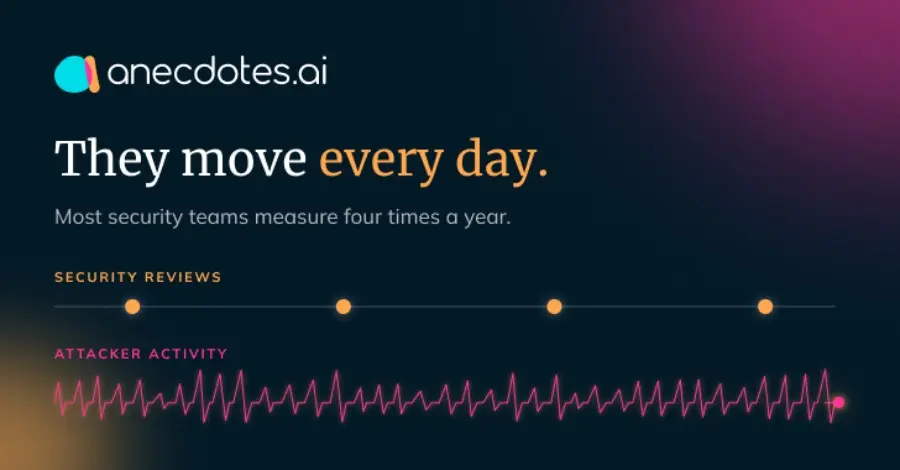
Comparing these two timelines reveals a stark and dangerous mismatch. On one side sits a picture of corporate security that is gathered by hand a few times a year, rendering it slightly stale the moment it is finalized. On the other side stands an adversary moving at machine speed every single day, including the long, quiet stretches between the organization’s last review and its next one. That operational gap was always uncomfortable for security leaders, but against AI-accelerated attackers, it has become the defining challenge of enterprise defense.
The Real Shift Is From Reporting to Visibility
The proper remedy for this structural flaw is not simply creating a better slide deck or adopting more persuasive executive language. The true fix is achieving the capability to see where the organization actually stands on a continuous basis, without requiring a human to manually assemble the data first.
This distinction is worth emphasizing, as it is easy to confuse continuous visibility with standard threat detection. This is not about catching an active attacker in the act of breaching the perimeter. Rather, it is about never losing sight of the corporate environment in the first place—knowing precisely what assets you own, what systems are properly covered, what configurations changed overnight, and where the blind spots are. It means maintaining a living, breathing picture rather than relying on a quarterly photograph. Continuous visibility into the real-time environment, pulled straight from the underlying systems that already hold the data, transforms a security posture from something that must be frantically reconstructed under deadline pressure into something leadership can simply look at and trust on any given day.

This exact operational hurdle is the problem that security platform Anecdotes was built to solve. Instead of forcing a human engineer to log into multiple disparate consoles and rebuild an enterprise-wide picture by hand, the platform connects directly to the systems a company already runs. By integrating with cloud accounts, identity providers, code repositories, and hundreds of other enterprise tools where the real state of operations lives, the technology pulls information straight from the source. The security picture assembles itself automatically and stays continuously current. As a result, the primary question shifts away from how many days it will take to gather metrics, focusing instead on what the live data indicates at this exact moment. To be clear about the scope of this approach, it does not actively chase attackers for the security team; instead, it ensures that the organization is never the last to know what its own infrastructure actually looks like.
When the security picture is always current, the day-to-day work of the security team changes shape entirely. Nobody has to spend the entire week before an executive review locked in a room gathering legacy data. The metric is simply there as today’s number, allowing the team to spend its valuable time acting on what the data actually says rather than constantly proving that the data exists.
Start With One
Achieving this level of continuous operational clarity does not require ripping out existing infrastructure and rebuilding everything from scratch at once, and any vendor claiming otherwise is likely overpromising. Organizations can begin by picking one critical area worth seeing clearly, such as asset coverage or the duration that known exposures remain unpatched. That single domain can then be connected directly to its source so that it updates itself automatically. Observing that single metric for a month can provide a clear, unvarnished look at the organization’s true security posture.
Security is ultimately not something that is magically true only on the day of an executive review. It is true, or it is demonstrably false, on an ordinary Tuesday when no one from the board is looking and last quarter’s slide deck is gathering digital dust in a shared corporate drive. On that very Tuesday, external attackers are not waiting for an invitation. The security teams that consistently stay ahead of modern threats are not necessarily the ones with the most elaborate dashboards; they are the ones who can instantly see where they stand at any given moment, without having to dig through disconnected systems to find out first.