Bitcoin (BTC) surrendered its early-week gains as Wall Street opened on Monday, retreating as geopolitical tensions escalated and doubts compounded over a proposed Russia-Ukraine “energy ceasefire.”
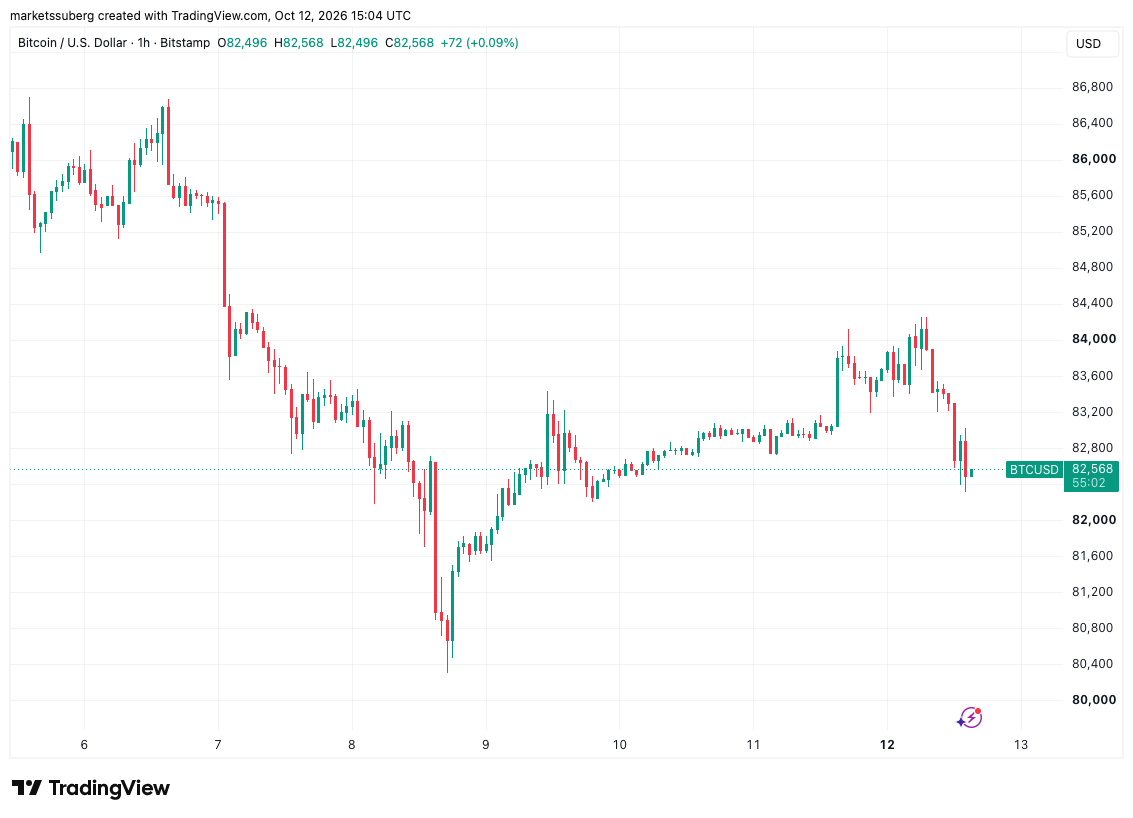
Data from TradingView showed that BTC/USD had initially climbed to $84,254 on Bitstamp, marking its highest price level since the previous Wednesday. However, the premier cryptocurrency quickly lost momentum, pulling back by as much as 2.2% as macroeconomic and geopolitical headwinds converged to dampen risk sentiment across global financial markets.
The sudden downward pressure on digital assets arrived in tandem with a sharp escalation in global energy markets. Crude oil prices surged following a flurry of concerning international developments. In the Middle East, reports emerged that an oil tanker had been struck and caught fire in the vital Strait of Hormuz, heightening fears of supply disruptions in one of the world’s most critical maritime chokepoints.

Simultaneously, the geopolitical landscape in Eastern Europe grew increasingly fragile. Ukrainian President Volodymyr Zelenskyy openly accused Russia of continuing to target critical energy infrastructure, casting a dark cloud over hopes for a diplomatic breakthrough. These accusations directly challenged the viability of a recently announced moratorium on such strikes by United States President Donald Trump, who had promoted the initiative in an attempt to stabilize energy flows and de-escalate the regional conflict.
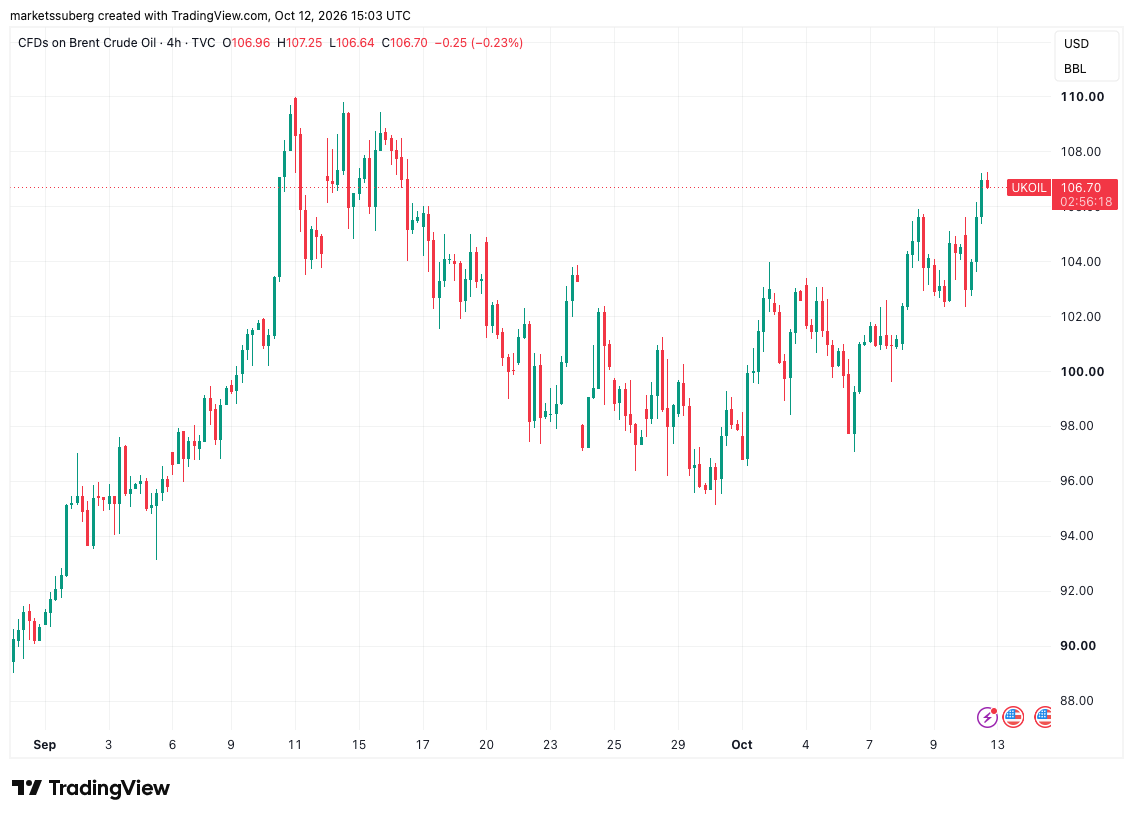
The combination of Middle Eastern shipping hazards and unfulfilled diplomatic promises sent immediate shockwaves through the commodities complex. West Texas Intermediate (WTI) crude spiked past $94 per barrel, while international benchmark Brent crude climbed past the significant psychological threshold of $107, reaching $107.25—its highest price point since September 16.
This dramatic appreciation in crude oil prices has placed traditional financial markets and risk-on assets like cryptocurrencies on high alert. Investors are acutely aware that sustained energy price spikes act as a primary catalyst for consumer inflation, a dynamic that has repeatedly triggered defensive positioning across asset classes.
These energy-driven pressures compound an already tense macroeconomic calendar. Markets are bracing for a heavy slate of critical United States inflation data scheduled for release later in the week. The Consumer Price Index (CPI) and the Producer Price Index (PPI) are slated for publication on Wednesday and Thursday, respectively. Previous market cycles have underscored the extreme sensitivity of the CPI metric to sudden surges in oil and energy prices, creating a cautious atmosphere among institutional and retail traders alike.
Weighing in on the broader commodity dynamics, Robin Brooks, former chief FX strategist at Goldman Sachs, offered a measured perspective on the oil market’s reaction. Brooks argued that oil markets may have priced in an excessive amount of risk premium, drawing attention to underlying maritime transit volumes through the Persian Gulf that continue to show resilience compared to earlier geopolitical crises.
"Oil volumes out of the Persian Gulf are around 13 million barrels per day compared to a high of 16.5 million barrels per day a few weeks ago," Brooks noted in a blog post. "This is still way better than the height of the war in March and April, but oil prices are back to their highs."
Despite his assessment of structural supply realities, the immediate psychological impact of $107 Brent crude has undeniably rattled crypto derivatives and spot markets, forcing digital asset traders to recalibrate their short-term strategies.
BTC Bid Support Seeks to Protect $82,000
As Bitcoin corrects from its weekly highs, market participants are closely monitoring key technical levels to gauge the depth of the pullback and identify potential accumulation zones. Institutional options and derivatives markets reflect a nuanced sentiment, balancing caution with underlying bullish structures.
According to insights from digital asset trading firm QCP Capital, Bitcoin options markets are currently exhibiting a dual nature. Traders are balancing defensive hedging strategies with the recognition that an eventual upside breakout remains entirely possible within the current market structure.
"Implied volatility has held firm even as spot settled back into the range, while risk reversals show a less pronounced premium for puts than usual," QCP Capital summarized in its latest market analysis. "Read together, the market looks less defensively positioned but still priced for a possible breakout." The firm added that a clean, sustained move above $87,000 would quickly bring the $94,000 level back into focus for market participants.
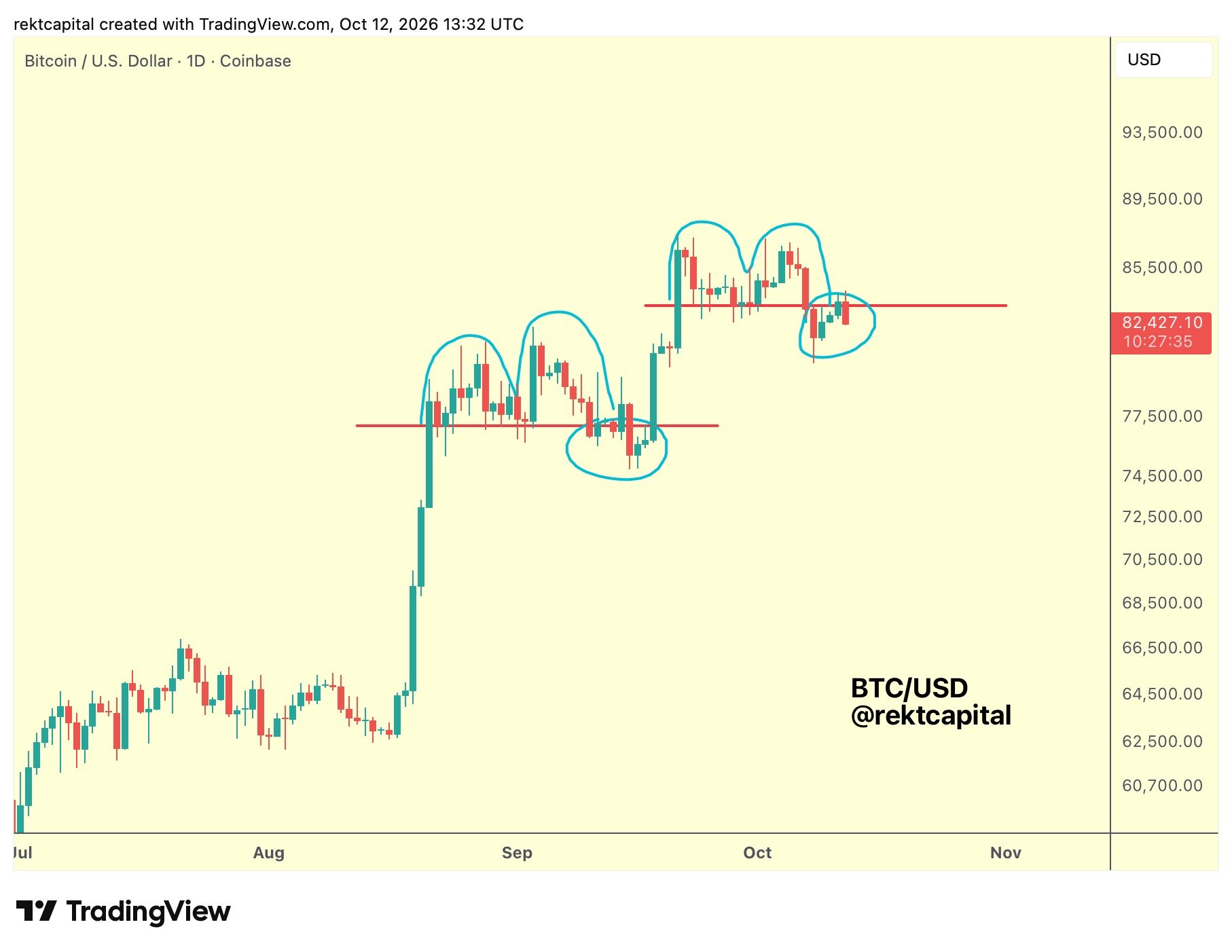
Independent trader and analyst Rekt Capital also evaluated the price action, pointing to $83,400 as a crucial local resistance level for the day. He noted that this current zone mirrors the behavior of the $77,000 price area observed from mid-August through September 21, a period that ultimately preceded a decisive upward breakout for BTC/USD.
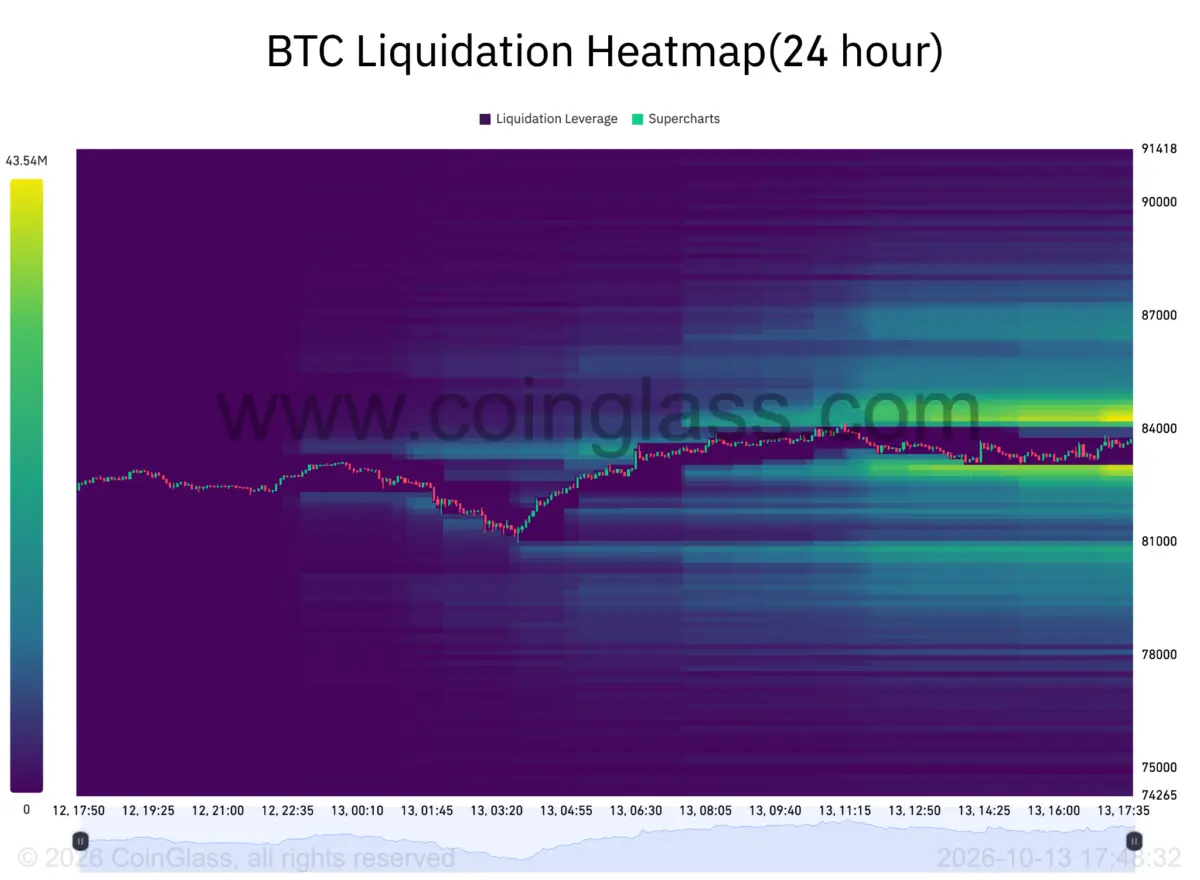
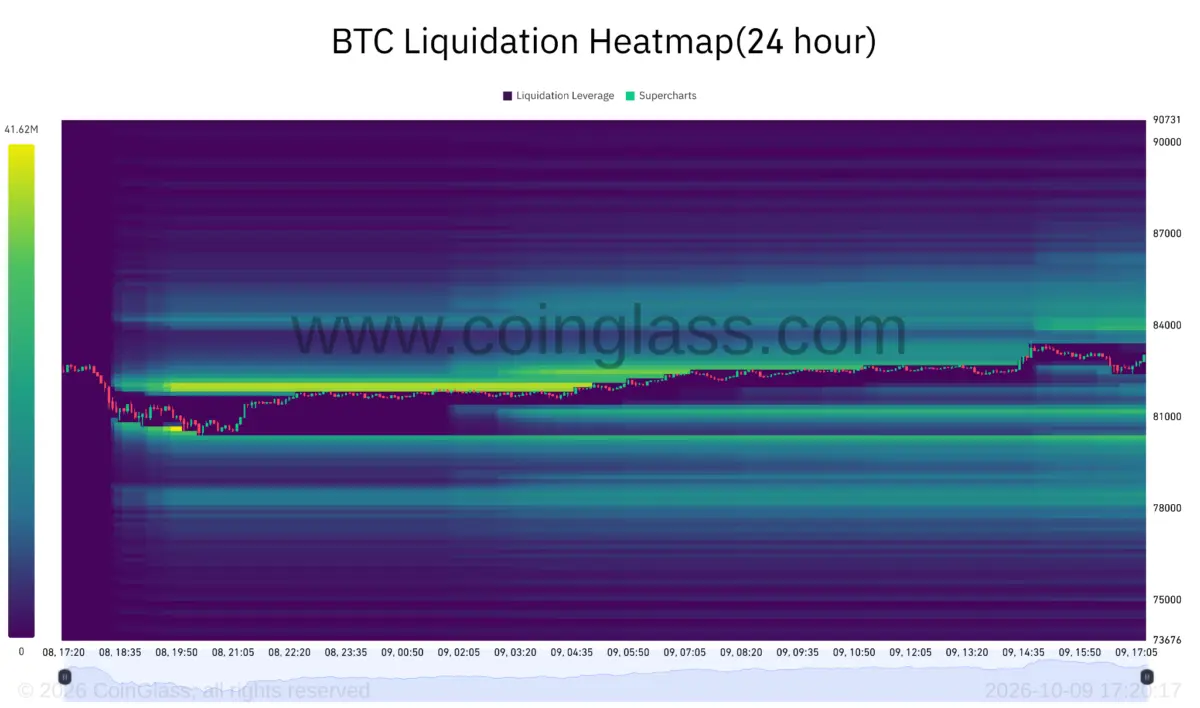
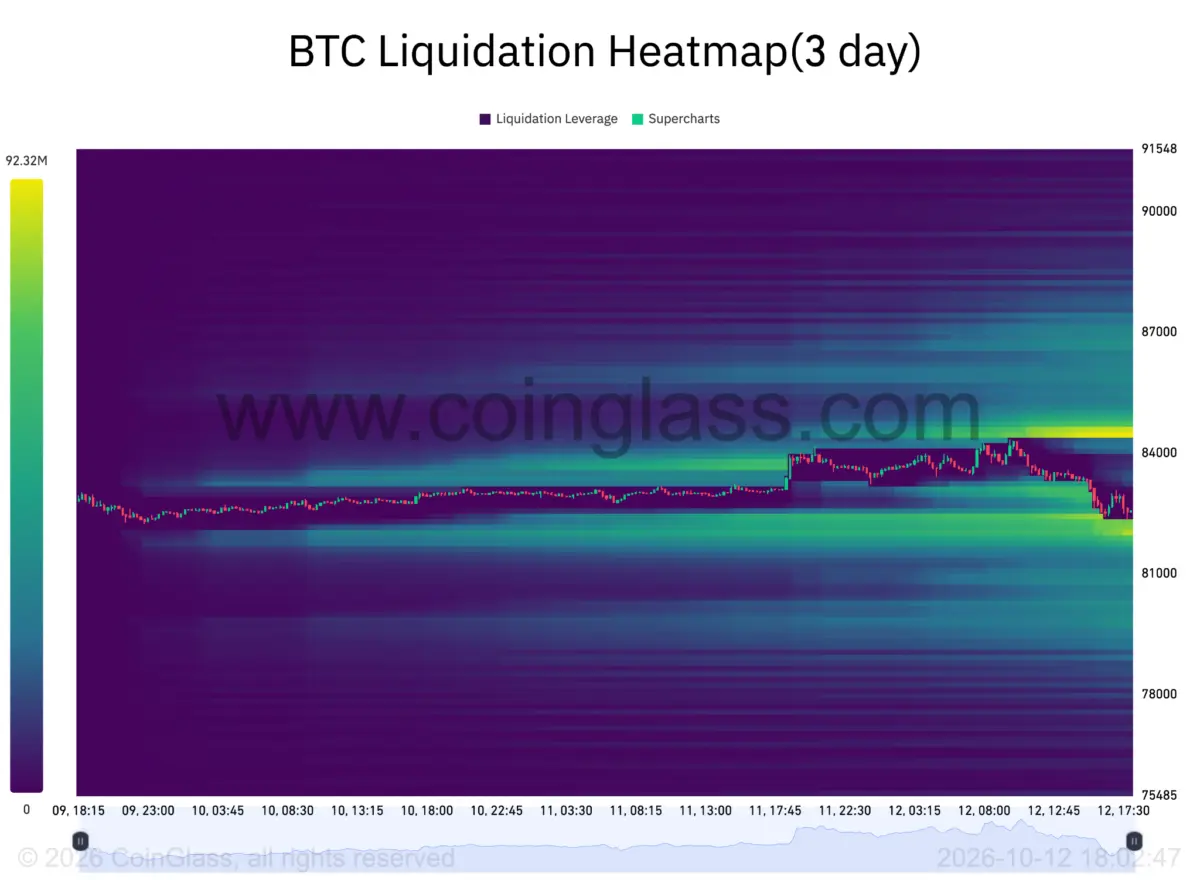
Order book and liquidation data from CoinGlass illustrate where market participants are positioning their capital as the spot price trends downward. Ask liquidity has clustered heavily around the $84,500 mark across major exchanges, with total sell orders at that specific threshold aggregating to approximately $180 million.
Conversely, strong defensive bids have begun to accumulate around the $82,000 region. As spot prices drift lower toward this zone, market participants are waiting to see whether these bid walls will successfully absorb the selling pressure and provide the necessary foundation for Bitcoin to consolidate ahead of the upcoming United States inflation data releases.