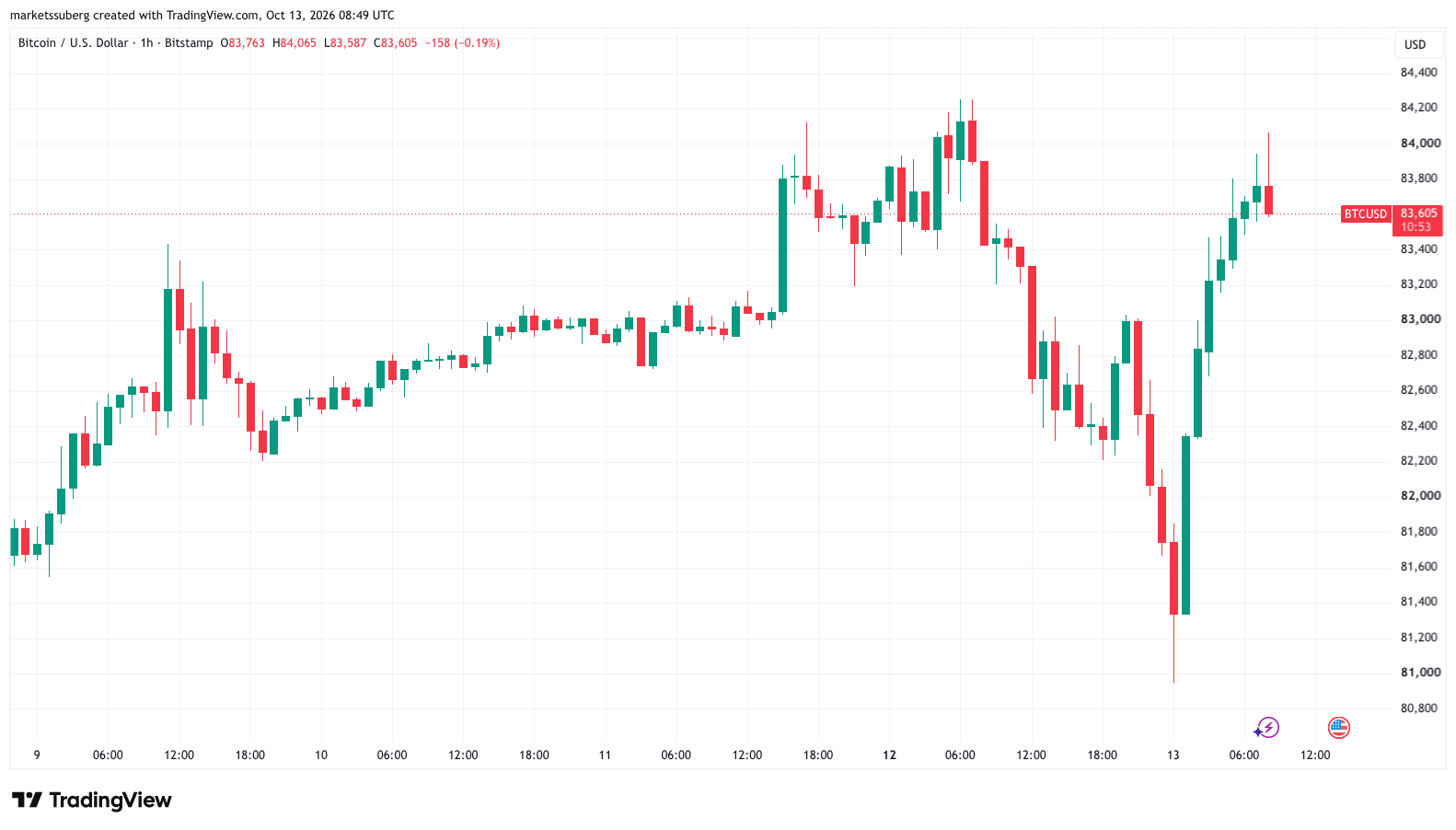
Bitcoin (BTC) staged a notable recovery on Tuesday, pushing back toward the $84,000 threshold and successfully retracing the losses recorded at the start of the week. The upward momentum in the premier cryptocurrency materialized even as traditional financial markets in Asia reeled from a sharp sell-off, specifically highlighting stress within South Korea’s technology sector. Rather than following the broader regional panic, digital asset markets demonstrated a degree of resilience, hovering near the upper boundary of their established local trading range.
South Korea’s KOSPI Loses 200-Day Trend Line as Panic Returns
The broader macroeconomic backdrop turned sour early in the week as a fresh wave of tech-focused selling swept across South Korea. Data from TradingView indicated that Bitcoin climbed more than 2.5% on Tuesday, touching $83,944 on Bitstamp and effectively wiping out the downward pressure that had driven prices lower a day prior.
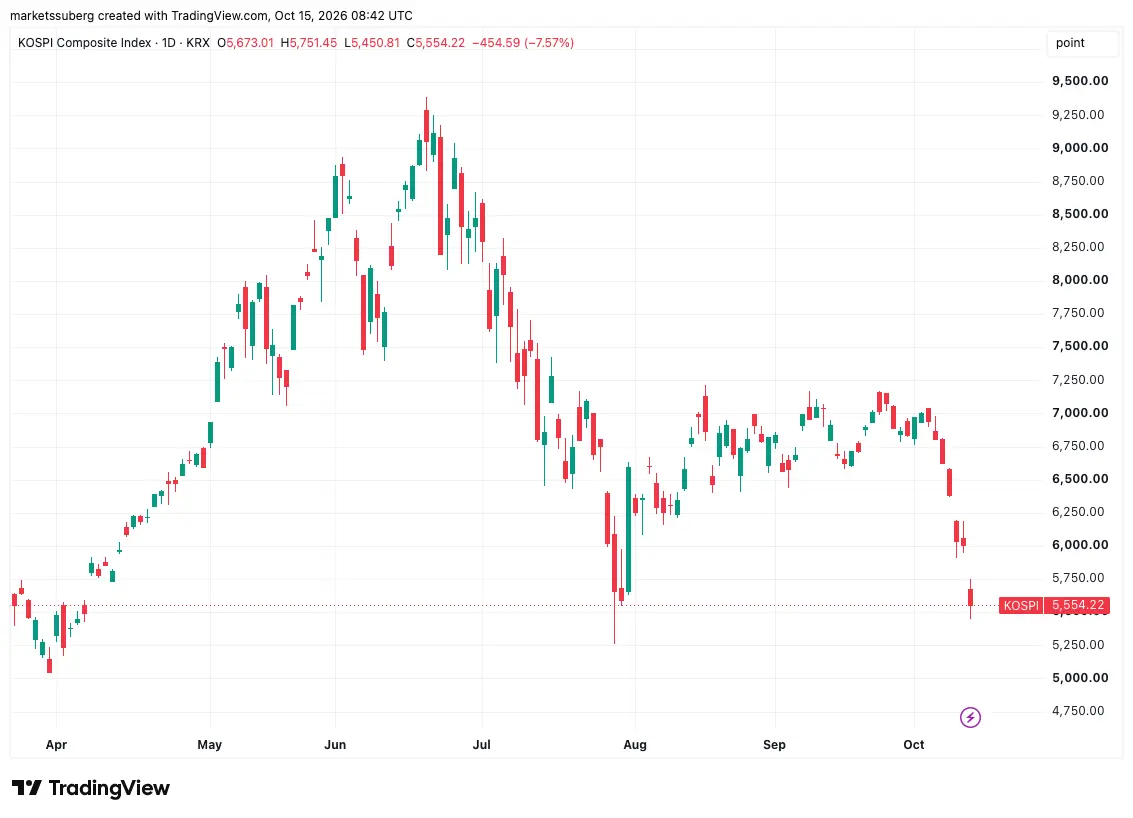
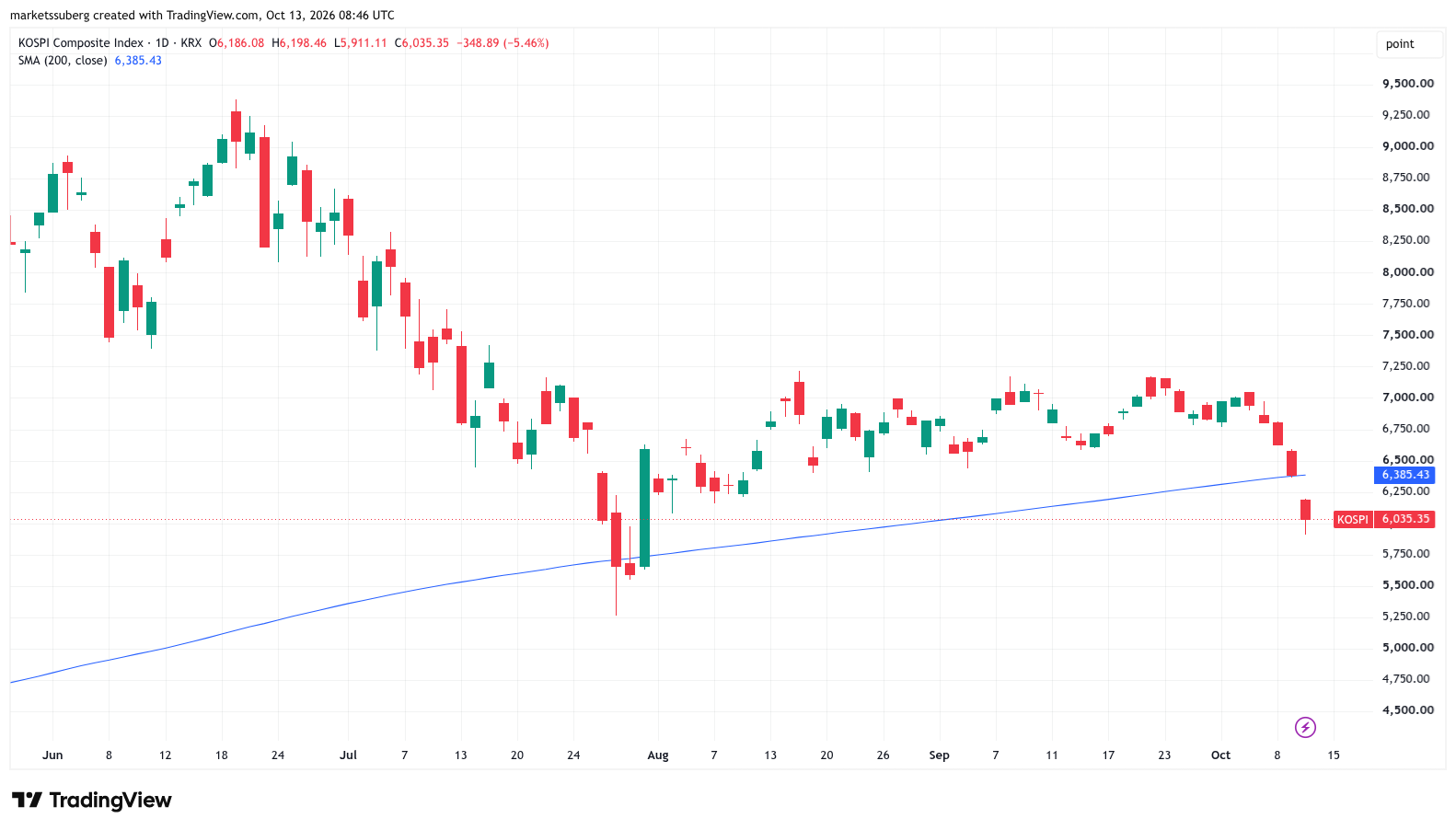
This cryptocurrency rebound stood in stark contrast to the performance of South Korea’s benchmark KOSPI Composite Index. The index extended its weekly losses to 7.4%, plunging below its closely watched 200-day moving average for the first time since late July. The breach of this critical technical level triggered renewed anxiety among institutional and retail participants alike, signaling a potential shift in market sentiment for the region.

Semiconductor heavyweights bore the brunt of the selling pressure. SK Hynix closed the session more than 10% lower, compounding ongoing operational and market challenges for Samsung Electronics, which was already grappling with the fallout from lower-than-expected third-quarter earnings reported the previous week. Market data indicates that foreign investors have offloaded approximately 173 trillion won—equivalent to roughly $129 billion—worth of shares in SK Hynix and Samsung since the beginning of the year. This massive capital flight accounts for the vast majority of year-to-date equity sales across the broader KOSPI index.
The unfolding weakness bears a striking resemblance to the sharp market correction witnessed in August. During that summer downturn, mounting anxieties over the sustainability of the artificial intelligence boom, combined with mounting corporate debt obligations tied to AI infrastructure, sparked severe losses that rapidly rippled across global financial markets.
Financial analysts point to shifting investor psychology as a primary catalyst for the current rout. Vey-Sern Ling, senior equity advisor at UBP, noted in comments to CNBC that market participants remain highly sensitive and are actively seeking opportunities to secure profits, particularly within memory and AI-related equities that have delivered outsized returns throughout the year.
Ling also highlighted emerging competitive pressures from China as a growing concern for South Korean investors, though he acknowledged that the Chinese semiconductor sector still faces substantial technological hurdles before it can fully challenge established domestic leaders.
Bitcoin Price Rebounds Despite Waning ETF Demand
Unlike the market correlation observed during the August sell-off, Bitcoin successfully avoided a copycat downturn. Instead of tracking the sharp losses in traditional Asian equities, BTC climbed toward the higher end of its prevailing local trading range, which has remained largely bounded between $80,000 and $87,000.
Market observers previously attributed Bitcoin’s relative strength during periods of macro uncertainty to expectations surrounding potential monetary policy easing by major global central banks. Attention this week has turned squarely toward upcoming United States inflation data, which precedes the Federal Reserve’s scheduled interest rate decision on October 28. Current consensus expectations suggest that central bank officials will opt to keep interest rates steady within their current target range of 2.75% to 4%.
What makes Bitcoin’s latest upward push particularly noteworthy is that it has occurred in the face of cooling institutional demand. Appetite for direct digital asset exposure via US spot Bitcoin exchange-traded funds has visibly waned over the course of the month. Cumulative net outflows from these spot ETFs have reached $451 million so far in October, a figure that includes an additional $69 million in net withdrawals recorded on Monday alone.
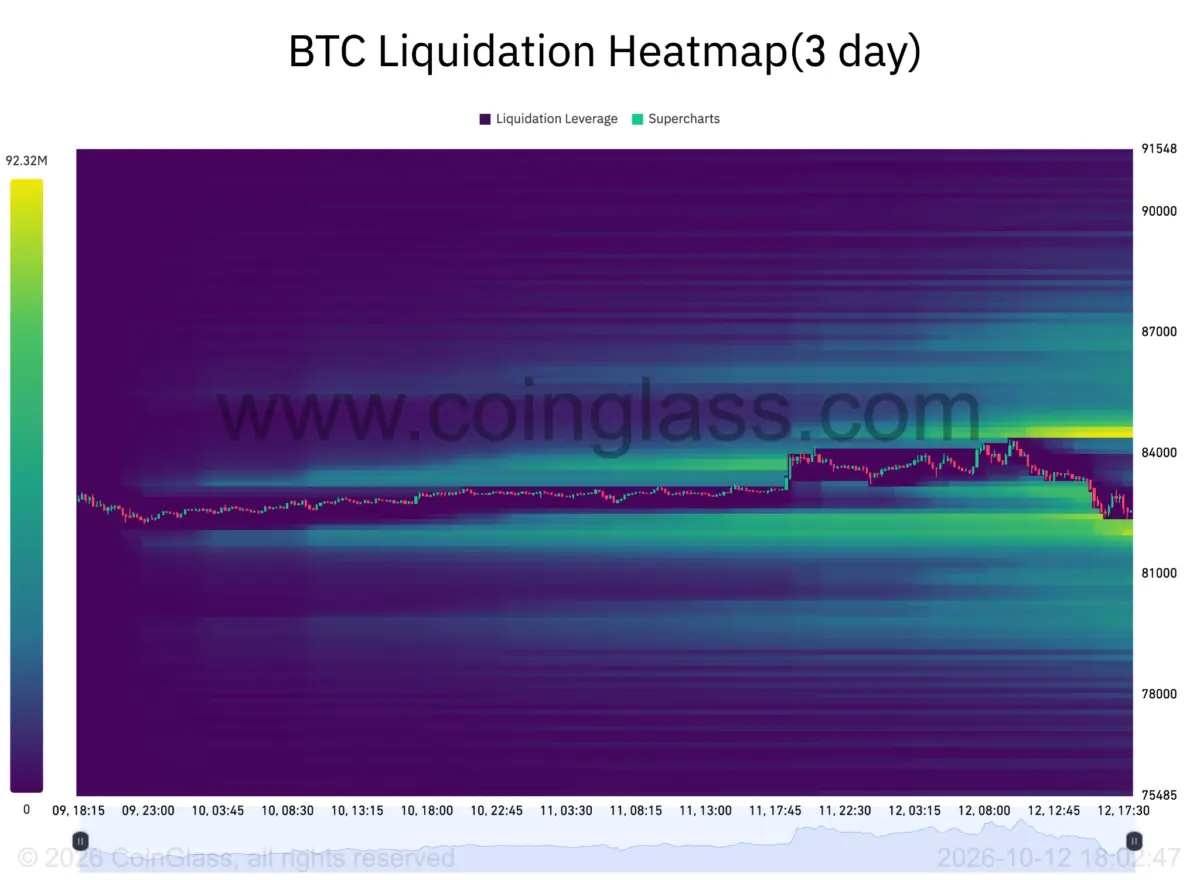
Despite the persistent outflows from institutional investment vehicles, spot market buyers have stepped in to defend key technical levels. However, short-term traders caution that bullish momentum continues to face hurdles as the asset approaches the $84,000 mark. Order book analytics provided by CoinGlass highlight a thick concentration of ask liquidity clustered just above current price levels, indicating that sellers remain active and are prepared to defend resistance zones on lower time frames as the market navigates the remainder of the week.