Among Short-Term Holders
The cryptocurrency market experienced a severe jolt as a sharp sell-off in Bitcoin and various altcoins wiped out over $1 billion in leveraged positions within a single 24-hour window. The sudden market downturn was heavily exacerbated by panic among newer market participants, who rushed to deposit tens of thousands of Bitcoin onto centralized exchanges at a noticeable loss in a bid to mitigate further financial exposure.
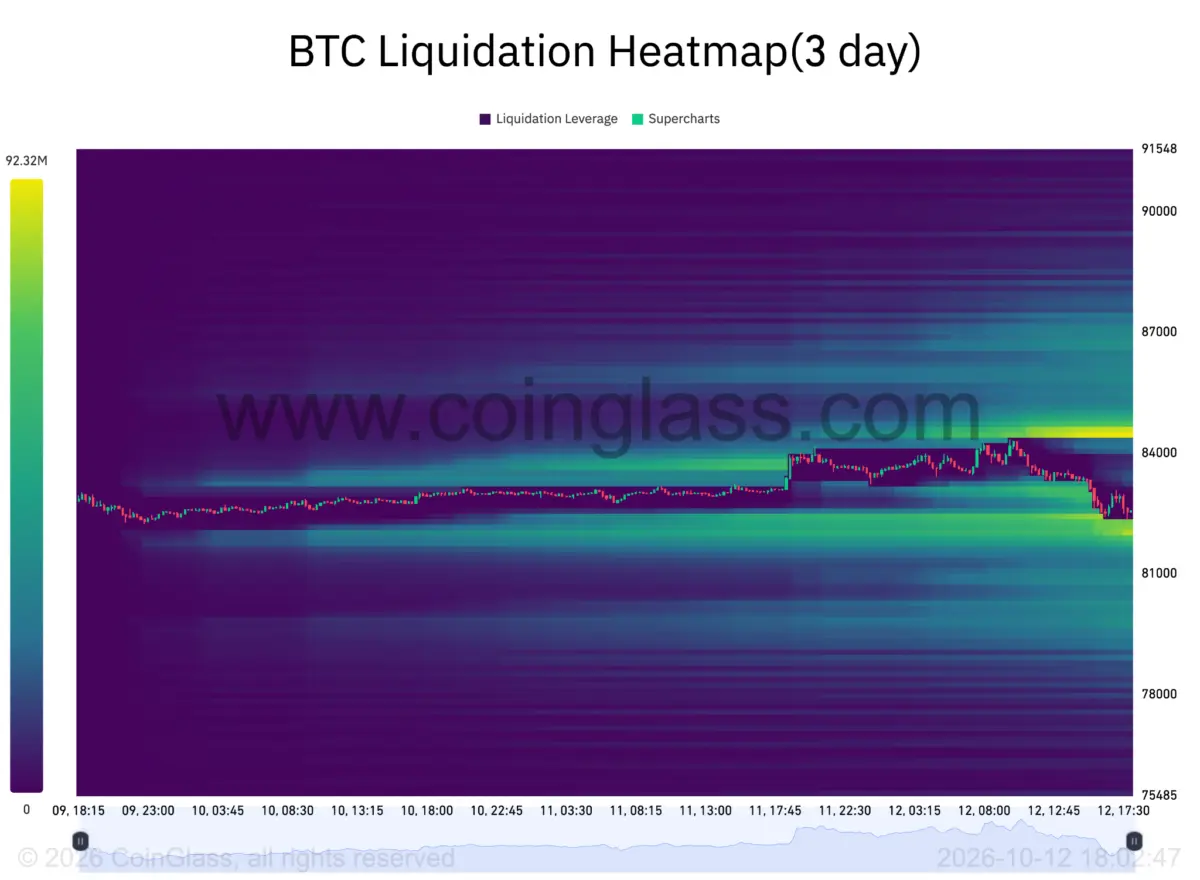
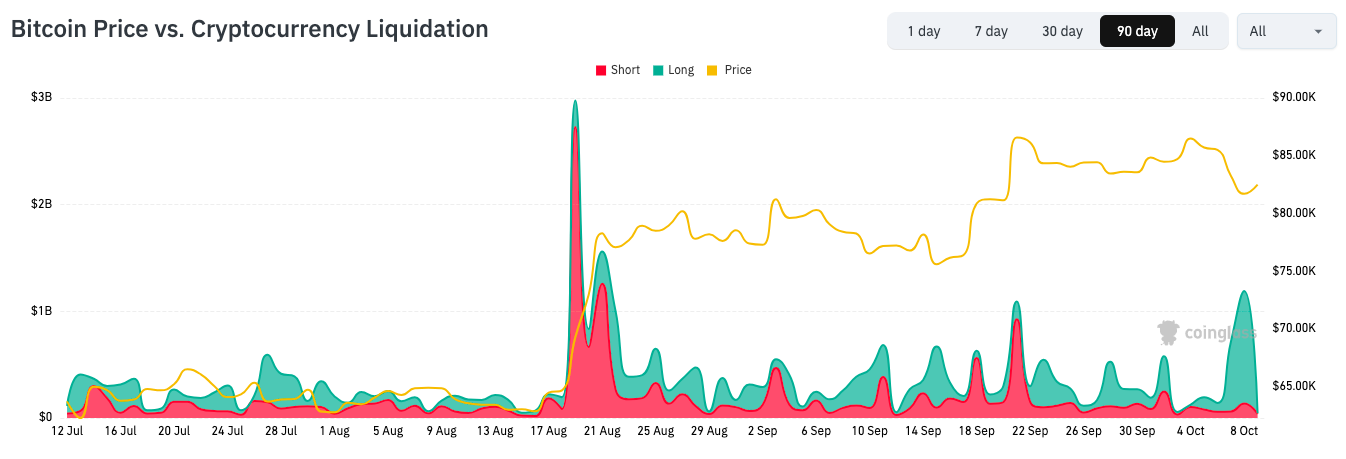
Data compiled by analytics platform CoinGlass revealed that total crypto liquidations reached an alarming $1.09 billion during the 24-hour period leading up to 10 am UTC on Friday. This massive flush of leverage marked the largest daily liquidation tally since August 21. During that late-summer surge, the BTC/USD trading pair climbed aggressively from $73,000 to $79,500, hitting two-month highs and subsequently triggering $1.3 billion in short position liquidations.
In stark contrast, the latest market flush saw long positions bear the brunt of the volatility, accounting for $1.05 billion of Thursday’s staggering total. The aggressive cascade of liquidations forced a dramatic recalibration across derivatives markets as over-leveraged traders were caught entirely off guard by the sudden downward momentum.

Bitcoin Drop to $80,350 Fuels $1.1 Billion Liquidations
The broader sell-off was catalyzed earlier in the week following reports that the United States government had moved more than 12,000 Bitcoin that had been previously confiscated through various legal proceedings. Large-scale transfers of government-controlled digital assets frequently ignite widespread speculation and anxiety across the digital asset ecosystem, as market participants routinely fear that such significant holdings could eventually find their way onto open order books to be liquidated, thereby increasing heavy selling pressure.
Amid this growing cloud of uncertainty, the BTC/USD pair slumped to a low of $80,350 on the Bitstamp exchange. This marked the lowest price point for the pioneer cryptocurrency since September 18, before a modest recovery managed to lift prices back toward the $82,500 threshold by Friday.
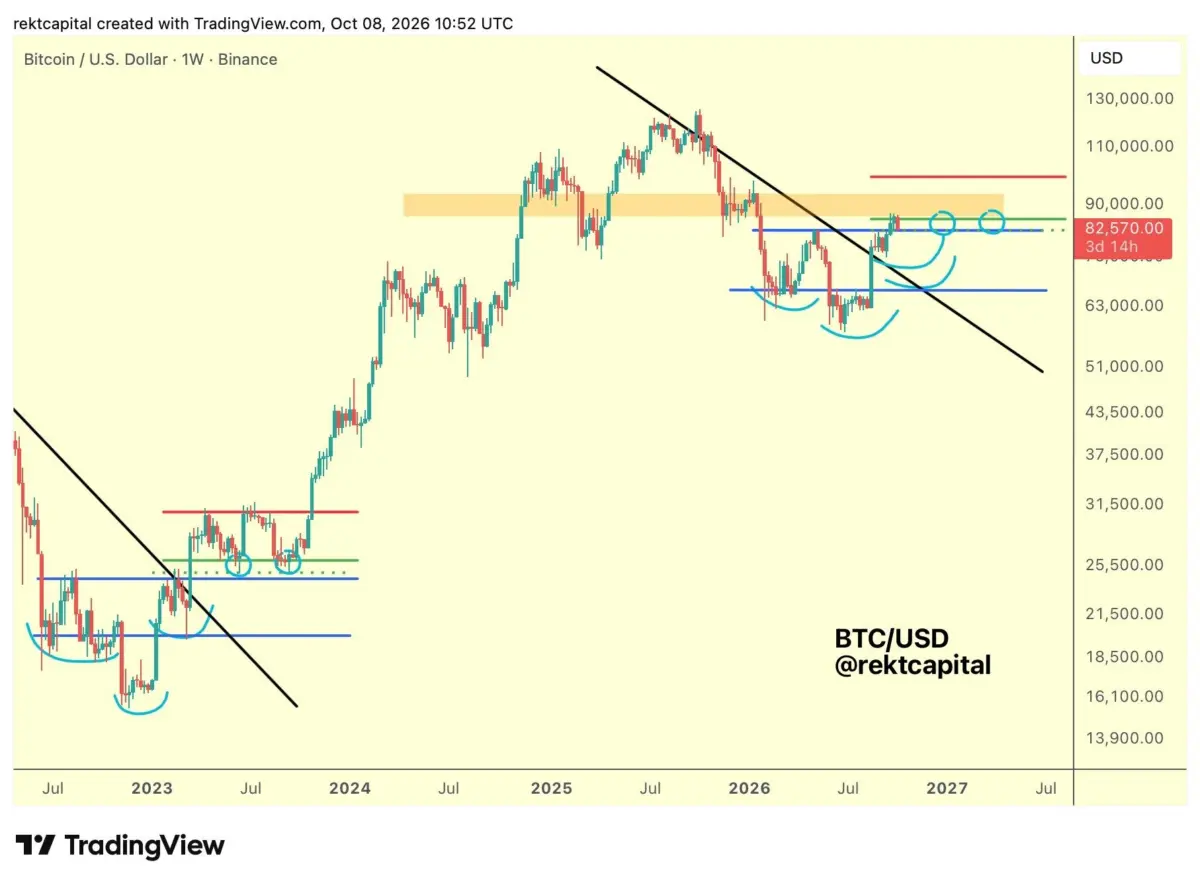
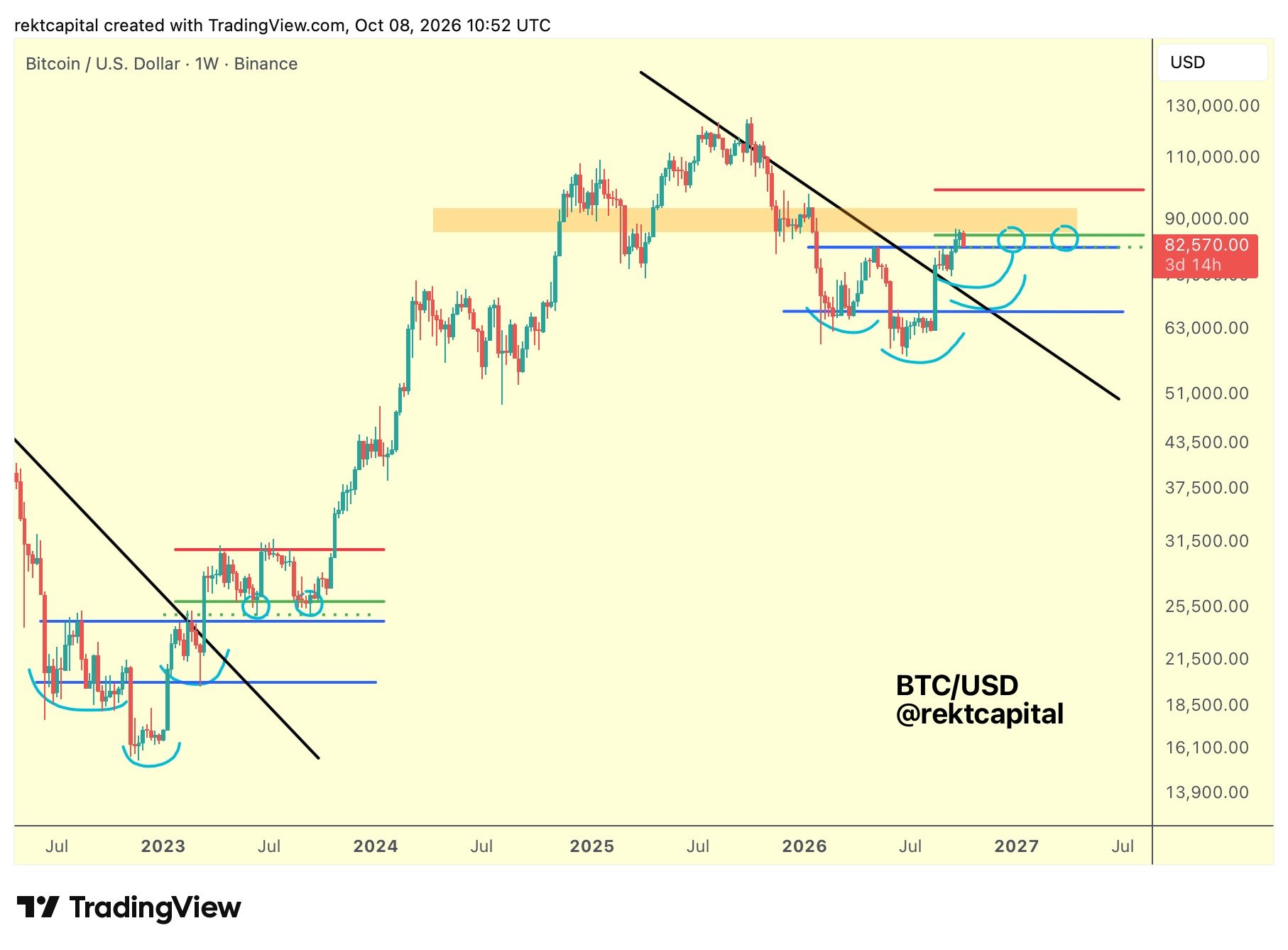
This specific price zone has played a critical technical role throughout Bitcoin’s broader macro uptrend, which has been in motion since early July. Notably, $82,500 served as the decisive breakout point for a prominent inverse head-and-shoulders pattern—a classic technical formation that typically signals a bullish reversal following a prolonged downtrend. For the wider market to maintain confidence in this ongoing recovery thesis, Bitcoin bulls must successfully defend this former resistance level and turn it into a reliable foundation of support.
Prominent trader and cryptocurrency analyst Rekt Capital, who has been closely monitoring this developing reversal structure and drawing parallels to Bitcoin’s resilient recovery during the 2023 market cycle, emphasized that the impending weekly candle close carries immense significance for the asset’s immediate trajectory.
"Bitcoin is currently failing its retest of ~$82500. Weekly Close below $82500 and turn it into resistance however and Bitcoin will be back in its Macro Accumulation Range," Rekt Capital warned via a social media post on X on Thursday.
If the weekly candle fails to reclaim and hold this vital threshold, analysts suggest that the market could drift sideways or face extended consolidation within its previously established macro trading boundaries, frustrating market participants who were anticipating a swift continuation toward new all-time highs.
Short-Term Holders Send 55,600 BTC to Exchanges at a Loss
Beyond the derivatives market chaos and technical charts, deep onchain analytics exposed mounting psychological stress among newer market participants as the asset prices tumbled.
According to insights shared by Amr Taha, a contributor to the onchain analytics platform CryptoQuant, short-term holders—defined as entities that have held their Bitcoin supply for anywhere up to six months without moving it—panicked as the market dipped. On Thursday alone, these reactive investors transferred a massive 55,600 Bitcoin to various centralized exchanges at a realized loss.
In onchain terminology, transactions executed at a loss indicate that the digital assets are being deposited onto trading platforms at a lower valuation than when they were last moved on the blockchain. This behavior typically serves as a textbook indicator of capitulation, driven by an impulsive emotional urge among retail and inexperienced investors to exit their positions to prevent further financial bleeding, out of fear that a delayed exit would result in even steeper portfolio drawdowns.
CryptoQuant pointed out that the magnitude of Thursday’s loss-driven transfer volume notably surpassed the levels recorded on June 26, when Bitcoin temporarily slid below the crucial $60,000 threshold for the second consecutive day during an earlier period of macroeconomic strain.
"Notably, Bitcoin was trading above $81,000, compared with $59,300 in June — a price difference exceeding 36%," the contributor wrote in their analysis, adding the caveat that exchange users do not always instantly liquidate the entirety of their balances the exact moment the coins arrive in their exchange-hosted accounts. Nevertheless, the sheer volume of coins moving to exchanges under distressed conditions highlights a high degree of vulnerability among newer cohorts.
Historically, periods characterized by aggressive, loss-driven selling from short-term market participants frequently coincide with local market bottoms or capitulation events. While deeply painful for those executing the transactions, such phases tend to exhaust weak hands, flushing out excessive leverage and clearing the emotional debris necessary to lay the groundwork for a subsequent, healthier price recovery once equilibrium is restored to the order books.