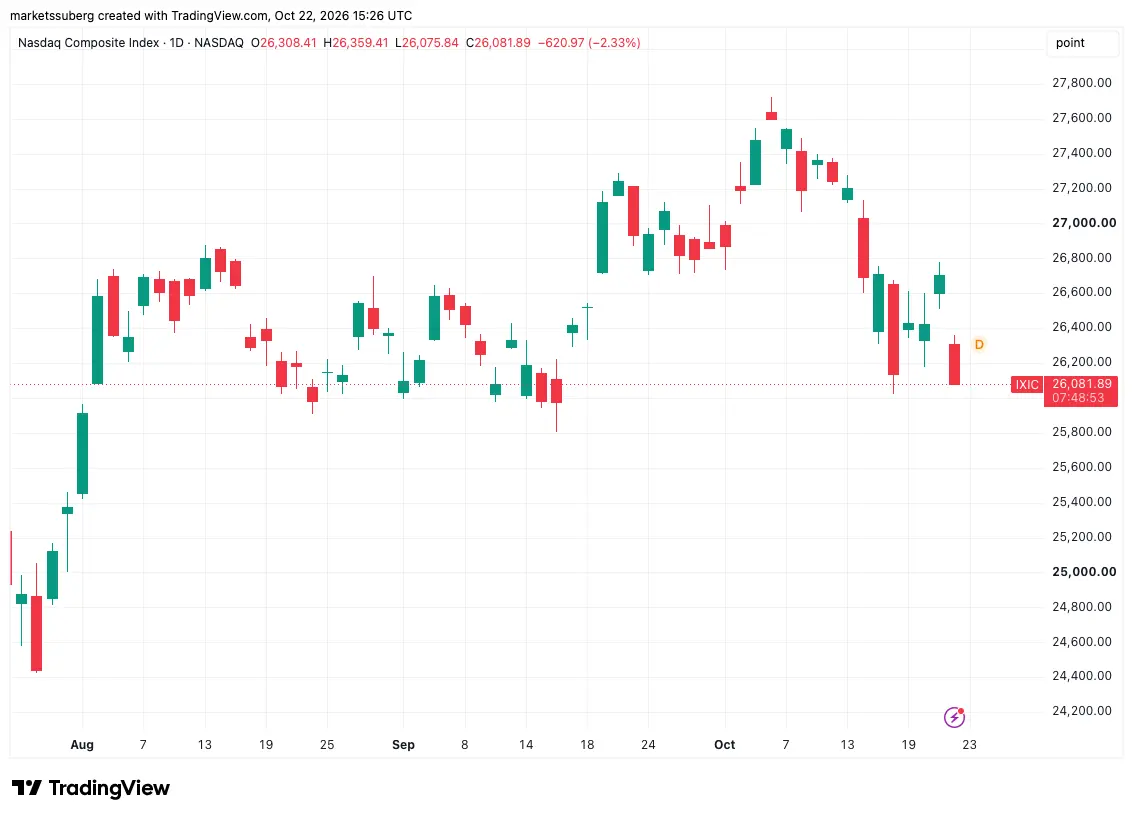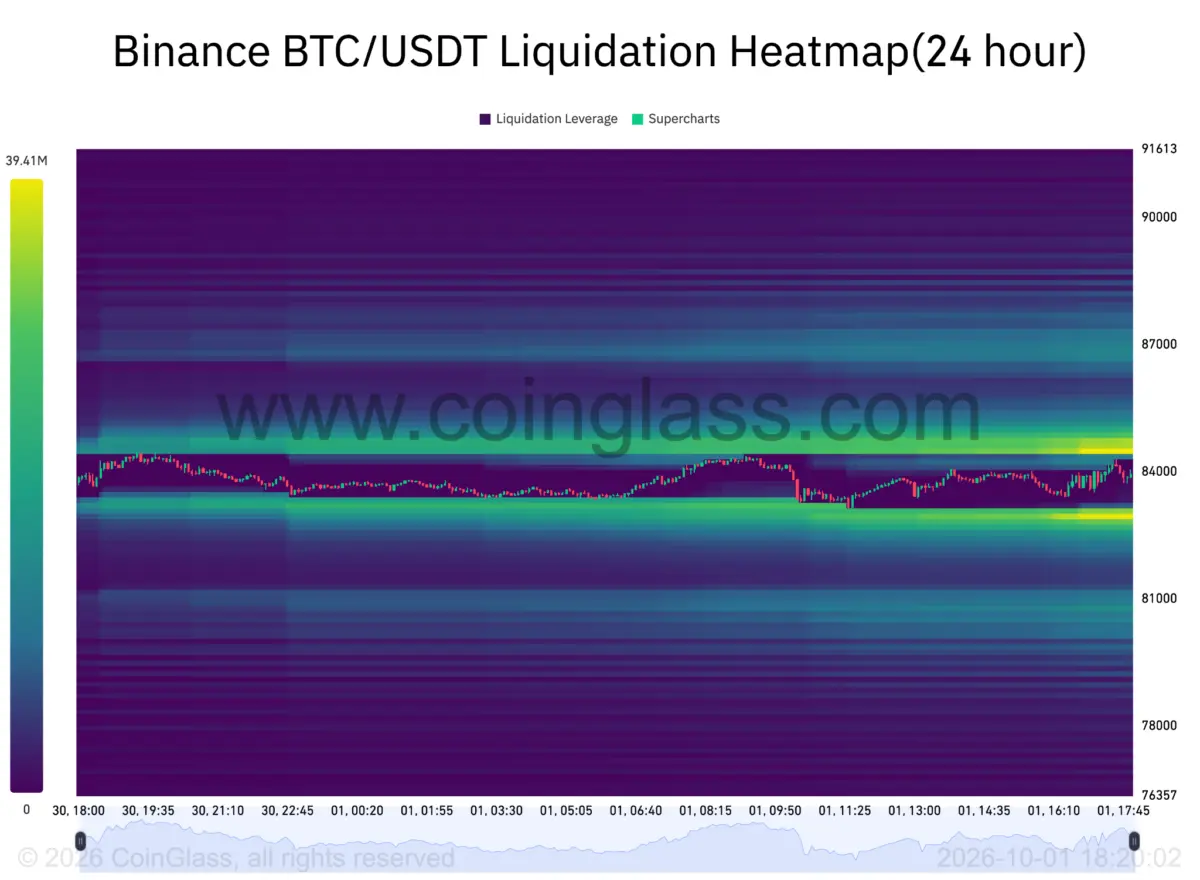
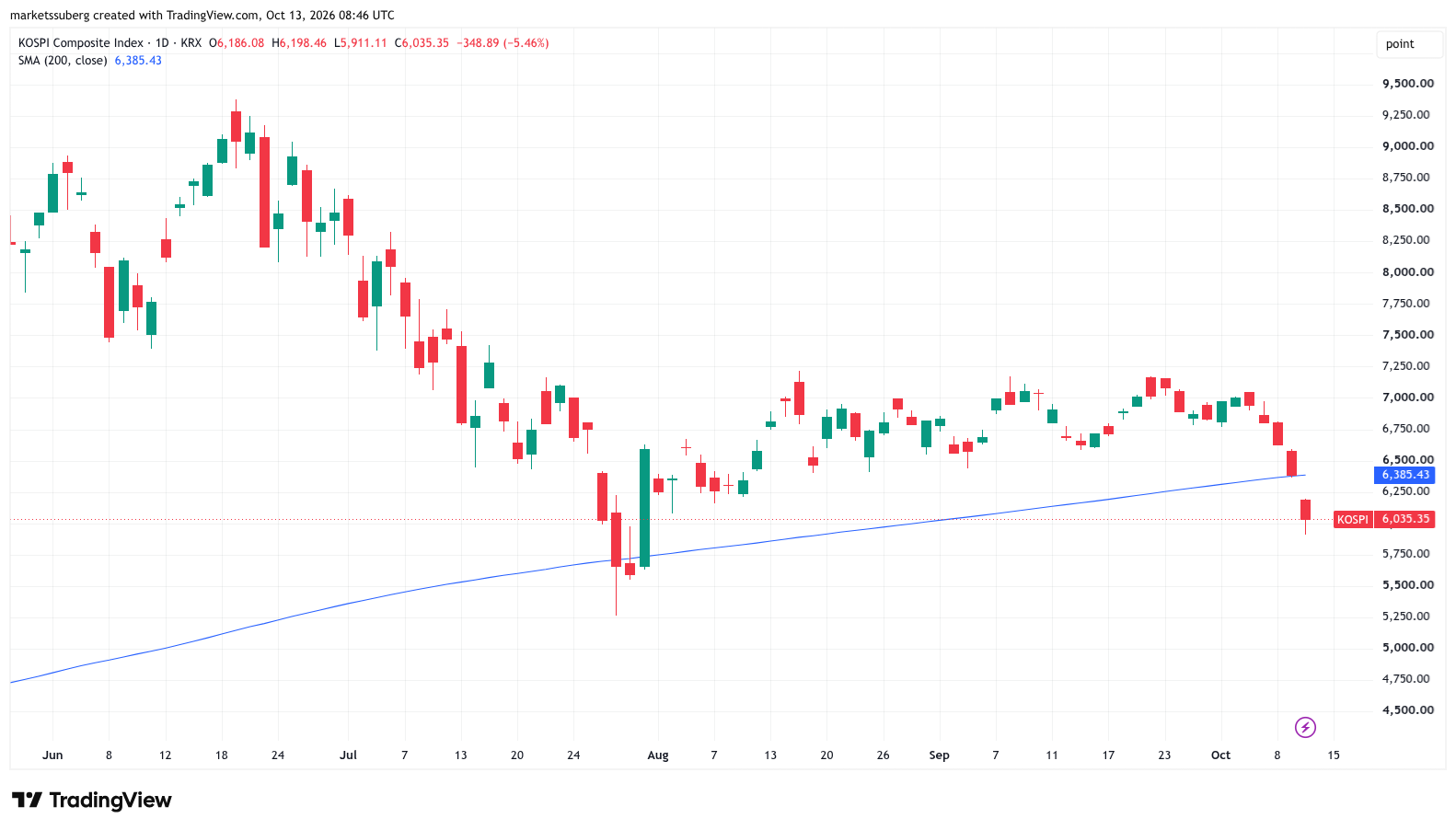
Data from TradingView captured the resilience of the digital asset, showing BTC/USD climbing more than 2.5% on the day to reach $83,944 on Bitstamp. This upward movement served to fully retrace a sharp drop recorded at the start of the week, which had been exacerbated by macro-level geopolitical tensions, including strikes in Ukraine and Iran that pushed oil prices toward a one-month high. However, by Tuesday, the primary catalyst drawing global investor attention shifted decisively away from the Middle East and toward the unexpected depth of the equity rout unfolding in South Korea.

South Korea’s KOSPI Loses 200-Day Trend Line as Panic Returns
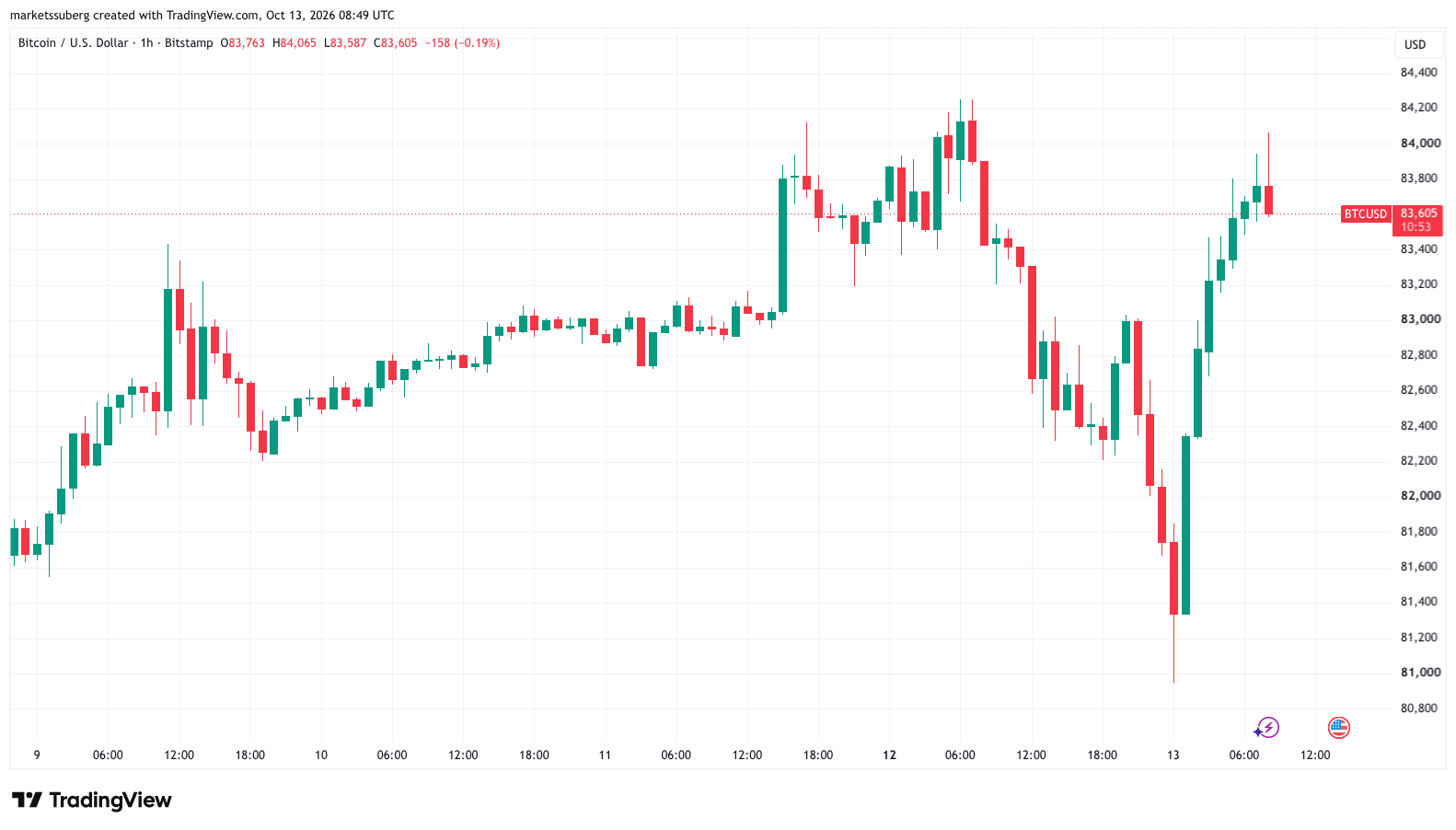
The broader financial strain became intensely visible in South Korea, where a fresh and aggressive tech sell-off ripped through the KOSPI Composite Index. The benchmark index extended its weekly losses to 7.4%, breaching a critical technical threshold by falling below its 200-day moving average for the first time since late July. This breakdown sparked immediate panic among regional market participants, echoing the traumatic market dynamics experienced during the August sell-off.
Semiconductor stocks absorbed the heaviest blow during the session. Shares of memory giant SK Hynix closed the day down by more than 10%, compounding a wave of negative sentiment that had already battered Samsung Electronics following its weaker-than-expected third-quarter earnings report released the previous week. The ongoing capital flight from the region’s premier technology houses has been staggering; foreign investors have offloaded approximately 173 trillion won, equivalent to roughly $129 billion, worth of SK Hynix and Samsung shares since the beginning of 2026. These massive liquidations account for the vast majority of all year-to-date sales across the broader KOSPI index.
Market analysts noted that the current downturn shares striking similarities with the August correction, when mounting anxieties surrounding the sustainability of the artificial intelligence boom and its associated corporate debt obligations triggered sharp risk-off behavior that quickly rippled across international borders. Vey-Sern Ling, senior equity advisor at Union Bancaire Privée (UBP), pointed out to CNBC that market participants have grown increasingly jittery. According to Ling, investors are actively seeking excuses to lock in profits, particularly targeting high-flying AI-related hardware and memory stocks that had significantly outperformed the broader market earlier in the year.
Furthermore, Ling highlighted growing structural concerns regarding increasing technological competition from Chinese firms. While acknowledging that Chinese semiconductor manufacturers still face considerable technological hurdles before they can fully challenge established South Korean industry leaders, the perceived threat has added another layer of anxiety for regional investors trying to navigate an increasingly complex macroeconomic landscape.
Bitcoin Price Rebounds Despite Waning ETF Demand
In stark contrast to the severe contagion witnessed during previous market corrections—such as the August sell-off when local crypto exchanges and regional trading volumes reacted intensely to stock market turmoil—Bitcoin largely avoided a copycat downward spiral this week. Instead, the leading digital asset demonstrated notable independence, steadily climbing back toward the upper boundary of its prevailing local trading range, which has been demarcated roughly between $80,000 and $87,000.
During previous episodes of macroeconomic stress, market analysts often attributed Bitcoin’s relative strength to expectations of imminent monetary policy easing by major global central banks. This macro backdrop remains relevant as traders look ahead to crucial United States inflation data scheduled for release later in the week. The upcoming Consumer Price Index (CPI) report arrives just ahead of the Federal Reserve’s pivotal rate decision slated for October 28, with market consensus currently anticipating that interest rates will be maintained at their existing levels of 2.75% to 4%.
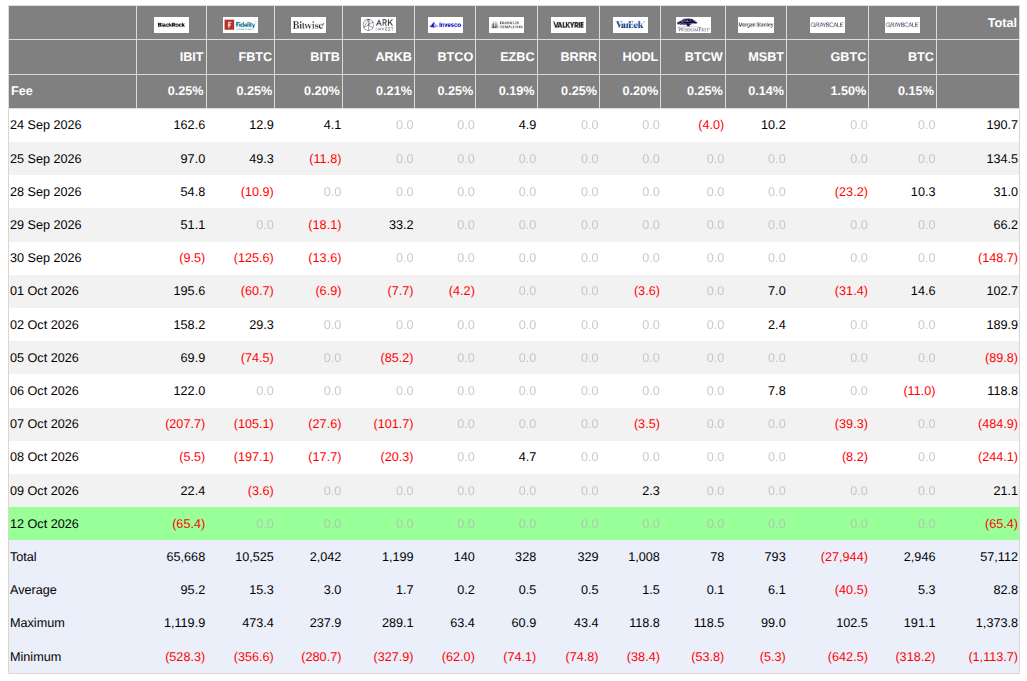
What makes Bitcoin’s latest upward push particularly striking is that it has occurred against a backdrop of waning institutional demand and cooling investor appetite for exposure through regulated investment vehicles. Demand for US spot Bitcoin exchange-traded funds (ETFs) has softened noticeably throughout October. Official figures from Farside Investors indicate that spot Bitcoin ETFs have logged a cumulative $451 million in net outflows since the month began, a negative streak that included an additional $69 million in net outflows on Monday alone.
Despite these capital outflows from spot ETFs, cryptocurrency bulls have maintained underlying support, although they have continued to face resistance on lower timeframes. Order book data compiled by analytics platform CoinGlass revealed a dense concentration of ask liquidity clustered just above the $84,000 level. This thick band of sell orders has made it challenging for buyers to secure a decisive and sustained breakthrough on shorter charts, keeping the market tightly coiled as traders weigh the competing pressures of sluggish institutional fund flows and resilient macroeconomic technical support.