Bitcoin remained under pressure, trading below the $82,000 threshold around Thursday’s Wall Street opening bell. A resurgence of geopolitical tensions involving Iran injected fresh volatility into global markets, forcing risk-sensitive assets onto the defensive and dragging major stock indices down alongside the leading cryptocurrency.
Data from TradingView showed the BTC/USD pair hitting an intra-day low of $81,256 on Bitstamp, marking a 2.9% decline on the day. The downward movement came as investors digested a combination of corporate earnings reports, fluctuating energy prices, and stark diplomatic developments that immediately cooled risk appetite across traditional and digital asset classes alike.
The pullback in cryptocurrency prices arrived on the heels of mixed reactions to Tesla’s third-quarter earnings and capital expenditure reports. While corporate earnings traditionally drive individual stock volatility, the broader macroeconomic backdrop quickly took center stage. Sentiment deteriorated sharply following fresh comments from Donald Trump regarding diplomatic relations with Iran.
Speaking to reporters, Trump asserted that the United States was "not negotiating" with the Iranian side, adding a layer of geopolitical uncertainty that rattled international markets. "We are going to have something one way or the other that will happen fairly soon," he told reporters, pointing toward the approaching US midterm elections scheduled for November 3 and noting that most people anticipate developments to unfold after the vote.
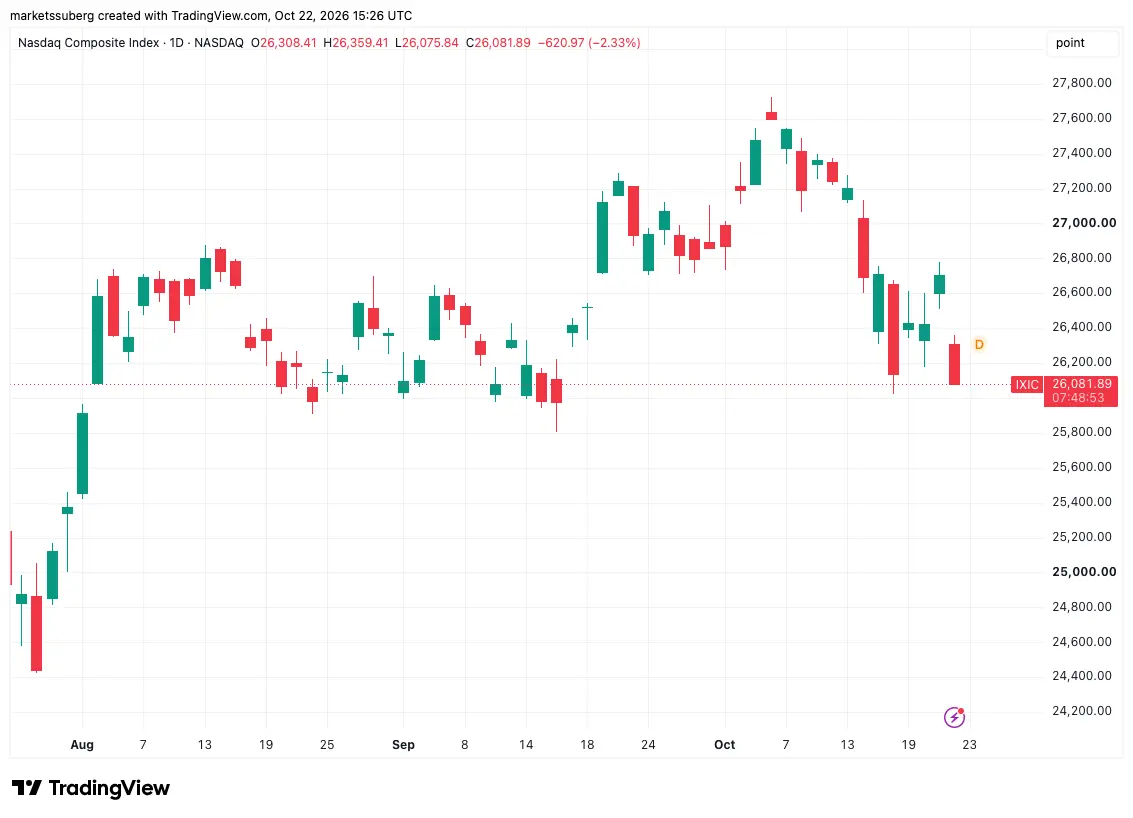
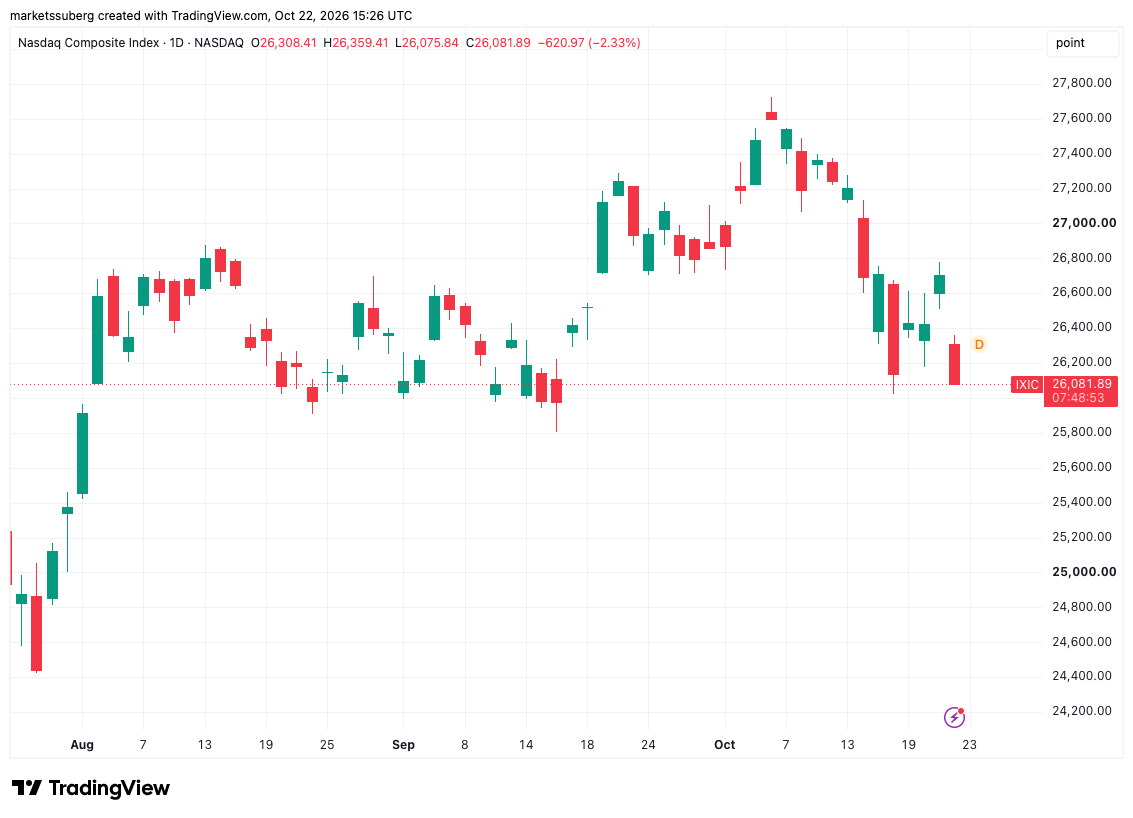
The immediate fallout was visible across Wall Street as US stocks fell heavily at the opening bell. At the time of writing, the benchmark S&P 500 Index was down 1.3%, while the technology-heavy Nasdaq Composite Index suffered a steeper drop of 2.3% as investors recalibrated their exposure to risk.
Market analysts pointed to a convergence of pressures weighing on equities and alternative assets alike. Ian Lyngen at BMO Capital Markets noted in remarks to Bloomberg that tech stocks came under renewed pressure amid persistent valuation fears surrounding artificial intelligence. Furthermore, a rebound in global energy prices contributed significantly to the prevailing risk-off sentiment, prompting capital to seek shelter in traditional safe havens.
According to Lyngen, US Treasuries emerged as a primary beneficiary as global risk sentiment deteriorated. As bond demand rose and yields adjusted, the US 10-year Treasury yield slipped to its lowest level since September 23, approaching the 5% threshold on the day before pulling back.
Stocks Fall as Trump Says US "Not Negotiating" With Iran
The geopolitical headline involving the US stance on Iran proved to be a major catalyst for the day’s risk-off trading session. As diplomatic channels appeared to stall ahead of the November midterm elections, investors quickly re-evaluated their portfolios, stepping away from high-beta assets such as equities and digital currencies.
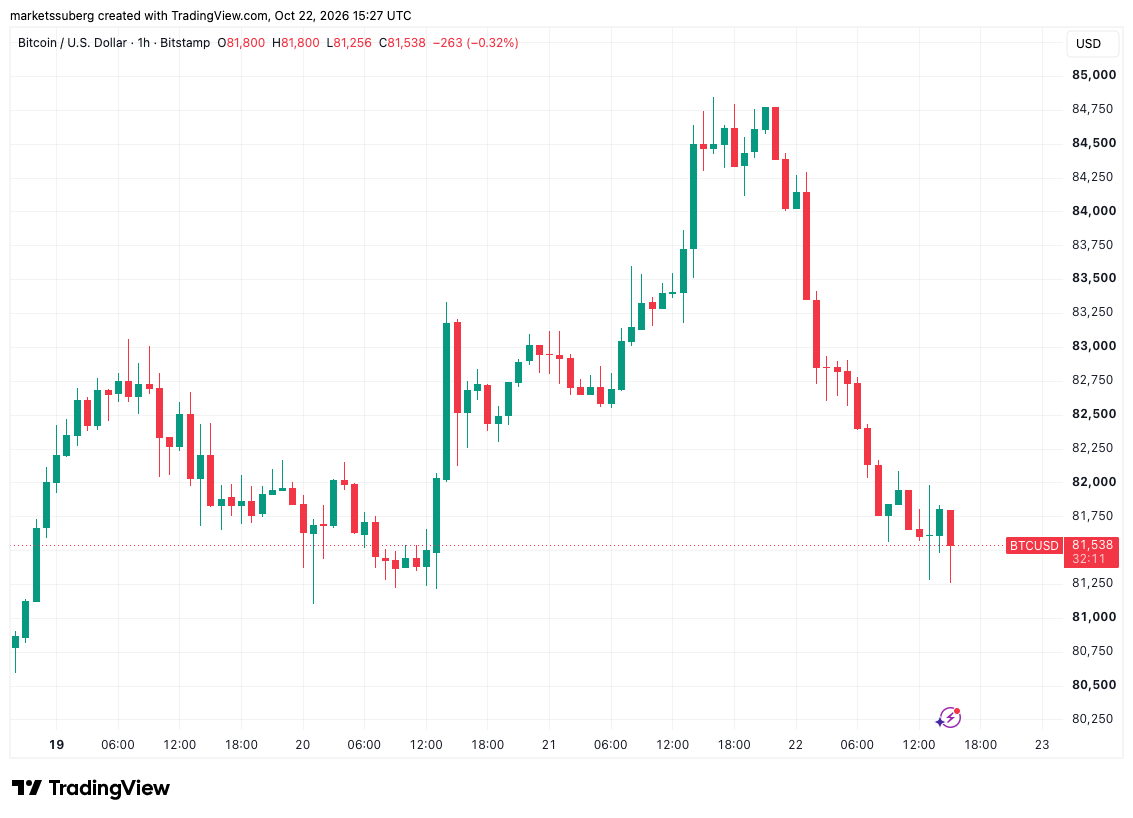
Bitcoin, which had traded near $85,000 just a day prior, found itself cycling around the aggregate cost basis of US spot Bitcoin exchange-traded funds, which sits at approximately $81,500. This crucial cost basis has historically acted as a psychological and structural pivot point for institutional and retail investors holding ETF shares.
The correlation between Bitcoin and traditional risk assets has remained a focal point for market participants. When Wall Street indices experience sharp pullbacks driven by macroeconomic or geopolitical shocks, digital assets frequently experience sympathetic downside pressure due to institutional portfolio rebalancing and algorithmic risk-management protocols. The tech-heavy Nasdaq slide, down 2.3% on the day, directly mirrored the broader risk aversion that pulled BTC/USD below $81,300 on Bitstamp.
Market observers noted that the combination of stalled US-Iran negotiations, fluctuating energy markets, and shifting expectations regarding monetary policy created a challenging environment for crypto bulls who had hoped to maintain momentum above the mid-$80,000 range.
Expect BTC in Narrow Range Until Fed Meeting
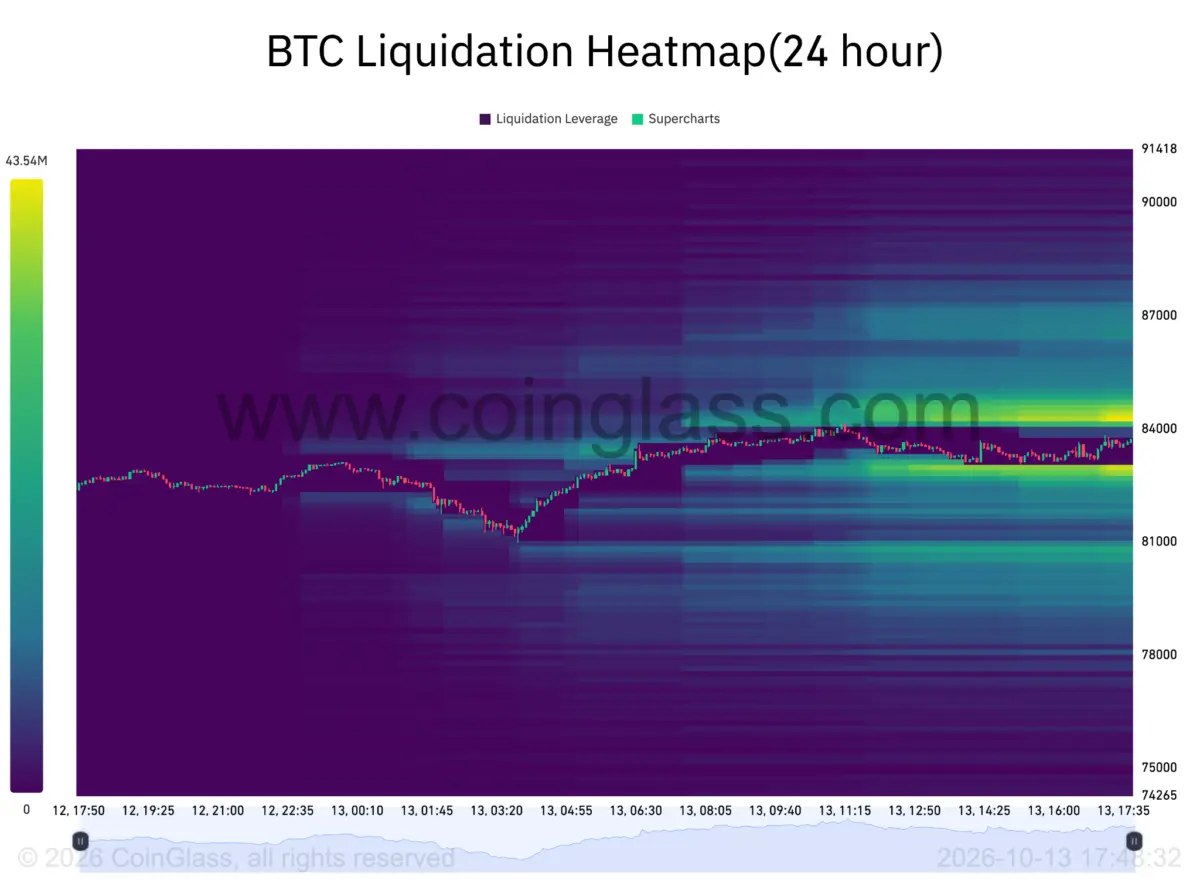
Looking ahead, market participants are bracing for a period of potential consolidation as they await clarity from macroeconomic policymakers. Analysts at Bitfinex Alpha, the research arm of the cryptocurrency exchange Bitfinex, released a report forecasting that BTC/USD would likely trade within a relatively narrow range between $81,300 and $84,400 leading up to the upcoming Federal Reserve rate policymakers’ meeting scheduled for October 28.
The Bitfinex researchers highlighted the delicate balance currently governing price action. Sustained inflows into spot Bitcoin ETFs, coupled with stable leverage metrics across derivatives markets, would be necessary to support a meaningful breakout above the $84,400 resistance level. Conversely, persistent macroeconomic headwinds combined with a daily price close below the $81,300 support mark would significantly increase the risk of a downward correction toward the October 15 swing low of $79,821.
Longer-term sentiment among derivatives traders also reflected caution. On prediction and derivatives platforms such as Kalshi, traders significantly discounted the probability of a major price recovery or a push toward new all-time highs by mid-January 2027. Expectations for BTC/USD hitting aggressive high-target thresholds were trimmed back sharply, with Kalshi traders pricing the chances of a new record high at a modest 3%, underscoring a prevailing sense of caution as the market navigates the final quarter of the year.