Bitcoin traded near $64,500 early Monday morning following a sharp weekend sell-off in thin holiday-style trading that dragged the world’s largest cryptocurrency down to a four-month low of $61,950. The sudden downturn rattled digital asset markets and pushed prices beneath a critical long-term technical indicator, coinciding with a high-stakes week for global financial markets that features crucial corporate earnings from tech giant Nvidia and upcoming monetary policy updates from the United States Federal Reserve.
Bitcoin Falls Below Its 200-Week Moving Average
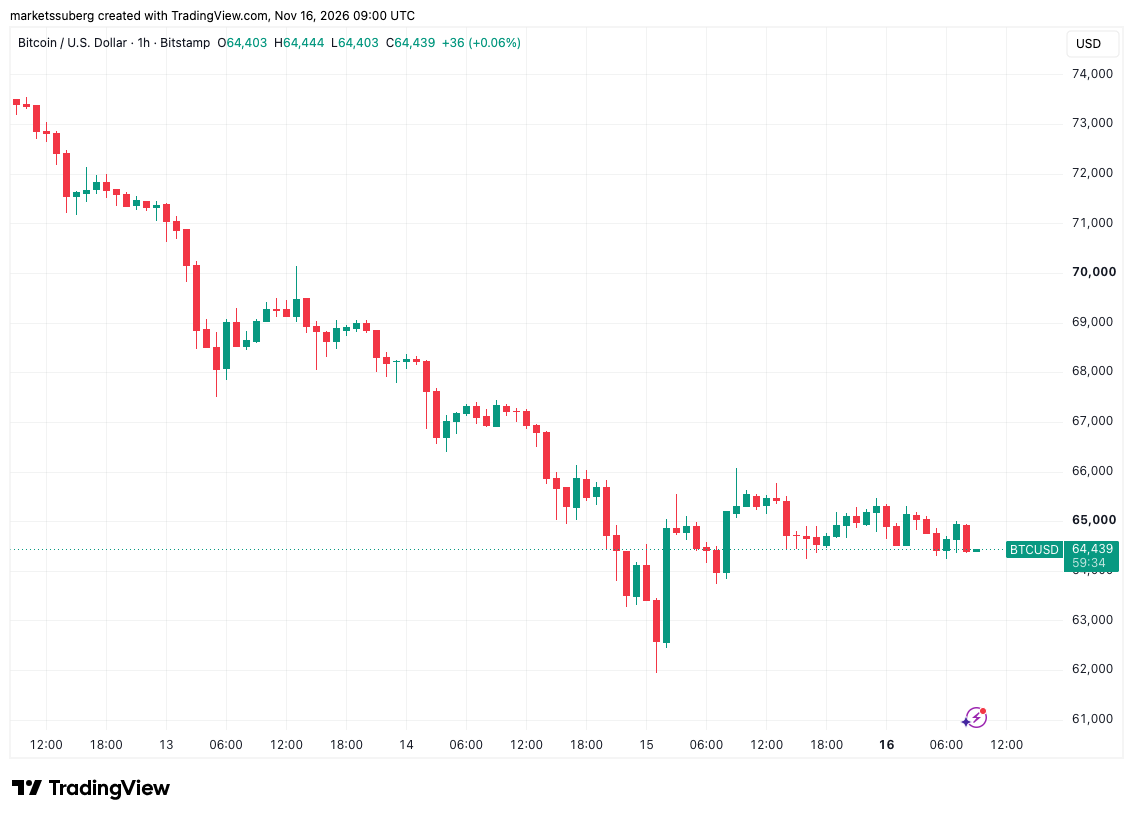
Data provided by TradingView showed that the BTC/USD pair dipped to $61,950 on the Bitstamp exchange during the weekend sessions, marking a price level that had not been tested since July 13. Although the pair managed a brief technical rebound toward the $66,000 threshold, bullish momentum faded quickly, easing prices back down to approximately $64,500 during Monday’s Asian trading hours.
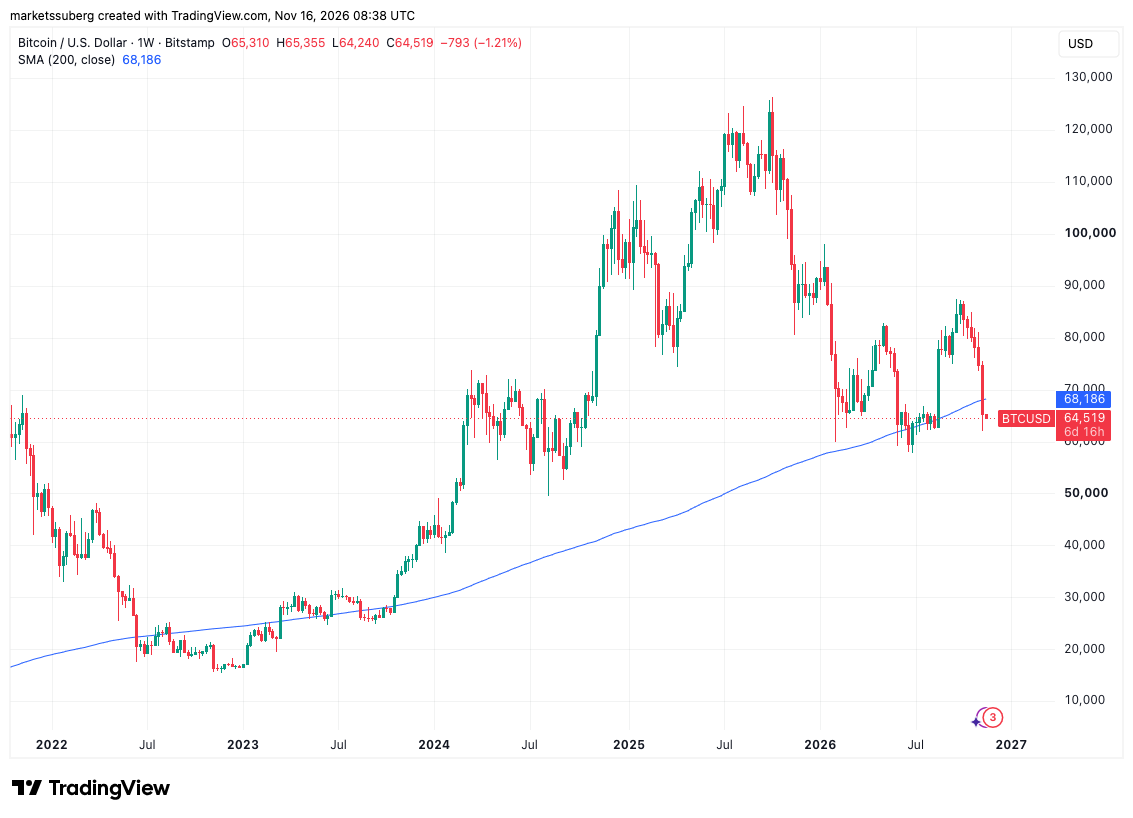
The weekend correction drove Bitcoin decisively below its 200-week simple moving average (SMA), which currently sits at $68,186. This breakdown has intensified market anxiety regarding the sustainability of Bitcoin’s previous summer recovery, which had propelled prices as high as $87,000 beginning in August. Market technicians note that successfully flipping the 200-week SMA from a barrier of resistance into a reliable foundation of support has historically served as a vital prerequisite for previous bear-market recoveries and long-term trend reversals.

Prominent crypto trader and market analyst Rekt Capital emphasized the historical significance of the move in a post published on social media platform X over the weekend, noting that deviating below the 200-week simple moving average has traditionally played an essential role in establishing a durable bear market bottom formation.
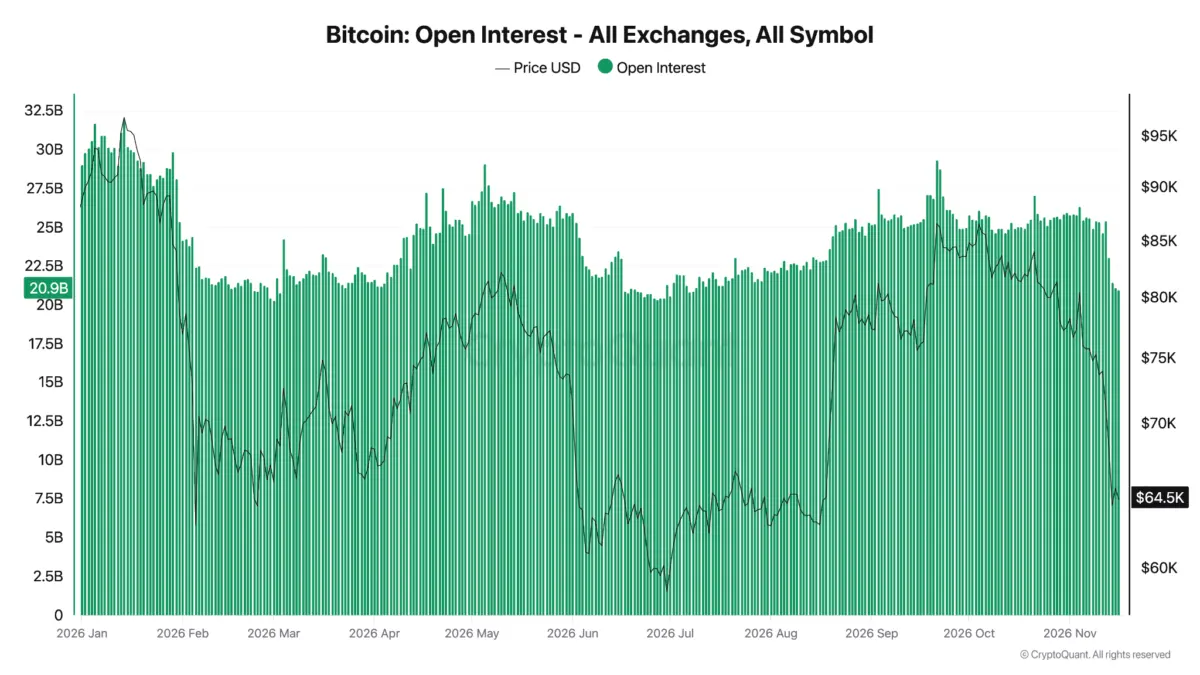
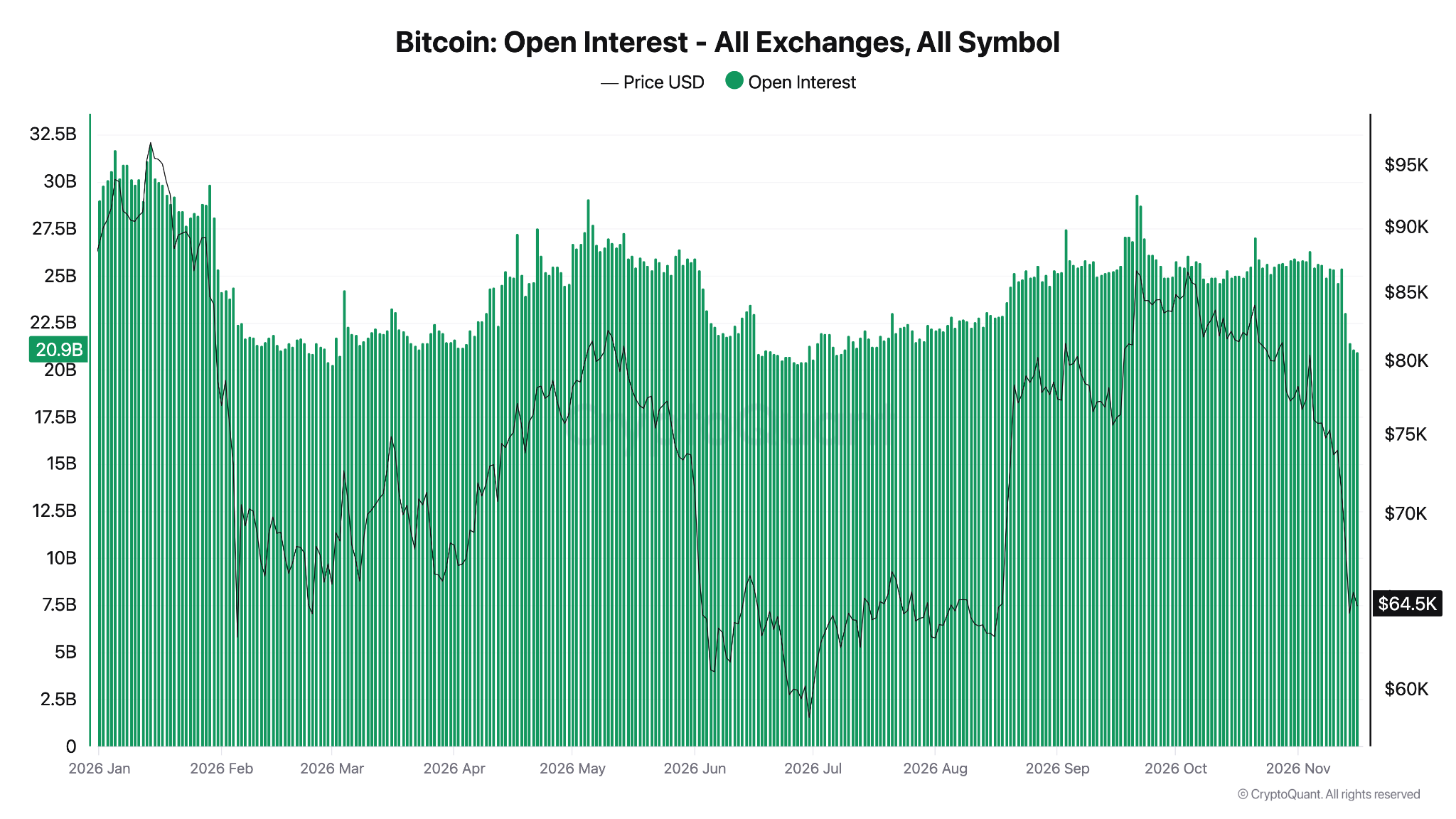
Onchain data from analytics platform CryptoQuant revealed that Bitcoin open interest suffered a notable contraction between Friday and 10:00 UTC on Monday, dropping by roughly 9.1% to settle at $20.98 billion. A contributing analyst at CryptoQuant pointed out striking structural similarities between this latest leverage flush and previous open interest drawdowns recorded earlier in the year during February and June, raising questions about whether Bitcoin is currently carving out a local bottom.
According to the analyst’s market commentary, if the leveraged flush has successfully run its course, a sustainable bottoming zone may be close at hand. However, the analyst cautioned that if short positions continue to pile up aggressively, even a modest relief rally could trigger a violent short squeeze, making the $59,000 to $60,000 summer low zone the next critical technical test for the asset.
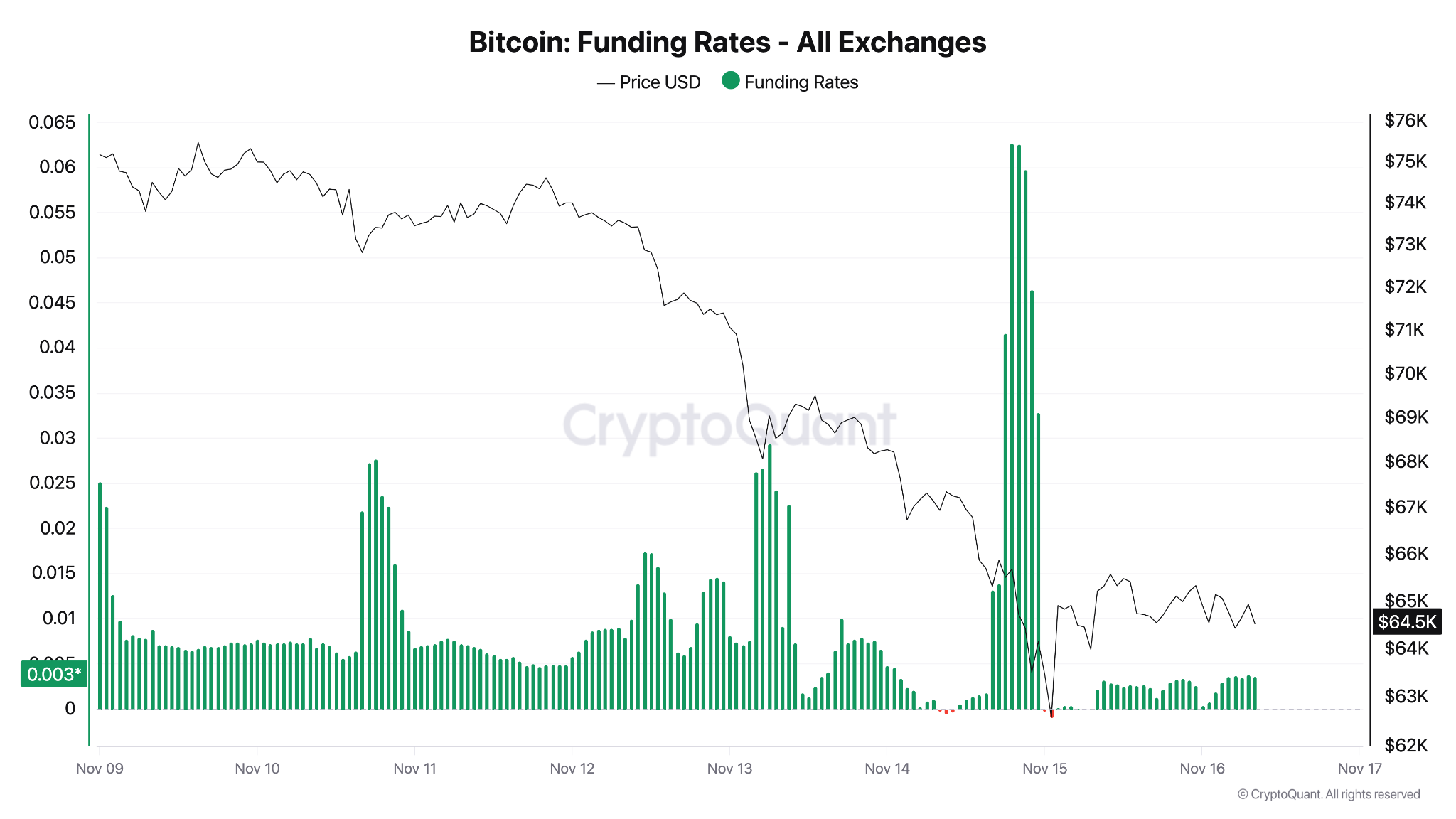
Further illustrating the intense bearish pressure over the weekend, Bitcoin perpetual futures funding rates briefly slipped into negative territory near the cyclical lows. This rare shift meant that aggressive traders holding short positions were temporarily required to pay funding fees to traders maintaining long positions, highlighting a temporary peak in speculative pessimism.
Nvidia Earnings Due Tuesday as Allies Push for Huang’s Return
Beyond the crypto sector, traditional equity markets are preparing for a blockbuster week dominated by Nvidia, which is scheduled to report its third-quarter financial results after the closing bell on Wall Street on Tuesday. The tech titan remains under intense scrutiny amid an ongoing leadership crisis surrounding former Chief Executive Officer Jensen Huang.
Interim CEO Colette Kress is set to lead the company’s upcoming earnings call. Nvidia previously issued forward guidance forecasting quarterly revenue of approximately $108 billion, while Wall Street analysts anticipate that the company’s earnings per share will nearly double on a year-over-year basis, reflecting the staggering demand for artificial intelligence hardware.
Market observers have closely followed reports that Huang is actively considering a potential return to Nvidia just days after his shocking resignation. Huang stepped down from his post following disclosures regarding a personal relationship with a corporate chip executive who is currently facing scrutiny from United States authorities over suspected espionage involving China—allegations that Beijing has firmly denied.
The Financial Times reported that a dedicated "war room" comprising prominent tech chief executives and industry leaders has been working aggressively to lobby for Huang’s reinstatement. Simultaneously, an open letter demanding his return has rapidly accumulated more than 165,000 signatures, including a public endorsement from Tesla and SpaceX CEO Elon Musk. Musk confirmed his stance on X on Friday, stating that a petition was underway to reinstate Jensen and that he was adding his signature to the effort.
These grassroots and industry-backed efforts have encountered resistance from key government figures, including US Treasury Secretary Scott Bessent. In a public appearance on Fox News, Bessent argued that Nvidia’s board of directors should look outside the organization for its next leader, asserting that the internal turmoil necessitates a dramatic and sweeping corporate shakeup.
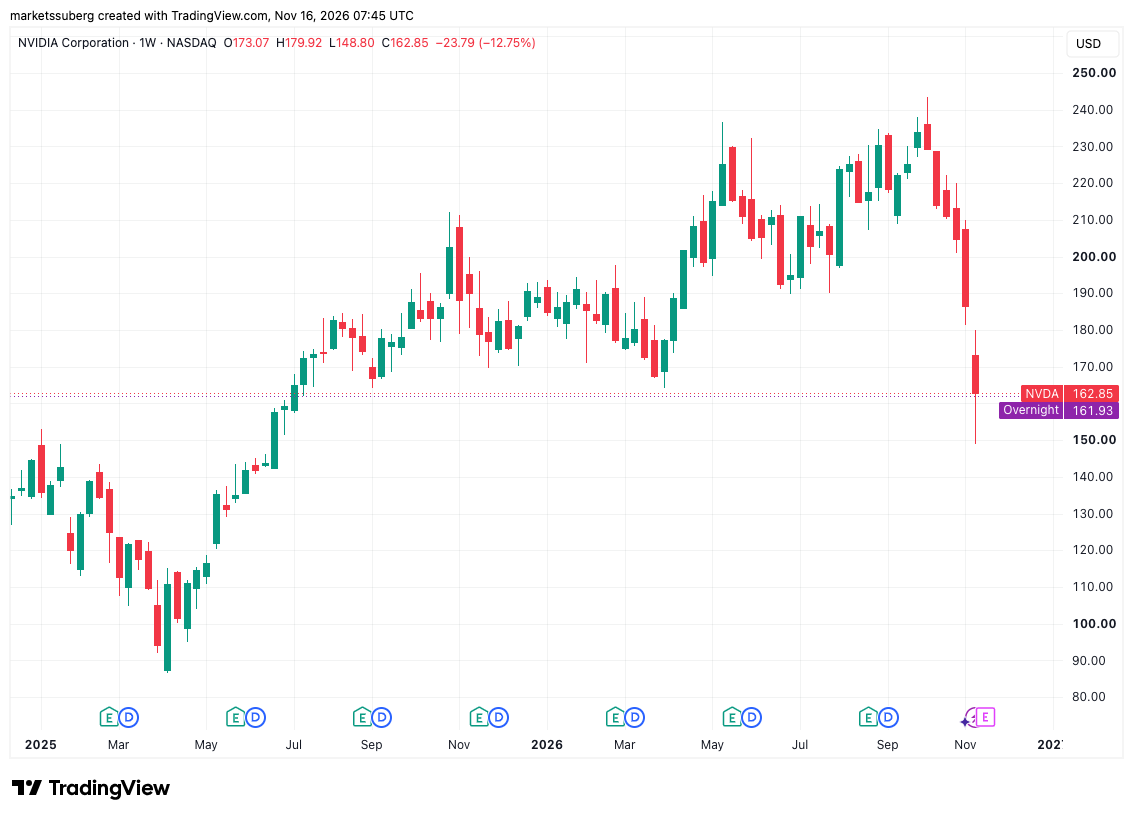
Nvidia’s stock price closed the week on Friday at $162.85, marking a steep 12.7% decline over the five-day trading period. Earlier in the week, shares briefly tumbled to $148.80 on Thursday, hitting their lowest level since mid-2025 before staging a partial recovery. The persistent volatility surrounding Nvidia headlines sent shockwaves through both broader equity tech indexes and cryptocurrency markets last week, leaving institutional and retail investors eager for concrete signals regarding the ongoing strength of corporate demand for advanced AI infrastructure.
Fed Minutes Due as Markets Price in December Rate Hike
Macroeconomic catalysts will also take center stage this week as monetary policymakers from the US Federal Reserve deliver a series of scheduled speeches, giving market participants an opportunity to glean insights into the central bank’s upcoming interest rate decision in December.
Federal Reserve officials are maintaining a busy public calendar. Opening remarks are scheduled at the Fed’s Productivity and Jobs Task Force Conference in San Francisco, where high-ranking central bank officials are slated to moderate panel discussions and participate in fireside chats focusing on labor market dynamics and economic productivity.
On Wednesday, the Federal Reserve will release the official meeting minutes from its October 27–28 policy gathering. During that meeting, policymakers opted to leave benchmark interest rates unchanged in the 3.75% to 4% target range, with officials citing resilient domestic consumer spending patterns despite lingering geopolitical uncertainties across global markets.
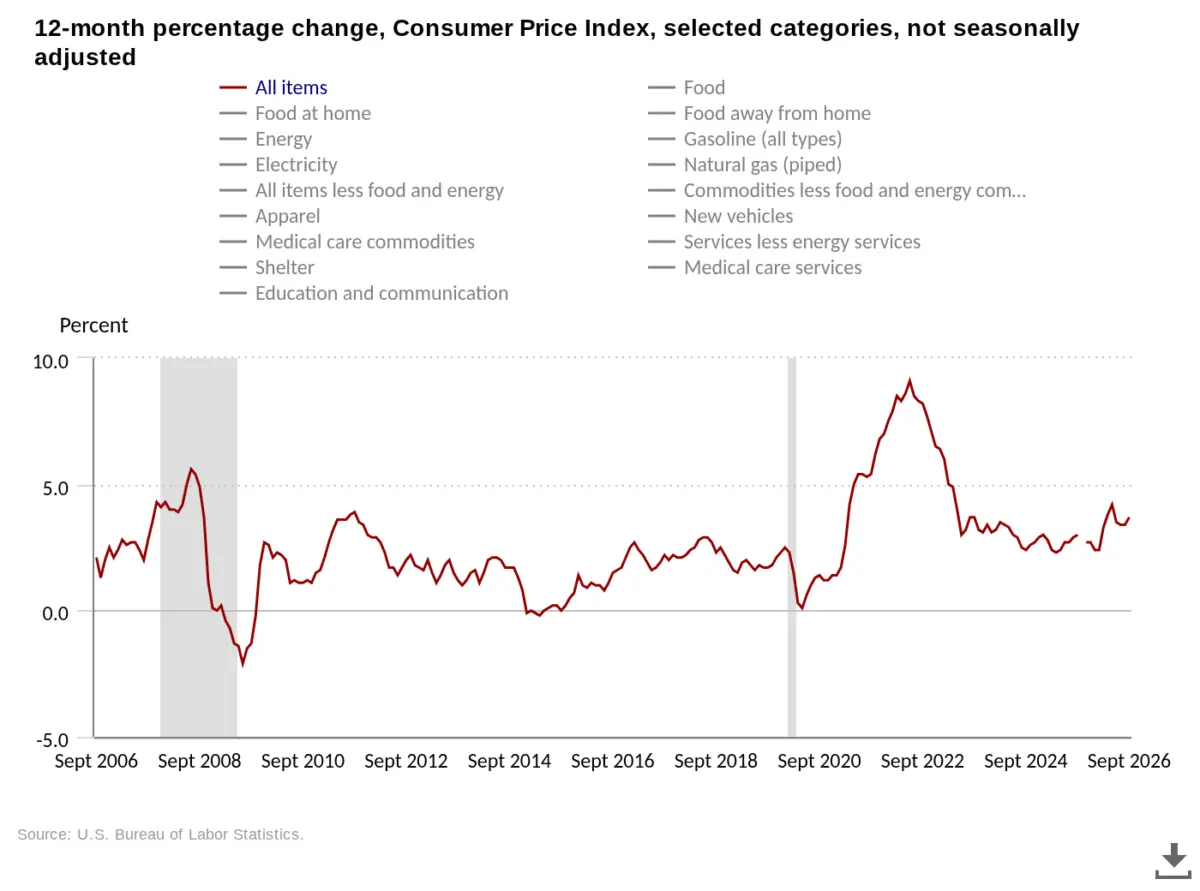
Following the release of recent domestic economic indicators, interest rate futures markets have fully priced in expectations of a quarter-point rate hike by the Fed at its upcoming December meeting. Last week’s Consumer Price Index inflation report came in higher than market expectations. Although the subsequent Producer Price Index reading showed a slightly cooler headline figure than anticipated, the underlying annual increase still marked the largest gain in four years.
These domestic pressures coincided with broader macroeconomic headwinds. The benchmark 10-year US Treasury yield climbed above the psychological 5% threshold, while a weakening Japanese yen once again introduced familiar headwinds for global risk assets, depreciating past the key psychological level of 160 per US dollar on Friday.
Compounding the foreign exchange pressure, official data released on Monday showed that Japan’s economy contracted at an annualized rate of 0.1% during the third quarter. The unexpected economic contraction complicates the policy outlook for the Bank of Japan, where benchmark interest rates already stand at a three-decade high of 1.25%.
Renowned economist Mohamed El-Erian noted over the weekend that with the Japanese yen perched precariously at 160 per dollar, the combination of sluggish domestic economic growth and sticky price pressures presents a complicated policy matrix for both the Bank of Japan and the nation’s Ministry of Finance.