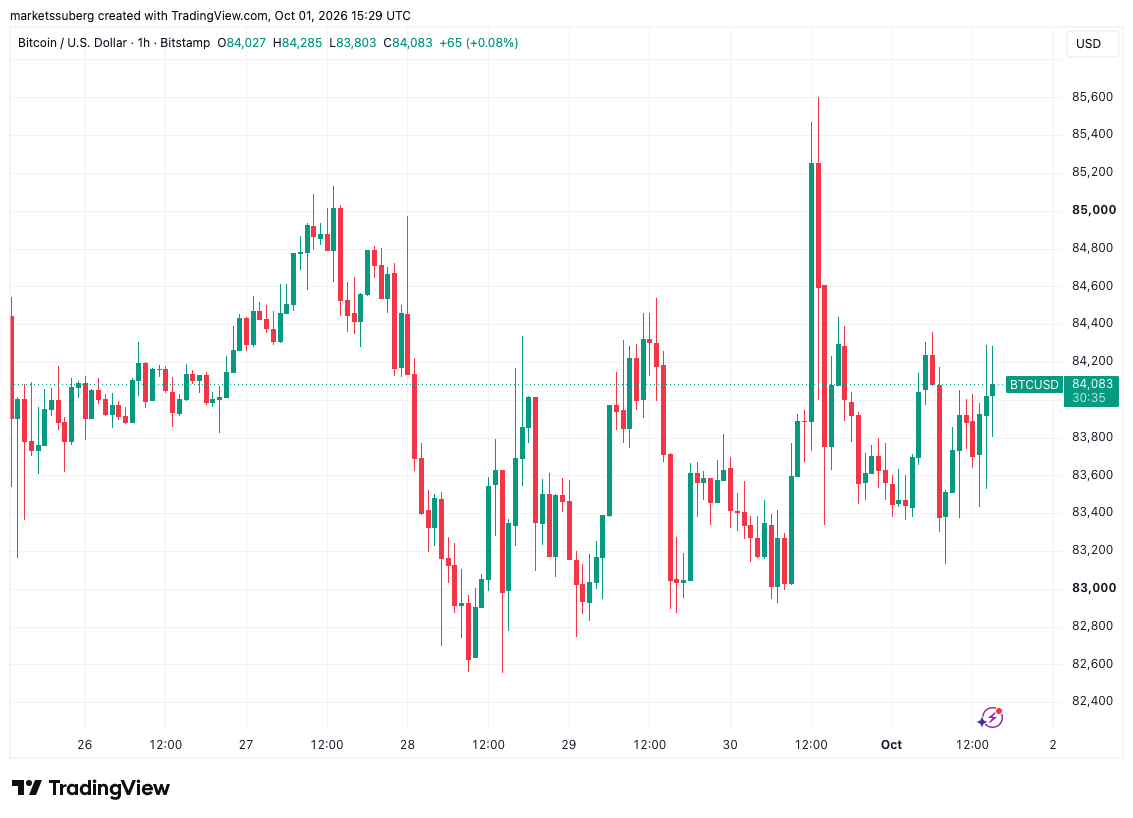
Bitcoin pushed back above the $84,000 threshold around Thursday’s opening bell on Wall Street, finding temporary relief as United States bond yields retreated from aggressive multidecade highs that had previously rattled global financial markets.
Data compiled by TradingView demonstrated that the BTC/USD trading pair has been actively preserving a constructive pattern of higher lows on hourly time frames, logging a modest 0.6% gain on the day. Despite overarching macroeconomic headwinds and heightened volatility across traditional asset classes, the premier cryptocurrency has continued to display notable resilience, clinging to key technical zones as traders weigh shifting monetary policy trajectories and escalating geopolitical tensions.

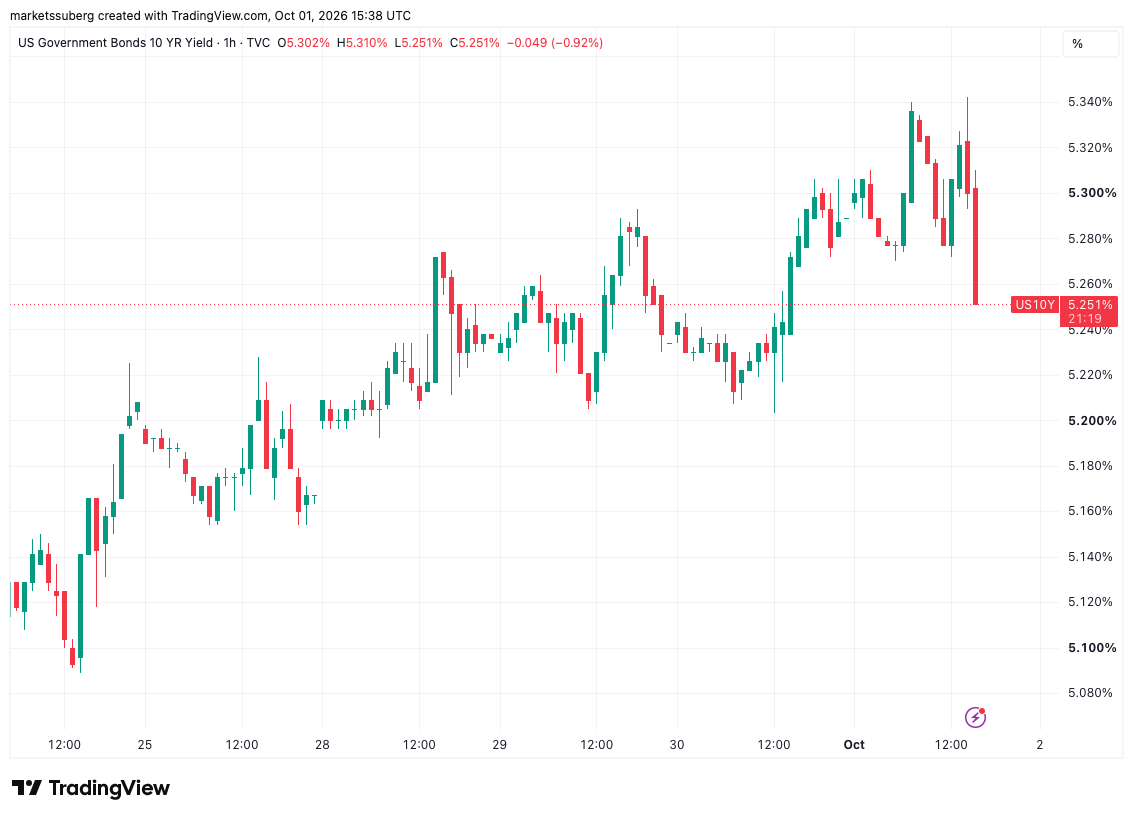
The broader market movement was heavily influenced by activity in the fixed-income sector. Both the US 30-year and 10-year Treasury yields surged to fresh macroeconomic highs, continuing a troubling trend for traditional debt markets. Notably, the 10-year yield touched 5.342%—a striking level not witnessed since April 2002—before moderating slightly to hover around 5.251% by the time of writing. This rapid escalation in borrowing costs has sent shockwaves through international financial systems, prompting deep-seated anxiety among institutional investors regarding the sustainability of mounting sovereign debt burdens and the compounding cost of public interest payments.
Offering insight into the underlying forces driving this relentless bond-market sell-off, Mahmood Pradhan, former deputy director of the European department at the International Monetary Fund, highlighted the prevailing unease among global market participants. Speaking to the New York Times, Pradhan explained that financial markets worldwide have grown "very nervous" about ballooning public debt obligations, a structural vulnerability that is being exacerbated exponentially by climbing yields. Furthermore, Pradhan pointed to external geopolitical shocks as a primary catalyst for the sudden shift in macroeconomic sentiment, remarking that the ongoing war in the Middle East has fundamentally altered the global economic landscape, with surging crude oil prices immediately beginning to manifest in persistent domestic inflation metrics.
This macroeconomic backdrop complicates the Federal Reserve’s ongoing battle to tame consumer price growth without tipping the economy into a severe downturn. Earlier economic data underscored the fragility of the current recovery. As previously reported by Cointelegraph, the August reading of the US Personal Consumption Expenditures (PCE) index—widely regarded as the Federal Reserve’s preferred gauge of underlying inflation—came in below consensus expectations at 3.4% on a year-over-year basis. However, financial markets displayed a remarkably muted reaction to the softer-than-expected print. Many market analysts and economists attributed the headline decline largely to methodological adjustments in how the PCE index was calculated rather than a genuine, organic cooling of inflationary pressures across the broader economy.
The disconnect between official inflation metrics and the reality of surging borrowing costs has drawn sharp criticism from market commentators. Crypto analyst Benjamin Cowen took to social media platform X to voice his skepticism regarding the central bank’s handling of the macroeconomic environment. "Yields have gone up rapidly since the market became concerned that the Fed was no longer taking inflation seriously," Cowen told his followers. Highlighting the definitive pushback originating from the debt markets, he added, "Well the bond market has revolted, and until the Fed gets a proper handle on inflation, this will likely continue."
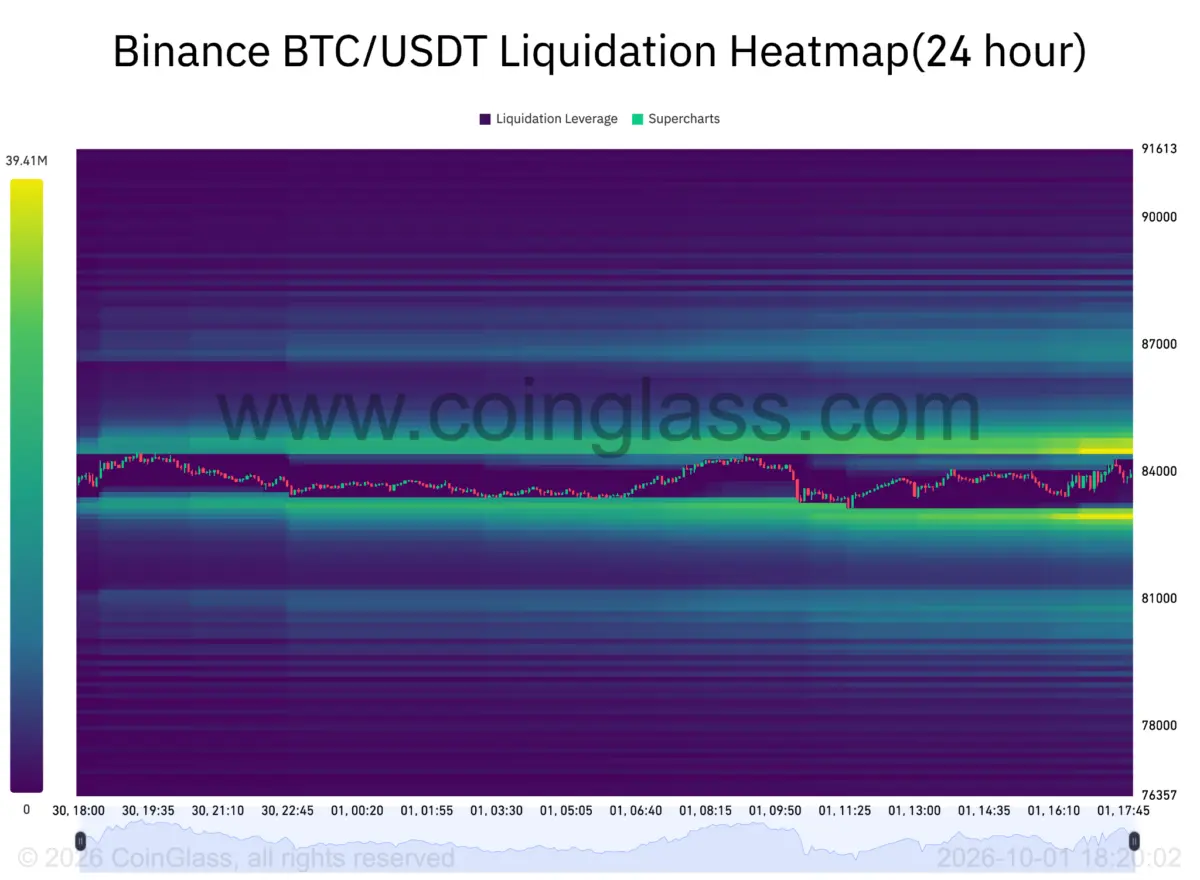
Amid these macroeconomic crosscurrents, Bitcoin has found itself hemmed in by dense clusters of liquidity on exchange order books, creating a localized battleground for spot and derivative traders. Real-time data sourced from CoinGlass indicated that price action is currently sandwiched between significant liquidity pools, with $84,500 and $82,900 serving as major areas of interest that could potentially act as a magnet for the spot price in the immediate term. Over the preceding 24 hours, total market liquidations reached $25 million as leveraged long and short positions were systematically flushed out, effectively reinforcing a tight, rangebound trading environment.
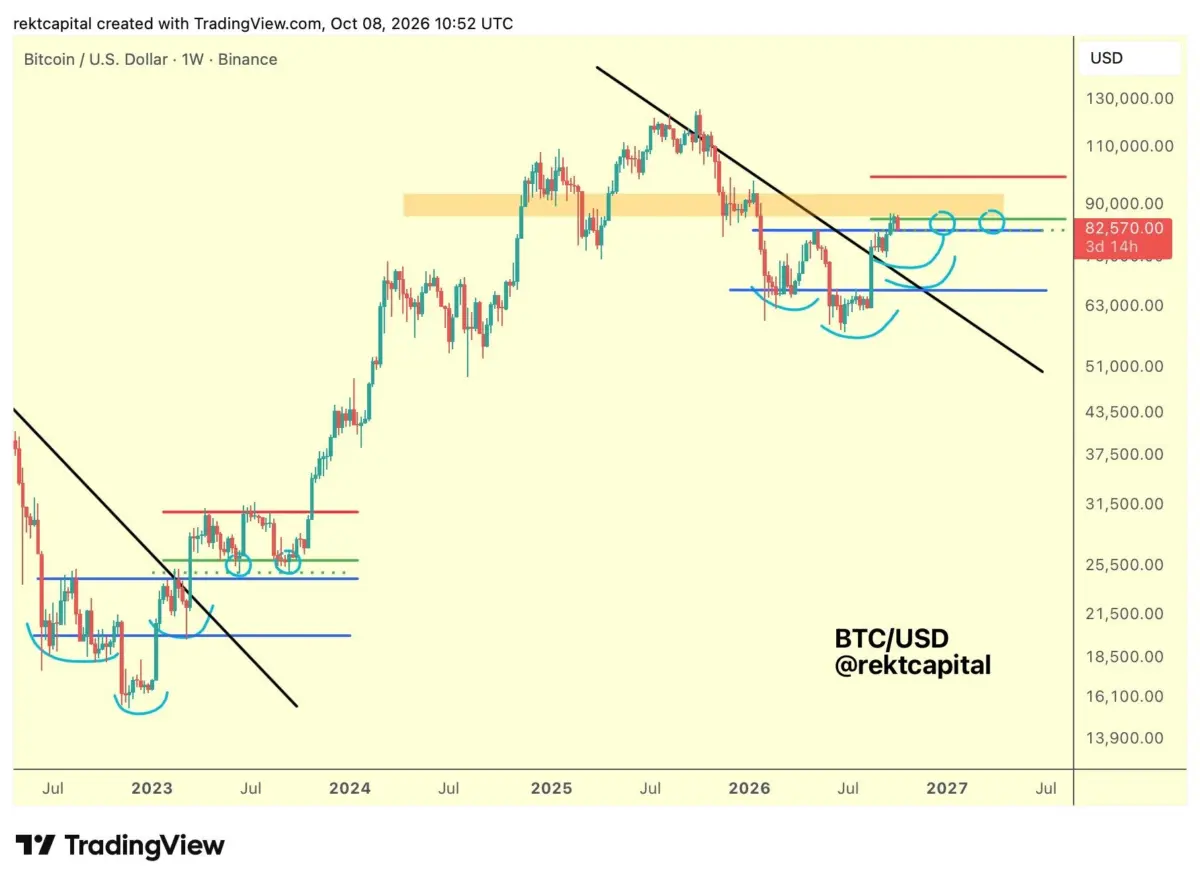
As market participants scan the charts for directional cues, prominent independent traders and analysts are forecasting a potential test of critical support levels before any sustained bullish continuation can materialize. Prominent analyst Rekt Capital shared an assessment pointing to a potential corrective dip toward a crucial support zone situated around $82,500.
"A successful retest there could set up the next trend continuation," Rekt Capital wrote in a post on X. Acknowledging the inherent unpredictability of such technical maneuvers, he added, "History suggests this retest could get messy, but let’s take it one level at a time and not look too far ahead."
This perspective aligns with previous technical commentary from the analyst, who stressed that the ability of market bulls to successfully defend the $82,500 mark as a reliable floor will ultimately dictate the scale and durability of Bitcoin’s broader macroeconomic rebound. As Wall Street navigates the dual pressures of retreating yet historically elevated bond yields and persistent geopolitical anxiety, the cryptocurrency market remains tethered to these pivotal macroeconomic developments, watching closely to see whether crucial technical supports will hold under mounting institutional scrutiny.