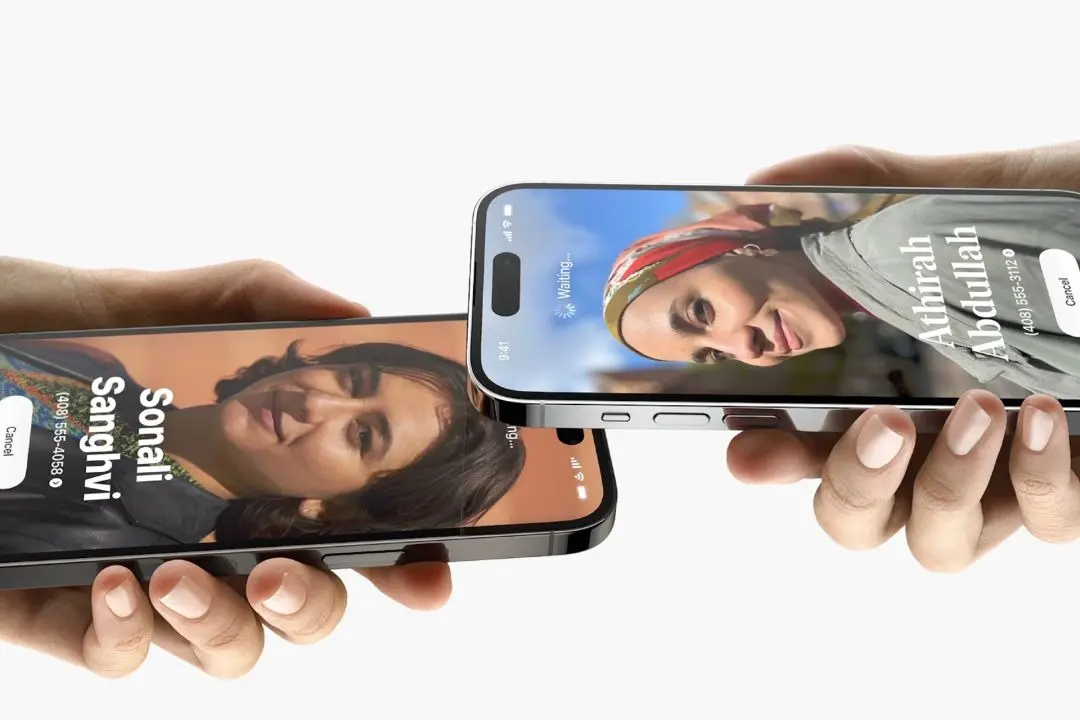
Apple is facing a high-stakes legal battle in India, where a U.S.-based startup has filed a massive lawsuit alleging that the tech giant’s popular NameDrop feature infringes upon its patented technology. The legal action marks a significant escalation in an ongoing intellectual property dispute between the iPhone maker and a smaller software developer that claims its proprietary proximity-based sharing innovations were unlawfully appropriated.
GG Technologies, the Santa Monica-headquartered startup behind the contact-sharing application StayTouch, has initiated legal proceedings in the Bombay High Court. In its extensive 781-page court filing, the company is seeking ₹15 billion, which amounts to approximately $161.86 million, in damages. Furthermore, the startup is aggressively pursuing an injunction that would block Apple from selling or importing iPhones and Apple Watches preloaded with the native iOS feature into the Indian market.
The core of the dispute revolves around NameDrop, a capability introduced by Apple as part of iOS 17 in June 2023. The feature officially debuted on iPhones later that year, allowing users to effortlessly share contact information simply by bringing two compatible devices close together. Support for Apple Watches carrying the feature arrived shortly after in October through the release of watchOS 10.1. GG Technologies contends that this functionality directly violates its protected intellectual property, which covers mechanisms that enable mobile phones to exchange contact details with nearby devices without the need for manual pairing procedures.
The legal confrontation in India is the culmination of a sequence of regulatory and legal steps taken by the startup. According to representatives from GG Technologies, the company filed the lawsuit in October after prior mediation proceedings failed in September. In India, pre-institution mediation is typically a mandatory requirement before commercial lawsuits can be formally registered in a court of law. The two parties had initially entered mediation proceedings back in April, but efforts to reach an out-of-court settlement ultimately broke down.
This international legal challenge is not isolated to South Asia. GG Technologies previously initiated legal action against Apple in the United States in April, leveling similar patent infringement claims. The U.S. dispute has also progressed through regulatory channels, with the International Trade Commission opening an official investigation into Apple’s alleged patent infringement in August following a formal complaint filed by the startup. In that proceeding, GG Technologies is similarly pursuing an exclusion order that could potentially block imports of the allegedly infringing Apple devices into the United States, alongside sweeping restrictions on their commercial distribution and sale.
GG Technologies was founded in 2018 by Gaurav Goel, an alumnus of the prestigious Indian Institute of Technology (IIT) Delhi and a former Goldman Sachs investment banker. Goel and his team originally developed StayTouch as a modern, digital alternative to traditional paper business cards, aiming to streamline how professionals exchange contact details. The application has since been made available to consumers globally on both the iOS App Store and the Google Play Store.
The startup’s journey to securing its intellectual property rights spans multiple years and jurisdictions. The company launched StayTouch in 2019, which coincided with the exact year it first pursued patent protection for the underlying proximity-sharing technology in the United States. Subsequently, GG Technologies filed its Indian patent application in 2021, culminating in the formal granting of the patent in July 2024, providing the legal foundation for the current litigation in the Bombay High Court.
Emphasizing the seriousness of their legal pursuit, representatives for the startup noted that they are actively seeking an injunction to restrict the ongoing utilization of the NameDrop feature, which is deeply integrated as a native component of the iOS ecosystem. As part of this request, GG Technologies has urged the Indian court to prohibit Apple from importing or distributing any hardware units preloaded with the software. As of now, the high-profile case has not yet been formally listed for an initial hearing before the court.
Apple, for its part, has not responded to requests for comment regarding the lawsuit in India or the ongoing regulatory scrutiny in the United States.
The legal challenge arrives at a particularly sensitive time for Apple, as India has rapidly ascended in strategic importance for the Cupertino-headquartered corporation. The South Asian nation is viewed by corporate leadership not only as a fast-growing consumer market with immense untapped potential, but also as a vital manufacturing hub situated outside of China. Apple has notably scaled up its local production efforts, with recent reports indicating that roughly one in four iPhones are now manufactured within India.
Alongside its manufacturing footprint, Apple has steadily strengthened its commercial and retail presence in the country. The company has brought its official store app and physical retail locations to the Indian market to capture a wider consumer base. Despite these aggressive expansion efforts, iPhones currently account for less than 10% of overall smartphone shipments in India, representing a modest market share that leaves substantial room for future growth. How the courts in India handle the intellectual property claims brought forward by GG Technologies could introduce new considerations for multinational technology firms operating and manufacturing within the country’s expanding digital economy.