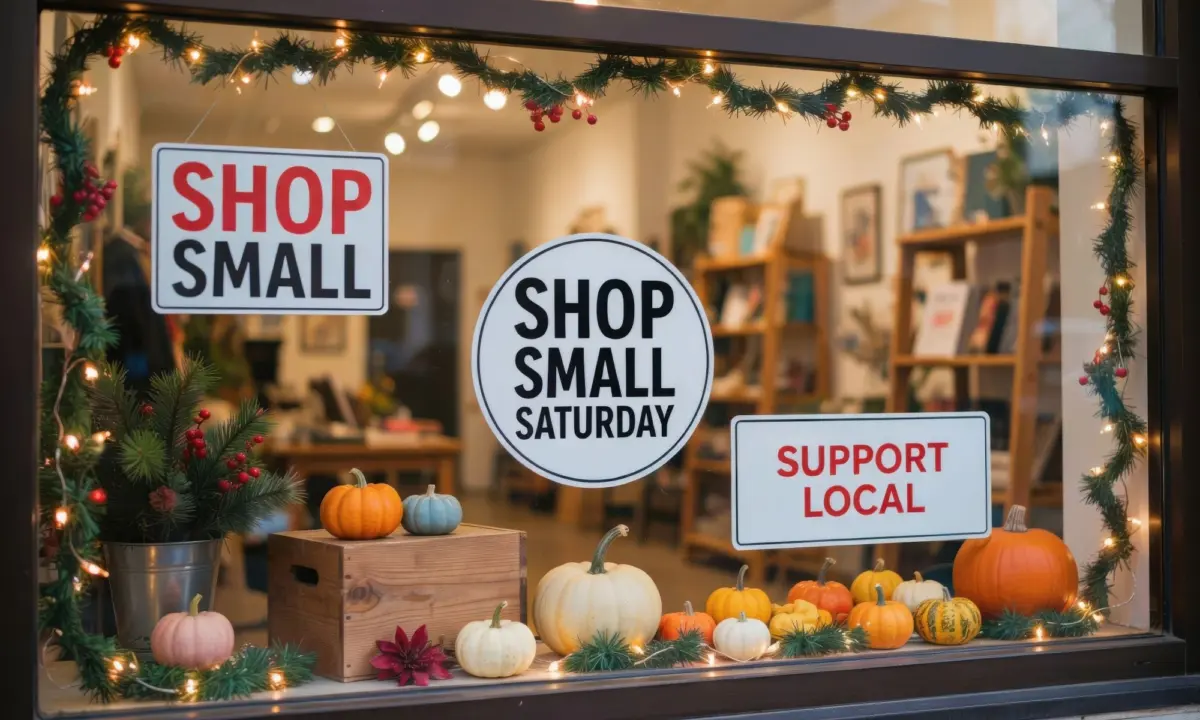
American Express is projecting that 88% of American consumers will patronize a small business during this year’s holiday season, marking the highest level of anticipated local shopping enthusiasm recorded by the financial services corporation since 2012.
That finding comes directly from the company’s annual Shop Small Impact Study, which was released on Thursday. The survey data points to a potentially robust holiday season for independent retailers, neighborhood service providers, and local dining establishments that rely heavily on late-year consumer spending to sustain their operations through leaner quarters.
Elizabeth Rutledge, chief marketing officer for American Express, emphasized the vital role that independent enterprises play within local communities in a news release accompanying the study. Small businesses bring character and connection to our communities, Rutledge noted, adding that the holiday season represents an essential opportunity for consumers to show up and financially support them.
Since creating Small Business Saturday back in 2010, American Express has continuously encouraged consumers to discover and support the independent merchants operating within their own neighborhoods. Each year, the organization hopes to turn that initial holiday enthusiasm into lasting relationships that help small businesses thrive year-round rather than just during the final weeks of December.
For the nation’s millions of small business owners, the stakes heading into the holiday season are exceptionally high. The American Express study revealed that 70% of small business owners say customer spending during the upcoming holidays will directly affect their ability to grow and expand their operations next year. A strong fourth quarter often provides the necessary capital for inventory expansion, equipment upgrades, hiring, and debt reduction.
To meet the anticipated surge in consumer demand and overcome ongoing operational pressures, small businesses are actively adapting their strategies. According to the study, almost all small businesses—an overwhelming 96%—said they were employing new strategies this year to prepare their operations for the holiday shopping season. Among those proactive measures, 90% of business owners reported that they expected to use artificial intelligence tools for various business functions, including marketing campaigns, day-to-day operations, and personalized customer outreach.
This widespread embrace of artificial intelligence by independent operators aligns closely with broader economic research. Separate findings compiled by PYMNTS Intelligence show that 74% of small and medium-sized businesses use AI at least occasionally in their workflows. Among those businesses that have integrated AI into their daily routines, 60% reported that they are able to produce more work without needing to add staff to their payroll. Furthermore, 72% of those respondents stated that the technology enables them to finish everyday tasks significantly faster than before.
Observers note that for a business owner trying to serve a growing number of customers with the exact same team, artificial intelligence can effectively act like an extra pair of hands. The findings suggest that small businesses currently have valuable opportunities to expand their operational capacity without immediately taking on the recurring fixed expense of hiring another full-time employee.
When looking specifically at how artificial intelligence is being deployed on the ground, around 45% of AI users reported that the technology allowed them to take on assignments and projects that were previously above their traditional capabilities. Customer service applications were cited as the most commonly used function for AI tools, followed closely by marketing initiatives, bookkeeping, and sales management.
These everyday practical uses help explain how artificial intelligence can successfully increase overall output across a relatively small company. Industry analysts emphasize that using the technology for these essential functions, however, does not necessarily mean a business has replaced a paid human worker. Instead, AI frequently serves as a force multiplier, enabling existing staff to focus on higher-value tasks, personal customer interactions, and strategic planning while routine digital workflows are automated.
At the same time that small business owners are strategizing around technology and consumer demand, the broader retail landscape continues to navigate complex consumer sentiment. Additional research conducted by PYMNTS Intelligence indicates that while everyday consumers are feeling somewhat more confident about the overall trajectory of the economy, a distinct layer of reluctance persists when it comes to committing to major financial expenditures.
This cautious consumer behavior was highlighted in recent survey data regarding large-scale purchases. Twenty percent of consumers surveyed last month reported that they had postponed a major purchase during the prior 90 days, compared to 18.3% who said the same in August. Another 11.1% reported that they had entirely cancelled a major purchase they had previously planned, up from 9.6% in the previous survey period. This underlying hesitancy underscores why independent merchants are leaning heavily on personalized marketing, artificial intelligence efficiencies, and community goodwill to capture consumer dollars during the crucial holiday shopping window.