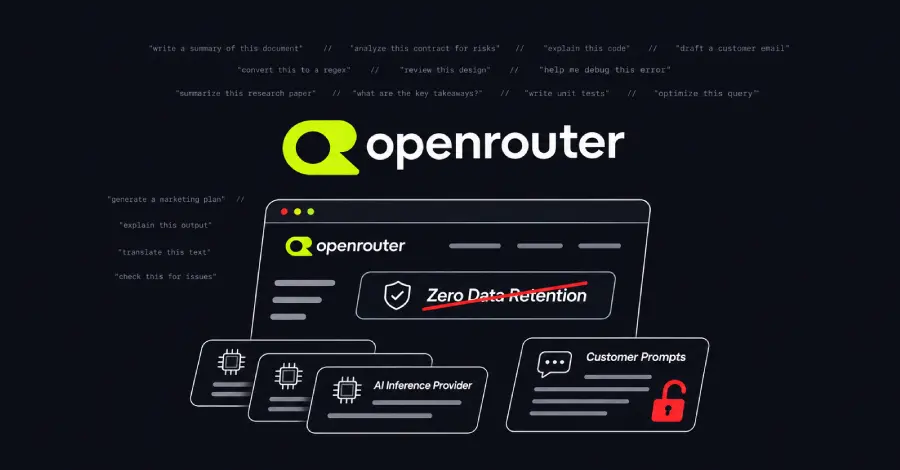
An extensive months-long cyber security investigation has revealed that malicious actors secretly compromised multiple artificial intelligence inference providers, intercepting customer data and private prompts for months without the companies realizing it. According to industrial cybersecurity firm Dragos, attackers managed to siphon data from inside at least three separate AI inference providers over an extended period. None of the affected organizations discovered the unauthorized access independently; instead, they were only alerted to the security lapses after researchers presented them with hard evidence.
The findings cast a harsh light on the reliability of standard privacy settings across the burgeoning AI supply chain, particularly the widely marketed "Zero Data Retention" configuration. This specific setting is supposed to guarantee that user prompts, queries, and conversational inputs are processed in volatile memory and never permanently stored or logged by the underlying infrastructure. However, the investigation demonstrated that such privacy flags offer little to no protection if an adversary has already bypassed perimeter defenses and established a persistent presence inside the inference stack itself.
The Anatomy of the Supply Chain Compromise
The alarming discovery originated from a sophisticated canary token research campaign conducted between July and November. During this five-month window, researchers seeded approximately two million AI prompts with unique, untraceable web links and specialized credentials. Because a planted secret can only be learned or accessed in one specific place, any subsequent external use or querying of those embedded tokens served as an absolute indicator that someone had read the prompt carrying it.
The investigation revealed that these planted prompts were processed right alongside real customer requests, and the overwhelming probability is that legitimate user inputs were copied and exfiltrated right alongside the bait. The earliest of the three major provider breaches identified by the firm began quietly in mid-July.
The largest of the three incidents involved a couple of hundred AWS keys that had been strategically planted within the test prompts. Each key was sent in exactly one request to a single provider during brief operational windows in late October. Investigators discovered that every single request transmitted during those specific timeframes was stolen by the intruders. Intriguingly, some of the compromised data originated from requests that the provider’s own systems had rejected prior to running any AI model. This crucial detail indicated that the attacker was not digging deep into the complex inference stack; rather, they were passively or actively copying network traffic at the very first point of arrival as it hit the provider’s perimeter.
The speed with which the thieves operated was alarming. In some instances, the threat actors tested the stolen credentials within hours of acquisition. They systematically listed Amazon S3 buckets, searched AWS Secrets Manager and Parameter Store, and attempted to generate new Bedrock API keys alongside adding unauthorized IAM users to maintain persistent backdoor access. These automated and manual actions drove tens of thousands of malicious AWS API calls.
Further compounding the complexity of the threat landscape, researchers observed that a single attacker appeared to have successfully compromised two of the inference providers simultaneously, utilizing stolen secrets from both systems concurrently from a single rented virtual private server. By November 1, this same actor integrated ARTEX—an advanced AI-driven penetration testing framework—exclusively to verify whether the stolen keys they already possessed remained active and valid. Security analysts noted that the framework utilized specific user agents, namely artex-agent and artex-judge-r121, which did not appear on any public indicator of compromise lists at the time, making them vital signatures for defenders to add to their detection tools.

Marketplace Vulnerabilities and Regional Data Scrapers
Beyond outright infrastructure intrusions, the research uncovered security risks that required no traditional break-in whatsoever. On certain decentralized or open AI inference marketplaces, unscrupulous sellers listed advanced models at artificially low prices, explicitly enabled comprehensive request logging, and passively collected everything that flowed through their servers.
The individuals operating these data-harvesting nodes often appeared as typical users connecting from standard home broadband networks. For instance, one operator working from a Mac computer on home broadband in France intercepted passwords from user prompts and manually attempted root Secure Shell (SSH) login attempts, while utilizing the exact same machine to test several of the planted AWS keys.
One of those critical keys had traveled through a third-party network router that was quietly forwarding a portion of its traffic directly to the marketplace—a covert hop that customers were never informed about. Although that specific router operator later confirmed they halted the practice after being contacted, subsequent network route tracing across roughly 2,000 distinct paths exposed several hundred unidentified systems, as well as a rogue seller that quietly injected approximately 1,000 hidden tokens into every single customer prompt passing through its infrastructure.
The investigation also tracked international data scraping activities. An unnamed Chinese AI lab fetched the secret canary links from more than half of the seeded prompts sent to its models between July and October. Strikingly, this included roughly two-thirds of all requests explicitly marked with strict no-data-collection or Zero Data Retention parameters. Prompts sent to U.S.-based hosting providers that merely resold the Chinese lab’s models triggered the exact same scraping behavior, causing sensitive data to flow right back to the lab overseas.
In a particularly telling incident, a secret link from a prompt sent to an inference system appeared inside a chat on Feishu—the Chinese workplace collaboration application known internationally as Lark—just twenty-four days after the initial prompt was transmitted. The link was opened within two minutes by users operating from three desktop computers and three mobile phones located in Beijing and Shanghai. Because the researchers had only publicly disclosed the first eight characters of that provider’s link, whoever posted it into the corporate chat application was clearly reading a fully cached, unredacted copy of the original prompt.
OpenRouter’s Response and Provider Disclosures
OpenRouter, a major gateway that routes customer AI requests to a diverse pool of third-party inference providers, responded swiftly to the findings. The company announced that it had officially removed three providers from its platform, stripped 125 endpoints of their eligibility for Zero Data Retention, and notified all potentially affected customers. OpenRouter emphasized that its own core infrastructure and gateway platform had not suffered a security breach.
The company explained that the 125 removed endpoints covered specific providers flagged by the researchers alongside others cut strictly as a precautionary measure. Any endpoint temporarily removed during the ongoing security review will require rigorous compliance assurances and technological validation before its Zero Data Retention status can be restored. Furthermore, OpenRouter is actively adapting the researchers’ canary testing methodology to implement continuous, automated security checks and is verifying network paths to identify any instances where requests and responses might be silently forwarded to unauthorized third parties.

Public disclosures from individual providers have begun to illuminate the scale of the crisis. Phala released a preliminary incident report detailing how an attacker successfully seized control of an inference server, granting them the ability to view customer request data while it was actively being processed. Phala confirmed that the incident was contained on November 8, and the model service was subsequently restored with enhanced defensive protections.
The company advised that any requests directed to the DeepSeek V4 Flash 0731 model that reached Phala through the gateway between October 21 and November 8 should be treated as completely exposed, urging users to rotate every key, token, password, or sensitive secret contained within those interactions. Although the researchers’ canary tests only captured misuse on October 21 and 22, Phala maintained the broader precautionary time window due to the sampling nature of the tests.
At Together AI, an unauthorized party downloaded stored samples of customer prompts after an AI coding agent accidentally committed a sensitive credential directly to the company’s public GitHub repository. Together AI noted that these samples had been collected strictly for routine software engineering testing and originated from requests made to MiniMax M3, GLM-5.2, and Kimi K2.6 models during June and July. The unauthorized party searched those samples for third-party credentials and tested them, discovering five of the researchers’ canary tokens in the process. Together AI stated it has no indication the data spread further, believes the local copies have been deleted, and has shifted Zero Data Retention to the default setting for all new user accounts.
Meanwhile, Novita confirmed that a routing configuration error inadvertently caused certain MiniMax customer requests to be forwarded directly to the official MiniMax API, exceeding the intended processing boundaries for those specific users.
Recommendations for Securing AI Pipelines
As the cybersecurity community continues to grapple with the implications of these supply chain vulnerabilities, security experts emphasize that traditional privacy settings have inherent limitations. A privacy flag or regulatory compliance label fundamentally binds only the first hop of a transaction. Autonomous AI agents and complex data pipelines will invariably transmit whatever readable text they encounter in their context windows, credentials included.
Industry experts advise that organizations must exercise rigorous control over where their prompts are directed. Relying solely on default provider pools or choosing infrastructure based exclusively on the lowest price often hands critical security decisions over to unverified third parties. For organizations handling highly sensitive intellectual property or proprietary corporate data, self-hosting remains the only foolproof method to ensure that no third-party entity reads an incoming prompt. Alternatively, working directly with established, tier-one providers simplifies the security equation by reducing the vendor chain to a single contract and a transparent privacy policy.
For enterprises utilizing AI gateways and multi-provider pools, experts recommend actively selecting upstream providers rather than accepting default configurations, verifying that privacy settings genuinely restrict downstream data forwarding, and steering clear of unvetted reseller marketplaces whose operational capacity may depend on compromised infrastructure. Implementing canary tokens directly within context windows serves as an effective tripwire, allowing organizations to instantly detect unauthorized data leakage or access attempts across their AI pipelines.