Bitcoin (BTC) managed to claw back some ground and avoid deeper losses on Friday, showing resilience as cryptocurrency markets digested reports of a security exploit affecting Ledger hardware wallets. While digital asset investors navigated a wave of market-wide liquidations and broader macroeconomic uncertainty, the premier cryptocurrency sought stability above key technical levels heading into the weekend.
Data from TradingView mapped BTC/USD hovering around the critical $82,500 support level on Friday, attempting to solidify a recovery after a volatile stretch earlier in the week. The upward momentum came on the heels of a sharp dip on Thursday that saw Bitcoin temporarily tumble to $80,350. That downward pressure was met with swift renewed buyer interest, which coincided with a massive flush of derivatives positions as rolling 24-hour cryptocurrency market liquidations surpassed the $1 billion mark across various centralized exchanges.
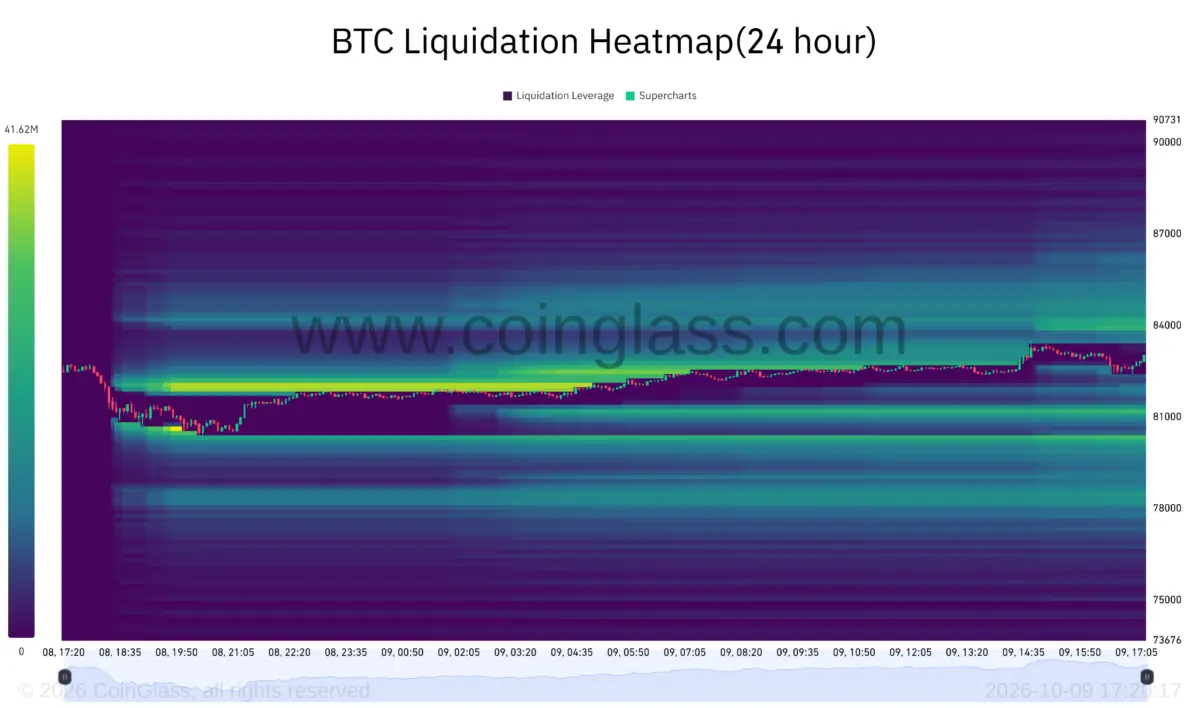
Order book analytics from CoinGlass highlighted the changing dynamics beneath the surface, revealing that the spot price had begun cutting through ask-side liquidity on exchange order books. This localized liquidity concentration was noted as thickening significantly around the $84,000 threshold, representing a near-term psychological and technical hurdle for bullish traders attempting to extend the recovery.
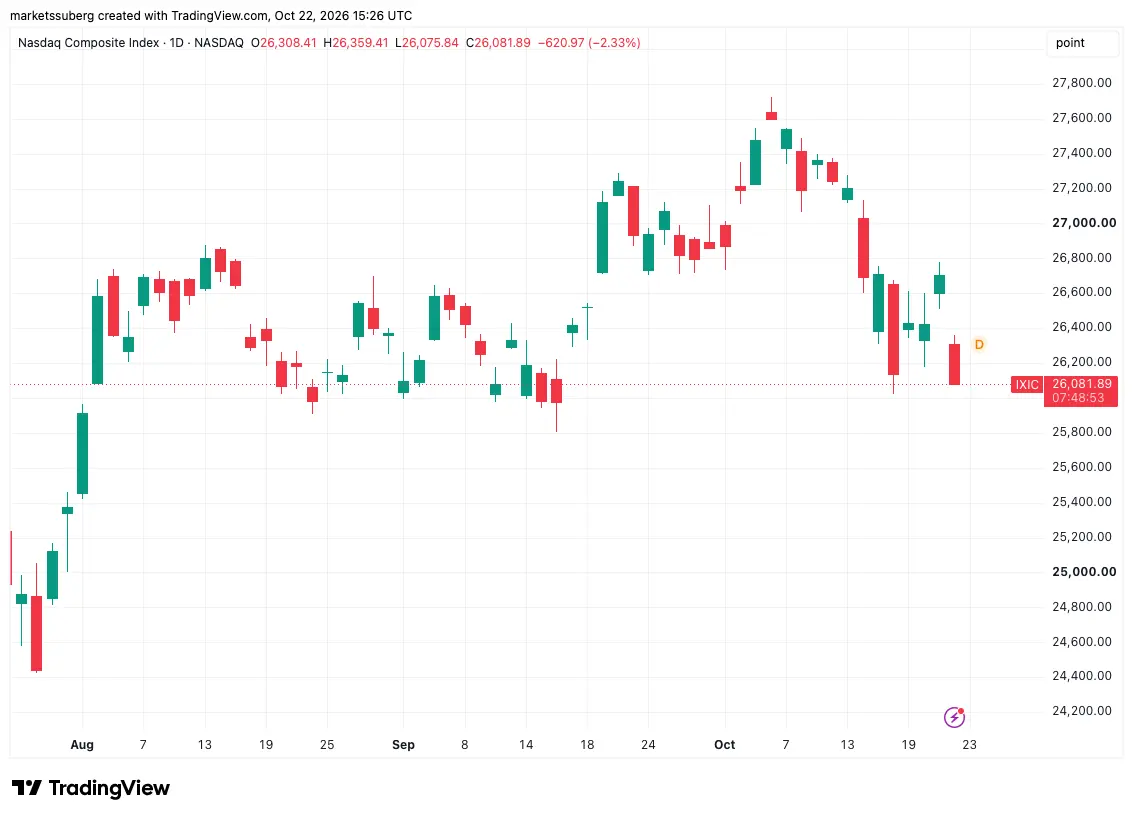
The broader financial landscape also provided a supportive backdrop for risk-on assets as traditional markets opened on Friday. US stocks posted gains in early trading, driven primarily by a tech sector rebound that helped cushion the blow from earlier weekly sell-offs. This recovery notably included the tech-heavy Nasdaq Composite Index. According to CNBC reporting, the index had previously come under intense pressure following weaker-than-expected earnings projections and forward-looking guidance from artificial intelligence giant OpenAI.

Market analysts weighed in on the underlying health of the technology sector, noting that structural positioning had played a major role in the recent volatility. Adam Crisafulli of Vital Knowledge addressed the market conditions in a note quoted by CNBC, pointing out that the recent downward adjustments reflected extreme positioning imbalances that still had further to unwind. Consequently, he suggested that the broader artificial intelligence-linked technology stock complex was unlikely to stage a simple, aggressive V-shaped recovery without further consolidation.
Despite the turbulence in traditional equities, cryptocurrency participants faced their own idiosyncratic challenges, notably fresh concerns surrounding hardware wallet security. Digital asset markets largely brushed off circulating reports of funds being stolen from users of Ledger hardware wallets, an incident that quickly drew official commentary from the manufacturer. In an official statement shared via an X post, Ledger acknowledged the claims and traced the origin of the compromised user experiences to CryptoBillis, a Southeast Asian-based reseller rather than a direct systemic failure of the core manufacturer infrastructure.
Nevertheless, out of an abundance of caution, the company issued practical guidance to affected or concerned customers. Ledger advised users who had set up devices sourced through specific channels to consider transferring their digital assets to a newly initialized Ledger signer utilizing a completely fresh seed phrase.
The incident has once again turned a spotlight onto the hardware wallet sector, which has faced heightened security scrutiny in recent months. The broader industry has remained particularly sensitive to hardware-level vulnerabilities following a multi-phase hack experienced by competing manufacturer Coldcard during July and August, an event that triggered widespread discourse regarding the physical and operational security of cold storage devices.
US Macro Data Seen as Next BTC Price Volatility Catalyst
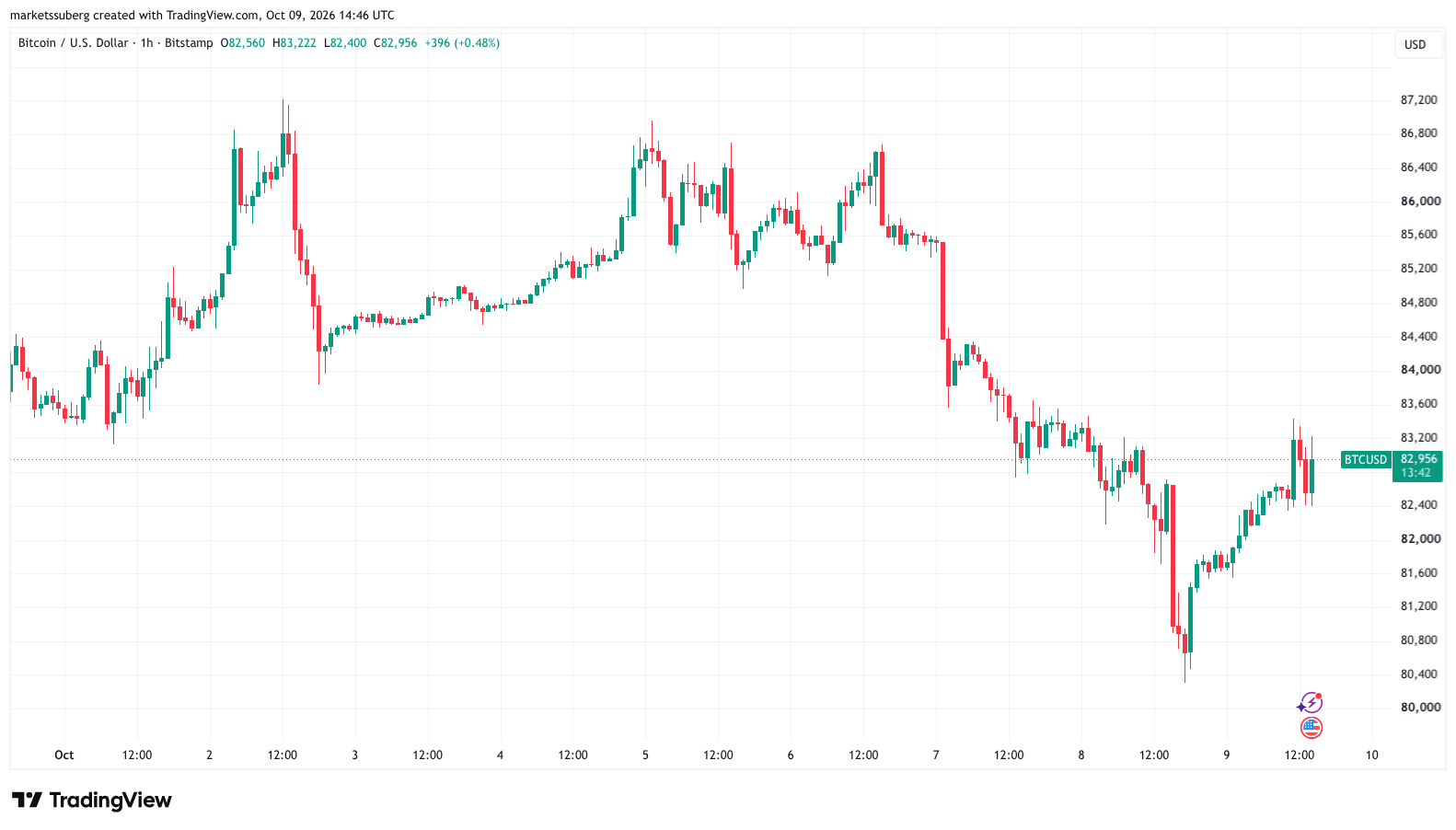
As the trading week drew to a close, market participants shifted their focus toward the upcoming weekly candle close, monitoring whether Bitcoin could successfully defend and lock in crucial structural zones. Analysts reiterated that the $82,500 mark remained an essential threshold for bulls to reclaim and defend, having served as a reliable support floor since mid-September. Furthermore, technical strategists pointed out that this price action forms part of a potential inverse head-and-shoulders reversal pattern, bearing strong structural similarities to a comparable setup that emerged during the market cycles of 2023.
Looking ahead to the immediate future, institutional research desks anticipate a period of tighter consolidation before the next major macroeconomic data release. Earlier in the week, Bitfinex Alpha—the research arm of the cryptocurrency exchange Bitfinex—published an outlook forecasting that range-bound trading conditions would likely persist until October 14. That date marks the scheduled release of fresh United States inflation data, which historically serves as an explosive catalyst for crypto market volatility.
In its weekly blog post, Bitfinex Alpha outlined its primary market expectations heading into the mid-October data dump, noting that the analytical team anticipated continued range-bound consolidation trapped between $81,300 and $86,500. The report emphasized that traders should prepare for repeated retests of the $84,000 level as the market searches for a definitive directional catalyst.