Bitcoin (BTC) surrendered its early-week gains as trading commenced on Wall Street, dipping into Monday’s session as skepticism intensified surrounding a proposed Russia-Ukraine “energy ceasefire.”
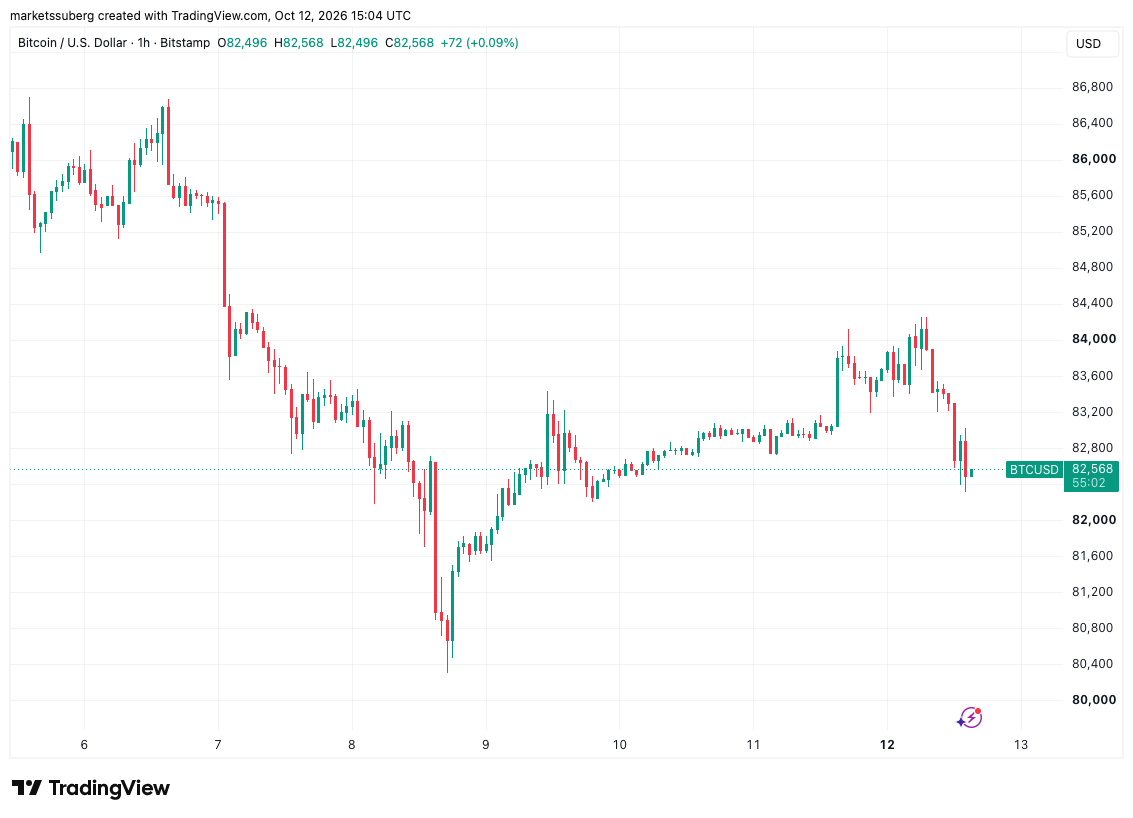
Data sourced from TradingView indicated that the premier cryptocurrency reached an intraday high of $84,254 on the Bitstamp exchange—marking its strongest performance since the previous Wednesday—before experiencing a downward correction of up to 2.2%. The retreat coincided with broader macroeconomic jitters, a sharp resurgence in global crude oil benchmarks, and growing anticipation ahead of high-impact United States inflation metrics due later in the week.
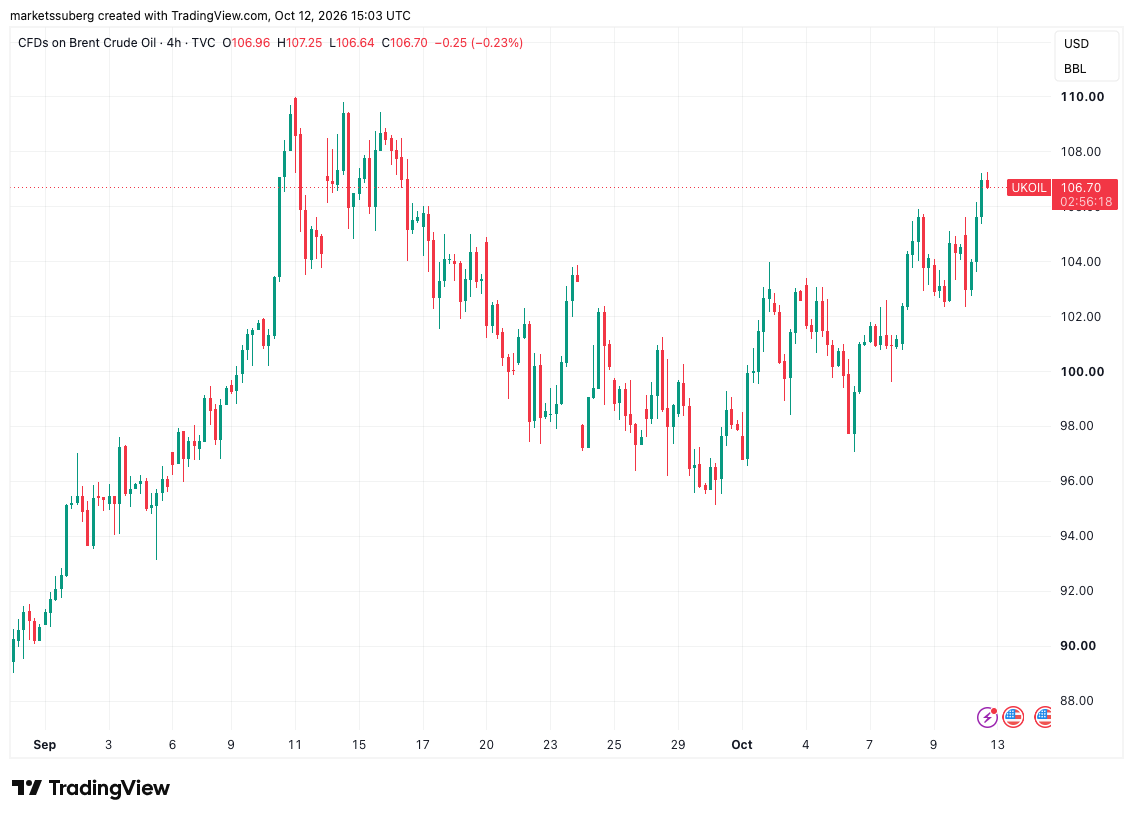
Bitcoin Pressured as Brent Crude Oil Rises Above $107
The sudden reversal in digital asset valuations was closely tied to escalating geopolitical tensions and fresh shocks to energy markets. Ukrainian President Volodymyr Zelenskyy publicly accused Russian forces of continuing to target critical energy infrastructure despite a recent announcement by US President Donald Trump regarding a moratorium on such strikes. Adding to the geopolitical anxiety, reports emerged from Iran confirming that an oil tanker had been struck and was ablaze in the strategic Strait of Hormuz.

The twin developments sent immediate shockwaves through global commodity markets. Oil prices reacted with sharp upward momentum, as West Texas Intermediate (WTI) crude spiked past the $94 per barrel mark, while Brent crude surged to $107.25—its highest price point since September 16.
These commodity price increases arrived while financial markets were already on edge, bracing for critical United States inflation data. The Consumer Price Index (CPI) and the Producer Price Index (PPI) are scheduled for release on Wednesday and Thursday, respectively. Market analysts have frequently noted that domestic CPI metrics remain acutely sensitive to fluctuations in energy and oil prices, raising concerns that persistent geopolitical conflicts could reignite inflationary pressures and influence future Federal Reserve monetary policy decisions.
Weighing in on the macroeconomic dynamics, Robin Brooks, former chief foreign exchange strategist at Goldman Sachs, suggested that energy markets might have overcorrected by pricing in an excessive risk premium. He pointed to ongoing maritime traffic figures through the Persian Gulf to illustrate that transit volumes, while down from recent peaks, remain resilient compared to earlier phases of the conflict.
“Oil volumes out of the Persian Gulf are around 13 million barrels per day compared to a high of 16.5 million barrels per day a few weeks ago. This is still way better than the height of the war in March and April, but oil prices are back to their highs,” Brooks observed in a commentary published on the same day.
BTC Bid Support Seeks to Protect $82,000
As digital asset traders evaluate the macroeconomic headwinds and assess potential price trajectories for Bitcoin, institutional insights point toward a complex sentiment within derivatives and options markets. According to a market update from trading firm QCP Capital, Bitcoin options exhibit a dual nature characterized by cautious defensive positioning alongside underlying speculation that a structural upside breakout remains entirely plausible.
“Implied volatility has held firm even as spot settled back into the range, while risk reversals show a less pronounced premium for puts than usual. Read together, the market looks less defensively positioned but still priced for a possible breakout,” QCP Capital summarized in its latest market analysis.
Prominent cryptocurrency trader and analyst Rekt Capital identified $83,400 as a crucial local resistance level to monitor. He noted that this threshold shares historical parallels with the $77,000 zone observed from mid-August through September 21, a consolidation area that ultimately preceded a decisive upward breakout for the BTC/USD pair.
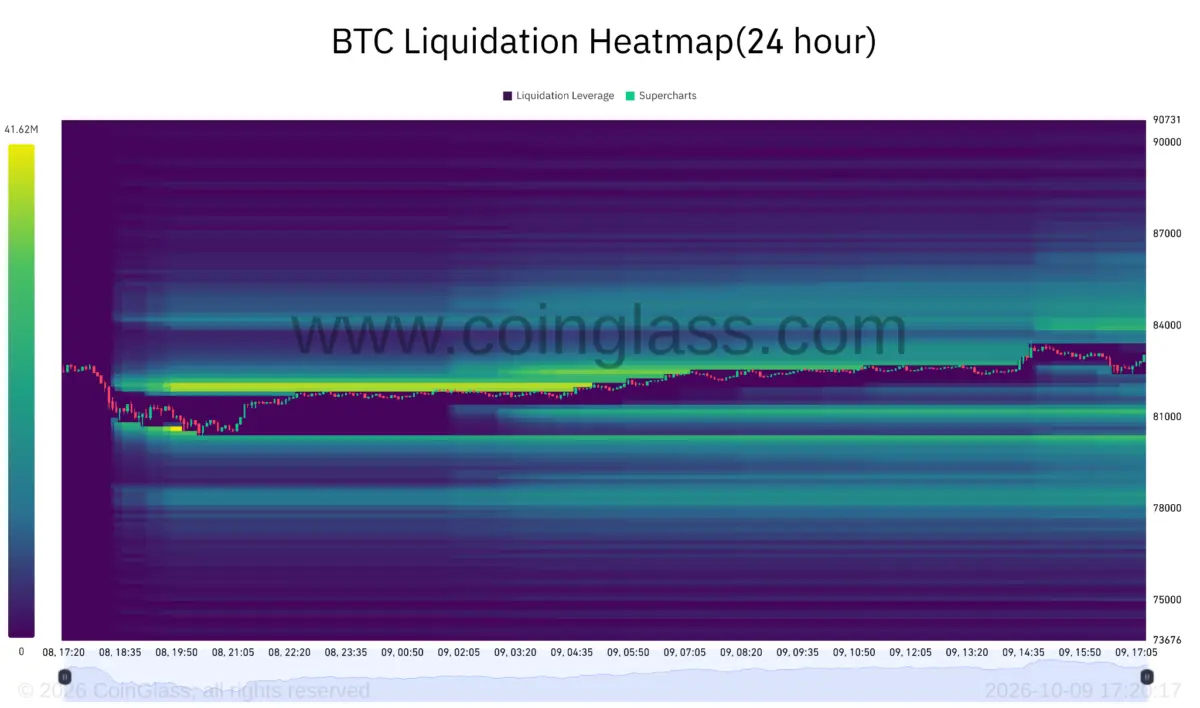
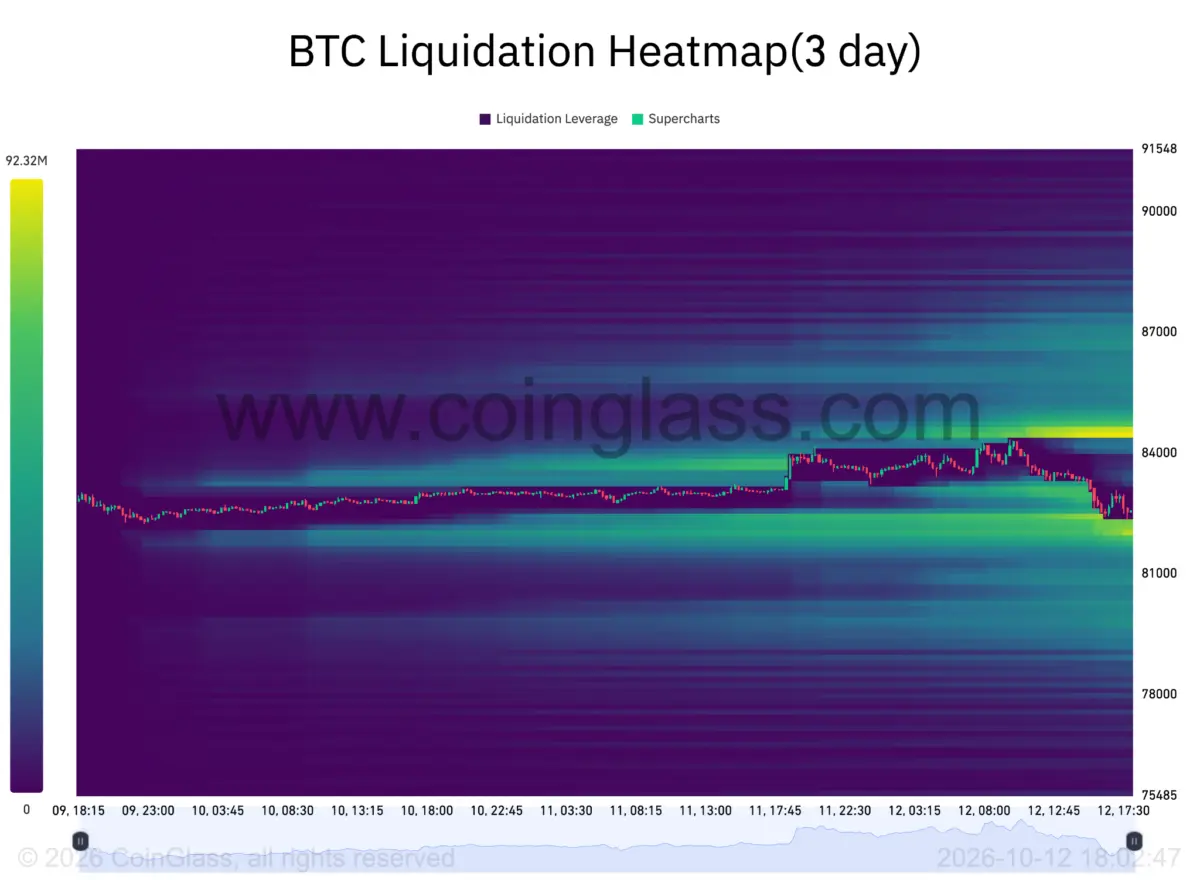
Order book and liquidation analytics provided by CoinGlass revealed significant market concentrations heading into the North American trading hours. Ask liquidity was heavily clustered around the $84,500 mark across major centralized exchanges, with total sell orders at that level approaching $180 million. Conversely, institutional and retail buy orders—or bids—were actively building around the $82,000 threshold as the spot price trended downward during the session, establishing a critical line of defense for bullish market participants aiming to stabilize the cryptocurrency near-term.