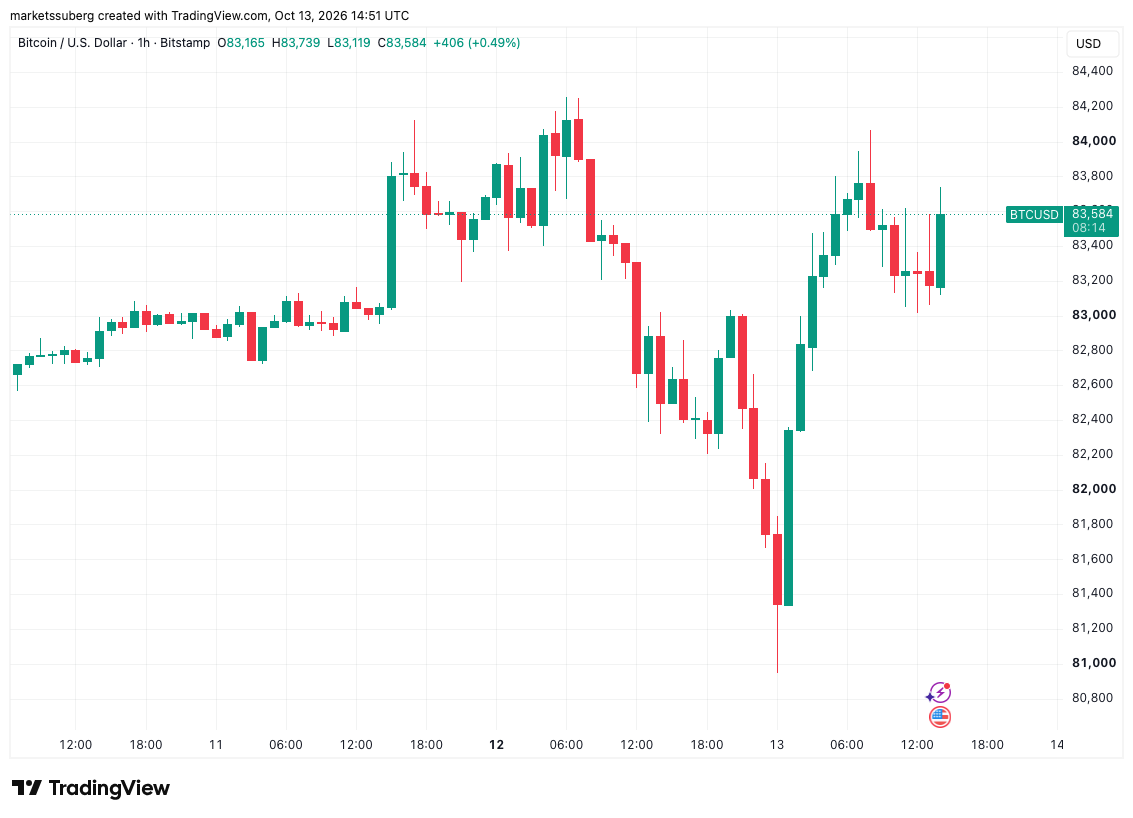
Bitcoin (BTC) continued to press toward the $84,000 threshold during Tuesday’s Wall Street opening bell, as United States equities attempted to recover from a sharp overnight tech sell-off originating in Asia.
Data from TradingView indicated that BTC/USD climbed back to approximately $83,800 at the official commencement of the US trading session, successfully preserving a significant portion of its overnight gains. Despite facing persistent macro headwinds, the premier cryptocurrency demonstrated resilience as traditional markets digested a cascade of international economic pressures, led primarily by a dramatic downturn in South Korea’s financial sector.
S&P 500 and Nasdaq Brush Off KOSPI Losses
Global equities initially opened lower on Tuesday after regional futures plummeted during Asian trading hours. The decline was catalyzed by South

Korea’s KOSPI Composite Index, which suffered a staggering 7.4% loss over a two-day period. The sharp correction was heavily concentrated in the semiconductor sector, driven by intensifying market anxieties regarding aggressive artificial intelligence capital expenditures and rising competitive pressures from Chinese technology firms.
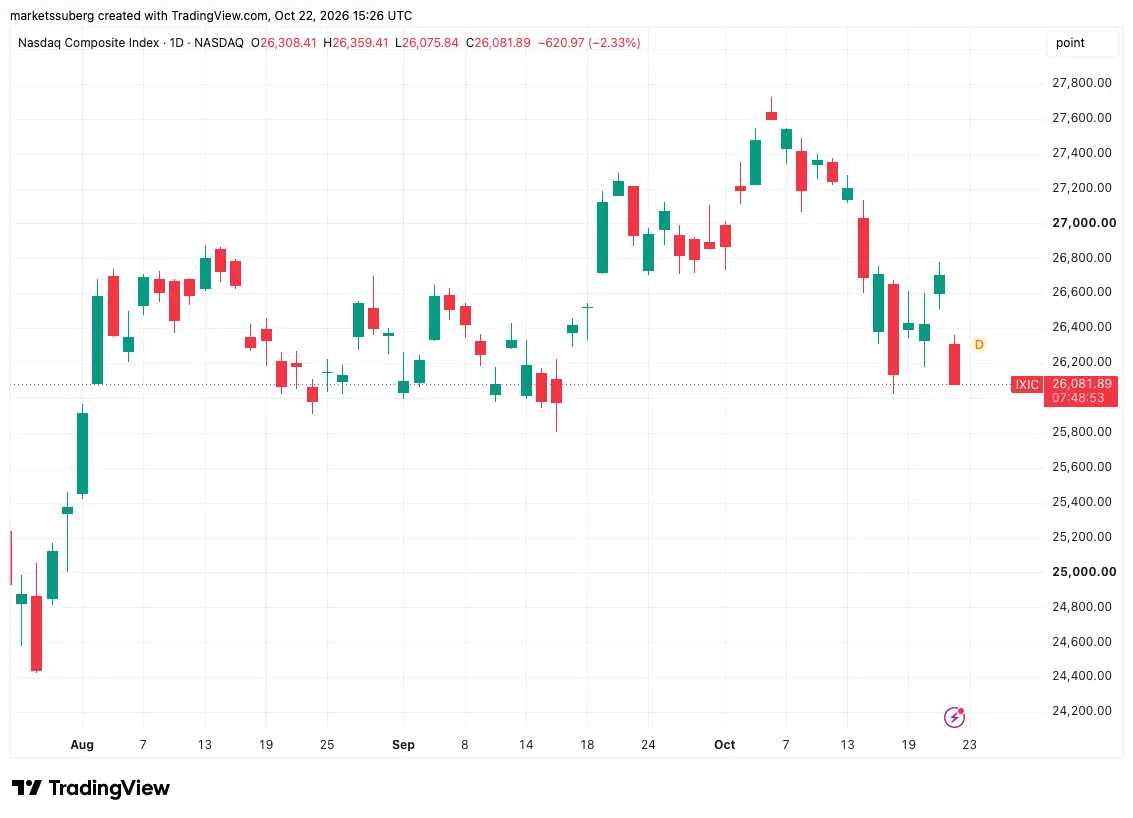
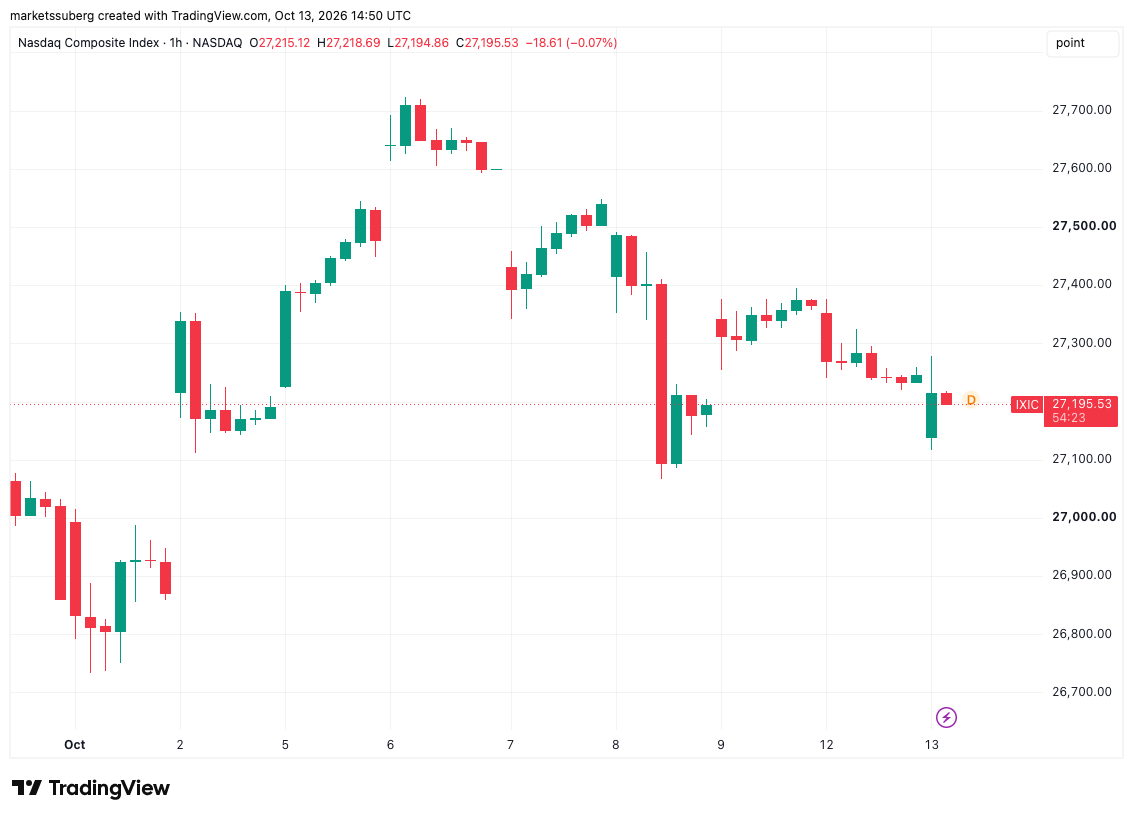
However, major US benchmark indices showed remarkable early buoyancy. Both the S&P 500 and the tech-heavy Nasdaq Composite index managed early intraday gains that briefly pushed them into positive territory. By the time of writing, however, both gauges had surrendered those marginal gains, trading lower by less than 0.5% as investors weighed broader systemic risks.
Market analysts pointed to broader structural shifts in fixed-income markets as the underlying driver of the current market volatility. Damien Boey, a portfolio strategist at Wilson Asset Management in Sydney, Australia, highlighted the cascading effects of rising borrowing costs during an interview with Reuters.
"The most important development has been not just bond yields going up, but the volatility for bonds… and that’s starting to work its way out through asset pricing across the board," Boey told Reuters, characterizing the current financial landscape as an "uncomfortable situation on many fronts." He added that investors are increasingly questioning whether corporate enthusiasm and spending on artificial intelligence infrastructure might "come off the boil a little bit," potentially leaving certain market participants exposed as casualties of overextension.
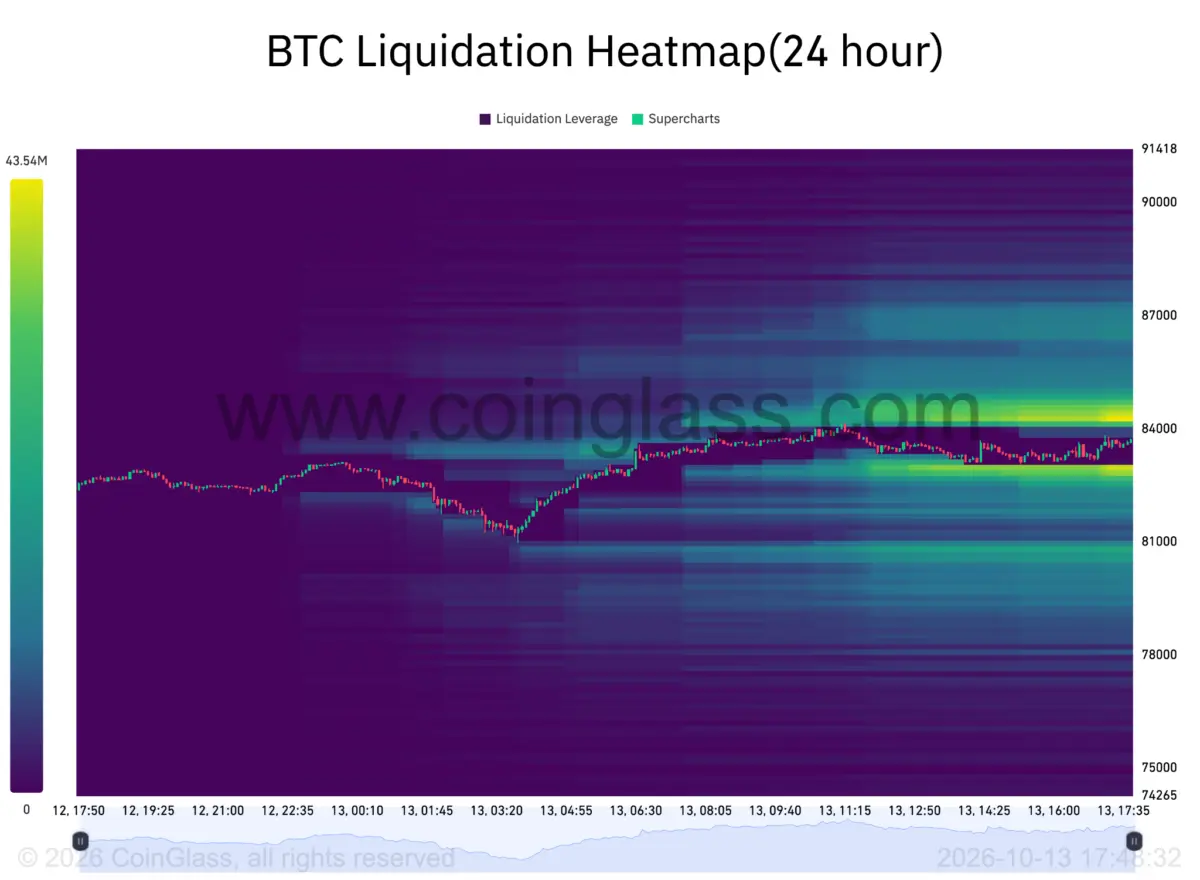
Within the digital asset ecosystem, Bitcoin’s immediate upside momentum remained contained by heavy concentrations of exchange order-book liquidity. According to metrics provided by CoinGlass, dense clusters of sell-side liquidity continued to function as a formidable resistance barrier just above the $84,000 mark, capping explosive breakout attempts as traders awaited clearer macroeconomic signals.
Dollar Strength and Yields Create Twin Headwinds
Beyond regional equity shocks, Bitcoin bulls faced a formidable double macro headwind throughout the month, according to insights shared on Tuesday by CryptoQuant contributor Darkfost.
With US sovereign bond yields hovering near their highest levels observed in nearly a quarter of a century, the broader foreign exchange market has experienced a profound surge in US dollar demand. The US Dollar Index (DXY)—which measures the greenback against a weighted basket of major trading partner currencies—has climbed roughly 5.5% since September 9. On Tuesday, the index touched 102.57, marking its highest valuation since April 2025.
While the historically inverse relationship between the DXY and Bitcoin has shown signs of decoupling or weakening at various points over the past year, onchain analytics and market observers suggest that the broader crypto market is currently suffering from a pervasive contraction in global risk appetite.
"Taken together, these factors constrain the liquidity available to markets and erode institutional confidence, leaving them reluctant to take on more risk," Darkfost wrote in a market commentary publication. He further elaborated that the prevailing financial climate remains notably unfavorable for digital assets, which are still broadly classified and traded as high-beta risk assets. Meanwhile, more mature institutional vehicles, such as the S&P 500 and Nasdaq indices, continue to attract capital and absorb what little discretionary liquidity remains available in the broader financial system.