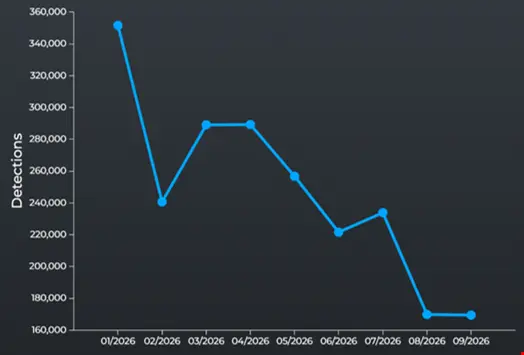
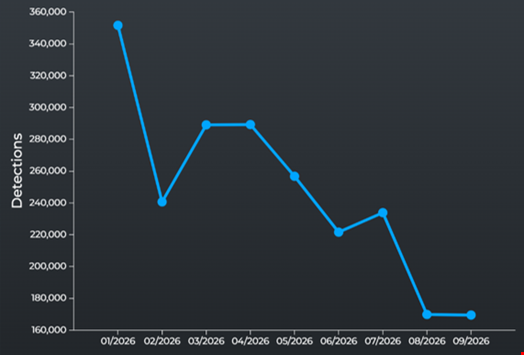
A new comprehensive analysis from security firm Trellix has revealed a significant downturn in observed cyber activity linked to Chinese nation-state actors. According to the research, which spans the period from April to September 2026, detected operations attributed to Chinese groups plummeted by 41.4%. While this numerical decline is substantial, cybersecurity experts and researchers are cautioning against interpreting these figures as a retreat from the global cyber-espionage stage. Instead, the findings suggest a possible recalibration of intelligence priorities, changes in operational infrastructure, or an evolution in stealth tactics that may be evading traditional detection methods.
Geopolitical Drivers and Evolving Priorities
The researchers at Trellix suggest that the sharp reduction in detected activity is likely tied to the broader, complex tapestry of geopolitical developments that have defined the mid-2020s. As the People’s Republic of China (PRC) navigates an increasingly volatile international landscape, its intelligence objectives appear to be undergoing a transition. One primary theory put forward by the report is that Chinese state-sponsored actors are narrowing their focus toward specific, high-value intelligence collection—most notably the monitoring and assessment of Western military capabilities and emerging battlefield technologies.
This strategic pivot appears to align with broader military and maritime maneuvers observed in the Indo-Pacific. The report highlights a direct correlation between fluctuations in cyber-aligned detections and the escalating tensions surrounding Taiwan. Specifically, the data shows that Chinese-aligned cyber activity experienced a notable uptick between June and July 2026. This period coincides precisely with the expansion of "gray-zone" operations orchestrated by the Chinese Coast Guard in the waters surrounding Taiwan. These operations, characterized by the persistent patrolling of Taiwan-controlled maritime zones, represent a dual-track strategy where physical presence is augmented by cyber-enabled reconnaissance and pressure campaigns.
The Illusion of Reduced Activity
Despite the significant statistical drop, Trellix researchers emphasize that the baseline for Chinese-linked cyber operations remains "substantially higher" than that of other prominent nation-state actors, including those aligned with Russia and Iran. This serves as a critical reminder that a decrease in visibility does not necessarily equate to a decrease in threat. The cybersecurity community is well aware that nation-state actors are constantly evolving their tactics, techniques, and procedures (TTPs) to maintain persistence within target networks while minimizing their digital footprint.
The researchers posit that the decline in detections may reflect a deliberate shift in how these actors deploy their infrastructure or manage their visibility. In the world of advanced persistent threats (APTs), "low and slow" is a common operational philosophy. If Chinese actors have shifted their focus toward more sophisticated, stealthy exfiltration techniques or have invested more heavily in the obfuscation of their command-and-control (C2) infrastructure, the ability of security tools to flag these activities effectively diminishes.
Historical precedent supports the concern that much of this activity remains hidden from view. A striking example mentioned in the report is the 2025 discovery of the threat actor known as "Weaver Ant." This group, which has strong ties to Chinese state interests, was found to have successfully infiltrated the network of an Asian telecommunications provider. The alarming aspect of this campaign was not just the breach itself, but the duration: the threat actor had maintained persistent, undetected access for over four years. Such cases underscore the reality that today’s detected incidents may only represent the "tip of the iceberg," with numerous long-term, high-impact espionage campaigns likely continuing under the radar.
Global Targets: The Strategic Focus on the US and Turkey
The Trellix report, published on November 4, provides a sobering look at the geographic distribution of nation-state targeting. The data confirms that the global landscape of state-sponsored cyber conflict is heavily concentrated, with a vast majority of activity directed at a handful of key nations. The United States and Turkey were the primary focal points, together accounting for more than three-quarters of all nation-state-linked detections between April and September 2026.
The United States, as the world’s largest economy and a global leader in high-value technology, defense, and government infrastructure, remains the most coveted prize for state-sponsored actors. The constant barrage of activity targeting American networks is a testament to the high strategic value placed on intellectual property, sensitive government communications, and military secrets.

Turkey, meanwhile, has emerged as an equally critical focal point for global intelligence agencies. Its unique geopolitical position—serving as a bridge between Europe, the Middle East, and Central Asia—makes it a hub for information gathering. Furthermore, as a key NATO member with significant military influence in its region, Turkey’s internal networks are of immense interest to adversaries looking to gain insight into the alliance’s regional strategies and military readiness. Following the US and Turkey, Germany was identified as the third most targeted nation, reflecting its position as a central player in European industry and policy.
Strategic Sectors and Persistent Tooling
When analyzing the sectors most frequently targeted by these state actors, the report highlights a heavy emphasis on the foundational pillars of modern society. Transportation, shipping, and telecommunications combined accounted for more than half of all detected campaign volume. This concentration suggests that state-sponsored groups are not merely interested in data for its own sake; they are focused on intelligence collection that provides insights into global supply chains, logistics capabilities, and the underlying communications infrastructure that supports international trade and military coordination.
The report also sheds light on the most active groups currently operating in the cyber domain. Over half of all detections were attributed to just ten specific threat groups. Among the most prolific were the Russia-aligned group Gamaredon, the Pakistan-linked actor APT36, and the Chinese-nexus group Mustang Panda. These groups continue to refine their toolsets to ensure maximum longevity within compromised systems.
In terms of methodology, backdoors remain the preferred tool for nation-state actors, appearing in nearly 21% of all detected incidents. This choice of tool is indicative of the primary goal of these groups: long-term, stealthy access. Unlike cybercriminals, who may prioritize rapid ransomware deployment for financial gain, nation-state actors are playing the long game. They require persistent access to siphon data over months or years, often moving laterally through a network to identify and harvest the most sensitive information available.
Infostealers followed closely behind, accounting for nearly 12% of detected tools. These are increasingly used to assist in the harvesting of credentials and sensitive documents once a network has been breached. By deploying these tools, attackers can quickly identify high-value targets within a compromised environment, allowing them to escalate privileges and deepen their control.
As the findings from Trellix make clear, the landscape of nation-state cyber operations is fluid and highly responsive to global political currents. While the 41% decline in Chinese-aligned detections provides an interesting data point, it is far from a sign of a cooling cyber conflict. Instead, it serves as a stark reminder of the need for persistent vigilance, advanced detection capabilities, and a deep understanding of the strategic motivations that drive state-sponsored actors to remain active, even when they appear to be shifting their focus. As these actors continue to refine their TTPs and target the critical infrastructure of global powers, the challenge for defenders remains as formidable as ever.