
The United Kingdom is rapidly approaching a critical crossroads that could fundamentally define its financial future: regulators must decide whether decentralized finance (DeFi) will be allowed to develop and flourish through safe, regulated gateways, or whether it will be constrained and isolated within an obsolete silo.
This pressing dilemma extends far beyond the immediate interests of niche cryptocurrency enthusiasts. Instead, it goes to the very heart of the future of capital markets, the global competitiveness of the City of London, and the United Kingdom’s overarching ability to shape and lead the next generation of global financial infrastructure.
For those navigating the modern digital economy, DeFi represents a revolutionary paradigm. It is fundamentally software that empowers individuals to borrow, lend, and trade assets directly with one another without ever having to rely on a traditional financial intermediary, such as a commercial bank or a centralized brokerage firm. Functioning less like a legacy financial institution and more like the foundational architecture of the internet itself, DeFi promises cheaper, faster, and vastly more efficient financial services that remain continuously accessible to anyone, anywhere, at any time.
While decentralized protocols will always remain accessible through direct, open-source, or purely decentralized routes, regulated financial institutions can also offer a vital, structured route to DeFi. Such pathways allow everyday customers to engage safely with cutting-edge technology while simultaneously receiving key disclosures, crucial information about the services they are accessing, and clear guidance regarding the inherent risks they should be aware of.
However, the Financial Conduct Authority’s (FCA) recently proposed crypto regulations threaten to make this collaborative integration entirely impossible. Under the regulator’s current framework, the FCA will expect authorized and regulated platforms to ensure that customer orders are executed exclusively on an FCA-authorized venue. While this restrictive requirement is ostensibly designed to prevent unauthorized overseas firms from illegally targeting and accessing the UK market, it carries a severe unintended consequence: it risks completely cutting off access to DeFi protocols. Because decentralized protocols and automated exchanges operate via autonomous code without a centralized corporate entity behind them, they cannot practically become authorized venues under traditional regulatory definitions.
Although no explicit rule currently states that financial firms are barred from offering DeFi integrations to their retail and institutional customers, the FCA has made it abundantly clear that it is not seeking to draft rules tailored specifically to these novel products. Instead, the regulator has opted to apply the exact same rigid rules designed for fully centralized trading platforms. The practical effect of this one-size-fits-all approach could easily culminate in a de facto ban.
Consequently, beginning in October 2027, regulated UK platforms may find themselves legally unable to provide customers with access to innovative DeFi services unless the FCA fundamentally shifts its regulatory stance and approach.
The UK government has repeatedly pledged that it wants the country to "lead the world on digital assets." Yet, prominent industry voices argue that the nation will profoundly struggle to realize this ambitious vision if British firms are systematically cut off from the decentralized infrastructure upon which modern digital asset markets are built.
DeFi is Becoming Part of the Next Financial Infrastructure
Regulators in other major international jurisdictions are already recognizing the immense economic opportunities presented by decentralized technology and are proactively exploring pragmatic ways to enable DeFi innovation. Within the European Union, for instance, the European Securities and Markets Authority (ESMA) has proposed allowing regulated firms to provide controlled access to DeFi. The European regulator noted that such a framework could successfully "allow innovation in decentralized finance in a regulated and transparent environment."

Similarly, across the Atlantic, the United States Securities and Exchange Commission (SEC) recently granted a temporary "Innovation Exemption" facilitating the peer-to-peer trading of tokenized stocks using automated trading systems and decentralized liquidity pools.
In short, both the United States and the European Union are actively exploring how traditional finance and innovative DeFi infrastructure can effectively work in tandem. Industry leaders emphasize that the UK should be exploring this exact same potential before it inadvertently closes off the option completely and falls behind its economic peers.
Onchain tokenized finance simply cannot reach its full market potential if it remains strictly confined to closed, fragmented traditional systems that perpetually struggle to interact with the decentralized technology underpinning the broader digital economy.
A De Facto Ban May Push DeFi Beyond the Regulator’s Reach
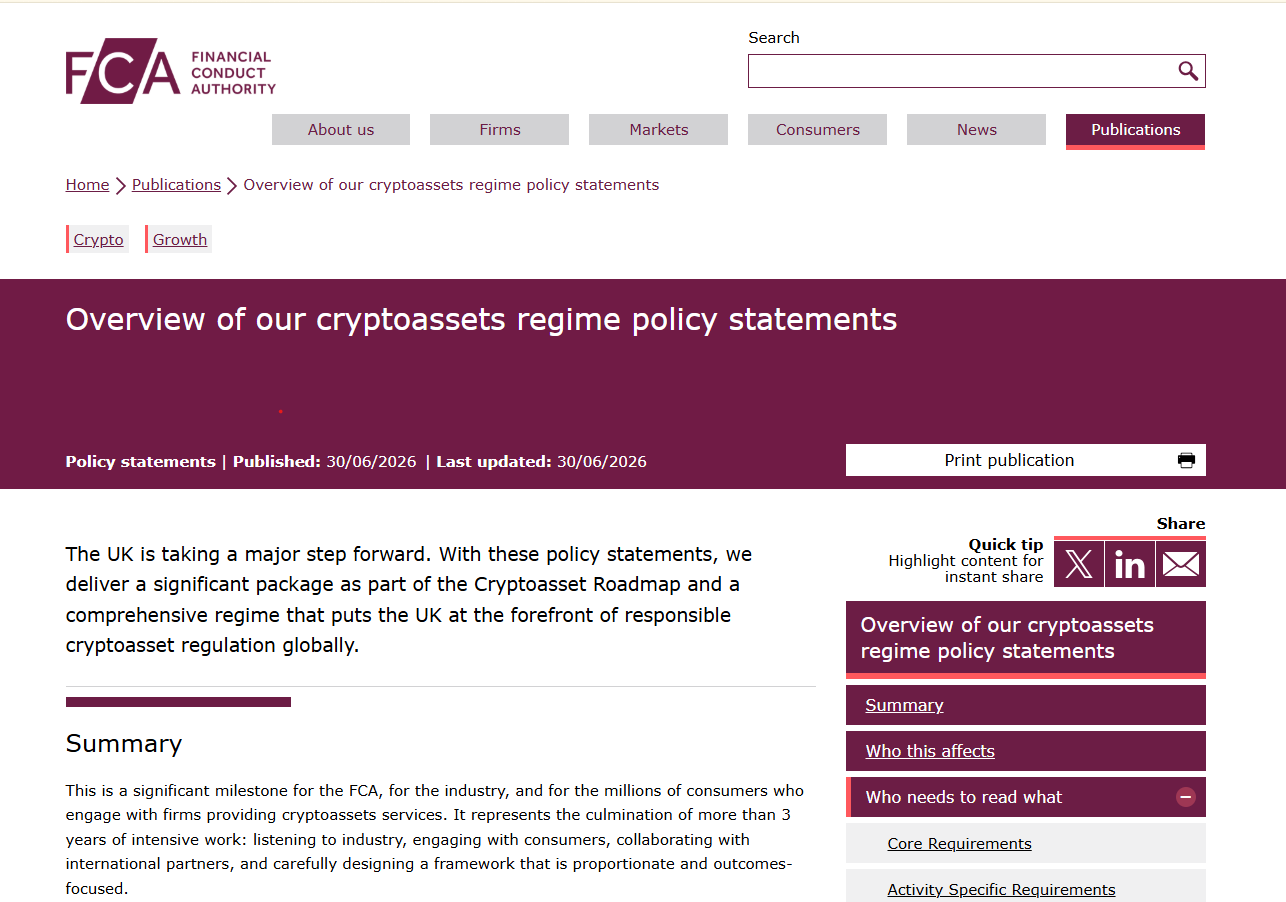
The UK has officially established its very first comprehensive rulebook governing the crypto sector. Effective Oct. 25, 2027, firms offering crypto-related services to UK consumers will be legally required to secure formal authorization from the FCA. In alignment with this rollout, the FCA is presently consulting on detailed guidance concerning how its overarching rules will apply to firms that provide financial services utilizing or interacting with DeFi.
Potential regulatory concerns surrounding DeFi integrations typically center on three core issues. First, regulators worry that a consumer utilizing a familiar, regulated platform might not fully realize when they have crossed into an environment where traditional consumer protections no longer apply. Second, authorities are concerned that certain opportunistic firms could potentially exploit DeFi integrations as a loophole to evade standard regulatory obligations. Third, regulators note that decentralized finance could introduce complex risks related to illicit financial crime and overall market resilience.
Nevertheless, industry experts argue that these legitimate risks point directly to the vital necessity for clear, transparent information for consumers and well-defined responsibilities for firms—not an outright prohibition.
A de facto ban would likely produce the exact opposite of its intended regulatory effect. Rather than eliminating DeFi activity, it would merely push more volume beyond the practical visibility of the FCA, thereby diminishing the ability of regulated firms to guide and protect how everyday consumers interact with the technology.
Conversely, regulated platforms can serve as an exceptionally useful focal point for institutional supervision. They can explicitly inform consumers when they are stepping outside a regulated environment and require explicit user consent before permitting such actions. Furthermore, regulated financial firms can effectively curate access to carefully vetted protocols, rigorously assess operational and governance risks, and promptly report usage metrics and security incidents back to regulators.
Regulate the Gateway, Not the Technology
The UK financial sector already recognizes, in numerous other areas of traditional finance, that regulated institutions can safely provide access to underlying products or markets that do not carry the identical level of direct oversight.
A wide array of retail trading platforms and multi-service "super apps" currently offer consumers access to a diverse suite of financial products—ranging from equities and money market funds to commodities and foreign exchange—each carrying varying degrees of regulatory protection. The FCA comfortably permits this operational model, provided that the platforms maintain absolute transparency, clearly outlining to consumers which specific protections apply to each individual product and service.
This precedent underscores why DeFi integrations demand a much more balanced and progressive solution. The FCA’s primary mandate is to protect consumers, but it should not seek to achieve consumer protection through total exclusion.
Responsible integration would ultimately provide consumers with vastly clearer information, grant regulatory supervisors significantly greater visibility, and afford UK financial services a fighting chance to successfully compete in the next transformative phase of global financial innovation.
Consumers Will Use DeFi, So the Question Is Where
DeFi protocols can already be accessed directly by technologically proficient users without the involvement of regulated financial institutions. Therefore, the central question facing policymakers is whether everyday consumers will also be granted the opportunity to access DeFi securely through a regulated gateway, complete with clear disclosures and built-in consumer guardrails.
The economic stakes extend far beyond simple crypto trading. DeFi underpins the greatest potential cost savings as traditional financial services continue to move onchain, minimizing costly intermediaries and establishing robust systems capable of supporting 24/7 cross-border activity. Establishing regulatory frameworks that provide a clear pathway to support DeFi is crucial to instilling the long-term confidence firms need to invest heavily in UK-based innovation.
If overly restrictive barriers to access are stubbornly imposed within the UK, tokenized capital markets and broader financial innovation will inevitably migrate to jurisdictions that are more decisive and welcoming in supporting essential DeFi infrastructure.
Ultimately, the UK cannot credibly aspire to be a global leader in digital finance while simultaneously closing off the decentralized architecture upon which the future of global finance is actively being built.