Cryptocurrency exchange Bitget is facing a severe regulatory crackdown in Thailand, where authorities have established a firm deadline for users to manage their holdings before network access is completely severed. The country’s regulatory watchdog has formally intervened, setting in motion a sequence of events that highlights the growing global scrutiny facing digital asset platforms operating across borders without explicit local licenses.
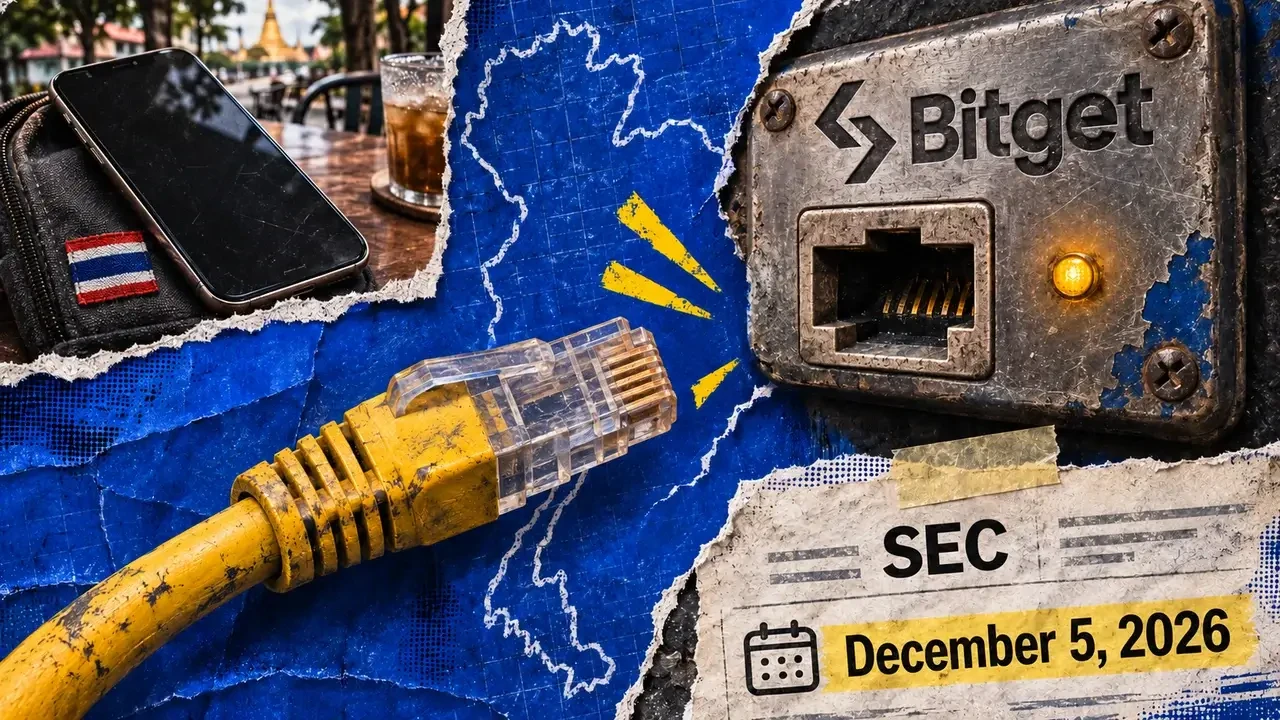
According to official notices, Bitget users in Thailand are facing a December 5, 2026 access block. The nation’s Securities and Exchange Commission (SEC) has actively urged all affected customers to seriously consider taking action regarding any assets they currently hold on the exchange prior to the restriction taking full effect. The impending block represents a major escalation in regulatory enforcement within Southeast Asia, reflecting a broader regional trend toward stricter oversight of international cryptocurrency service providers.
The regulatory action stems from a formal notice issued by Thailand’s SEC on November 5, 2026. The announcement followed the filing of official criminal complaints concerning alleged unlicensed exchange operations conducted within the country’s jurisdiction. As part of this sweeping measure, the SEC confirmed that it had formally notified the Ministry of Digital Economy and Society, instructing the government body to systematically block bitget.com, all associated Bitget domains, and the exchange’s dedicated mobile applications. The scheduled restriction is specifically tailored to cut off digital access originating from within Thailand.
What Bitget customers in Thailand face before December 5
The regulatory pressure highlights the specific operational footprint that triggered the intervention. The SEC identified BG Limited as the primary platform provider behind Bitget. In its findings, the regulatory body alleged that the exchange actively charged trading fees and deliberately targeted Thai retail users throughout the period spanning from 2022 to 2025. According to the investigation, this localization strategy included the deployment of a dedicated Thai-language website interface, pricing displays denominated in Thai baht, and specialized marketing campaigns conducted entirely in the Thai language.
Beyond corporate entities, the criminal complaint also targets individual actors. The filing explicitly names Kritsana Kritsananuwat, whom the SEC has accused of assisting in the promotion of the cryptocurrency exchange through prominent social media channels, specifically Facebook and YouTube. The regulator emphasized that these allegations remain subject to the ongoing criminal legal process. Under standard Thai legal procedures, this encompasses a thorough investigation by inquiry officials, subsequent prosecution handled by public prosecutors, and final adjudication by the nation’s courts as subsequent necessary steps.
Despite the severity of the enforcement action, the immediate regulatory stance regarding user funds remains distinct from a total asset confiscation or administrative freeze. The SEC has explicitly asked customers to review and manage their holdings before access is cut off, but the notice specifies no direct asset freeze, compulsory liquidation sale, or separate withdrawal cutoff enforced by the government. This leaves customers to independently decide how to handle assets remaining on the platform ahead of the scheduled network restriction.
However, internal corporate policies compound the complicated environment that Thai users must navigate. Bitget’s own platform eligibility rules already restrict service utilization within the country. The exchange’s terms of service, which carry an update marker for November 4, explicitly list Thailand among its prohibited jurisdictions. Furthermore, these terms formally classify residents of the country as restricted persons. This pre-existing corporate policy creates an additional layer of friction, shaping the exact service conditions that customers face as they approach the government-mandated block date.
The contractual terms governing the platform outline specific parameters for external-wallet withdrawals, noting that such actions remain strictly conditional upon maintaining sufficient available balances, ensuring that assets are entirely free from internal holds, and complying with applicable administrative requirements. Moreover, the platform’s terms reserve the right for Bitget to withhold processing in instances where applicable law prevents a withdrawal, or to suspend withdrawal functionalities entirely during unexpected platform security incidents.
In the wake of the SEC’s announcement, industry observers and media outlets have sought clarification from the exchange. Reports published in early November indicated that a Bitget spokesperson confirmed the company was actively reviewing the regulatory announcement and carefully evaluating potential pathways for engaging constructively with the Thai regulator. At the time, the spokesperson maintained that user safety remained a priority, assuring the public that customer assets were secure and promising future guidance regarding service-access modifications through official communication channels. Despite these assurances, account-specific withdrawal availability for customers physically located in Thailand remained a point of ambiguity.
This regulatory hurdle arrives on the heels of other operational milestones for the exchange. Earlier in the autumn, Bitget announced the complete global phased restoration of withdrawals, fiat services, and customer-to-customer operations following a security incident that occurred in September. While that earlier service update marked a return to normalcy for its international operations, it predated the Thai regulatory notice and provided no specific confirmation regarding the current status of account services tailored to Thai users.
As the December deadline approaches, further company guidance is expected to focus primarily on managing the transition and addressing access limitations. In the meantime, the Thai SEC continues to direct local investors toward its official website and its proprietary SEC Check First application, tools designed to help consumers verify whether a digital asset operator holds the requisite licenses to legally offer financial services within the kingdom.