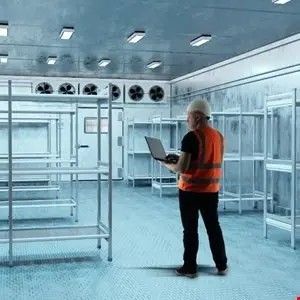
The United States government has issued a high-priority advisory urging organizations across the country to bolster the security of their industrial refrigeration and cold chain monitoring systems. This call to action, spearheaded by the Cybersecurity and Infrastructure Security Agency (CISA) and the Federal Bureau of Investigation (FBI), comes in response to a concerning surge in malicious cyber activity targeting the hardware that maintains temperature-sensitive environments globally. Federal authorities are increasingly concerned that attackers are successfully exploiting vulnerabilities to remotely alter temperature settings, posing a direct threat to the integrity of food supplies, medical resources, and industrial operations.
The federal advisory, published on November 5, highlights that authorities are currently tracking a pattern of activity where threat actors gain unauthorized access to internet-connected refrigeration controllers. These attacks represent a significant escalation in the targeting of operational technology (OT) and industrial control systems (ICS). By manipulating these systems, hackers can force units into continuous heating or aggressive defrost cycles, effectively sabotaging the products housed within cold storage facilities.
A Growing Pattern of Global Sabotage
The warning from U.S. officials is not abstract; it is rooted in a series of damaging incidents that have unfolded across Europe over the past several weeks. On October 11, 2026, reports surfaced indicating that multiple major supermarket chains in France and other European nations were forced to discard vast quantities of food inventory. The losses were the direct result of a cyber-attack that compromised systems managed by the refrigeration technology provider Danfoss. In a move that demonstrated the destructive potential of these intrusions, the attackers reconfigured the systems to reach temperatures as high as 50°C (122°F), rendering the perishable goods unsalvageable and inflicting significant financial and operational damage.
The wave of attacks did not end there. On November 1, a similar breach affected supermarkets across at least nine European countries, suggesting a coordinated or widespread campaign against the infrastructure powering the modern cold chain. Perhaps the most alarming incident occurred shortly thereafter, when a cyber-attack targeting refrigeration equipment provider Coolworld resulted in a catastrophic failure at France’s National Blood Service (EFS). In that instance, the intruders reportedly manipulated settings to turn cold storage rooms into environments reaching a boiling 110°C (230°F), a temperature that could have resulted in the irreversible loss of vital medical supplies.
These incidents have underscored the vulnerability of critical infrastructure that, while essential to public health and commerce, has often been integrated into the internet without the robust security postures typically required for high-stakes OT environments.
The Scope of the Threat to Critical Sectors
The U.S. government’s advisory specifically warns operators and owners of refrigeration systems to remain vigilant, particularly those operating within sensitive sectors such as healthcare, food and agriculture, chemical manufacturing, and logistics. These industries rely heavily on automated and remote monitoring systems to manage temperatures, maintain continuous logs for regulatory compliance, handle defrost cycle management, and optimize energy consumption. When these systems are compromised, the consequences extend far beyond simple technical errors; they represent a fundamental disruption to the supply chain.
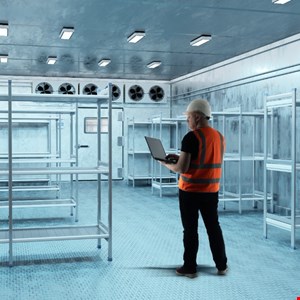
According to the federal agencies, attackers are leveraging a variety of well-documented techniques to compromise these systems. The primary vectors for these breaches include the exploitation of unpatched vulnerabilities, the use of authentication bypass methods, arbitrary code injection, and the exploitation of weak or default configurations. By targeting internet-accessible controllers, malicious actors can circumvent traditional security layers to take full control of the cooling unit’s logic, forcing them into states that cause widespread inventory loss and potential equipment hazards.
Chris Butera, CISA’s acting executive assistant director for cybersecurity, emphasized the urgency of the situation. "Every organization that depends on refrigeration and monitoring systems should assume it could be a target," Butera stated. He urged stakeholders to review the joint fact sheet issued by the agencies and to take immediate, proactive steps to close known security gaps before they can be leveraged by hostile actors.
Mitigation and the Shift in Internet Exposure
In response to the mounting threat, the authoring agencies have outlined a series of immediate actions that security teams should take to mitigate risks to their industrial refrigeration and cold chain infrastructure. The focus of these recommendations is on limiting the exposure of sensitive control systems to the public internet and ensuring that management interfaces are shielded by robust authentication and access controls. Security professionals are advised to conduct thorough audits of their network perimeters to identify any refrigeration controllers that may be directly accessible via the internet and to isolate these devices behind secure firewalls or virtual private networks (VPNs).
The industry appears to be responding to the heightened risk profile. Data published by the security firm Censys on November 5 revealed a notable shift in the landscape of internet-exposed hardware. Following the high-profile supermarket incidents in October and early November, Censys tracked a 53% reduction in the number of internet-exposed refrigeration controllers associated with the Danfoss StoreView and Copeland/Dixell XWEB product lines. This sharp decline in exposure is widely interpreted as a direct result of service providers and facility owners taking decisive action to disconnect vulnerable devices or place them behind more secure network configurations.
Despite the concerted effort by providers and operators to harden their systems, the underlying threat remains fluid. As of the latest reports, investigators have not yet attributed these attacks to a specific nation-state or criminal threat actor. The lack of clear attribution, combined with the ease with which these systems can be accessed if left exposed, has kept security agencies on high alert.
The incident serves as a stark reminder of the convergence between digital security and physical safety. As industries continue to lean into the efficiencies of the Internet of Things (IoT) and remote management, the perimeter of what constitutes a "cyber-attack" continues to expand. For the food and healthcare sectors, the refrigeration unit is no longer just a piece of warehouse equipment; it is a critical node in a digital infrastructure that, if left unprotected, can be turned into a weapon against the very supply chains it was designed to protect. The ongoing efforts by CISA and the FBI are intended to ensure that the rapid digitization of industrial processes does not come at the cost of the fundamental reliability of the nation’s cold chain. As organizations review their own configurations, the focus remains on closing the gap between the convenience of remote management and the necessity of hardened, secure industrial operations.