
Clash Online Over the Future of Non-Financial Web3 Applications
Prominent venture capitalists in the cryptocurrency and blockchain ecosystem are engaged in a heated online debate over the fundamental utility of non-financial Web3 use cases. The high-profile disagreement centers on whether decentralized applications outside of finance have failed due to a lack of genuine market demand and product-market fit, or if the industry’s struggles are merely growing pains caused by regulatory hostility, high-profile industry scandals, and extractive behaviors, meaning the best days for these technologies still lie ahead.
The digital clash began on Friday when Chris Dixon, a managing partner at prominent venture capital firm a16z crypto, published an article arguing that years of industry-wide disruption have hindered non-financial development. According to Dixon, years defined by severe industry scams, extractive behavior from bad actors, and intense regulatory attacks are the primary reasons non-financial use cases within crypto have failed to achieve mainstream velocity.
Dixon pointed to a broad array of non-financial sectors that have struggled to capture widespread public adoption. These include decentralized social media platforms designed to give users ownership of their data and networks, digital identity management solutions, decentralized media streaming services, digital rights and creator monetization platforms, and interactive Web3 video games, among other community-driven initiatives.
However, this thesis faced swift and direct pushback from rival investors. On Sunday, Haseeb Qureshi, a managing partner at competing crypto venture firm Dragonfly, took to social media to challenge Dixon’s perspective head-on. Qureshi argued that the core issue is not external regulatory pressure or bad actors, but rather a fundamental lack of consumer desire for these products.

"Non-financial use cases for crypto have failed because no one wants them," Qureshi wrote in his response. He went on to urge the industry to face reality, stating that the products simply failed the market test. He explicitly rejected the notion that regulatory figures like United States Securities and Exchange Commission leaders, fraudulent figures like Sam Bankman-Fried, or market crashes like the collapse of Terra caused these non-financial sectors to stall, writing that pretending otherwise is merely a psychological coping mechanism.
In defending a16z crypto’s long-term thesis, Dixon emphasized that his firm operates with a significantly extended time horizon. Because a16z crypto funds are managed with at least a 10-year outlook, Dixon argued that building entirely new technological paradigms and foundational industries simply takes a considerable amount of time.
The debate quickly drew commentary from other heavyweights in the venture capital community. Nic Carter, a founding partner at venture firm Castle Island Ventures, weighed in on the exchange by challenging Dixon’s timeline approach. Carter argued that traditional venture capital does not afford the luxury of waiting indefinitely to be proven right. According to Carter, investors must be accurate about market demand and product viability within the strict window of a typical two-to-three-year fund deployment period.
This ideological split among leading investors follows a notable surge of venture capital funding into crypto projects, which doubled over the course of 2025. However, data indicates that the vast majority of this renewed capital did not flow into experimental non-financial sectors or decentralized social media. Instead, the investment capital heavily favored tokenized real-world assets, which represent physical or traditional financial assets brought onchain via digital tokens, alongside core financial infrastructure.
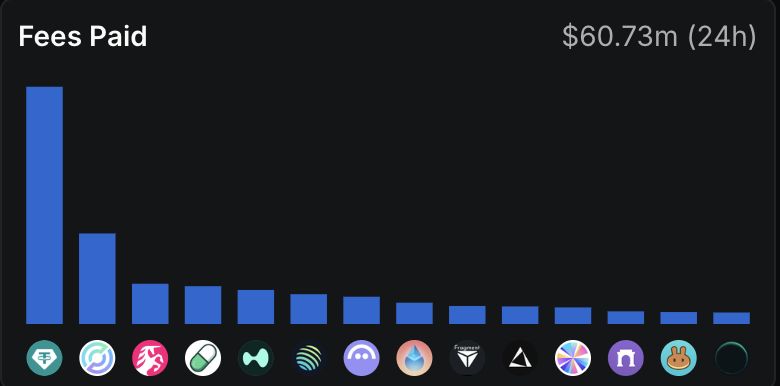
Market data consistently underscores the dominance of financial applications across the broader blockchain ecosystem. Over a recent 24-hour period, over $60.7 million in fees were paid to crypto exchanges and decentralized finance applications alone. Furthermore, metrics tracking fee generation and protocol revenue show that the top ten crypto applications across the entire industry are exclusively financial use cases, leaving non-financial decentralized apps far behind in revenue capture.
Different approaches to portfolio building
The ideological divide between these prominent venture capital firms is deeply reflected in their distinct strategies for portfolio construction and capital allocation. Dragonfly has deliberately structured its investment portfolio around financial use cases and foundational blockchain infrastructure designed to efficiently move value and risk through the emerging onchain financial system.
The firm’s strategic investments highlight this financial focus, encompassing ventures such as the Agora stablecoin and payments platform, payments infrastructure provider Rain, synthetic dollar issuer Ethena, and the high-throughput Monad layer-1 blockchain network, which are all engineered to bolster decentralized finance and digital transactions.
In contrast, a16z crypto maintains a much broader investment mandate. While the firm’s portfolio certainly includes major financial use cases—such as industry giant Coinbase and decentralized cryptocurrency exchange Uniswap—it also features a significantly wider spectrum of non-financial Web3 sectors. These encompass community-building initiatives, interactive gaming ecosystems, and decentralized media streaming platforms.
Among a16z crypto’s notable portfolio projects are the community-building club Friends With Benefits, digital identity provider World, and Web3 gaming platform Yield Guild Games, reflecting the firm’s continued bet on consumer-facing decentralized applications despite broader market skepticism over their near-term viability.