Bitcoin (BTC) handed back its early-week gains as Wall Street opened for trading, sliding from local highs amid mounting skepticism over a proposed Russia-Ukraine "energy ceasefire." The premier cryptocurrency faced renewed downward pressure as broader macroeconomic jitters—driven heavily by surging crude oil prices and looming United States inflation reports—sent ripples through global financial markets.
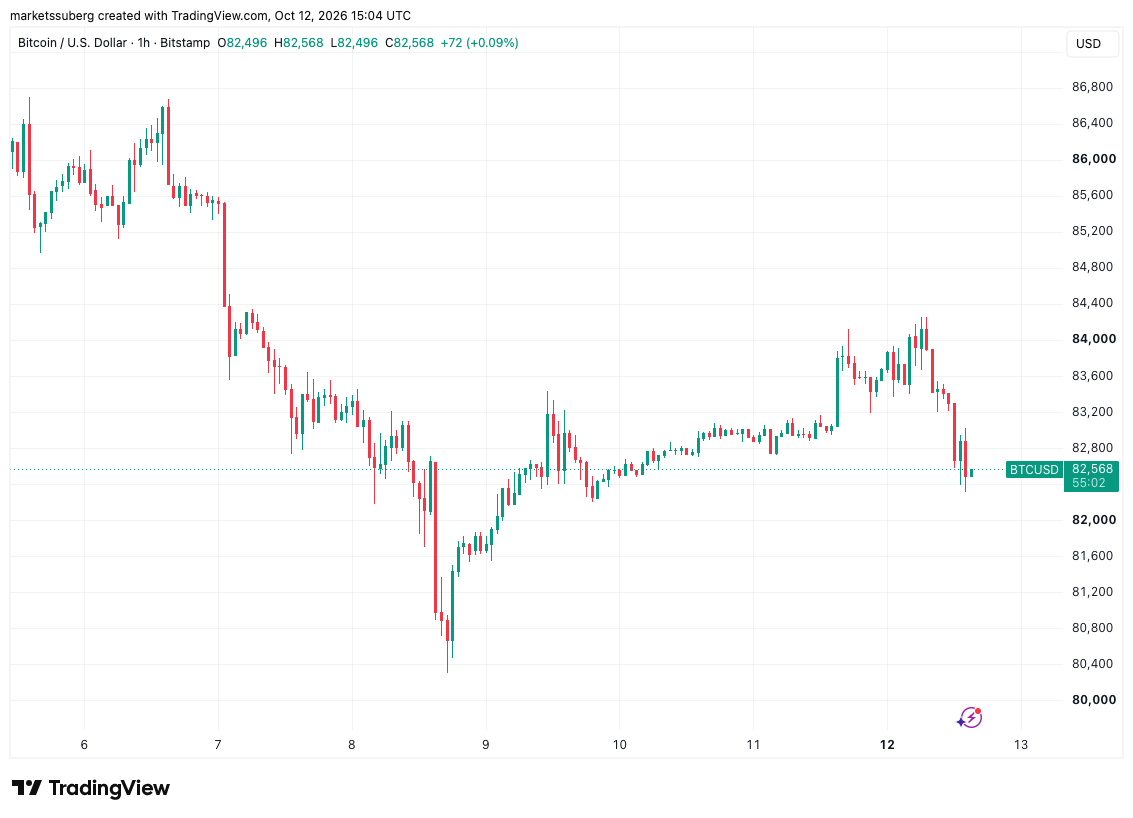
Data captured from TradingView indicated that BTC/USD climbed as high as $84,254 on Bitstamp, marking its strongest valuation since the previous Wednesday. However, the upward momentum quickly stalled, giving way to a retracement of up to 2.2% as traders digested a worsening geopolitical landscape and its immediate economic fallout.

The abrupt shift in sentiment was heavily influenced by renewed friction in Eastern Europe. Ukrainian President Volodymyr Zelenskyy publicly accused Russia of continuing to target vital energy infrastructure, directly undermining hopes for a lasting moratorium. This development cast serious doubt on the sustainability of an energy ceasefire previously announced by US President Donald Trump. Compounding the geopolitical strain, reports surfaced from the Middle East that an oil tanker had been struck and was ablaze in the strategic Strait of Hormuz, instantly heightening supply security concerns across global shipping lanes.
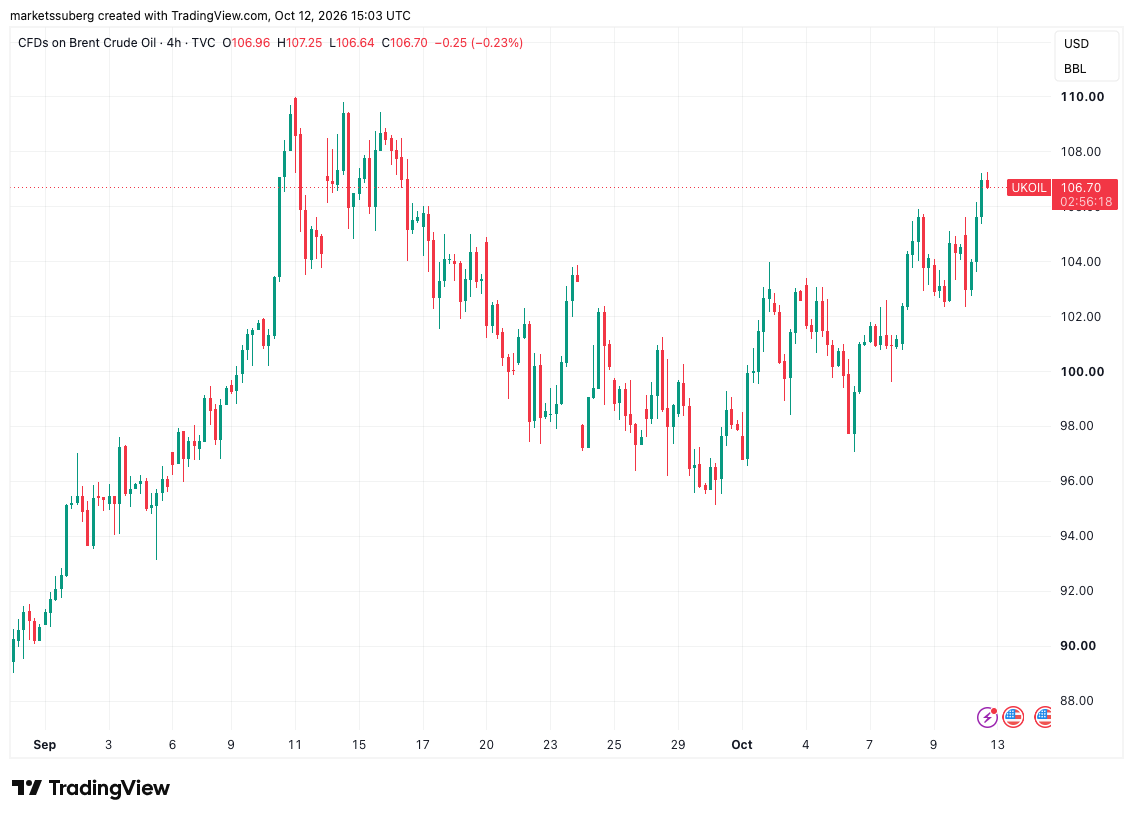
Global energy markets reacted swiftly and violently to the dual shocks. West Texas Intermediate (WTI) crude oil spiked past the $94 per barrel mark, while Brent crude surged significantly higher, reaching $107.25 per barrel—its loftiest valuation since September 16. Because energy prices serve as a primary engine for broader economic inflation, the sharp rally in crude immediately put risk assets, including cryptocurrencies, on the defensive.
The renewed macroeconomic pressure arrives at a precarious time for financial markets, which are already bracing for a heavy slate of crucial US inflation data. The Consumer Price Index (CPI) and the Producer Price Index (PPI) are scheduled for release on Wednesday and Thursday, respectively. Historical market reactions demonstrate that headline inflation figures—particularly the CPI component—exhibit high sensitivity to sudden spikes in oil prices. As energy costs climb, fears of persistent inflationary pressures mount, potentially complicating the trajectory of future monetary policy and dampening investor appetite for speculative or volatile asset classes like Bitcoin.
Despite the macroeconomic headwinds and the aggressive upward move in energy benchmarks, some financial analysts suggest that the panic in traditional commodities may be overblown. Robin Brooks, the former chief FX strategist at Goldman Sachs, weighed in on the situation by arguing that energy markets may have priced in an excessive amount of risk premium. Analyzing recent transit data, Brooks pointed out that tangible improvements in regional shipping volumes contradict the extreme panic currently reflected in futures contracts.
"Oil volumes out of the Persian Gulf are around 13 mb/d compared to a high of 16.5 mb/d a few weeks ago. This is still way better than the height of the war in March and April, but oil prices are back to their highs," Brooks noted in a recent commentary. Despite such expert reassurances, the immediate psychological and mechanical impact of $107 Brent crude continued to dictate short-term trading behavior across equity and crypto exchanges alike.
As Bitcoin seeks to find its footing following the pullback from the $84,000 threshold, market participants are closely monitoring key support and resistance zones to gauge the next major directional move. Institutional insights provider QCP Capital highlighted a striking duality within the Bitcoin options markets. According to the firm’s latest analysis, traders are currently displaying a combination of cautious "defensive" positioning while simultaneously maintaining exposure to the possibility of a sudden upside breakout.
"Implied volatility has held firm even as spot settled back into the range, while risk reversals show a less pronounced premium for puts than usual. Read together, the market looks less defensively positioned but still priced for a possible breakout," QCP Capital summarized in its weekly market insights report, adding a notable technical projection: "A clean move above $87k would bring $94k into focus."
Reinforcing the technical outlook, prominent trader and analyst Rekt Capital pointed to specific historical and local resistance parameters currently governing price action. The analyst flagged $83,400 as a critical local resistance barrier for the session. This level closely mirrors the structural behavior observed around the $77,000 mark between mid-August and late September, a consolidation zone that ultimately preceded a decisive upside breakout for BTC/USD.
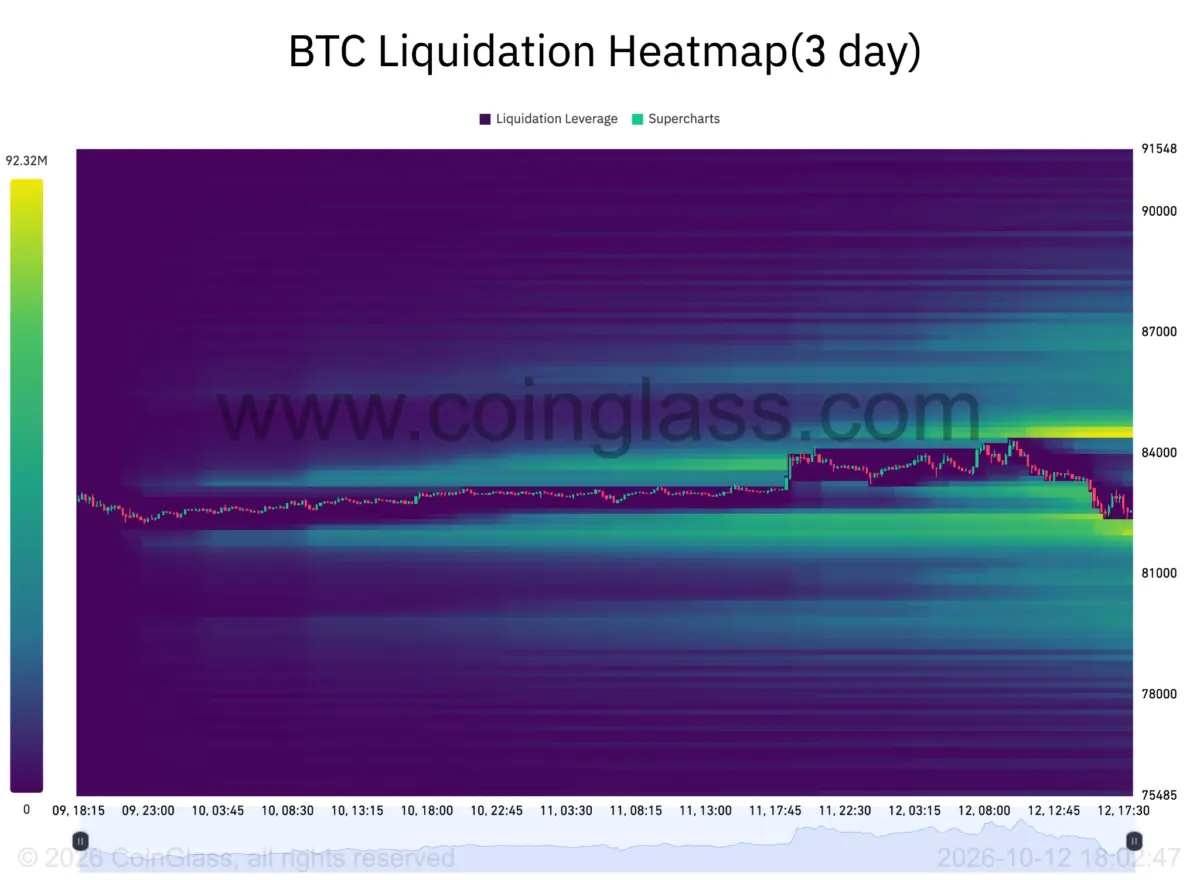
Order book and liquidation metrics from analytics platform CoinGlass illustrated where market participants are positioning their capital as the spot price trends downward. Ask liquidity has heavily clustered around the $84,500 threshold on major exchanges, with aggregate sell orders at that specific level hovering near the $180 million mark. Meanwhile, defensive buy orders and structural bids were visibly building around the $82,000 region as the cryptocurrency tested local support levels ahead of the mid-week macroeconomic data releases.