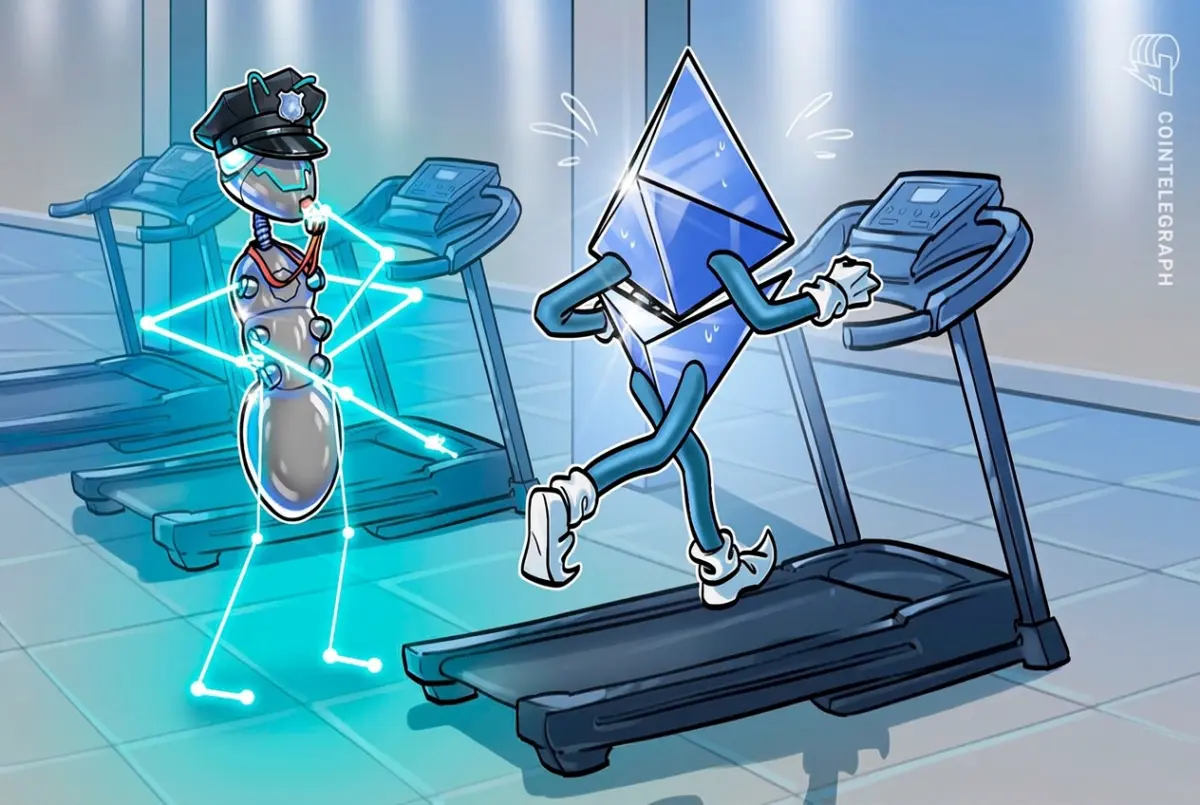
Ethereum layer-2 scaling network Starknet has officially initiated a pivotal non-binding governance vote, asking STRK token holders to decide whether the ecosystem should explore a future as an independent, post-quantum layer-1 blockchain.
The community-wide consultation kicked off on Thursday, launching a crucial seven-day poll designed to gauge sentiment across the network’s decentralized stakeholder base. Voting participants are presented with three distinct pathways: supporting further technical research into the layer-1 transition, opposing the initiative entirely, or choosing to remain neutral while awaiting more comprehensive information. According to the network’s governance portal, the polling period is scheduled to close on October 22, with the final results slated for publication immediately afterward.
Crucially, project leaders have clarified that a "Yes" vote will only serve as a mandate for developers and researchers to proceed with further feasibility studies rather than authorizing an immediate architectural transition. If the community votes in favor of continued exploration, any subsequent migration or structural overhaul would still require further formal proposals and separate governance votes down the line. Furthermore, StarkWare has not yet announced a definitive timetable for when Starknet might technically pivot away from its current layer-2 status to become a standalone layer-1 network.
The underlying motivation for the sweeping proposal stems from growing concerns over long-term cryptographic security in the face of advancing quantum computing technologies. StarkWare, the core software development firm behind the Starknet ecosystem, explained that cutting ties with Ethereum’s specific infrastructure schedule could allow the network to pursue quantum-resistant security measures at an accelerated pace. At present, Starknet relies heavily on Ethereum for critical foundational infrastructure, including its core asset bridge and data availability layers. StarkWare has explicitly identified these shared dependencies as areas that remain vulnerable to future quantum threats if left unaddressed.
Emphasizing the urgency of the situation, StarkWare CEO Eli Ben-Sasson recently spoke with industry media regarding the existential timeline facing modern cryptography. "Quantum-proofing crypto is urgent, so we must move at lightning speed," Ben-Sasson told reporters, drawing a sharp contrast between Starknet’s proactive stance and what he characterized as a much slower pace of progress within the broader Ethereum and Bitcoin ecosystems.
The governance poll follows a series of public hints dropped by key figures within the project earlier in the month. Both Ben-Sasson and the official Starknet social media channels shared coordinated updates on October 8, floating the ambitious vision of positioning Starknet as "the first fully quantum-resistant network" by the year 2027.
This forward-looking strategy builds upon a broader technical roadmap unveiled by StarkWare earlier this year. In June, the development firm introduced a comprehensive three-phase quantum-resistance roadmap specifically tailored for Starknet. That strategic framework outlined critical milestones spanning signature cryptographic upgrades, smart contract migration paths, and the eventual decoupling of Ethereum-dependent infrastructure components.
The broader blockchain industry is increasingly grappling with the looming threat posed by quantum computers, which are theoretically capable of breaking standard asymmetric cryptographic algorithms used to secure digital assets. While Starknet is aggressively exploring an independent layer-1 trajectory to fast-track its defenses, other major ecosystems are also mobilizing internal resources to address the vulnerability. In March, core developers within the Ethereum ecosystem established a dedicated post-quantum research team with the objective of introducing initial protocol-level protections by roughly 2029.
As the seven-day voting window progresses toward its October 22 deadline, STRK token holders hold the immediate responsibility of steering the network’s long-term research priorities. Whether the community chooses to back exploratory research, push back against the layer-1 ambition, or adopt a wait-and-see stance, the outcome will significantly influence Starknet’s strategic approach to cryptographic security in an evolving digital asset landscape.