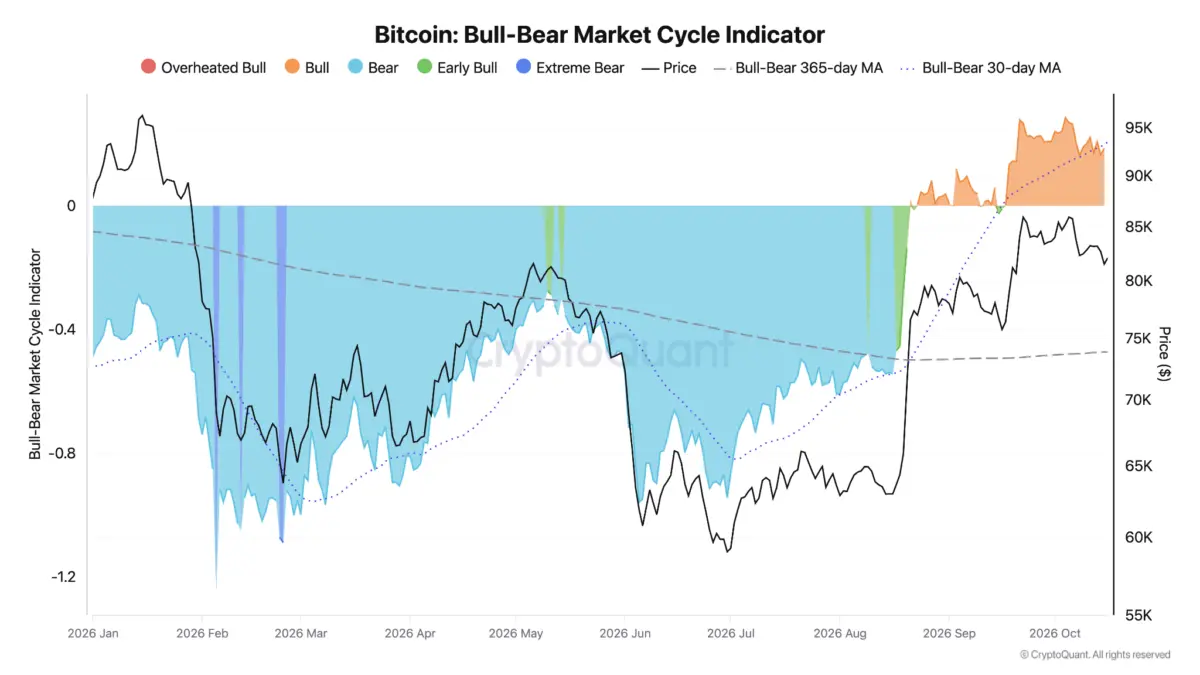
Bitcoin may still be on track to preserve its traditionally robust October performance, as emerging onchain data suggests that a local price bottom is currently forming. Despite facing a barrage of mixed macroeconomic and geopolitical headwinds over the past several weeks, analysts point to shifting underlying indicators that could lay the groundwork for a broader recovery in the cryptocurrency market.
The flagship cryptocurrency has spent much of the month navigating a complex financial landscape characterized by 24-year highs in United States bond yields, rising global oil prices, and cooling capital inflows into spot exchange-traded products. These pressures initially dampened market enthusiasm, putting a ceiling on expectations for a strong October rally—frequently referred to in crypto trading circles as "Uptober." However, fresh analysis published on Monday on the crypto analytics platform CryptoQuant indicates that the market is transitioning into a state of cautious optimism as key fundamental metrics stabilize.
BTC Price Analysis Flags “Potential Bottom” Signals

According to insights shared by CryptoQuant contributor XWIN Research Japan, signs of a potential price bottom are actively emerging as market conditions gradually tilt back in favor of risk-on assets. Since the beginning of October, macroeconomic pressures have begun to ease slightly, most notably through cooling expectations regarding aggressive interest-rate hikes by the Federal Reserve looking ahead into 2027. This shift in monetary policy outlook has boosted the probability of renewed capital inflows into digital assets.
Simultaneously, financial markets are anticipating greater visibility and clarity surrounding the domestic political landscape in the United States as the approaching Midterm Elections draw near. Market participants have closely monitored political developments, and analysts argue that a reduction in political uncertainty following the vote could prompt institutional and retail investors to reassess their portfolio allocations. Less friction in the macroeconomic environment could ultimately provide the catalyst needed for risk assets, including Bitcoin, to regain upward momentum.
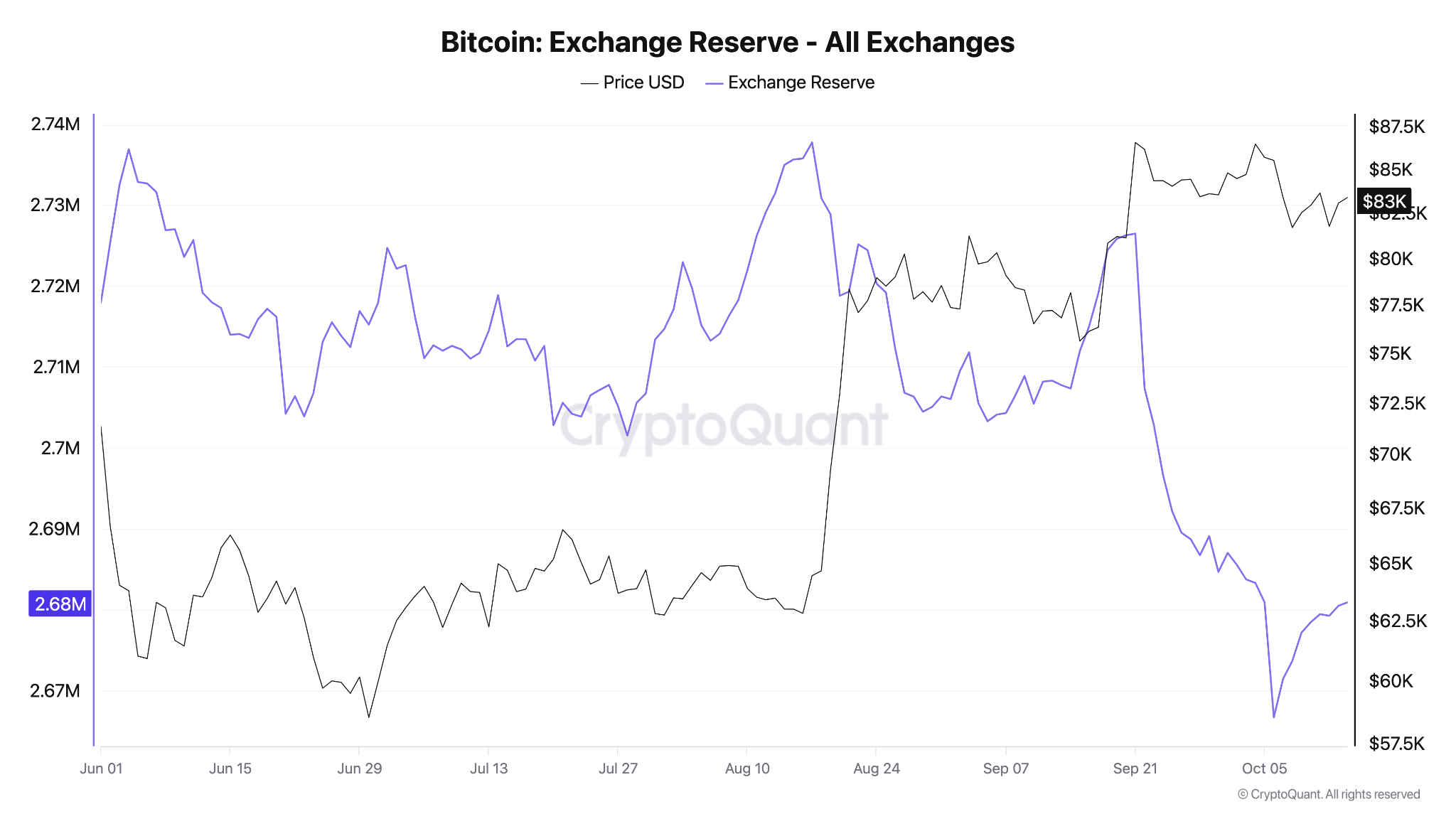
Underpinning these macroeconomic shifts are specific onchain metrics monitored by XWIN Research Japan, which suggest that October’s local low may have already been established. Most notably, Bitcoin exchange reserves have experienced a steady decline over the past several weeks. The total supply of BTC held across major cryptocurrency exchanges dropped from 2.726 million coins on September 20 to 2.68 million coins as of Tuesday. This represents a meaningful decrease of approximately 1.7%, even when accounting for a modest uptick in exchange inflows over the course of the most recent week.
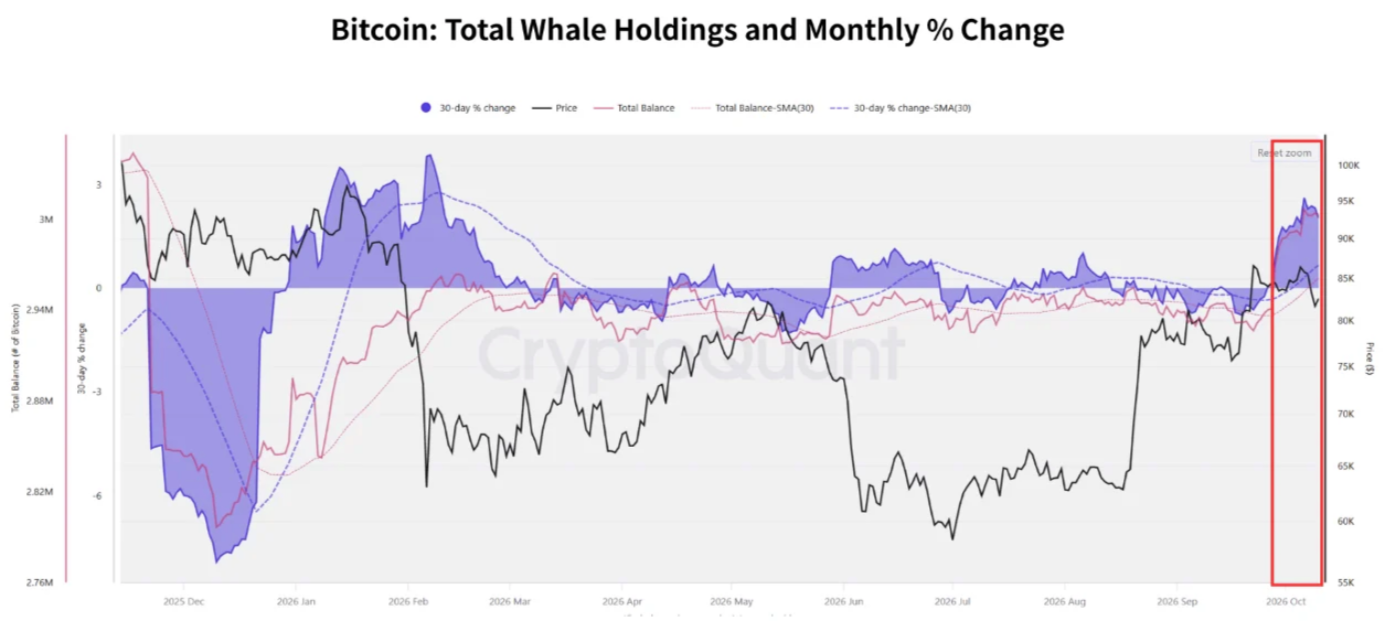
At the same time, large-volume investors, commonly referred to as "whales," have demonstrated remarkable resilience. The combined holdings of this influential cohort have remained comfortably above the 3 million BTC threshold. Significantly, the aggregate urge among whales to reduce their market exposure has largely survived a sharp market correction that saw the BTC/USD trading pair drop from a peak of $87,000 on October 2 down to near the $80,000 mark by October 8. Their willingness to hold through volatility indicates a strong underlying confidence that differs sharply from historical panic-selling behavior.
Bitcoin Demand Data Stays Bullish in October
Beyond exchange reserves and whale accumulation, broader demand metrics are offering additional support for the bullish thesis. Apparent demand—a vital analytical metric that compares newly minted Bitcoin against changes in dormant supply—shows that overall market demand remains supportive despite earlier contractions.
Throughout much of the year, the apparent demand metric remained predominantly negative, punctuated only by a brief period of positive 30-day readings during the second half of August. While demand softened again following that summer peak, it has steadily recovered toward near-neutral levels as of this week. This progressive stabilization points to a shifting balance between buyers and sellers in the open market.
Despite these encouraging signs, analysts emphasize that confirmation of a true trend reversal will require further validation. XWIN noted that sustained exchange-traded fund inflows, stronger spot buying volume within the United States, and a continued recovery in overall demand are necessary prerequisites for a sustained rally. Furthermore, market observers frequently remind traders that seasonal phenomena like "Uptober" do not necessarily require uninterrupted straight-line gains, suggesting that a healthy correction can ultimately serve to build a stronger foundation for the next upward advance.
These market observations arrive amid a broader industry dialogue regarding the cyclical health of the cryptocurrency sector. Earlier in the week, prominent crypto asset manager Bitwise released commentary noting that third-quarter onchain data pointed toward the emergence of a "crypto spring" following a period of historically significant performance. Meanwhile, CryptoQuant CEO Ki Young Ju publicly highlighted what he perceives as the definitive start of a new crypto bull market, declaring in late August that the previous bear market cycle had officially come to an end.