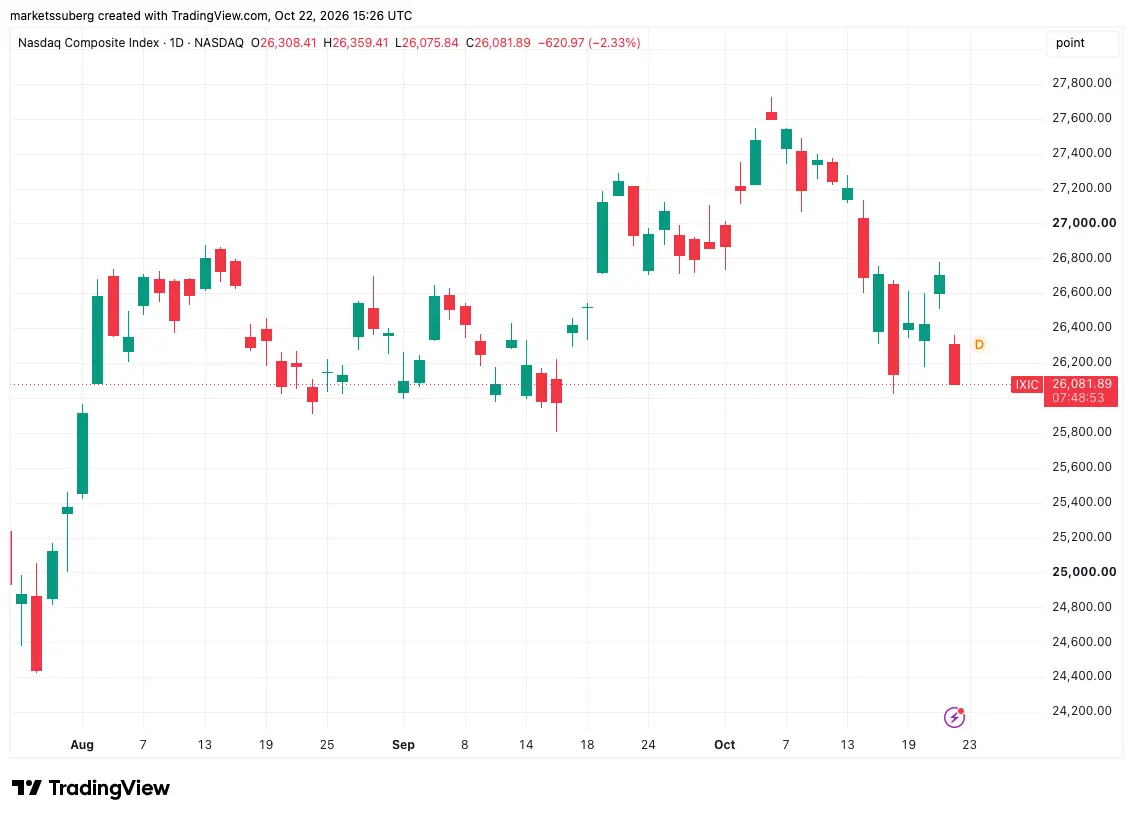
Bitcoin retreated to its lowest levels in over three weeks on Thursday, mirroring a broader wave of risk aversion rippling across global markets as fresh and steep losses on South Korean stock exchanges dragged digital asset valuations lower. The premier cryptocurrency faced renewed downward momentum, bringing prices perilously close to the psychological threshold of $80,000 amid a confluence of domestic equity sell-offs in Asia, sticky macroeconomic inflation data out of the United States, and lingering geopolitical tensions affecting international supply chains.
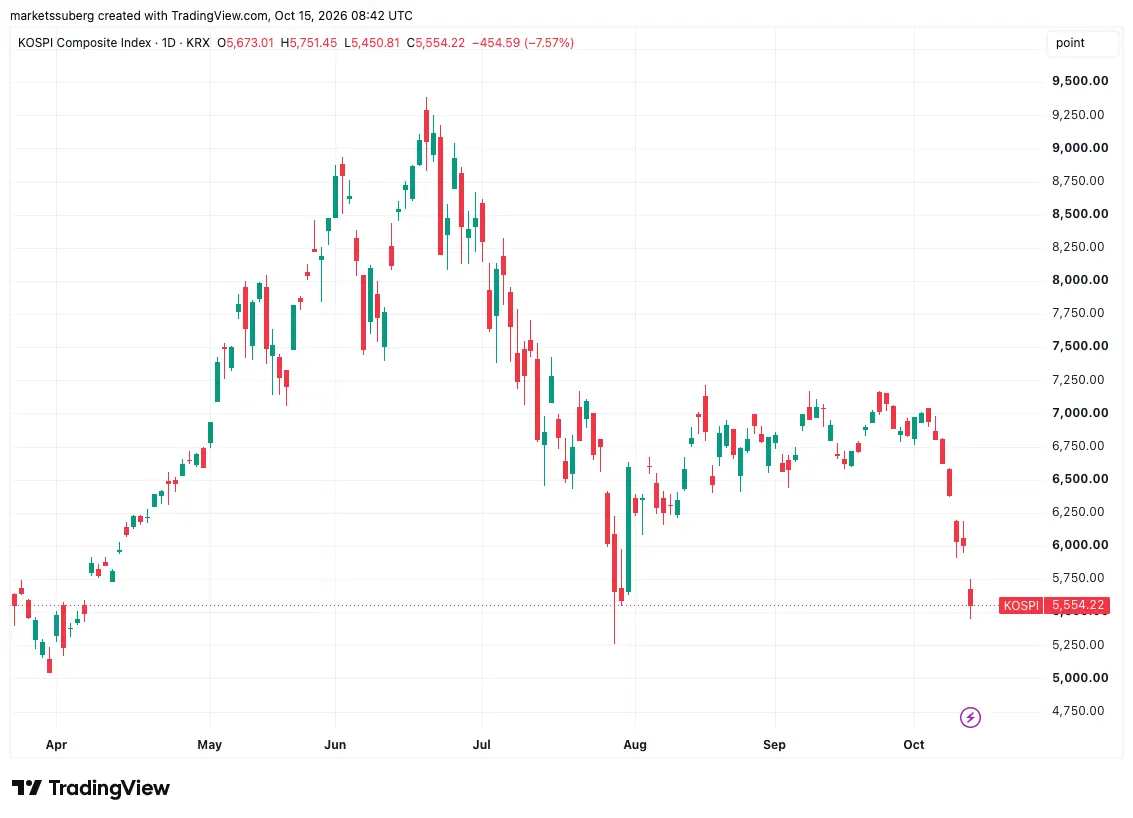
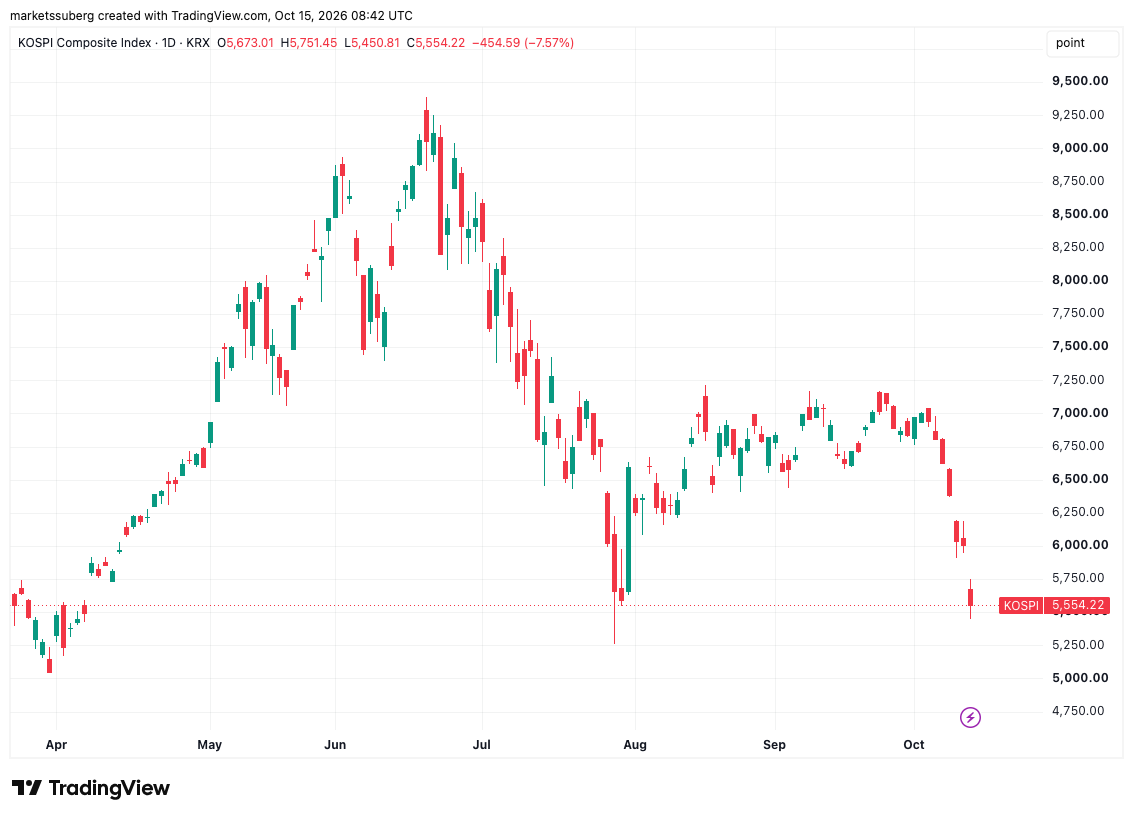
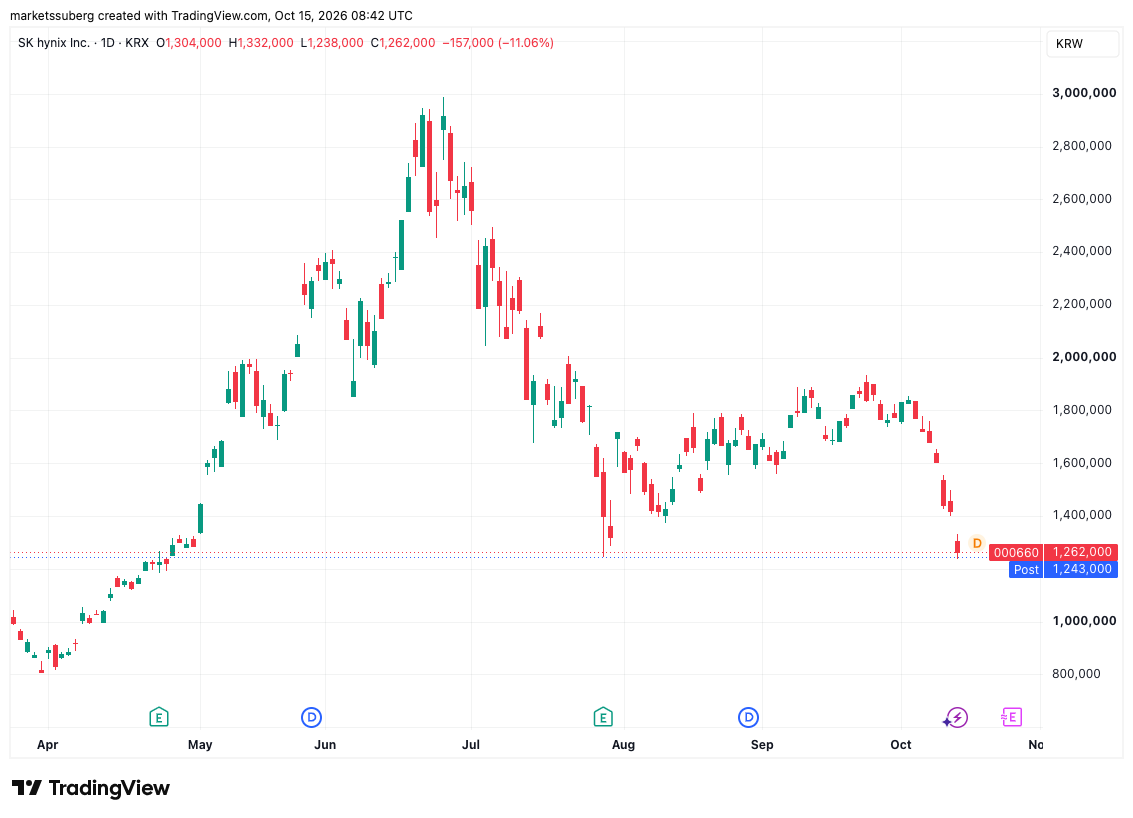
The localized equity shock began in Seoul, where the Korea Composite Stock Price Index, commonly known as the KOSPI, finished the trading day down 7.5%. This sharp single-day drop extended the index’s losses for the week to an alarming 15.5%. As has been the pattern in recent sessions, South Korea’s heavyweight technology sector bore the brunt of the aggressive liquidation. Semiconductor giant SK Hynix plummeted 11% by the closing bell, while consumer electronics and tech bellwether Samsung Electronics suffered a steep 9.5% decline.

Market analysts and regional reports have pointed to a combination of compounding pressures behind the South Korean market rout. Mounting concerns over artificial intelligence debt obligations, persistent foreign capital outflows, and intensifying commercial competition from Chinese manufacturing and tech sectors have severely dented investor confidence. Furthermore, the KOSPI’s critical 200-day moving average slid sharply, dropping to as low as 5,450 points—a technical threshold that had not been breached since late July. The index ultimately settled Thursday’s session at 5,554 points, marking its lowest daily closing value since April 8.
Speaking to local media publication The Korea Herald, Mirae Asset Securities analyst Kim Seok-hwan cautioned that broader global macroeconomic headwinds would likely introduce continued friction for investors in the near term. Market volatility is expected to persist as domestic supply and demand conditions deteriorate, leaving the broader financial ecosystem increasingly sensitive to external shocks while immediate improvements in the global macroeconomic climate remain scarce.
Compounding the pressure on tech sentiment, both SK Hynix and Samsung are scheduled to release their third-quarter earnings reports on October 28 and 29, respectively. Market participants are watching these upcoming announcements closely, as any financial metrics or forward-looking guidance that fall short of aggressive consensus projections could trigger a secondary wave of downside volatility across regional technology equities. Samsung alone is anticipated to confirm third-quarter sales figures reaching 195 trillion won, equivalent to approximately $145 billion, alongside an operating profit hovering near 107 trillion won, or roughly $80 billion.
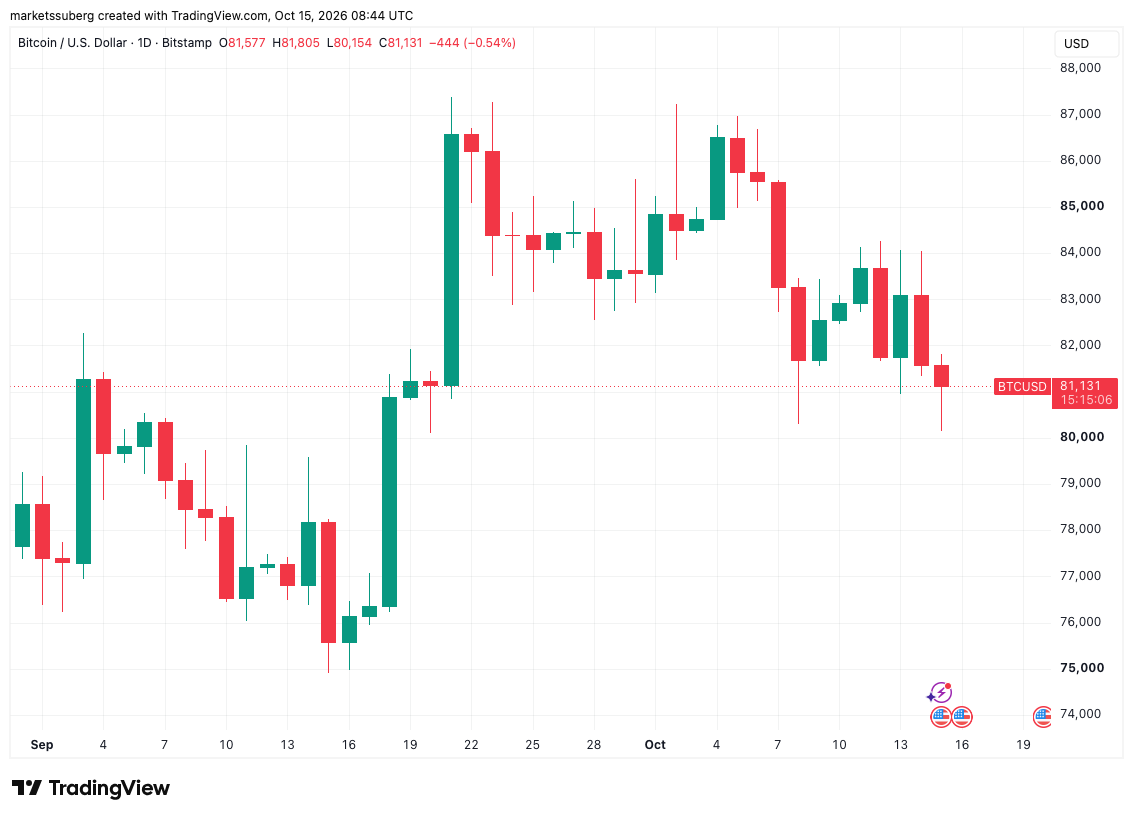
Trading data captured via TradingView illustrated the immediate impact of these Asian equity liquidations on the digital asset space. The BTC/USD trading pair hit a low of $80,154 on the Bitstamp exchange, marking a price level that had not been visited by the market since September 20. This retreat breaks a period of relative consolidation and highlights the growing sensitivity of decentralized cryptocurrencies to traditional equity market sell-offs, particularly those driven by liquidity crunches and margin pressures in major Asian financial hubs.
Macroeconomic Pressures and US Inflation Data
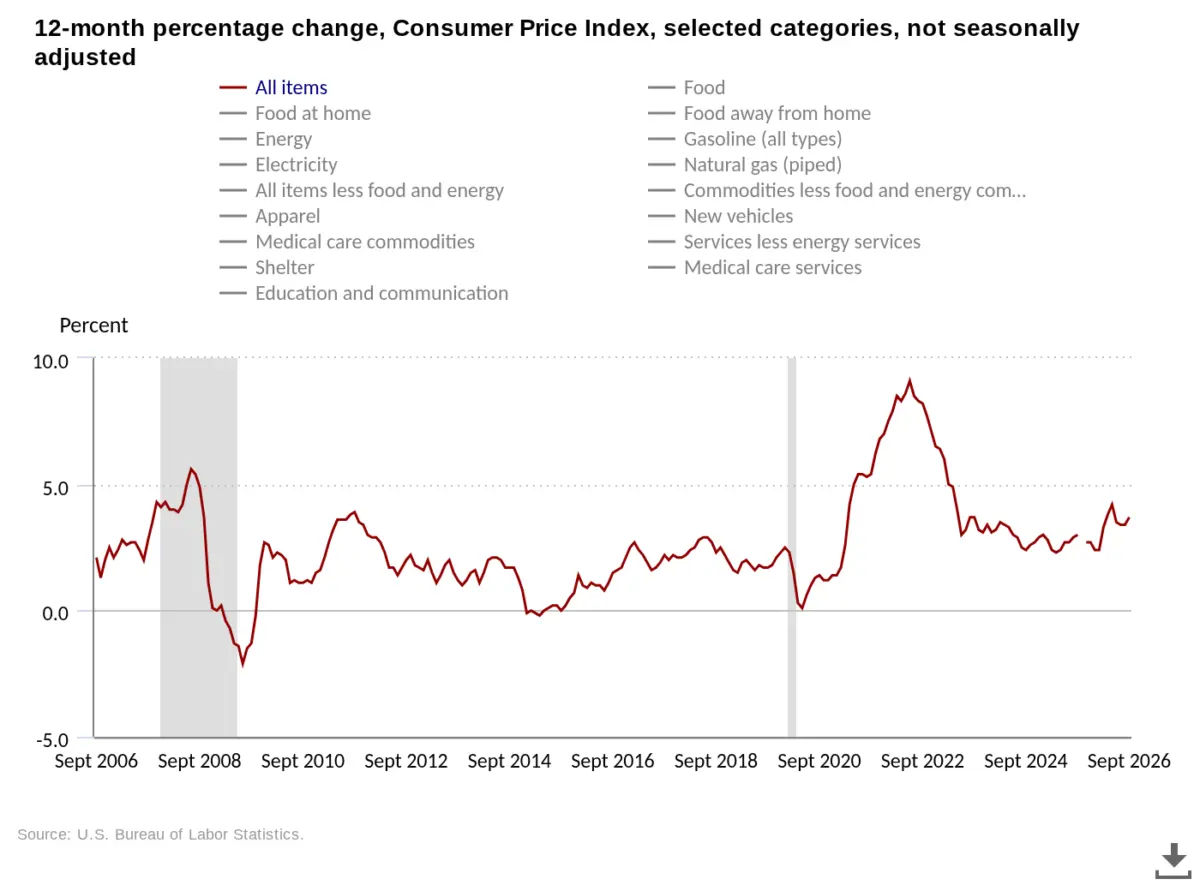
The downward trajectory of Bitcoin was not driven by Asian markets alone; it was further exacerbated by lingering reactions to higher-than-expected United States inflation data released earlier in the week. The September print for the Consumer Price Index came in at an annualized rate of 3.7%, a figure that immediately triggered a more hawkish repricing of interest rate expectations among market participants tracking the United States Federal Reserve.
The hotter-than-anticipated inflation print has forced traders and institutional desks to reassess the trajectory of monetary policy. Financial institutions are actively debating whether the persistent inflation readings will compel the central bank to implement additional benchmark interest rate hikes, or if mounting stress within the credit markets will ultimately force a policy recalibration. Trading firm QCP Capital addressed these conflicting macro forces in a note to clients, questioning whether the inflation beat forces further tightening or if systemic credit pressures will dictate the central bank’s next moves.
Higher energy costs have played a significant role in sustaining the elevated consumer price index figures, yet counter-intuitively, global oil benchmarks experienced downward pressure on Thursday despite ongoing geopolitical instability in the Middle East. The decline in crude prices followed an incident in which a Singapore-registered oil tanker was struck and sunk in the crucial Strait of Hormuz. The Maritime and Port Authority of Singapore swiftly condemned the event, describing the sinking as unjustifiable and raising fresh alarms over the safety of commercial shipping lanes in the region.
However, despite the heightened threat profile in the Persian Gulf, energy markets reacted with unexpected calm. Industry experts suggest that the structural dynamics of global oil supply have evolved to absorb localized disruptions more efficiently than in past geopolitical crises. Firas Bechwaty, head of business development at online trading platform ICM, told CNBC that he sees minimal probability of transit volumes through the Strait of Hormuz returning to the levels recorded prior to the outbreak of the United States-Iran conflict.
Bechwaty noted that despite the permanent alteration of traffic through the vital checkpoint, alternative pathways have proven effective. Saudi crude oil continues to find its way to international buyers through bypass pipelines and alternative maritime routes. Furthermore, accelerated emergency strategic reserve releases coordinated by International Energy Agency member countries have provided an essential supply buffer. These mitigating factors have successfully prevented a sharp vertical spike in energy commodities, even as regional geopolitical tensions remain elevated.
At the time of writing, West Texas Intermediate crude traded below $95 per barrel, reflecting a daily decline of approximately 0.5%. Meanwhile, international benchmark Brent crude experienced a more pronounced pullback, dropping 2.2% to change hands at $103.7 per barrel.
As the cryptocurrency market navigates these overlapping crosscurrents—ranging from the sharp tech correction in South Korea and looming corporate earnings reports to shifting expectations regarding Federal Reserve monetary policy and volatile energy dynamics—Bitcoin traders remain on high alert. The breakdown toward the $80,000 support level demonstrates that digital assets continue to be tightly coupled with macroeconomic liquidity trends and broader risk sentiment across traditional financial markets, setting the stage for continued turbulence as the fourth quarter unfolds.